
 rifanmuazin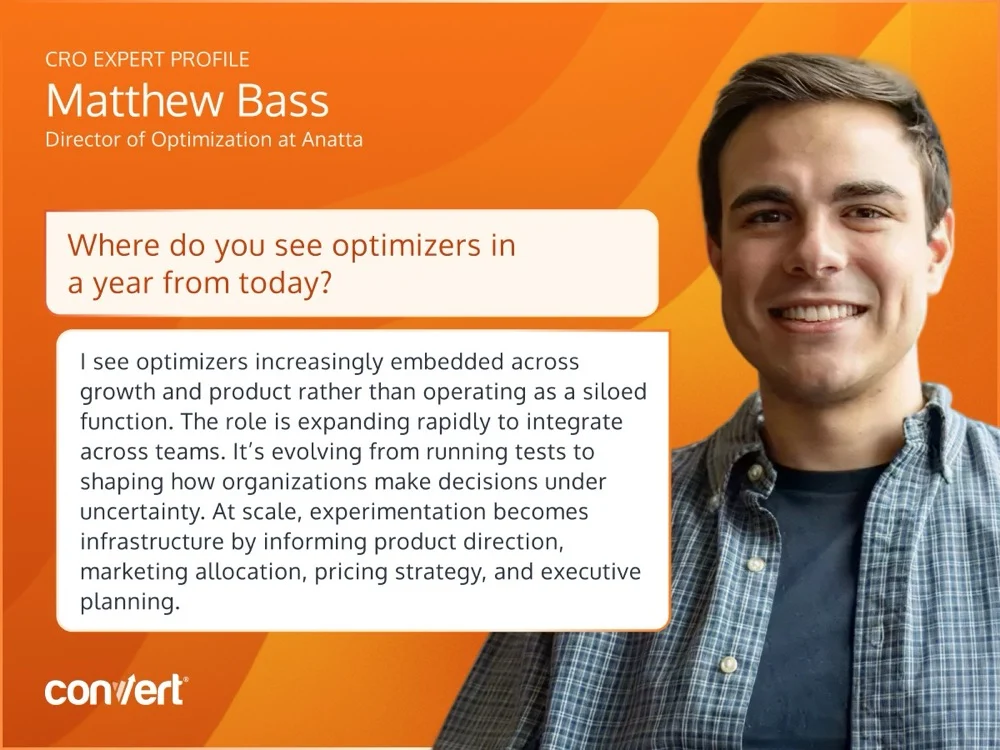
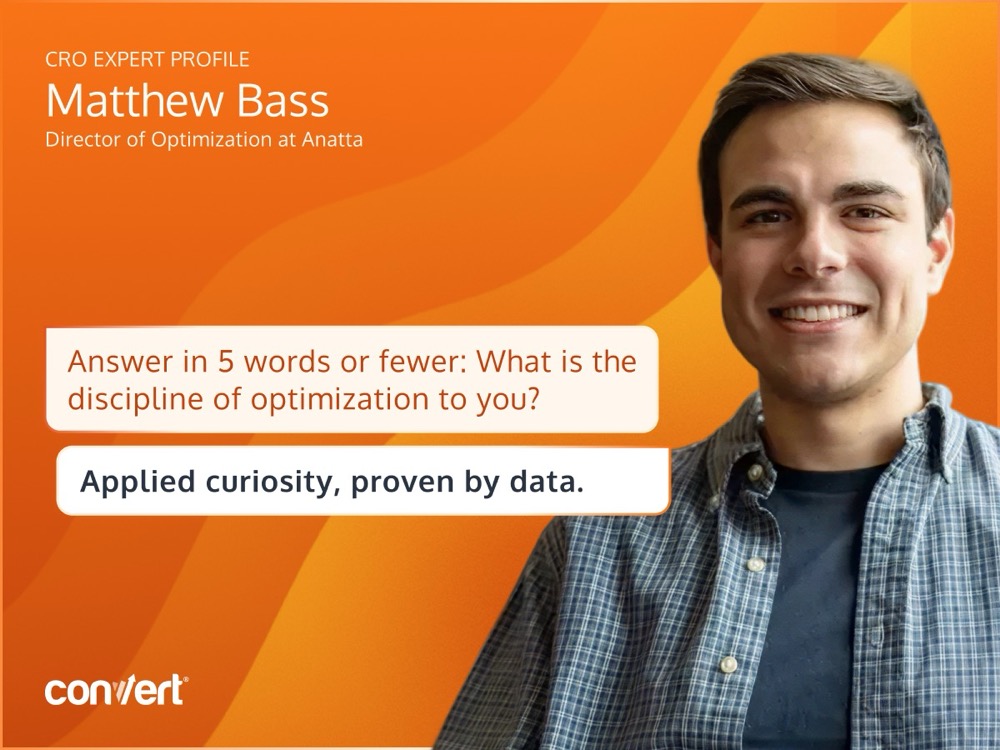
The discipline of digital optimization has transitioned from a niche technical function to a cornerstone of corporate strategy, as highlighted by the professional trajectory and insights of Matthew Bass, the Director of Optimization at Anatta. With over seven years of experience in the field, Bass has witnessed the transformation of conversion rate optimization (CRO) from basic A/B testing into a sophisticated "operating system" for scalable performance. His approach, which he defines as "applied curiosity, proven by data," reflects a broader industry shift toward using experimentation as the primary bridge between human intuition and empirical truth. As high-growth eCommerce brands face increasing customer acquisition costs and market saturation, the ability to connect qualitative insights with behavioral data has become a critical competitive advantage.
The Professional Trajectory of Matthew Bass and the Rise of Experimentation
Matthew Bass’s career began in the realm of upper-funnel eCommerce acquisition and creative strategy, a background that provided him with a unique perspective on the user journey. Unlike many practitioners who enter the field from a purely technical or statistical background, Bass’s roots in marketing and creative storytelling allowed him to view optimization through a narrative lens. Over the past seven years, his focus has expanded from simple creative testing to full-funnel experimentation, user experience (UX) research, and the scaling of enterprise-level optimization programs.

This timeline of professional growth mirrors the maturation of the CRO industry. In the mid-2010s, many brands viewed testing as an isolated tactic used to "tweak" button colors or headlines. However, by 2024, the field has evolved into a comprehensive methodology for decision-making under uncertainty. At Anatta, Bass leads UX strategy for high-growth brands, integrating commercial strategy with behavioral data to create a unified system for growth. This evolution suggests that the most successful optimizers are no longer just data analysts; they are strategic leaders who can navigate the complexities of human behavior and business objectives simultaneously.
The Integration of Artificial Intelligence in Experimentation Workflows
One of the most significant shifts in the current optimization landscape is the rapid adoption of Artificial Intelligence (AI). According to Bass, AI is not a replacement for strategic thinking but a tool that increases the "leverage" of leaders who understand how to ask the right questions. The primary value of AI in modern workflows lies in its ability to synthesize vast amounts of data—including session recordings, survey responses, and merchandising analytics—compressing analysis that once took days into a matter of hours.
Industry data supports this trend. Recent reports from Gartner and Forrester indicate that organizations utilizing AI in their marketing and UX workflows see a marked improvement in speed-to-market for new features and a more precise understanding of customer friction points. Bass notes that AI is particularly effective in identifying patterns across disparate data sources, allowing teams to move from observation to hypothesis much faster. By automating the "noise reduction" process, AI enables human optimizers to focus on high-level strategy and the creative aspects of test design, which remain beyond the current capabilities of automated systems.

Bridging Creative Strategy and Data-Driven Optimization
The pivot from creative strategy to CRO is a defining characteristic of Bass’s methodology. He argues that a background in creative strategy trains experimenters to think in terms of narratives rather than just isolated metrics. This full-funnel approach ensures that optimization efforts are aligned with the overall brand story and user journey, rather than being restricted to specific touchpoints.
Experimenters with a creative background bring several key advantages to a growth team. First, they are often better equipped to interpret qualitative data, such as customer feedback and emotional responses, which are essential for building a holistic view of the user. Second, they excel at storytelling, which is a vital skill when securing buy-in from stakeholders. When test results are complex or counterintuitive, the ability to frame the data within a compelling narrative can make the difference between a rejected hypothesis and a successful strategic pivot. Bass emphasizes that as the field of experimentation matures, the ability to communicate insights effectively across an organization becomes just as important as the ability to generate those insights.
Case Study: Reimagining the Product Detail Page as Value Architecture
To illustrate the impact of sophisticated experimentation, Bass points to a specific project involving the redesign of a Product Detail Page (PDP). Rather than viewing the PDP as a static merchandising layout, Bass and his team treated it as a "value-architecture system." Through a combination of behavioral and offer analysis, they discovered that while customers were highly motivated by an exclusive bundle offer, the offer itself was buried and difficult to find within the standard conversion path.
The team introduced a "Best Value" framing mechanism directly into the core PDP experience. By making the bundle the most "cognitively accessible" option and clarifying the price-per-unit economics at the moment of commitment, they significantly reduced decision friction. The results were twofold: a clear lift in key commercial metrics and the protection of direct-to-consumer (DTC) channel revenue by positioning the bundle as a differentiated, direct-only offer.
This experiment serves as a microcosm for the broader potential of CRO. It was not merely a "win" for a single page; it reshaped how the entire organization thought about value communication and offer strategy. It informed omnichannel experiences and future merchandising decisions, demonstrating that the true value of experimentation lies in its ability to generate compounding knowledge that impacts the entire business.
The Future of the Optimization Role: From Silo to Infrastructure
Looking toward the future, Bass predicts that the role of the optimizer will continue to evolve away from being a siloed, independent unit. Instead, optimization specialists are increasingly being embedded directly into growth and product teams. This shift reflects a growing recognition that experimentation is not a "service" provided to other departments, but a foundational infrastructure for the entire company.
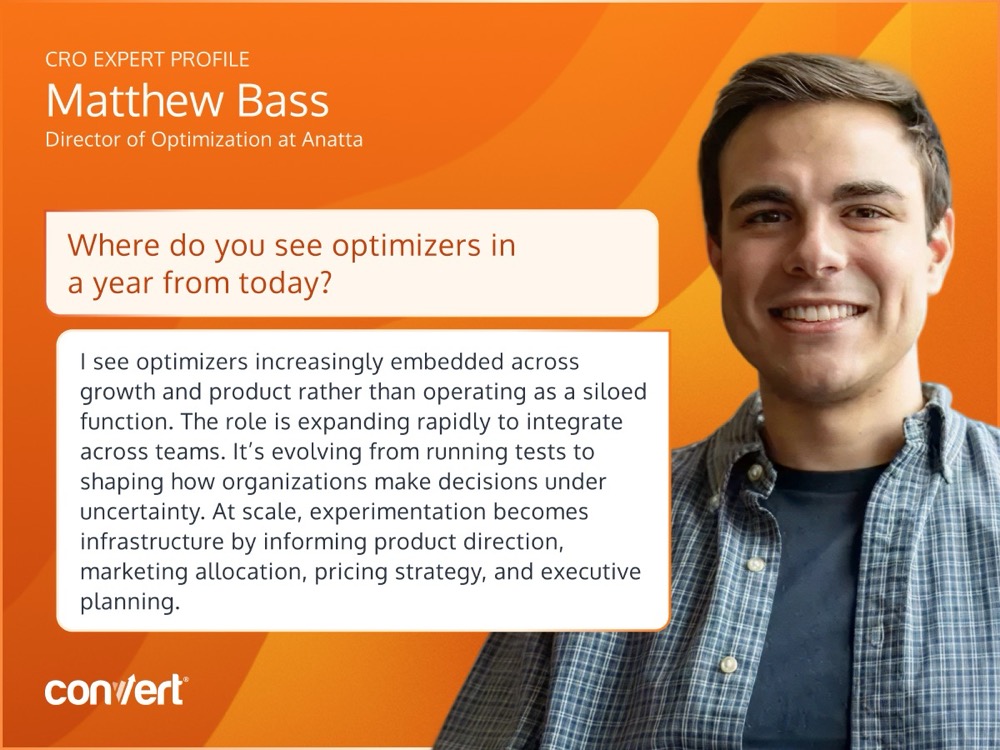
In this vision of the future, experimentation informs every major business decision, from product direction and marketing budget allocation to pricing strategy and executive planning. Organizations that embrace this model move beyond simple conversion rate improvements; they build a sustainable competitive advantage by creating a culture of continuous learning. When experimentation is treated as infrastructure, it allows a company to navigate market volatility with greater confidence, as every move is backed by a system designed to validate assumptions and mitigate risk.
Broader Implications and Strategic Analysis
The insights provided by Matthew Bass suggest that the next frontier of digital commerce will be defined by "decision science." As the technical barriers to running tests continue to fall, the primary differentiator between successful and unsuccessful brands will be the quality of their hypotheses and the speed of their learning cycles. The integration of AI will further accelerate this process, making it possible for even mid-sized brands to run sophisticated, multi-variable experiments that were once the exclusive domain of tech giants like Amazon or Netflix.
Furthermore, the emphasis on "empathetic user experience evolution" highlights a shift away from aggressive, short-term "growth hacking" toward long-term brand building. By using data to understand and meet user needs more effectively, optimizers are playing a crucial role in fostering customer loyalty and lifetime value. In an era where consumer trust is difficult to earn and easy to lose, the use of experimentation to create more intuitive, helpful, and transparent digital experiences is not just a tactical choice—it is a moral and commercial necessity.

As the industry moves forward, the "optimizer" may eventually become synonymous with the "strategist." The ability to live in the data, weather failed tests, and convince stakeholders through evidence-based storytelling will remain the hallmark of the professionals leading this charge. For brands looking to scale in an increasingly complex digital economy, the message is clear: optimization is no longer an optional add-on; it is the engine of growth.








