
 rifanmuazin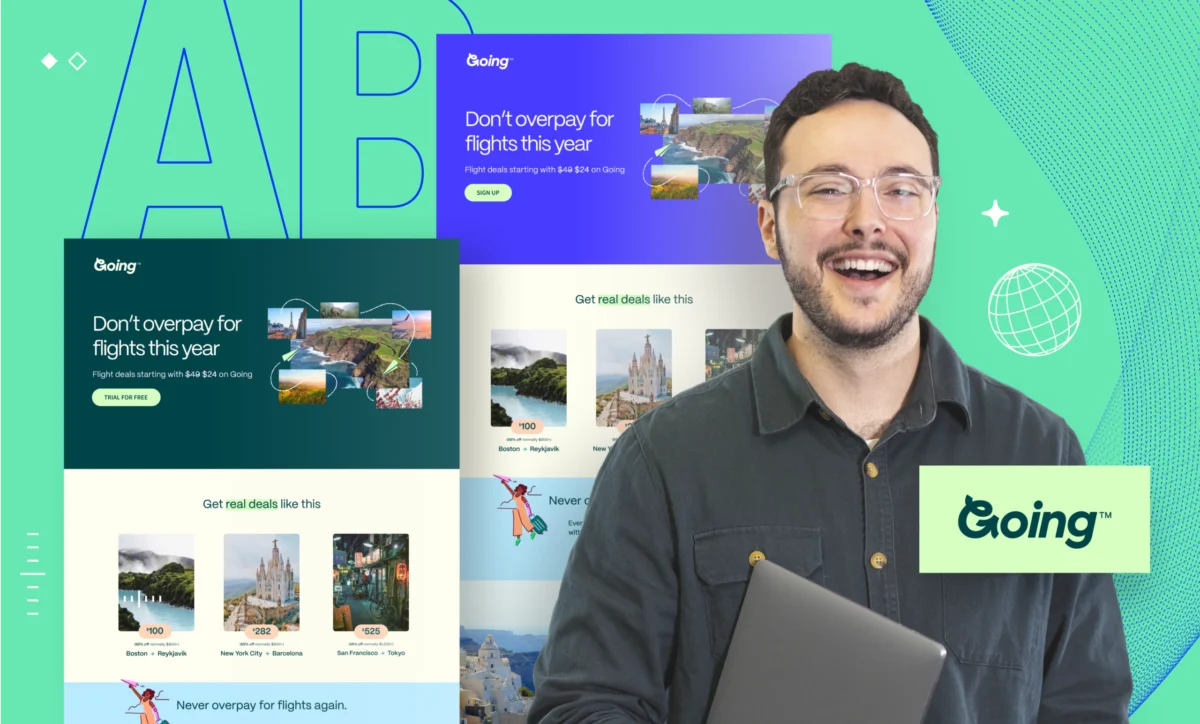
In an era where digital advertising costs have reached record highs and consumer attention spans have hit historic lows, the global marketing landscape is undergoing a fundamental shift from traffic acquisition to conversion optimization. Industry data suggests that while the primary focus of digital strategy for the past decade was the sheer volume of visitors, the modern priority is the quality of engagement and the efficiency of the “conversion funnel.” Conversion marketing, once a niche discipline, has emerged as a critical pillar for businesses seeking to sustain profitability in an increasingly competitive online marketplace.
The strategic pivot toward conversion marketing is driven by a simple yet harsh economic reality: pouring capital into traffic generation without a robust conversion strategy is increasingly viewed by analysts as a “leaky bucket” approach to growth. As digital platforms become more saturated, the cost-per-click (CPC) across major advertising networks continues to climb, forcing CMOs to re-evaluate how they derive value from existing web traffic.
The Economic Context of Conversion Optimization
The transition toward conversion-centric strategies did not happen in a vacuum. Historically, the early 2010s were characterized by relatively cheap social media and search engine traffic. During this period, companies could afford low conversion rates because the cost to acquire a new visitor was minimal. However, several factors have converged to end this era of “cheap growth.”
First, the implementation of stricter privacy regulations and changes in mobile operating systems—such as Apple’s App Tracking Transparency (ATT)—have made ad targeting less precise and more expensive. Second, the rise of the “creator economy” and the sheer volume of content have made it harder for brands to capture attention. According to recent industry updates from July 2025, the average cost to acquire a customer (CAC) has risen by nearly 40% over the last five years in the SaaS and e-commerce sectors.
In response, conversion marketing has become the preferred methodology for maximizing the return on investment (ROI). By focusing on the percentage of visitors who take a specific, desired action—whether that is a purchase, a lead form submission, or a demo request—companies can effectively double their revenue without increasing their advertising spend. For instance, a website with 10,000 monthly visitors and a 2% conversion rate generates 200 leads. By optimizing the page to reach a 4% conversion rate, the business achieves 400 leads using the same traffic base, effectively halving its cost-per-lead.
Defining the Conversion Framework: Macro vs. Micro Goals
Professional conversion marketing distinguishes between different tiers of user actions, categorized as macro and micro conversions. Understanding the interplay between these two is essential for a comprehensive digital strategy.
Macro conversions represent the primary objective of a digital property. For an e-commerce platform, this is a completed transaction; for a B2B software company, it is a signed contract or a paid subscription. These are the metrics that directly impact the bottom line and are the ultimate indicators of business health.

Micro conversions, conversely, are the smaller steps that lead a visitor toward the macro goal. Examples include signing up for a newsletter, downloading a whitepaper, or adding an item to a shopping cart. While these actions do not immediately generate revenue, they serve as vital indicators of intent and allow marketers to build a relationship with the prospect. Analysts point out that a failure to track micro conversions often leads to an incomplete understanding of the customer journey, as it ignores the incremental trust-building required for high-stakes purchases.
The Psychology of Conversion: Value Propositions and Trust Signals
At its core, conversion marketing is the application of behavioral psychology to digital interfaces. The success of a conversion strategy hinges on a brand’s ability to articulate a compelling value proposition and mitigate “conversion friction.”
A value proposition must be more than a slogan; it must be a clear, concise statement that explains how a product solves a problem, delivers specific benefits, and tells the customer why they should buy from this brand rather than the competition. Experts in the field emphasize that clarity consistently outperforms cleverness. If a visitor cannot understand the offer within the first five to ten seconds of landing on a page, the likelihood of a “bounce”—where the user leaves the site without interacting—increases exponentially.
Furthermore, the role of trust signals cannot be overstated. In a digital environment rife with skepticism, consumers look for social proof before committing to a brand. High-converting websites strategically deploy several types of trust indicators:
- Customer Testimonials: Specific, results-oriented quotes that address common pain points.
- Industry Certifications: Security badges (e.g., SSL certificates) and professional accreditations.
- Case Studies: Detailed accounts of how the product or service delivered value to other organizations.
- User Ratings: Aggregated reviews from third-party platforms like G2, Trustpilot, or Google.
Data indicates that specificity in social proof is a major driver of action. A testimonial stating, “This software saved our team 15 hours per week,” is significantly more effective than a generic “Great product” review.
Technical Usability and the Friction Factor
While psychology drives the “why” of a conversion, usability dictates the “how.” Site design and technical performance are often the invisible barriers to conversion success. Industry benchmarks show that a one-second delay in mobile load times can impact conversion rates by up to 20%. As mobile traffic continues to dominate the web, the “mobile-first” approach has transitioned from a recommendation to a requirement.
Common friction points that impede conversions include:
- Lengthy Forms: Research shows that 27% of users abandon online forms due to excessive length or unnecessary questions. High-performing marketing teams utilize “progressive profiling,” asking for only essential information initially and gathering more data over time.
- Complex Navigation: If a user has to “hunt” for a checkout button or a contact link, they are likely to abandon the session.
- Lack of Urgency: Without a reason to act “now,” many visitors will procrastinate. Genuine urgency—such as limited-time offers, countdown timers for shipping, or low-stock alerts—can serve as a catalyst for decision-making, provided the urgency is authentic. Fake urgency, analysts warn, can permanently damage brand trust.
The Scientific Method: A/B Testing and Data-Driven Experimentation
A hallmark of sophisticated conversion marketing is the abandonment of “gut feeling” in favor of the scientific method. A/B testing, or split testing, is the process of comparing two versions of a webpage to see which one performs better.

In a typical A/B test, traffic is split between a “control” version (the original) and a “variant” (the version with one specific change). Marketers might test headlines, call-to-action (CTA) button colors, imagery, or the placement of social proof. The key to successful experimentation is isolation; by changing only one element at a time, teams can definitively identify what caused the shift in user behavior.
Modern platforms have integrated Artificial Intelligence (AI) to accelerate this process. Tools like Unbounce’s “Smart Traffic” utilize machine learning to analyze visitor attributes—such as location, device type, and time of day—and automatically route them to the page variant where they are most likely to convert. This represent a significant shift from traditional A/B testing, which typically declares one “winner” for all visitors, to a personalized optimization model.
Organizational Integration and the Role of Feedback Loops
Conversion marketing is most effective when it is integrated across the entire organization rather than siloed within the marketing department. Insights from sales and customer support teams are particularly valuable. These departments interact with customers daily and can identify the specific objections and questions that prevent conversions.
By creating a feedback loop where support teams share recurring customer hesitations with the marketing team, companies can address these concerns directly on their landing pages. This proactive approach to “objection handling” reduces the burden on sales teams and creates a smoother path to purchase for the customer.
The Broader Impact on Business Sustainability
The implications of a robust conversion marketing strategy extend beyond immediate revenue gains. In a volatile economic climate, conversion optimization provides a layer of insulation against market fluctuations. When a company can convert its traffic more efficiently, it can afford to bid more aggressively in ad auctions, thereby gaining market share from competitors who are limited by lower conversion rates.
Moreover, the focus on user experience and trust-building inherent in conversion marketing tends to improve customer lifetime value (CLV). A customer who has a seamless, transparent first interaction with a brand is more likely to return, reducing the long-term reliance on expensive acquisition channels.
As we move further into 2025, the consensus among digital strategists is clear: the era of “growth at any cost” has been replaced by the era of “optimized growth.” Conversion marketing is no longer an optional tactic but a core business competency. Organizations that master the art of turning visitors into customers—through psychological insight, technical excellence, and rigorous experimentation—will be the ones that thrive in the increasingly crowded digital arena.








