admin
admin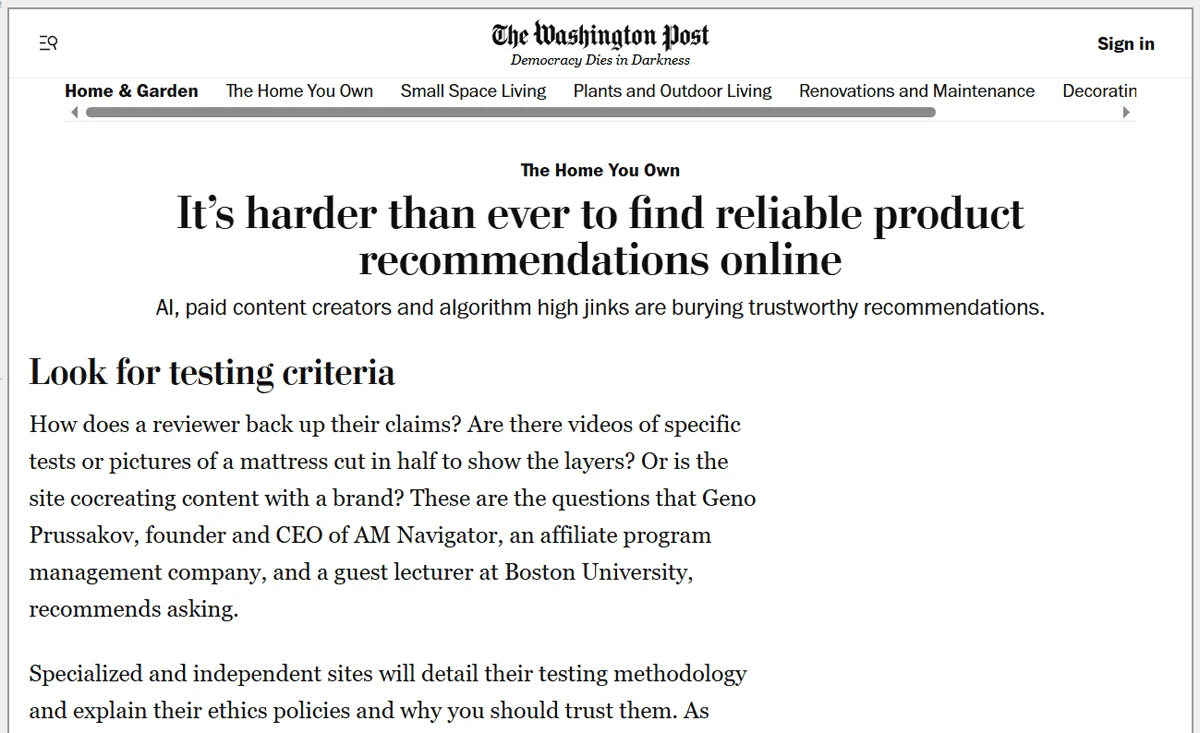
The landscape of digital journalism is undergoing a profound transformation as traditional media outlets increasingly pivot toward affiliate marketing and "commerce content" to sustain their operations. This shift was recently highlighted in an investigative feature by The Washington Post, which sought expert analysis on the growing prevalence of online product recommendation lists. Central to this discussion is the tension between editorial integrity and the financial necessity of monetization, a topic that has gained significant traction as consumers become more skeptical of the "best of" lists that dominate search engine results.
As the digital advertising market faces volatility, major publishers have sought to leverage their established brand authority to generate revenue through affiliate commissions. This practice involves including tracked links within product reviews; when a reader clicks and makes a purchase, the publisher receives a percentage of the sale. While once a niche strategy relegated to personal blogs, affiliate marketing is now a cornerstone of the business models for legacy institutions and digital-native giants alike.
The Economic Context of Media Monetization
The rise of commerce content is not a random trend but a calculated response to the decline of traditional display advertising and print circulation. According to industry data from Statista, affiliate marketing spending in the United States alone reached approximately $8.2 billion in 2022, with projections indicating continued growth through 2025. For media houses, this represents a more stable and scalable revenue stream than standard banner ads, which are frequently bypassed by ad-blocking software or ignored by "banner-blind" consumers.
Major media players have established dedicated commerce divisions to manage these efforts. Notable examples include CNN Underscored, NBC Select, and New York Magazine’s The Strategist. Perhaps the most significant milestone in this evolution was The New York Times’ acquisition of the product review site Wirecutter in 2016 for approximately $30 million. This move signaled to the industry that high-quality, service-oriented journalism could be a primary driver of revenue, provided the audience trusts the recommendations.
However, the monetization of "search engine authority" presents a unique set of ethical challenges. Because these outlets possess high domain authority, their product roundups often rank at the top of Google search results, regardless of whether the testing was as rigorous as that of a specialized niche site. This has led to a crowded digital marketplace where the line between an objective review and a paid endorsement can often become blurred.
Chronology of the Commerce Content Boom
The transition from traditional reporting to integrated affiliate strategies followed a distinct timeline:
- The Early 2000s: Affiliate marketing begins as a tool for bloggers and niche hobbyist sites, primarily through programs like Amazon Associates.
- 2011–2015: Digital-native publishers like Gawker (via Gizmodo and Kotaku) begin experimenting with "commerce deals" posts, proving that editorial audiences would engage with shoppable content.
- 2016: The New York Times acquires Wirecutter, legitimizing the "review-to-revenue" model for legacy media.
- 2018–2021: A "gold rush" occurs as nearly every major publisher, from Forbes to Hearst, launches a dedicated "Best of" or "Reviews" vertical. Forbes Advisor, for instance, expanded rapidly during this period to cover financial products and services.
- 2023–2025: Increased scrutiny from both consumers and search engines. Google’s "Product Reviews Update" begins prioritizing content that demonstrates first-hand knowledge and rigorous testing, forcing media outlets to improve their transparency.
Vetting and Editorial Integrity: The Publisher’s Defense
In response to concerns regarding the objectivity of their recommendations, many large media organizations have implemented strict internal protocols. Industry experts, including those who manage affiliate programs for global merchants, note that reputable publishers treat the vetting process with a high degree of seriousness to protect their brand equity. There are four primary pillars upon which these organizations typically build their commerce content:
Specialized Testing Labs and Hands-on Evaluation
Many top-tier outlets have invested in physical testing facilities. For example, some media groups employ engineers and product specialists to perform stress tests on appliances, electronics, and consumer goods. This empirical data serves as the foundation for their rankings, theoretically insulating the editorial team from the influence of the sales department.

Strict Separation of Church and State
A hallmark of ethical commerce journalism is the "firewall" between the editorial staff and the affiliate management team. In this model, writers and editors select products based on merit and performance, while the affiliate team adds the tracking links after the content has been finalized. This ensures that a writer’s choice is not dictated by which brand offers the highest commission rate.
Sentiment Analysis and User Feedback
Publishers often supplement their internal testing with an analysis of broader consumer sentiment. By aggregating reviews from various retail platforms and monitoring social media feedback, they can identify long-term durability issues that a short-term lab test might miss.
Continuous Content Lifecycle Management
Unlike traditional news articles that remain static, commerce content requires constant maintenance. Reputable outlets employ "update editors" whose sole responsibility is to ensure that recommended products are still in stock, prices are accurate, and newer, better models have not rendered the current recommendation obsolete.
The "Pay-to-Play" Risk and Financial Incentives
Despite these rigorous internal controls, the financial reality of the industry introduces unavoidable pressures. In some instances, a product’s ranking may be influenced by complex financial arrangements between the publisher and the advertiser. These can include "placement fees," where a brand pays a flat rate to be featured in a specific list, or "commission overrides," where a merchant increases the percentage paid to the publisher in exchange for a higher ranking.
Furthermore, metrics such as "Earnings Per Click" (EPC) play a significant role in how content is optimized. If two products are of similar quality, but one yields a significantly higher EPC due to better conversion rates or higher commissions, the publisher faces a strong economic incentive to prioritize the more profitable item. This creates a "filtered" version of reality where the "best" product recommended to the consumer is actually the "best performing" product for the publisher’s bottom line.
Consumer Protection Strategies in the Affiliate Era
As the prevalence of monetized content grows, industry analysts suggest that consumers must adopt a more analytical approach to online shopping. To navigate this landscape effectively, experts recommend several key strategies:
- Cross-Reference Multiple Sources: Consumers should never rely on a single "top 10" list. By comparing recommendations across three or more independent outlets, shoppers can identify which products consistently appear at the top based on merit rather than specific affiliate partnerships.
- Investigate Testing Methodologies: A trustworthy review will explicitly state how a product was tested. Readers should look for original photography, specific performance data, and a clear explanation of the criteria used to rank the items.
- Verify External Review Sentiment: It is essential to check third-party platforms like Reddit, specialized forums, or verified purchaser reviews on retail sites. If a media outlet’s "top pick" has a low rating on consumer-driven platforms, it may indicate a disconnect between editorial testing and real-world usage.
- Look for Disclosure Transparency: Federal Trade Commission (FTC) guidelines require clear and conspicuous disclosure of affiliate relationships. Consumers should look for these disclosures at the top of the page. A lack of transparency is often a red flag regarding the objectivity of the content.
Broader Implications for the Future of Information
The evolution of affiliate-funded journalism has broader implications for the future of the internet. As AI-driven search engines like Google’s Search Generative Experience (SGE) begin to summarize product reviews directly on the search results page, the traffic flowing to media outlets may decrease. This could lead to a "quality arms race," where publishers must produce increasingly deep and inimitable original research to remain relevant.
Moreover, the "authority" of big media is a finite resource. If consumers feel that recommendations are consistently biased toward high-commission products, the brand value of these institutions will inevitably erode. The challenge for the next decade of digital publishing will be to balance the need for sustainable revenue with the foundational journalistic duty to provide honest, unbiased information to the public.
The intersection of commerce and content is now a permanent fixture of the media economy. While it has provided a lifeline for struggling newsrooms, it has also shifted the burden of skepticism onto the consumer. As the industry continues to mature, the survivors will likely be those who prioritize long-term audience trust over short-term financial gains.