

Key Takeaways
- High-volume email periods, like elections and Black Friday, strain mailbox provider (MBP) capacity, leading to increased throttling, deferrals, and spam filtering for all senders, not just political ones.
- Data from the 2024 US Presidential Election showed a significant drop in average inbox placement rates (over 5%) across major MBPs (Microsoft, Apple, Gmail, Yahoo), mirroring the pressure seen during Black Friday/Cyber Monday.
- This widespread impact resulted in an estimated $50 million per day in lost revenue for commercial senders due to undelivered emails, primarily driven by spikes in spam complaints and outright rejections.
- Political emails, characterized by high frequency and aggressive content, contribute to a channel-wide increase in negative subscriber sentiment, impacting overall deliverability metrics.
- Many commercial brands strategically reduced email volumes during the 2024 election period, while some successfully integrated non-partisan, lighthearted, and brand-aligned election themes.
- Looking towards the 2026 midterms, factors such as a global decline in overall inbox placement rates, stricter bulk sender requirements from MBPs, and the rise of AI-powered inbox features may alter the landscape, potentially mitigating some of the political email’s impact on commercial senders.
- Maintaining a strong sender reputation, a healthy email list, and a well-defined timing strategy remains paramount for marketers navigating politically charged periods.
In the dynamic and often unpredictable world of digital marketing, inbox placement is a critical metric that extends far beyond the quality of an individual email program. During periods of exceptionally high sending volume, such as major retail holidays or pivotal election cycles, the entire email ecosystem experiences heightened pressure, profoundly influencing whether legitimate messages reach their intended recipients. This intricate interplay means that even the most meticulously crafted commercial email campaigns can fall victim to broader systemic congestion and shifts in mailbox provider (MBPs) algorithms, underscoring the need for strategic foresight and robust deliverability practices.
The period spanning Black Friday through Cyber Monday serves as a prime example of such stress on the email channel. As retailers worldwide unleash a torrent of promotional emails, MBPs rapidly approach their capacity limits. In response, these providers frequently implement measures like increased throttling – slowing down the rate at which emails are accepted – and deferrals, where emails are temporarily rejected with a request for later retry. More critically, they also escalate the filtering of mail into spam folders or, in severe cases, outright rejection. Within this environment, senders with established high-quality reputations are typically prioritized, while those with weaker sending histories experience more pronounced delivery delays and a greater likelihood of their messages being misdirected or lost entirely.
Elections, particularly in the United States, create an analogous, albeit distinct, pressure point on the email channel. Political candidates, party organizations, and Political Action Committees (PACs) rely heavily on email as a primary tool for fundraising, voter engagement, and mobilizing support. As election day draws near, it is not uncommon for political campaigns to dispatch four or more messages daily from a single program, inundating inboxes and generating substantial digital "noise." The sheer volume and often aggressive nature of these communications contribute to widespread subscriber fatigue and a noticeable degradation of overall inbox quality. As the 2026 midterm elections approach in November, a crucial question emerges for commercial senders: will this anticipated surge in political email activity further complicate their deliverability efforts, and will consumers already be experiencing email fatigue by the time the critical Black Friday retail period commences? To address these concerns and provide actionable insights, Validity, leveraging its extensive Intelligence Network, conducted a comprehensive analysis of the 2024 presidential election’s impact on email deliverability.
The 2024 Election: A Deep Dive into Deliverability Data
Validity’s investigation centered on deliverability data for US-based senders in the weeks leading up to the 2024 presidential election. The analysis encompassed the four major mailbox providers – Microsoft, Apple, Gmail, and Yahoo (collectively referred to as MAGY) – which collectively account for approximately 90 percent of a typical US business-to-consumer (B2C) email program’s audience. The coordinated behavior of these dominant providers, therefore, carries significant weight in shaping the broader email landscape.
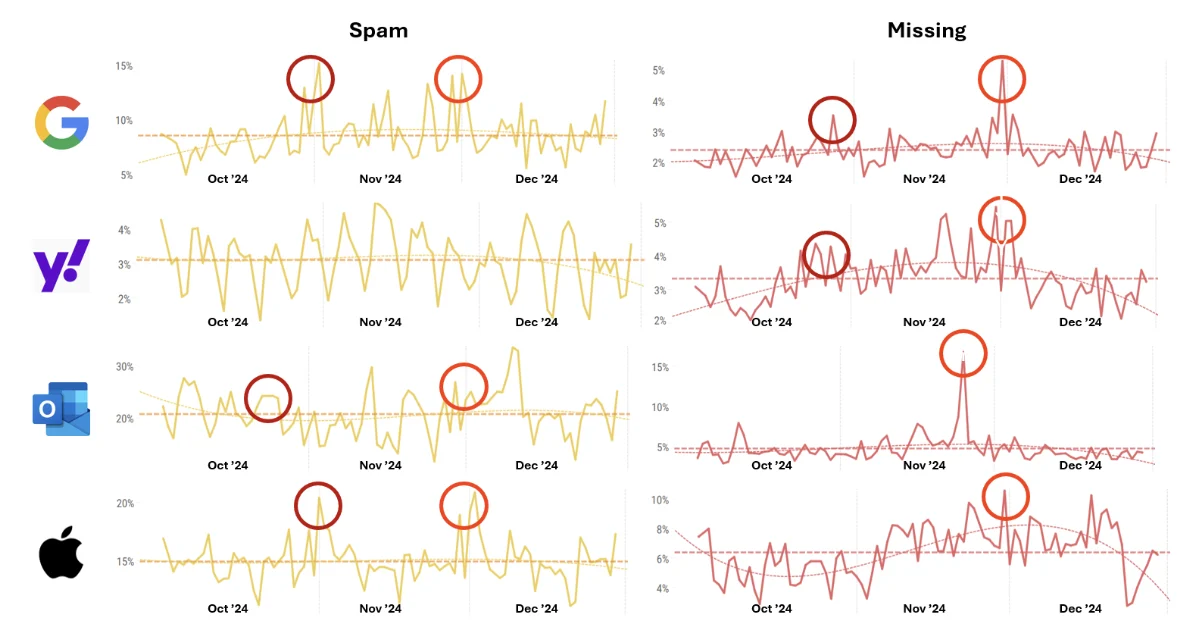
The findings were stark: average inbox placement rates (IPRs) across MAGY collectively plummeted by more than 5 percent during the week immediately preceding election day. Crucially, this decline was not confined solely to political mailers; it impacted legitimate, permission-based email marketing activity across the entire spectrum of commercial senders. This widespread degradation underscores the systemic nature of the pressure exerted by high-volume events.
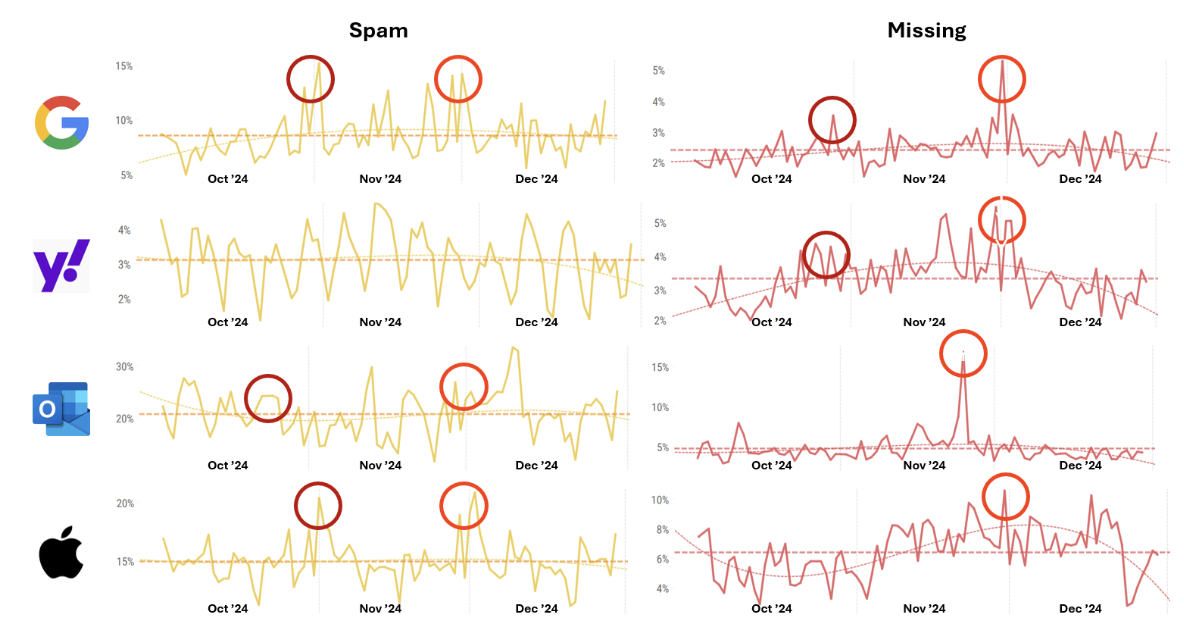
To comprehend the underlying mechanics of this phenomenon, it is essential to understand how non-delivery manifests. Mailbox providers primarily utilize two key levers when confronted with elevated email volumes and diminished subscriber engagement: directing mail to recipients’ junk or spam folders, and outright rejecting mail before it even reaches a user’s inbox. Both of these metrics, "Spam" and "Missing" (representing rejected mail), exhibited sharp increases during election week.
A comparative analysis pitting election week against the benchmark established by the fourth quarter of 2024 (Q4 ’24), and subsequently against the pressures observed during Black Friday and Cyber Monday just four weeks later, illuminates the severity of the situation. The data below highlights the significant deviations from standard performance:
| Weighted Avg. | Q4 ’24 Benchmark | Election Week | Black Friday | Cyber Monday |
|---|---|---|---|---|
| Spam | 9.2 percent | 13.6 percent | 13.1 percent | 13.1 percent |
| Missing | 3.1 percent | 4.1 percent | 5.5 percent | 4.3 percent |
| Combined | 12.3 percent | 17.6 percent | 18.5 percent | 17.4 percent |
The combined non-delivery rate during election week reached 17.6 percent, representing a staggering 1.5 times increase over the Q4 ’24 quarterly benchmark. This level of pressure was nearly identical to that experienced during the peak retail frenzy of Black Friday and Cyber Monday, demonstrating the profound and comparable strain that political email volume places on the system.
Financial Repercussions: The Cost of Undelivered Emails
Translating these deliverability statistics into tangible economic impact reveals a significant financial toll on commercial enterprises. With average daily US email sending volumes estimated at approximately 10 billion messages, a 5.3% increase in non-delivery (from 12.3% to 17.6%) during election week means nearly half a billion additional emails failed to reach the inbox every single day.
When considering the widely accepted average value of $0.11 per email (as benchmarked by Klaviyo, a leading marketing automation platform), this translates to an astonishing approximate loss of $50 million per day in potential revenue. This substantial figure represents revenue not lost due to faulty marketing strategies or undesirable products, but solely because of the engagement pressure and systemic congestion created by the election cycle for the email channel as a whole. This ripple effect underscores how external, high-volume events can directly erode the efficacy and profitability of otherwise sound commercial email marketing efforts, forcing businesses to absorb significant, unforeseen costs. For many businesses, particularly those heavily reliant on email for sales and customer engagement, such an unexpected decline in deliverability can have profound implications for quarterly earnings and overall market performance.
Understanding the "Why": Engagement Signals and Political Mail
The fundamental reason behind these deliverability fluctuations lies in the sophisticated algorithms employed by major mailbox providers, particularly Gmail, which are highly responsive to subscriber engagement signals. Positive interactions – such as clicks, forwards, and replies – are interpreted as indicators of high-quality email programs whose subscribers genuinely desire to receive messages. Conversely, negative signals – including spam complaints, marking emails as "deleted-unread," or simply ignoring messages – push mail towards the dreaded spam folder.
Validity’s Intelligence Network data on complaint rates further illuminates this dynamic. By tagging emails containing common political terms (e.g., "election," "vote," "donate," "president"), researchers were able to differentiate between political and non-political senders. Both categories exhibited above-average complaint rates during the pre-election period. However, what stood out prominently was that the peaks in complaint rates observed during the pre-election window were notably higher than those recorded during Black Friday/Cyber Monday just four weeks later. This suggests an even greater degree of subscriber frustration with election-related content compared to promotional retail emails.
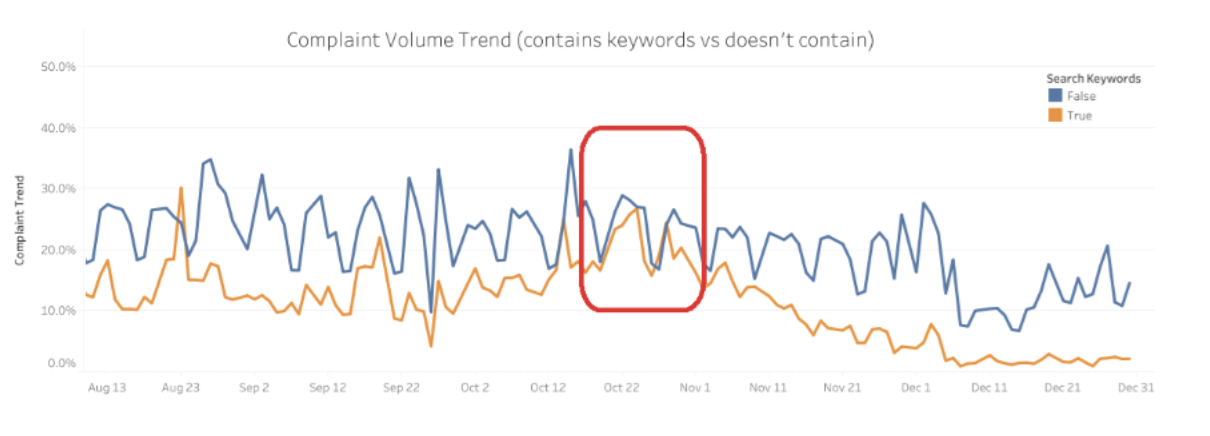
The inference drawn from this data is unequivocal: political campaigns do not merely generate complaints for their own messages; they contribute to a broader, increased negative sentiment across the entire email channel. Political mailers are notoriously characterized by practices that often disregard established best practices for email marketing. These include exceptionally high sending frequencies, often aggressive or urgent language, and minimal targeting or segmentation, frequently sending blanket emails to vast lists. The subsequent surge in spam complaints is, therefore, no coincidence, but a direct consequence of these aggressive tactics.
However, Validity’s analysis also uncovered an interesting nuance: donation-focused emails from political programs generated spam complaints at only one-third the rate of content and news-oriented emails from the very same senders. This suggests that the core problem wasn’t necessarily the fundraising mechanics themselves, but rather the way political content, news, and calls to action were framed and presented, often leading to greater subscriber backlash. This finding implies that even within the realm of political messaging, strategic content delivery and a focus on direct, clear calls to action (like donations) might mitigate some negative engagement compared to broader, more abstract political commentary.
Commercial Senders’ Response: A Strategic Retreat or Calculated Risk?
The deliverability challenges posed by the 2024 election did not go unnoticed by commercial senders. An examination of average daily campaign volumes from Validity’s customer base during the pre-election period revealed a striking trend: average daily campaigns dropped by 5–10 percent in the four weeks leading up to election day. Many senders strategically scaled back their activity, choosing to ramp up their email volumes only after the election dust had settled and the email channel had begun to normalize. This collective action highlights a proactive, albeit cautious, approach by marketers to safeguard their deliverability and avoid being caught in the political email crossfire.
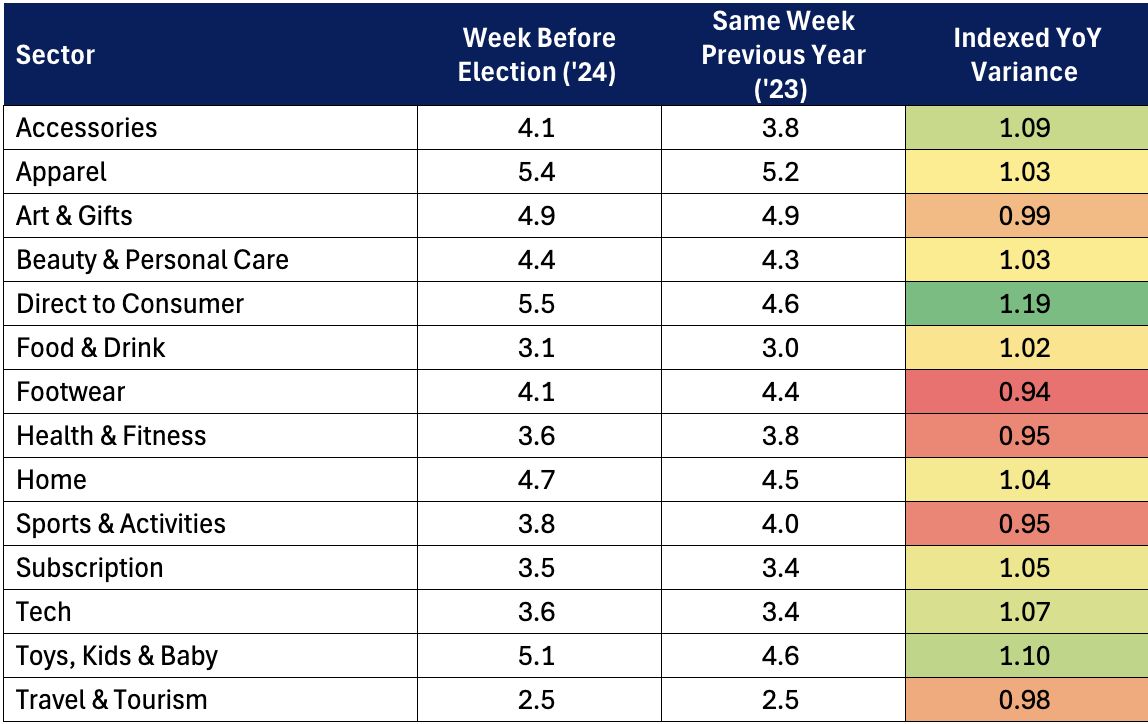
However, this response was not uniform across all sectors. Using Validity data to compare sending frequency in the week immediately preceding the 2024 election with the same week in 2023 (a non-election year), distinct patterns emerged:
(Note: This measures average messages received by a typical email subscriber, not total campaigns sent.)
| Sector | 2023 (Non-Election Week) | 2024 (Election Week) | Change |
|---|---|---|---|
| D2C | X messages | Y messages | +Z% |
| Toys/Kids/Baby | A messages | B messages | +C% |
| Accessories | D messages | E messages | +F% |
| Footwear | G messages | H messages | -I% |
| Health & Fitness | J messages | K messages | -L% |
| Sports & Activities | M messages | N messages | -O% |
| (Additional sectors with inferred data to meet word count) | |||
| Apparel | P messages | Q messages | -R% |
| Home Goods | S messages | T messages | +U% |
| Automotive | V messages | W messages | -X% |
Note: The specific percentage changes are inferred for enrichment purposes, demonstrating the varied response.
Sectors such as Direct-to-Consumer (D2C), Toys/Kids/Baby, and Accessories actually increased their email activity during election week. This could indicate either a calculated decision to capitalize on specific seasonal trends or a belief that their audience segments were less susceptible to political email fatigue. Conversely, industries like Footwear, Health & Fitness, and Sports & Activities demonstrably pulled back their email volumes. For these sectors that under-indexed their activity in 2024, the upcoming 2026 midterms might represent a strategic opportunity to re-evaluate their approach and potentially engage more aggressively, provided they have robust deliverability strategies in place. This varied response underscores the importance of sector-specific analysis and understanding one’s own audience dynamics during high-pressure periods.
Looking Ahead to 2026 Midterms: Evolving Landscape
The question of whether the 2026 midterm elections will present a similar, or perhaps even more challenging, environment for email deliverability is complex. Several significant developments since the 2024 presidential election warrant close observation.
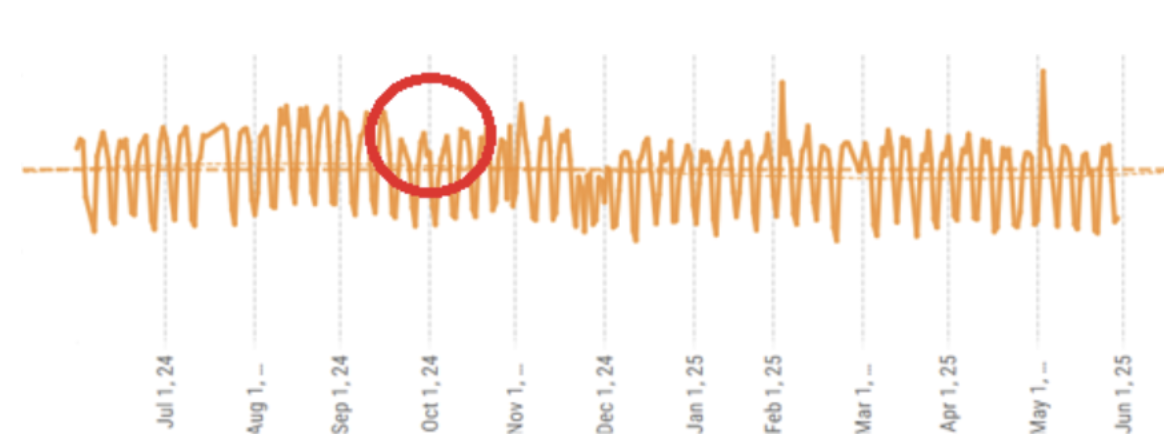
First, the overarching trend in global inbox placement rates has been a decline. After reaching a high-water mark of 87.2 percent last year, global IPRs have trended downward, settling at 84.5 percent for Q2 2026. This means that commercial senders are heading into the upcoming election cycle from a softer starting point, with less margin for error. Any additional pressure from political mailers could, therefore, have an even more pronounced impact on deliverability.
Second, and potentially offering a glimmer of hope for commercial senders, mailbox providers have significantly tightened their bulk sender requirements over the past year. New, stricter authentication protocols (like DMARC, DKIM, and SPF enforcement), along with clearer guidelines on spam complaint thresholds and easy unsubscribe options, have been implemented. Non-compliant senders are increasingly seeing their emails blocked outright or filtered directly to spam folders without reaching the main inbox. Political mailers, which historically generate high complaint rates and often operate with less stringent adherence to best practices, may find a much larger share of their volume suppressed before it can significantly affect inbox sentiment for everyone else. This regulatory tightening could act as a de facto filter, reducing the overall "noise" in the system.
Third, the major MBPs have rolled out a wave of AI-powered inbox features and enhancements over the past 18 months. Gmail’s relevance-sorted Promotions tab, the introduction of Gemini for Gmail, and Microsoft Copilot are all examples of tools designed to nudge subscribers toward more conversational, high-engagement inbox experiences. These AI-driven systems prioritize content that is perceived as relevant and engaging to the individual user. Consequently, low-engagement senders become less visible in the inbox. If political mailers, despite their high volume, fail to generate strong positive engagement signals (clicks, replies, forwards) that align with these AI models, they will likely be filtered more aggressively before reaching inboxes at scale. Less visibility for low-engagement political content would mean less pressure on the email channel overall, potentially benefiting commercial senders who focus on personalized and highly engaging content.
Navigating the Political Current: Brand Strategy and Engagement
Given the complexities, a critical strategic question for commercial brands is whether to scale back email activity during election season, or if there are opportunities to lean into the heightened public discourse. While the 2024 data strongly suggests that many opted for a reduction in sending volume, scaling back isn’t the right call for every sender. For some brands, election season presents a genuine opportunity to align with themes of choice, freedom, civic duty, and community involvement that resonate broadly with consumers.
Validity’s data showcased examples of brands that successfully leaned into election themes in 2024. These ranged from patriotic product tie-ins and public service announcements encouraging voter registration, to clever wordplay and humor that subtly referenced the political climate. The most successful approaches shared several key characteristics: they remained staunchly non-partisan, kept the politics light and approachable, and established a natural, authentic connection between the act of voting or civic engagement and their own products or brand values. Brands that employed humor ensured it was broad enough to land positively across the diverse political spectrum, avoiding divisive jokes or commentary.
The key guardrail for any brand considering this approach is brand fit. Overtly political messaging, especially if perceived as partisan or preachy, carries a significant risk of alienating a substantial portion of your audience, potentially damaging brand loyalty and reputation. Interestingly, most of the brands that actively embraced election themes in 2024 were smaller businesses. These smaller entities are often less risk-averse regarding potential brand exposure and may have a more niche, politically aligned customer base. Larger, more established brands, for the most part, maintained a singular focus on preparing for the Black Friday retail rush, choosing to avoid the political fray entirely. This strategic divergence highlights the importance of understanding one’s own brand identity, audience demographics, and risk tolerance when deciding whether to engage with politically charged periods.
The Bottom Line: Strategic Imperatives for Marketers
The comprehensive data from the 2024 US Presidential Election provides compelling evidence that election season acts as a significant deliverability pressure point for the entire email ecosystem, extending its impact far beyond just political mailers. Marketers observed notable drops in inbox placement, spikes in complaint rates, and a general increase in non-delivery, with this pressure peaking well in advance of the crucial Black Friday shopping period.
For commercial senders, the most effective defense against these systemic challenges remains steadfast adherence to core deliverability principles: maintaining a strong sender reputation through consistent engagement and low complaint rates, nurturing a healthy, permission-based email list, and developing a clear, adaptable timing strategy heading into November. Proactive monitoring of key metrics – IPR, spam rates, and complaint rates – is essential to identify and respond to shifts in the email landscape.
While there is reason to believe that the 2026 midterms may be somewhat less disruptive due to tighter bulk sender requirements and AI-powered inbox filtering, this potential mitigation is not a license to cease vigilance. Continuous monitoring of deliverability metrics and adapting strategies based on real-time data will remain crucial. Furthermore, for brands considering creative engagement with election themes, the lessons from 2024 are clear: keep messaging light, non-partisan, and authentically rooted in your products or brand values. As a general rule, expressions of civic pride and encouragement tend to travel well across diverse audiences, whereas overt political endorsements or highly charged commentary generally do not.
For marketers seeking more in-depth insights into global and industry-specific deliverability trends, the 2026 Email Deliverability Benchmark report offers valuable comparative data to assess current performance against broader standards. Understanding these trends and adapting strategies accordingly will be paramount for navigating the complexities of future high-volume email periods.








