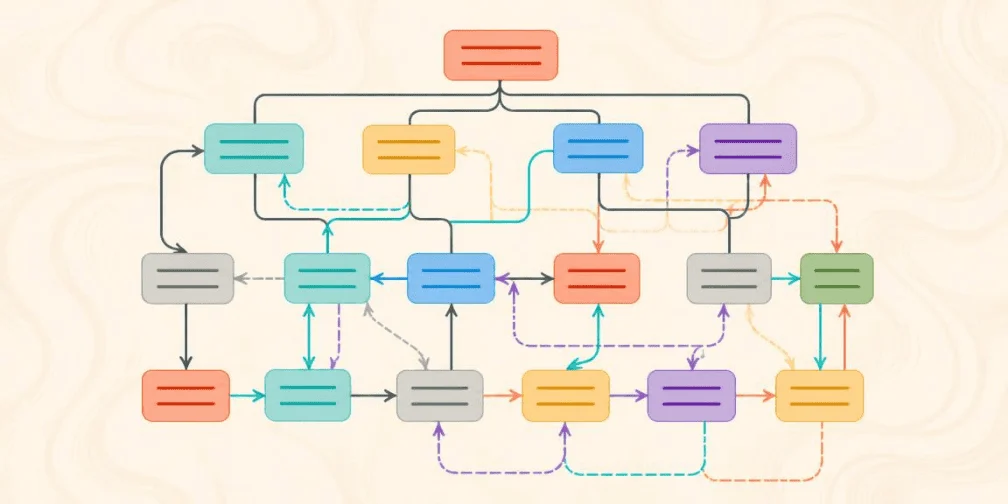
In an era where financial prudence is paramount and technological advancements offer tantalizing possibilities, business leaders are increasingly grappling with the perennial challenge of achieving ambitious goals with constrained resources. The common directive from boards and CFOs to "hit the pipeline number, but cut the budget" is a familiar refrain, particularly for Chief Marketing Officers (CMOs). However, the prevailing solution—leaning on Artificial Intelligence (AI) to absorb workload and reduce headcount—is often a misguided approach, according to operational experts. Instead of focusing on reducing the number of people, the critical first step should be a comprehensive analysis and mapping of existing workflows to distinguish tasks requiring human judgment from those amenable to automation.
This fundamental shift in perspective is crucial because "do more with less" is not a strategy in itself, but rather a target lacking a defined plan. Without understanding the intricate steps involved in producing a given output, teams often fall into predictable pitfalls: burnout from overburdened staff or the inefficient patching of gaps with external resources like agencies and contractors who are not integrated into a well-defined process. This ultimately hinders the ability to achieve sustained, meaningful results. The core issue lies not in the quantity of personnel, but in the clarity and efficiency of the work processes themselves.
The Evolving Landscape of Budgetary Pressures and AI Adoption
The pressure on marketing departments to deliver quantifiable results while operating within tighter financial parameters has been a constant for years. However, the advent of sophisticated AI technologies has introduced a new dimension to this age-old dilemma. Where once the conversation might have revolved around streamlining manual processes or reallocating existing staff, the immediate response to the "do more with less" imperative is now often to consider AI’s potential to replace human roles. For instance, the notion that AI can generate initial drafts of content suggests that traditional writing roles might be reduced. Similarly, AI’s capacity to score and route leads could lead to a reassessment of staffing levels in sales and marketing operations.
This immediate leap to AI as a headcount solution, however, overlooks a critical prerequisite: a deep understanding of the underlying workflows. Before any decisions are made about AI implementation, contractors, or even the reassignment of existing staff, it is imperative to meticulously map out what constitutes the team’s output, the objectives these outputs serve, and, crucially, which specific tasks within that production chain genuinely require human cognitive abilities.
The Flaw in Treating "Do More With Less" as a Strategy
Many leaders perceive the "do more with less" directive as an inherently strategic imperative, a sign of efficient management. While it’s true that many organizations can identify areas for optimization within their current processes, budgets, or team structures, framing this directive as a standalone strategy is fundamentally flawed. As Lisa Heay, Vice President of Business Operations at Heinz Marketing, points out, it often becomes a target without a concrete plan to achieve it.
Teams that adopt this approach without a foundational understanding of their operational mechanics tend to encounter significant challenges. They might experience widespread burnout as remaining employees are stretched thin to cover the work of those who have been let go. Alternatively, they may resort to onboarding external help—agencies or freelancers—who are then expected to seamlessly integrate into a process that was never designed to accommodate them, leading to inefficiencies and a lack of cohesive strategy. The fundamental problem is that a target number (less people, less money) is set, but the actual work and how it will be accomplished under these new constraints remains undefined. This disconnect between expectation and execution is where many initiatives falter.
Prioritizing Workflow Analysis Over Organizational Restructuring
The most effective approach to addressing the "do more with less" challenge begins not with the organizational chart, but with a granular examination of how work is actually performed. Operations leaders, responsible for bridging the gap between executive directives and daily execution, often observe that the initial instinct to reduce headcount is misplaced. The true solution lies in dissecting the existing workflows, identifying bottlenecks and inefficiencies, and addressing them before any changes are made to staffing levels.
The critical first questions to ask are: What are the tangible outputs of the team? What overarching business objectives do these outputs support? What specific outcomes are they accountable for? And most importantly, which components of this production process genuinely necessitate the unique contributions of a human being performing their current tasks? The unfortunate reality is that in many organizations, this detailed mapping exercise is rarely undertaken.
When headcount reductions are implemented without this workflow analysis, decisions are often driven by superficial criteria such as employee tenure, salary cost, or ease of departure. This can lead to unforeseen consequences, such as a decline in quality or missed deadlines, because the actual volume and complexity of the work have not diminished, only the capacity to perform it. Furthermore, individuals who are dismissed might have been the linchpins holding together unwritten processes, such as critical approval chains or inter-departmental handoffs. When these individuals are gone, the work does not disappear; it accumulates on the shoulders of the remaining team members, leading to a reactive scramble when the system inevitably breaks.

The Illusion of Speed: Faster Doesn’t Mean Fixed
The integration of AI, while promising increased speed, does not inherently equate to a fixed or improved process. When teams are simply relieved of personnel without a corresponding redesign of their workflows, AI is often introduced into a system that was fundamentally built with human presence in mind. This can lead to AI accelerating tasks without addressing underlying systemic flaws.
Consider the example of content creation. AI can certainly generate a first draft of an article or a piece of marketing copy. It can also score and route leads with remarkable efficiency. However, the ability to produce a draft is distinct from the judgment required to determine its readiness for publication. Similarly, scoring a lead is different from understanding the nuanced context of that lead and deciding on the most appropriate next action. Without human oversight and critical evaluation, AI-driven acceleration can result in a faster flow of unpolished content or poorly directed leads through a process that lacks the necessary safeguards. The system becomes faster, but not necessarily better or more effective.
The Imperative of Workflow Mapping Before Setting Targets
To truly achieve the "do more with less" objective, organizations must adopt a systematic approach that prioritizes workflow analysis. This involves a detailed examination of every step in the process to discern where human judgment is indispensable. This includes critical decision-making, relationship management, strategic creative direction, and other complex cognitive functions that AI, in its current form, cannot reliably replicate. Concurrently, it is vital to identify tasks that are repetitive, well-defined, and can be effectively absorbed by AI or other automation tools without compromising the quality of the final output.
A practical example can be seen in a content marketing workflow. AI might be leveraged to generate an initial outline and a first draft. However, a human strategist is essential to evaluate the angle and ensure it aligns with market needs and brand positioning. Finally, an editor provides the crucial final review for tone, accuracy, and overall impact before the content is released. In this scenario, two of the three steps—drafting and initial structuring—are repeatable and amenable to AI assistance. The third, strategic evaluation and final editorial judgment, remains a uniquely human contribution and represents the core value that should be preserved and compensated.
Only after this meticulous mapping of human-centric versus automatable tasks is completed can a meaningful and actionable headcount number be determined. This ensures that any adjustments to staffing are aligned with the actual requirements of the work and the strategic priorities of the organization.
The Contractor Conundrum: A Symptom, Not a Solution
When workflow mapping is neglected, and teams are downsized without a corresponding reduction in workload, the natural consequence is the need to fill the ensuing gaps. External contractors often become the default solution due to their perceived lower overhead compared to full-time employees. While bringing in specialized external expertise can be a valid strategic move, its effectiveness is severely undermined when employed as a reactive patch to an unaddressed workflow problem.
Without a re-evaluation of the underlying processes, layering contractors onto an ill-defined system leads to escalating costs and management complexities. The workflow was not designed with external contributors in mind, leading to confusion, duplicated efforts, and a lack of clear accountability. This approach, driven by expediency rather than strategic planning, rarely yields sustainable efficiency gains.
Realigning the Organization Chart with a Thoughtful Workflow
The ultimate goal is to establish a workflow that has been genuinely and comprehensively considered. This ensures that regardless of who or what is performing the work—be it a full-time employee, a contractor, or an AI system—there is a clear, defined role and integration point within the process. This systematic approach provides a stable foundation for operations, even amidst fluctuating resource allocations.
It is important to acknowledge that not all staffing decisions are solely about efficiency. Many organizations do, indeed, have more personnel than current work demands, and some roles were established in a marketing landscape that has since evolved. However, the response to the "do more with less" directive cannot be a simple reduction in the number of positions on an organizational chart. It must originate from an honest and thorough assessment of the work itself: what truly requires human expertise, and what can be effectively automated. This is a more challenging conversation, requiring deeper introspection and strategic planning, but it is the only approach that can deliver sustainable efficiency and genuine value in the long run. The future of effective operations lies not in shrinking the org chart, but in optimizing the workflow that dictates its necessity.