

In a rapidly shifting media landscape, the traditional methods of information dissemination are being fundamentally restructured by government entities, social media platforms, and independent creators. Recent developments in New York City’s municipal communications, Instagram’s automated content moderation, and the gaming industry’s subscription models highlight a broader trend: the transition from centralized "gatekeeper" media to a fragmented, relationship-driven ecosystem. As public trust in legacy institutions continues to fluctuate, the strategies used to reach audiences are becoming increasingly direct, though not without significant technical and ethical challenges.
The Rise of the Government-Influencer Complex in New York City
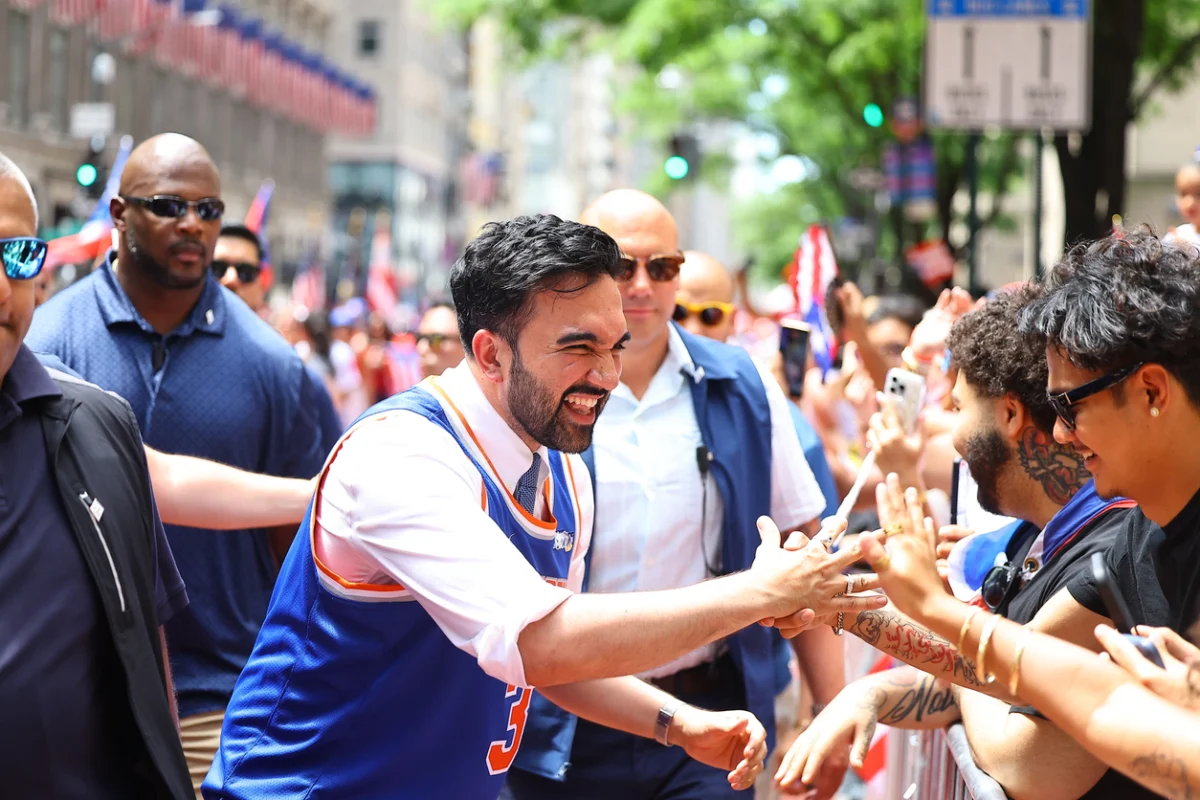
The administration of New York City Mayor Zohran Mamdani has institutionalized a new model for public relations by bypassing traditional press galleries in favor of a direct-to-creator pipeline. According to reports from the New York Times and the Columbia Journalism Review, City Hall has established a robust network of over 200 social media creators, effectively creating a modern, influencer-centric press list. This network is managed primarily through a private Signal group titled "NYC Creators Announcements," which serves as a clearinghouse for daily updates, official talking points, video assets, and invitations to exclusive events.
The strategy marks a significant departure from decades of municipal communication norms. Unlike traditional journalists, the creators in this network are not bound by editorial standards of neutrality, nor are they required to cover every update. Instead, they are provided with the tools to curate information that resonates with their specific niches. The network is diverse, ranging from "micro-influencers" with a few thousand followers focused on hyper-local neighborhood issues to major personalities with audiences numbering in the millions.
Emilia Rowland, the director of media and cultural communications for the Mamdani administration, defended the shift as a necessary response to the "monopolization of the media." Rowland noted that legacy outlets are increasingly struggling with declining viewership and the proliferation of paywalls, which often restrict access to essential public information. By engaging creators, City Hall aims to reach demographics that have largely tuned out traditional news broadcasts or newspapers.
However, the model has sparked a debate regarding transparency and the blurring lines between public information and propaganda. While the city does not pay these creators for their participation in the Signal group—treating them similarly to an unpaid press corps—the lack of formal disclosure requirements for "organic" creator content can lead to a "trust problem." If an influencer shares a city-sanctioned talking point without disclosing their access to the Signal group, audiences may perceive the message as a personal endorsement rather than a government-facilitated announcement.
Instagram’s AI Labeling Crisis and the Erosion of Digital Trust
As government agencies move toward digital-first communication, the platforms they rely on are struggling with the technical realities of the Artificial Intelligence era. Meta’s Instagram has recently come under fire for the inconsistent performance of its "AI Content" labels. While intended to provide transparency in an era of deepfakes and synthetic media, the automated system is reportedly misidentifying human-made content while failing to flag fully AI-generated images.
The Verge recently conducted a series of tests revealing that Instagram’s detection system is erratic. Images generated by Google’s Gemini AI frequently bypassed the label, while photographs taken on mobile devices and subjected to minor retouching were flagged as AI-generated. This technical friction has reached a boiling point for commercial brands. The cosmetics company About Face recently reported that its promotional imagery—created with real human models and standard photography—was erroneously labeled as AI by the platform.
The implications for brand reputation are severe. In a consumer environment characterized by "AI skepticism," a false AI label can suggest that a brand is being deceptive or cutting corners by using synthetic models. For a beauty brand like About Face, which prides itself on "real artists and real people," such a label strikes at the core of its value proposition.
Meta has yet to provide a comprehensive technical fix for these "false positives." The issue stems from the way the platform reads metadata. Many modern editing tools, including Adobe Photoshop and even basic iPhone photo settings, now include "AI-assisted" features like generative fill or advanced noise reduction. Instagram’s algorithm appears unable to distinguish between a photo that was enhanced by AI and one that was created by AI. This lack of nuance creates a "chilling effect" for creators who fear that any level of post-production will lead to their work being devalued by an automated tag.
The Economic Realities of the Subscription Model: Xbox’s Cloud Gaming Pivot
The digital shift is also forcing a reckoning in the gaming industry, where the "all-you-can-eat" subscription model is facing sustainability hurdles. Microsoft recently announced that it would be implementing monthly usage limits on Xbox Cloud Gaming starting in November 2026. This move represents a "meaningful change" to the Game Pass Ultimate tier, which previously marketed itself on the premise of unlimited access.
Microsoft’s justification for the change is rooted in the high operational costs of cloud infrastructure. Unlike traditional digital downloads, cloud gaming requires dedicated server blades to run the game and stream the video feed to the user in real-time. As the user base grows and players spend more hours in-game, the electricity and hardware maintenance costs scale linearly, making an "unlimited" model difficult to maintain at a flat monthly price.
The company stated that the change would likely only affect the top 4% of its most active subscribers—the "power users" who stream hundreds of hours of content monthly. However, the announcement has been met with significant backlash on platforms like Reddit. Users have argued that the 4% figure is misleading, as it compares heavy cloud users against the entire Game Pass subscriber base, many of whom primarily play via local downloads rather than the cloud.
From a communications perspective, Microsoft’s approach has been criticized for "minimizing" the impact. While the company was transparent about the business necessity, the focus on the small percentage of affected users felt dismissive to the community’s most loyal advocates. Analysts suggest that a more effective strategy would have been to frame the limits as a trade-off for increased server reliability and lower latency for the broader population, rather than a cost-cutting measure.
The FOIAball Case Study: Building Loyalty in the Newsletter Economy
While major corporations and governments navigate large-scale shifts, individual creators are finding success through a "relationship-first" approach to monetization. David Covucci, the writer behind the college football newsletter FOIAball, has provided a blueprint for how independent journalists can thrive in the "post-paywall" era.
Covucci’s newsletter, which focuses on public records requests related to college athletics, has amassed 7,500 subscribers, with 420 of them opting for a $7 monthly paid tier. His data-driven approach to subscriptions challenges the traditional "hard paywall" strategy. In one experiment, Covucci found that keeping a major "scoop" free resulted in three times as many paid conversions as putting that same scoop behind a paywall.
This phenomenon highlights a shift in consumer psychology. In the modern media environment, audiences are less likely to pay for a single piece of information—which can often be found elsewhere or summarized by AI—and more likely to pay for the "voice" and "perspective" of the creator. Covucci’s success suggests that "falling in love" with the content is a stronger driver of revenue than transactional access to data.
For communications professionals, the FOIAball model offers a vital lesson: value must precede the ask. Whether it is a government agency seeking public cooperation or a brand seeking a sale, the focus must be on building a foundation of trust and consistent utility.
Analysis of Implications: A Fragmented Future
The common thread across these four developments is the fragmentation of the digital public square. The "gatekeepers" of the 20th century—major TV networks, national newspapers, and centralized platforms—are losing their absolute control over the narrative.
- The Localization of Influence: New York City’s use of influencers suggests that "influence" is becoming more localized and niche-specific. A creator who focuses solely on Brooklyn transit may have more impact on policy perception than a general city reporter.
- The Metadata War: The Instagram AI labeling controversy indicates that the next great battle in digital media will be over "provenance." As AI becomes integrated into every creative tool, the industry needs a standardized way to disclose the degree of AI involvement without unfairly penalizing human creators.
- The End of "Infinite" Digital Goods: The Xbox changes signal the end of the "infinite growth" era for digital subscriptions. As the physical costs of the cloud (energy and hardware) become more apparent, we should expect more platforms to move toward tiered, usage-based pricing.
- The Value of Intimacy: The success of newsletters like FOIAball proves that in an era of mass-produced, AI-labeled content, human-centric, high-utility "niche" reporting is more valuable than ever.
As we move toward 2027, the challenge for organizations will be navigating this "trust gap." Bypassing traditional media allows for more direct communication, but it also removes the third-party verification that traditional journalism provides. For the public, the responsibility of discernment is higher than ever, as the line between a city official’s update, a brand’s "real" photo, and a creator’s "organic" opinion continues to thin.









