rifanmuazin
The landscape of online search is undergoing a profound transformation, driven by the rapid integration of artificial intelligence. Brands that fail to adapt their visibility strategies to this new paradigm risk not just diminished traffic, but a significant erosion of trust, credibility, and ultimately, customer engagement. The era where a top Google ranking guaranteed brand recognition is rapidly ceding to a new reality where AI-generated answers dictate consumer recommendations, fundamentally rewriting the rules of digital presence.
The Shifting Sands of Search: From Links to Curated Answers
For decades, search engine optimization (SEO) revolved around securing high rankings in traditional search results, primarily on platforms like Google. Success was measured by click-through rates on organic links, guiding users to a brand’s website. However, the advent of sophisticated Large Language Models (LLMs) such as ChatGPT, Perplexity AI, and Google Gemini has introduced a seismic shift in how users seek and receive information. These AI tools do not merely list links; they synthesize, summarize, and curate answers, often providing a single, context-aware, and personalized recommendation.
A brief history of search evolution reveals a progressive journey towards more intelligent information retrieval. From keyword-matching algorithms of the early internet to Google’s sophisticated PageRank and subsequent emphasis on E-E-A-T (Experience, Expertise, Authoritativeness, and Trustworthiness), search engines have continually evolved. The current phase, however, represents an unprecedented leap. Generative AI models are trained on vast datasets, allowing them to understand natural language queries and formulate coherent, human-like responses. This capability is now being seamlessly integrated into core search functionalities, most notably through initiatives like Google’s Search Generative Experience (SGE), which blends traditional search results with AI-powered summaries and recommendations.
This evolution has fundamentally altered user expectations. Consumers are increasingly treating AI-generated answers not as generic search results, but as personal advice or expert recommendations. Data suggests that millions of users are turning to conversational AI for product comparisons, service recommendations, and general information, with adoption rates for platforms like ChatGPT reaching unprecedented speeds – hitting 100 million users in just two months. This shift implies that if a brand isn’t present in these AI-curated responses, it effectively ceases to exist for a growing segment of the online audience, irrespective of its performance in traditional search engine rankings.
The Critical Blind Spot: Why Traditional SEO is No Longer Enough
The rise of AI search has exposed a critical blind spot for many brands. Traditional SEO tools, while adept at tracking keyword rankings, organic traffic, and backlink profiles, offer no insight into how a brand appears within AI-generated answers. This creates a hidden competitive landscape where rivals might be consistently recommended by AI platforms, gaining invaluable trust and market share, while other brands remain oblivious to their invisibility in this new, powerful domain.
Consider a scenario where a brand ranks #1 on Google for a crucial keyword. In the past, this was a clear victory. Today, however, a user might bypass these links entirely, instead asking an AI chatbot for "the best solution for [keyword]." If the AI’s curated response fails to mention the #1 ranking brand, that brand’s visibility, credibility, and potential customer acquisition evaporate instantly. This distinction between "ranking" and "recommendation" is paramount. AI systems actively recommend, offering a stamp of approval that carries significant weight with users who increasingly trust these intelligent agents.
The financial implications of this blind spot are substantial. Industry analysts estimate that a significant portion of online queries will soon involve AI-generated summaries and recommendations. Brands not optimized for this environment could face substantial losses in qualified leads, brand recognition, and ultimately, revenue. Research indicates that consumers are more likely to trust recommendations from sources they perceive as unbiased and intelligent, a perception often extended to AI platforms. This makes appearing positively in AI responses not just a matter of visibility, but a cornerstone of future brand equity.
Crafting the Narrative: Controlling Your Brand’s AI Perception
In this AI-driven era, controlling your brand’s narrative becomes more critical than ever. AI platforms like ChatGPT, Perplexity, and Gemini piece together a brand’s story from a multitude of scattered sources—reviews, news articles, social media discussions, and the brand’s own content. If these sources convey inconsistent or contradictory messages, the AI’s generated answers will reflect that fragmentation. Therefore, projecting a unified, consistent message across all digital touchpoints is no longer merely good practice; it’s a strategic imperative for shaping AI perception.
Brands must actively reinforce their core message, whether it’s "affordable luxury," "sustainable innovation," or "unrivaled customer service," consistently across their website, press releases, social media, and external communications. This pervasive consistency ensures that AI models, when synthesizing information, encounter a clear and unambiguous brand identity.
Furthermore, proactive reputation management is crucial. Misinformation or negative sentiment, if left unaddressed, can be amplified by AI systems, causing significant harm to a brand’s reputation. Quickly responding to inaccurate reviews, publishing clarifications, and actively engaging with customer feedback online helps correct the record and guides AI towards a more accurate and positive portrayal. Supporting key brand attributes with structured data, such as schema markup for awards, unique selling points, or company history, provides AI platforms with a definitive, machine-readable framework to reference, ensuring accuracy and positive framing. Consistency in messaging and proactive management are the twin pillars upon which a strong AI-driven brand narrative is built.
Yoast AI Brand Insights: Navigating the New Frontier of Visibility
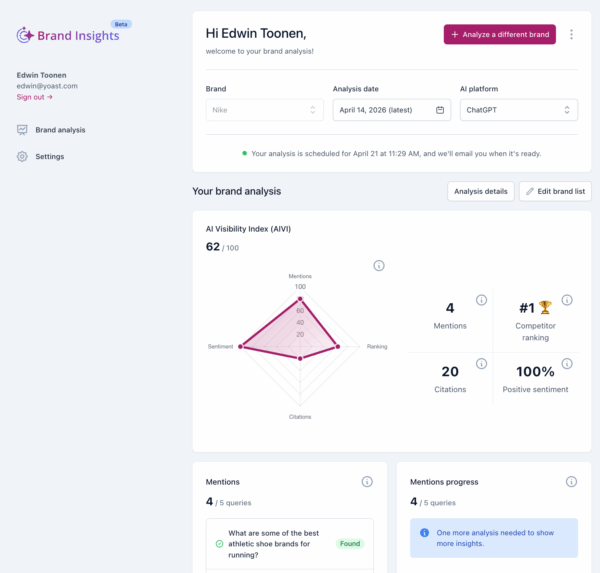
Recognizing this urgent need, Yoast has introduced Yoast AI Brand Insights, a specialized tool designed to provide brands with a clear, actionable view of their visibility, sentiment, and credibility within major AI platforms. This tool addresses the critical blind spot in traditional SEO by offering a comprehensive understanding of how a brand is perceived and presented by LLMs.
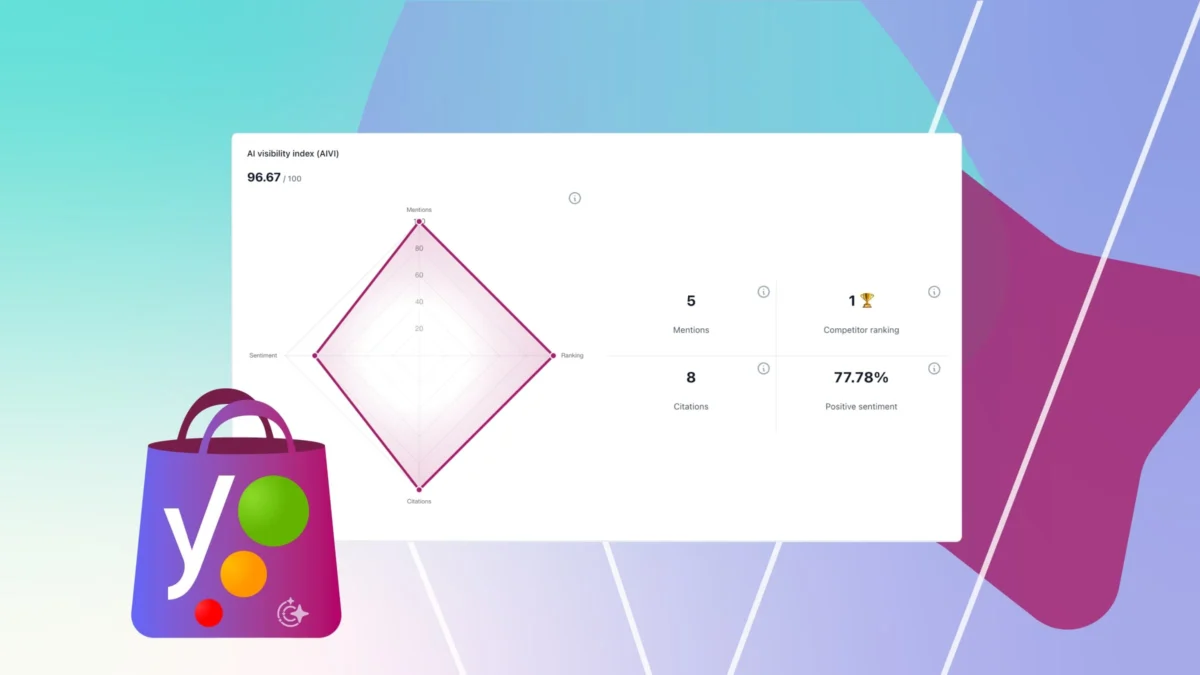
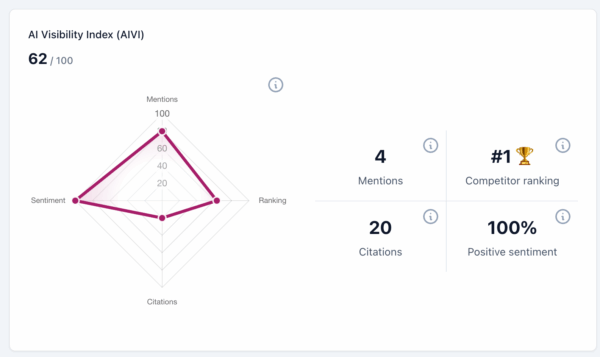
At the heart of Yoast AI Brand Insights is the AI Visibility Index (AIVI), a proprietary scoring system (on a scale of 0-100) that quantifies a brand’s presence across AI platforms like ChatGPT, Perplexity, and Gemini. A higher AIVI score indicates greater visibility in AI search results for tracked terms. The AIVI is composed of three crucial metrics:
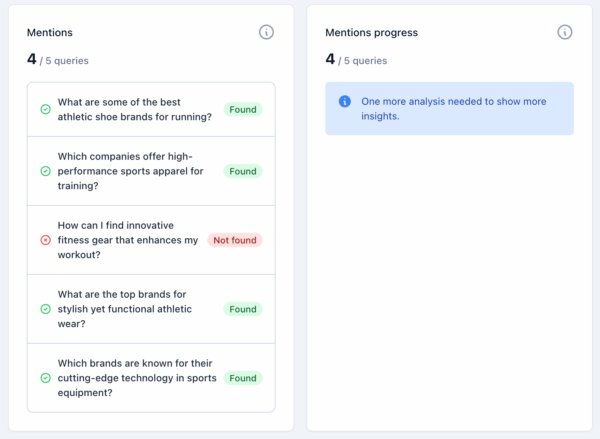
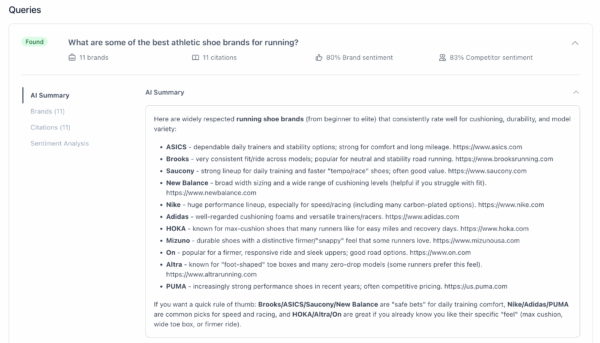
- Mentions: This metric tracks the specific queries for which a brand appears in AI responses. If a user asks, "What is the best low-cost CRM system for small businesses?" and a brand is included in the AI’s answer, that constitutes a mention. More mentions directly correlate with greater visibility and opportunity. Brands with low mention counts for relevant queries must actively improve their content strategy to align with conversational AI patterns.
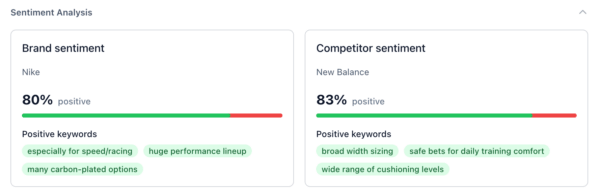
- Sentiment: Sentiment measures the proportion of positive versus negative language associated with a brand in AI-generated responses. AI describing a brand as "innovative" or "reliable" contributes to positive sentiment, while terms like "overpriced" or "unreliable" contribute negatively. Positive sentiment builds trust and attracts customers, while negative sentiment can deter them. Monitoring sentiment allows brands to actively address issues, amplify positive testimonials, and refine their messaging to foster a favorable AI portrayal.
- Citations: Citations refer to the explicit sources that AI platforms reference when generating an answer. While a brand might not receive a direct citation itself (e.g., "According to American Express"), appearing prominently within highly cited, authoritative publications (e.g., The New York Times article cited by Gemini) significantly increases the likelihood of the brand being mentioned within the AI’s synthesized response. Citations from top industry publications and news sources enhance a brand’s credibility and act as validation points for AI systems.
Yoast AI Brand Insights empowers brands to strategically apply these insights. The tool facilitates competitive benchmarking, allowing brands to see how their AI visibility, mentions, and sentiment stack up against competitors. This insight is invaluable for sharpening messaging, identifying gaps in content strategy, and uncovering competitor strengths that can be emulated or countered. For example, a coffee company might discover a competitor is consistently labeled "the Italian espresso expert" by AI, prompting them to highlight their own unique heritage or roasting process.
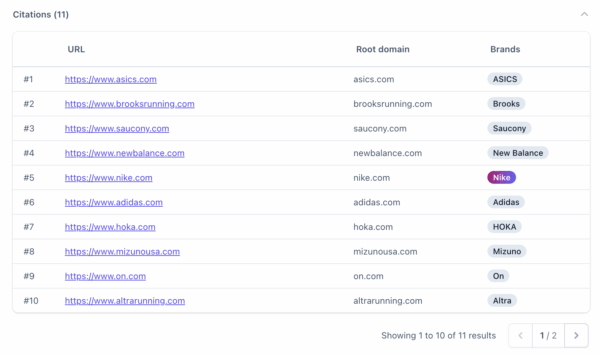
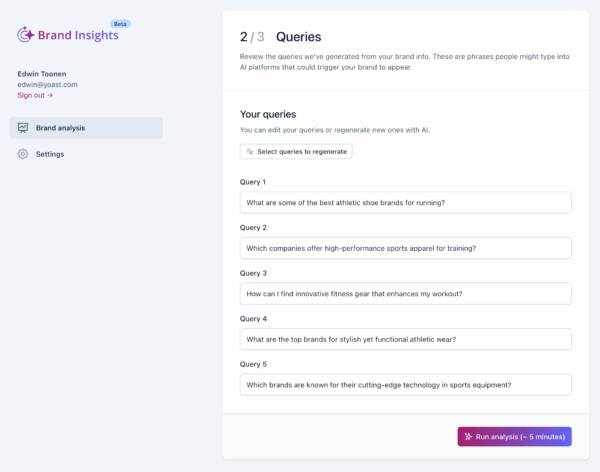
Furthermore, the tool assists in optimizing for brand-specific and conversational queries. It suggests relevant questions that AI platforms might ask about a brand (e.g., "Is [Your Brand] good for small businesses?"), guiding content creation to directly answer these high-intent queries. Regular weekly scans and a historical view allow brands to track their progress, identify trends, and refine their strategies over time, ensuring continuous improvement in their AI visibility.
A Roadmap for AI Visibility: Influencing Large Language Models
Influencing LLMs to mention your brand requires a multi-faceted approach that extends beyond traditional SEO tactics. It’s about building a digital footprint that AI models recognize as authoritative, relevant, and trustworthy.
-
Publish Authoritative and Structured Content: LLMs prioritize well-structured, factually accurate, and uniquely insightful content. Brands should invest in original research, surveys, case studies, and industry reports that offer unique data and expert opinions. Utilizing the inverted pyramid structure, placing the most important information first, makes content easily digestible for AI. Optimizing for facts, statistics, and expert quotes, rather than generic statements, provides LLMs with concrete information to cite. For instance, instead of "Our tool is great for marketers," state, "Our tool increased conversion rates by 30% for 500+ marketers in 2025, according to our latest case study." Leveraging structured data (schema markup) further aids AI crawlers in understanding the context and relationships within the content.
-
Cultivate High-Authority Citations: The more a brand is mentioned on reputable, high-authority sites—industry publications, news outlets, and trusted review platforms—the more likely it is to appear in AI responses. Brands should actively pitch stories to journalists, seek features in "Top X Tools" lists, and encourage customers to leave reviews on platforms like G2, Capterra, and Trustpilot. Guest posting on relevant industry blogs and participating in expert roundups can also generate valuable mentions and backlinks that AI systems interpret as indicators of authority.
-
Optimize for Conversational Queries: LLMs excel at answering natural language questions. Content strategies must therefore pivot to address conversational queries directly. This involves using question-focused headings (e.g., "Is [Your Brand] good for startups?"), targeting long-tail keywords (e.g., "best project management tool for remote teams in 2026"), and creating comprehensive FAQ pages with appropriate schema markup. Directly answering these questions early in the content makes it easier for AI to extract relevant information.
-
Ensure AI Crawlability: Fundamental technical SEO remains crucial. A site must be fast-loading, mobile-friendly, and free of crawling errors. Clean URLs, optimized meta tags, and descriptive alt text for images are still important. Critically, brands should ensure their
robots.txtfile does not inadvertently block AI crawlers. Yoast SEO offers anllms.txtfile feature, a proposed standard designed to specifically guide AI crawlers to the most important content, ensuring optimal discoverability. -
Engage in Online Communities: LLMs draw information from a wide array of online sources, including forums, social media, and community platforms like Reddit, Quora, and LinkedIn. Active and valuable participation in these communities can enhance brand visibility. By providing insightful, non-promotional answers on platforms like Quora or Reddit, and sharing thought leadership content on LinkedIn, brands can naturally weave their name into discussions that AI models are likely to ingest. For example, "As a [Your Industry] expert, I recommend [Your Brand] because…" can subtly influence AI perception.
The Imperative for Adaptation: Seizing the AI-Driven Future

The future of brand visibility is undeniably AI-driven. The shift from a link-centric search economy to an AI-curated recommendation model represents a fundamental change in how consumers discover, evaluate, and trust brands. Brands that recognize this transformation early and adapt their strategies will gain a significant competitive advantage, securing market share and building lasting credibility in the AI era. Conversely, those that cling to outdated SEO paradigms risk becoming invisible to a rapidly evolving and increasingly influential segment of the online audience.
This new landscape demands a holistic approach to brand management, where technical SEO, content strategy, public relations, and community engagement converge to influence AI perception. Tools like Yoast AI Brand Insights provide the necessary intelligence to navigate this complex environment, offering actionable data on mentions, sentiment, and citations across key AI platforms. By actively monitoring these metrics, benchmarking against competitors, and implementing strategies to cultivate authority and consistency, brands can proactively shape their narrative and ensure their presence in the AI-driven recommendations that will define future commerce. The time to act is now; embracing AI visibility is not just an option, but a strategic imperative for long-term growth and relevance.