rifanmuazin
Trust is an indispensable currency in the realm of Business-to-Business (B2B) transactions, a foundational element that underpins every significant decision. Recent research from LinkedIn underscores its paramount importance, with a staggering 94% of marketers acknowledging trust as the linchpin of success in the B2B landscape. As purchase decisions progress from initial exploration toward commitment, the imperative for trust intensifies, prompting buyers to scrutinize the reliability of guidance, demand concrete evidence, and seek clarity on their accountability post-decision. This evolving dynamic is the focus of a comprehensive analysis examining how brands can strategically build and reinforce trust throughout complex buyer journeys.
The current B2B marketing ecosystem is characterized by increasingly extended timelines and a proliferation of touchpoints across diverse channels. This environment amplifies the pressure on marketers to not only earn but also consistently maintain buyer confidence. The challenge is amplified by the reduced margin for error; with fewer opportunities to rectify missteps, a faltering in buyer trust can have significant repercussions. This underscores a fundamental shift: buyers are not necessarily prioritizing trust more than before, but rather marketers have fewer windows of opportunity to recover when that confidence is shaken.
A comprehensive report, "Answer Engine: The State of B2B Thought Leadership in 2026," offers a practitioner-focused perspective on how marketing teams are adapting to heightened buyer scrutiny and fragmented decision-making pathways. The research highlights a critical disconnect: while nearly all respondents (97%) identify thought leadership as essential for full-funnel success, fewer than half consistently extend its influence beyond the initial acquisition phase into the later stages where reassurance and reinforcement are most vital.
Marketers Grapple with Heightened Scrutiny and Fragmented Journeys
The report’s findings reveal a strategic pivot among marketers aiming to fortify credibility across the entire buyer lifecycle, encompassing evaluation, decision-making, and post-sale engagement. Despite the near-universal recognition of thought leadership’s importance, a significant gap persists in its application during crucial post-acquisition phases. This oversight becomes particularly apparent as marketing programs mature and buyer journeys become more intricate.

A third of surveyed marketers cite a lack of visibility into funnel performance as a primary impediment to achieving success. Another third point to an over-reliance on a limited selection of marketing channels as a constraint. These limitations collectively hinder the ability of brands to maintain a cohesive narrative over time and to demonstrably prove the enduring relevance and stability of their guidance as buyers inch closer to making a final commitment.
The Erosion of Trust Across the Buyer Funnel
The consequences of this fragmented approach to trust-building are evident. When buyer journeys are prolonged and involve multiple decision-makers, the initial trust established during awareness stages can dissipate if not actively reinforced. The pressure to justify decisions internally, especially for significant B2B investments, requires a robust foundation of confidence that extends beyond initial impressions. Buyers are looking for evidence, for validation, and for assurance that the chosen solution will deliver on its promises.
The "Answer Engine" report details how this breakdown in trust can manifest. In the evaluation phase, buyers may begin to question the depth of a brand’s expertise or the impartiality of its recommendations. During the decision phase, doubts can emerge regarding the long-term viability of the solution or the vendor’s commitment to customer success. Post-sale, a lack of continued support or inconsistent messaging can undermine the buyer’s confidence in their choice, leading to potential dissatisfaction and reputational damage for the vendor.
High-Performing Teams Cultivate Trust as a Continuous System
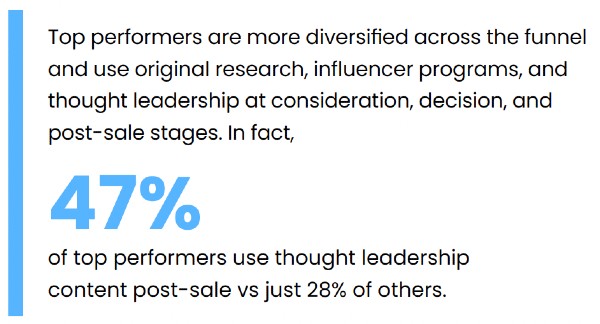
In contrast to these challenges, high-performing marketing teams approach trust not as a singular achievement, but as a dynamic system that is continuously nurtured and reinforced at multiple junctures along the buyer’s journey. This strategic approach is reflected in their return on investment (ROI). The report indicates that marketers achieving high ROI are significantly more likely to leverage thought leadership content during the critical decision and post-sale stages. Specifically, 47% of these top performers extend thought leadership into post-sale engagement, a stark contrast to the 28% of their lower-performing counterparts.
This pattern strongly suggests a deliberate and proactive effort by successful organizations to bolster buyer confidence even after a deal has been closed. This post-sale engagement is crucial for solidifying the buyer’s decision, fostering long-term relationships, and ultimately driving repeat business and positive referrals. It signifies that the brand’s commitment to providing valuable guidance and support extends beyond the transactional nature of the sale.

The overarching conclusion drawn from these findings is that trust is not a byproduct of a single campaign or channel. Instead, it is meticulously built and reinforced through sustained presence, the consistent delivery of evidence-backed insights, and repeated validation across all stages of the buyer’s journey. This holistic approach is particularly vital in today’s complex B2B environment, where decision-making processes are often protracted and involve numerous stakeholders.
Strategies for Reinforcing Trust Throughout the B2B Journey
Leading B2B brands are distinguished by their intentionality in designing for trust-building moments. They recognize that trust is cultivated through deliberate actions and a consistent commitment to providing value at every interaction. This involves a multi-faceted approach that addresses the evolving needs and concerns of buyers.
Fortifying Credibility with Verifiable Evidence:
The bedrock of enduring trust lies in the credibility of the ideas and guidance a brand provides. This credibility is significantly bolstered when thought leadership is grounded in tangible evidence that buyers can reference and rely upon. Original research, in-depth data analysis, and meticulously crafted case studies serve as the structural pillars of robust thought leadership, moving beyond subjective opinions to offer durable, fact-based insights. Such evidence empowers buyers to not only understand complex issues but also to effectively articulate and defend their decisions internally, a critical step in many B2B procurement processes.
Integrating Human Voices into Evaluation Stages:
While data and research are essential, trust is profoundly reinforced when buyers engage with authentic human voices. Experts, satisfied customers, and strategic partners offer invaluable perspectives that static content alone cannot replicate. The participation of B2B influencers and content creators in marketing efforts can significantly enhance a buyer’s ability to gauge the practical application and real-world validity of an idea. When buyers are actively pressure-testing claims or comparing competing solutions, hearing from individuals with direct experience provides a level of reassurance and insight that is difficult to achieve through other means. This human element adds a layer of authenticity and relatability, fostering a deeper connection and building confidence.
Sustaining Presence and Guidance Post-Decision:
The role of trust does not diminish once a contract is signed. Brands that continue to offer relevant and actionable guidance after the sale has been completed are instrumental in helping buyers navigate the implementation phase and achieve desired outcomes. This ongoing engagement signals a commitment that transcends the initial transaction, reinforcing the buyer’s belief that the guidance they relied upon during the decision-making process remains pertinent and valuable. Such continued support can lead to higher customer satisfaction, reduced churn, and increased opportunities for upselling and cross-selling.
Minimizing Friction Through Unwavering Consistency:
Consistency, though often overlooked, plays a pivotal role in the gradual accumulation of trust over time. When a brand’s narrative remains coherent and aligned across various channels and throughout different stages of the buyer’s journey, buyers are less likely to expend energy reconciling conflicting messages. Instead, they can focus on building confidence in their chosen solution. A consistent and familiar message, delivered repeatedly, becomes a predictable and reliable anchor, making it easier for buyers to maintain their conviction as their decision progresses. This consistency reduces cognitive load and fosters a sense of reliability.
Establishing a Robust Trust System: A Phased Approach
The development of a comprehensive "Trust System" within a B2B organization is not an instantaneous endeavor. It is an organic process that unfolds through repeated exposure to reliable information, consistent reinforcement of core messages, and demonstrated follow-through at every stage, from initial consideration to long-term commitment and beyond.
Identifying Critical Junctures of Uncertainty:
The initial step in strengthening a trust system involves a thorough analysis of the buyer’s journey to pinpoint moments where confidence might waver. These are often characterized by buyers slowing their pace, posing more probing questions, or requiring internal justification for their choices. These are precisely the critical junctures where proactive trust reinforcement is most needed. Understanding these "friction points" allows marketers to strategically deploy resources and messaging.
Underpinning Guidance with Data and Research:
To effectively support buyers during these uncertain moments, it is imperative to ground all guidance in robust research and data-informed insights. This provides buyers with a stable and reliable foundation upon which to build their decisions. The ability to reference concrete evidence not only lends authority to a brand’s recommendations but also empowers buyers to confidently articulate their rationale to internal stakeholders.
Leveraging Human Validation for Reassurance:
When buyers are in the evaluation phase or seeking confirmation of their choices, the introduction of human validation becomes paramount. Expert opinions, authentic customer testimonials, and the perspectives of trusted partners can significantly amplify the impact of informational content. These human voices add a layer of relatability and real-world applicability, assuring buyers that the ideas they are considering are not merely theoretical but are grounded in practical experience and sound judgment.
Maintaining Narrative Cohesion Through Post-Decision Stages:
The importance of a consistent narrative extends well beyond the point of sale. Brands must ensure that their messaging remains steady and supportive through the decision and post-sale phases. This consistency reduces friction for the buyer, reinforcing their confidence that the guidance they trusted earlier remains relevant and applicable as they move toward implementation and the realization of outcomes. A disjointed or absent post-sale communication strategy can quickly erode the trust meticulously built during the earlier stages.
Measuring Trust Beyond Conversion Metrics:
A fundamental shift in measurement is also required. Rather than solely focusing on conversion rates, organizations must begin to measure trust over time. Indicators such as sustained engagement, continued participation in brand communities, and the cultivation of long-term relationships offer a more profound and accurate reflection of genuine trust than ephemeral, one-time actions. This longitudinal view provides a clearer understanding of the effectiveness of trust-building initiatives.
The Transformative Power of Trust: From Clarity to Confidence
Ultimately, clarity illuminates the path of options available to buyers, but it is trust that empowers them to commit. When a brand’s guidance consistently withstands scrutiny, when its narrative remains unwavering across pivotal moments, and when its ideas are genuinely championed by credible individuals, buyers are equipped with the confidence necessary to move forward decisively. This confidence is not merely an emotional state; it is a tangible outcome of a well-executed trust-building strategy, directly impacting sales cycles, customer loyalty, and overall brand reputation.
The "Answer Engine: The State of B2B Thought Leadership in 2026" report provides invaluable insights into how leading B2B marketers are actively constructing and reinforcing trust within the complex modern buyer journey. By understanding and implementing these strategies, organizations can transition from merely providing information to becoming trusted advisors, fostering deeper relationships, and driving sustainable growth.
For those seeking to delve deeper into these strategies and understand how top B2B marketers are successfully navigating the trust imperative, the full report, "The State of B2B Thought Leadership in 2026," is available for download. Furthermore, to translate these insights into actionable strategies and elevate a company to "Best Answer Brand" status, the "Best Answer Marketing Playbook" offers a comprehensive roadmap for implementation.