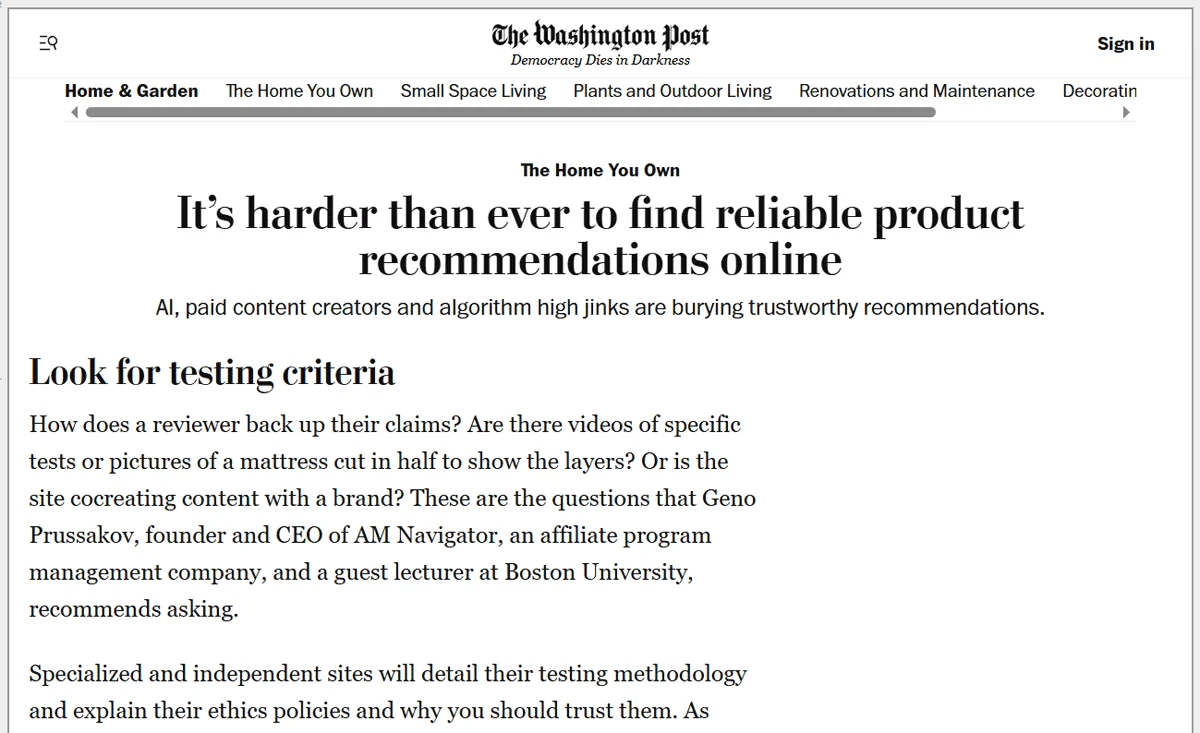
The landscape of digital journalism has undergone a profound transformation over the past decade, shifting from a primary reliance on display advertising to a sophisticated model of "service journalism" powered by affiliate marketing. This evolution has brought the integrity of online product recommendation lists into sharp focus, as major media conglomerates increasingly leverage their established brand authority to drive consumer purchasing decisions. The recent investigation by The Washington Post into the reliability of these "best of" lists highlights a growing tension between editorial independence and the commercial necessity of digital publishing. As media outlets seek new revenue streams in a post-print era, the boundary between unbiased reporting and sponsored endorsement has become increasingly porous, prompting industry experts and consumer advocates to call for greater transparency and more rigorous standards in digital product reviews.
The phenomenon, often referred to as "commerce content," involves major publications creating dedicated sections for product reviews and shopping guides. These articles contain specialized links that allow the publisher to earn a commission when a reader makes a purchase. While the practice is now ubiquitous, it remains a subject of intense scrutiny regarding how financial incentives might influence the ranking and selection of products. Industry veteran Geno Prussakov, founder of AM Navigator, recently provided expert analysis to The Washington Post, emphasizing that while many organizations maintain strict "firewalls" between their editorial and business departments, the potential for financial arrangements to color recommendations remains a persistent challenge for the industry.
The Chronology of Media Monetization and Affiliate Integration
The integration of affiliate marketing into mainstream media did not happen overnight; it was a strategic response to the decline of traditional advertising revenue. In the early 2010s, independent review sites like The Wirecutter and Reviewed.com began to prove that high-quality, long-form product testing could be both helpful to consumers and highly profitable. The success of these pioneers caught the attention of legacy media organizations. In 2016, The New York Times Company acquired The Wirecutter for approximately $30 million, a move that signaled a major shift in how traditional newsrooms viewed commerce content.
Following this acquisition, a wave of similar integrations occurred across the media landscape. By 2018, nearly every major publisher, from CNN with "CNN Underscored" to Hearst and Condé Nast, had established dedicated commerce teams. These teams were tasked with creating content that would rank high in search engine results pages (SERPs) by leveraging the high domain authority of their parent brands. By 2020, the COVID-19 pandemic accelerated this trend as e-commerce surged, making affiliate revenue a critical lifeline for publishers facing a downturn in other ad sectors. By early 2025, the market reached a point of saturation, leading to the current era of critical re-evaluation by both consumers and major news outlets like The Washington Post.
The Mechanics of Authority and Search Engine Dominance
At the heart of the debate is the concept of search engine authority. Legacy media outlets possess significant "Trust, Authoritativeness, and Trustworthiness" (E-E-A-T) in the eyes of search engine algorithms. When a reputable news organization publishes a list of the "best vacuum cleaners," search engines are likely to rank that page at the top of the results, even if the outlet has no historical expertise in home appliances. This creates a powerful monetization loop: high search rankings lead to high traffic, which leads to high affiliate conversions.
However, this dominance has led to concerns regarding "site reputation abuse," where the authority earned through hard news reporting is used to boost commercial content that may not have undergone the same level of rigorous fact-checking. In response, Google and other search engines have updated their algorithms to specifically target "thin" review content, demanding that publishers provide evidence of actual hands-on testing and unique insights that cannot be found elsewhere on the web.

How Major Media Outlets Maintain Editorial Standards
Despite the inherent potential for conflict, many large-scale publishers have implemented robust systems to protect their reputations. Expert analysis of the sector reveals four primary methods through which reputable media organizations attempt to ensure the quality of their recommendations:
- Dedicated Testing Facilities: The most reputable players in the space invest heavily in physical laboratories and long-term testing protocols. Instead of relying on manufacturer specifications, these outlets put products through standardized stress tests, often spending months with a product before issuing a recommendation.
- Separation of Church and State: Most major newsrooms maintain a strict divide between the editorial team writing the reviews and the business team managing affiliate relationships. In this model, editors choose the "best" products based on performance, and only after the selection is made does the business team add affiliate links.
- Rigorous Merchant Vetting: Publishers often conduct extensive "homework" on the merchants they link to. This includes assessing the merchant’s shipping reliability, return policies, and historical customer service records to ensure that the reader’s post-click experience reflects well on the publisher’s brand.
- Data-Driven Updates: Commerce content is rarely static. Publishers use real-time data to monitor product availability and consumer feedback. If a recommended product begins to receive high return rates or negative reviews from readers, it is often removed or replaced in the rankings.
The Influence of Financial Arrangements on Rankings
While many organizations strive for independence, the financial realities of the industry cannot be ignored. There are several ways in which commercial agreements can subtly or overtly influence what a consumer sees. "Placement fees" are a common practice where brands pay a flat fee to be included in a roundup. Additionally, inflated affiliate commission rates or "Earnings Per Click" (EPC) guarantees can make certain products more attractive to the business side of a media outlet.
When a publisher is faced with two products of similar quality, the one offering a 15% commission is often prioritized over the one offering 5%. This nuance is frequently invisible to the average consumer, who sees only a curated list of "top picks." This reality underscores the importance of the Federal Trade Commission (FTC) guidelines in the United States, which require clear and conspicuous disclosures regarding financial relationships between publishers and brands.
Supporting Data: The Scale of the Affiliate Industry
The stakes for maintaining this balance are high. According to industry reports, the affiliate marketing industry in the United States alone is estimated to be worth over $8 billion annually. For many digital publishers, commerce content now accounts for 25% to 40% of their total digital revenue. A survey of digital consumers found that nearly 60% of shoppers start their journey by searching for "best [product]" lists, and they are 40% more likely to trust a recommendation if it comes from a recognized media brand rather than a social media influencer. This trust is the primary asset being monetized, making its protection essential for long-term business viability.
Consumer Strategies for Navigating Online Recommendations
As the line between editorial content and advertising continues to blur, consumers must adopt a more analytical approach to online shopping. Industry experts suggest four critical steps for verifying the integrity of a product recommendation:
- Scrutinize Transparency Disclosures: Look for clear statements at the top of an article explaining how the publisher earns money. A lack of transparency is a major red flag regarding the objectivity of the content.
- Cross-Reference Multiple Sources: Never rely on a single "best of" list. By comparing recommendations across three or four different major outlets, consumers can identify consensus picks and spot outliers that may be the result of specific financial deals.
- Identify Evidence of Hands-On Testing: Authentic reviews will typically feature original photography, specific data points from testing (such as decibel levels or battery life durations), and a detailed explanation of the testing methodology.
- Distinguish Between "Best" and "Sponsored": Many lists now mix organic editorial picks with "sponsored" entries. Consumers should carefully check for small labels or different background colors that indicate a specific placement was paid for by a brand.
Broader Impact and the Future of Service Journalism
The implications of this shift extend beyond individual consumer choices. The commercialization of media authority is reshaping the relationship between the press and the public. If consumers begin to feel that "best of" lists are merely high-priced ad catalogs, the hard-earned trust in the masthead of legacy institutions could be permanently damaged.
Furthermore, the rise of Artificial Intelligence (AI) presents a new challenge. As AI-generated "review" sites proliferate, the value of human-led, laboratory-tested journalism may actually increase, provided that publishers can prove their methodology is superior to algorithmic aggregation. The future of digital media will likely depend on the ability of organizations to prove that their recommendations are based on merit rather than margin. As the investigation by The Washington Post suggests, the industry is at a crossroads where the preservation of editorial integrity is no longer just a moral imperative, but a fundamental requirement for commercial survival in an increasingly skeptical marketplace.