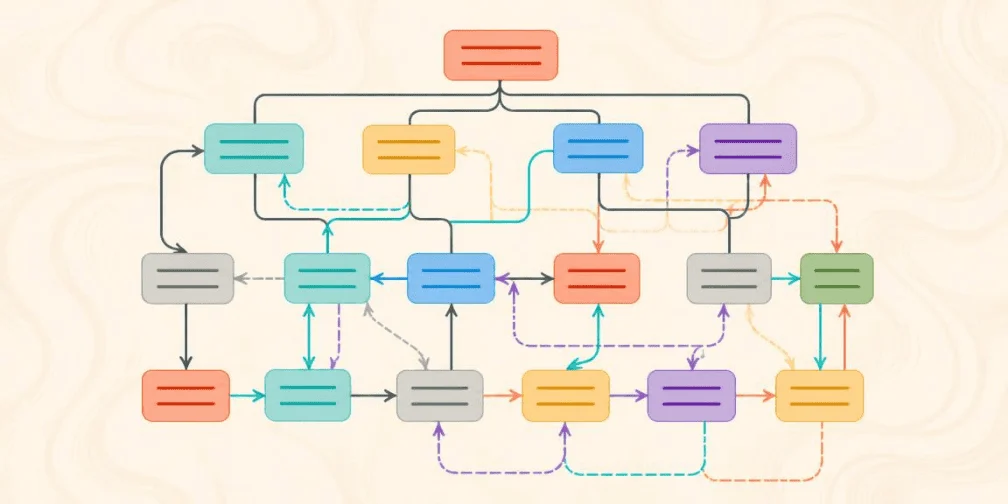
The landscape of B2B marketing and sales has long grappled with a fundamental challenge: the inherent static nature of traditional buyer journey maps versus the dynamic reality of customer decision-making. While meticulously crafted in strategy sessions, these journeys often become outdated relics, failing to adapt to the swift currents of market shifts, evolving buyer priorities, and emerging competitive pressures. However, a new paradigm is emerging, driven by the power of Agentic Artificial Intelligence (AI), promising to transform buyer experiences from one-size-fits-all frameworks into continuously refined, personalized, and actionable orchestrations. This evolution is poised to significantly enhance buyer engagement, accelerate decision cycles, and foster deeper customer relationships.
For years, B2B organizations have invested considerable effort in developing comprehensive buyer journey maps. These documents, often the product of extensive workshops, stakeholder interviews, and customer research, typically outline distinct buying stages, define key buyer personas, recommend relevant content, and prioritize messaging strategies. The initial creation process is valuable, yielding a shared understanding of the customer’s path. However, the critical hurdle lies not in the creation, but in the sustained relevance and actionable execution of these journeys.
The traditional model relies heavily on human intervention to interpret a deluge of data. Marketing and sales teams are tasked with monitoring engagement metrics, content consumption patterns, buying signals, campaign performance, sales feedback, market trends, and customer conversations. The onus then falls on these teams to synthesize this information, discern its meaning, and determine the appropriate next steps. This includes deciding on content adjustments, identifying when sales intervention is necessary, recognizing the entry of new stakeholders, pinpointing buyer roadblocks, and assessing shifts in buyer intent.
The sheer volume of data available to organizations today is immense, often leading to a state of information overload. The true challenge, therefore, is not a lack of data, but the capacity to translate these signals into timely, coordinated, and effective actions. This operational gap frequently results in missed opportunities, generic buyer experiences, and slower response times than market dynamics demand. Even the most experienced professionals can only process so much information, leading to decisions that are often based on incomplete data, delayed insights, or educated guesswork. The well-designed buyer journey, while conceptually sound, falters when its consistent guidance relies on human capacity for real-time decision-making.
The Limitations of Static Buyer Journey Frameworks
The importance of understanding the buyer’s journey cannot be overstated. The fundamental decisions buyers make—from problem recognition to solution selection—remain consistent. However, the speed at which buyers, markets, and competitors evolve has accelerated dramatically. This rapid evolution renders static buyer journey frameworks increasingly inadequate.
Most organizations construct their buyer journeys through collaborative efforts, drawing on internal expertise and external customer insights. The output is typically a robust framework detailing buyer challenges, benefit messaging, buying committee members, content recommendations, and channel strategies for each stage. The flaw lies in the perception of this framework as a final deliverable rather than a living, breathing system. It often becomes a reference document, consulted occasionally, but rarely integrated into the fabric of day-to-day decision-making.
Meanwhile, the buying process itself is inherently dynamic. Buyers continuously progress, new questions arise, different stakeholders enter the conversation, competitors alter expectations, and market conditions fluctuate. This disparity between a static journey map and a dynamic buying process creates a significant disconnect, hindering the ability to provide a consistently relevant and effective buyer experience.
Agentic AI: The Dawn of the Dynamic Buyer Journey Orchestrator
While the term “AI” often evokes associations with content generation, its true transformative potential lies in enhancing buyer experiences. Agentic AI offers organizations the unprecedented ability to continuously monitor, refine, personalize, and orchestrate buyer journeys in real-time. This is achieved by understanding and responding to buyer behavior with precision and at scale.
Agentic AI empowers organizations to continuously analyze buyer journey activities and connect signals that would be challenging for human teams to identify and act upon in a timely manner. By analyzing sales conversations, engagement patterns, win-loss data, market trends, and other buyer behaviors, AI can pinpoint areas where buyers encounter friction, identify shifts in priorities, and determine the most effective actions to facilitate progress. The objective is not to replace human marketers or sales professionals, but to equip them with enhanced visibility and context, enabling smarter decisions, faster responses, and a perpetually improving buyer journey.
A common pitfall observed is the premature adoption of AI without a foundational understanding of the buyer. Technology, while powerful, does not negate the need for a robust strategy. In fact, it amplifies its importance. The effectiveness of AI in identifying signals, personalizing engagement, and orchestrating next-best actions is directly proportional to the organization’s understanding of its buyers—their questions, challenges, and the stakeholders involved in their decision-making processes.

Building the Foundation for an Agentic AI-Enabled Buyer Journey
The principles of buyer decision-making remain constant. Buyers still need to recognize a problem, achieve internal alignment, evaluate options, justify investment, and gain confidence in their final choice. What has fundamentally changed is our capability to understand, support, and optimize this journey in real time.
The development of an AI-enabled buyer journey begins with a process analogous to traditional buyer journey engagements. This involves bringing together cross-functional stakeholders from marketing, sales, customer success, and product teams to address foundational questions:
- Who are the key buyers and stakeholders? This involves a deep dive into personas, their roles, motivations, and influence within the buying committee.
- What are their primary challenges and goals? Understanding the pain points and desired outcomes is crucial for crafting relevant messaging and solutions.
- What information do they need at each stage of their decision-making process? This requires mapping content needs to specific journey milestones and buyer considerations.
- What are the key decisions they must make to move forward? Identifying these decision points allows for targeted interventions and support.
From this foundation, the buying committee is mapped, critical decisions are identified, and challenge and benefit messaging is developed for each audience. Content, proof points, and channels most likely to influence progress at every stage are defined, forming the bedrock for the AI Agent.
In many organizations, invaluable buyer insights are fragmented across various systems, including CRMs, call recording platforms, win-loss review notes, customer interviews, support tickets, website analytics, campaign performance data, and market research. While the information exists, its disparate nature makes connection and operationalization incredibly difficult. This is where AI agents prove exceptionally valuable.
Consider an AI agent continuously analyzing sales conversations to identify new objections that were not part of the original messaging framework. Another agent could monitor content engagement patterns, flagging instances where technical buyers are disengaging from the journey. A third agent might surface emerging industry trends, recommending updates to challenge messaging proactively, before these shifts impact pipeline performance.
Instead of an annual review of the buyer journey, organizations can implement a system that is perpetually learning and adapting. The result is an AI-informed buyer journey that consistently delivers a superior buyer experience. The human element remains critical, providing the strategy, judgment, creativity, and customer empathy. AI agents, in turn, augment these capabilities by uncovering patterns, opportunities, and insights at a scale that would be virtually impossible for humans to manage alone.
The Broader Implications and Future of Buyer Engagement
The advent of Agentic AI signifies a paradigm shift in how organizations approach buyer engagement. The ability to automate the continuous analysis of buyer signals and trigger personalized, contextually relevant actions promises to significantly accelerate sales cycles and improve conversion rates. This technology democratizes sophisticated buyer journey management, making it accessible to a wider range of organizations, not just those with extensive resources for manual analysis and intervention.
The implications extend beyond mere efficiency gains. By providing buyers with more relevant information at the precise moment they need it, and by anticipating their needs and concerns, organizations can foster deeper trust and build stronger, more enduring customer relationships. This personalized approach can differentiate brands in increasingly competitive markets, moving beyond transactional interactions to create true partnerships.
However, the successful implementation of Agentic AI-enabled buyer journeys requires a strategic and well-defined approach. Organizations must first establish a clear understanding of their buyers and a robust buyer journey strategy. AI is a powerful tool for amplification, not a substitute for foundational marketing and sales principles.
The ongoing evolution of AI capabilities suggests a future where buyer journeys are not only dynamic but also predictive. AI agents could potentially anticipate future buyer needs and proactively offer solutions, further solidifying customer loyalty and driving incremental revenue. The signals are already present in the vast amounts of data organizations collect; the challenge and opportunity lie in effectively harnessing these signals to create a more intelligent, responsive, and ultimately, more human-centric buyer experience.
For organizations looking to explore the possibilities of an AI-enabled buyer journey, a collaborative approach is essential. By combining strategic human insight with the analytical power of Agentic AI, companies can unlock new levels of buyer engagement and achieve unprecedented levels of sales and marketing alignment, ensuring their buyer journeys evolve in lockstep with their most valuable asset: their customers.