

The landscape of online search is undergoing a seismic transformation, driven by the rapid integration of artificial intelligence. Once a niche concept, AI-powered search is no longer a distant prospect but a present reality, fundamentally altering how consumers discover information and how businesses must adapt their digital strategies. Recent data indicates that a significant portion of consumers are already engaging with AI for product research, a trend that is accelerating at an unprecedented pace. This shift necessitates a profound re-evaluation of traditional search engine optimization (SEO) practices and a proactive approach to embrace the emerging AI-driven search paradigm.
The Rapid Ascent of AI in Consumer Search Journeys
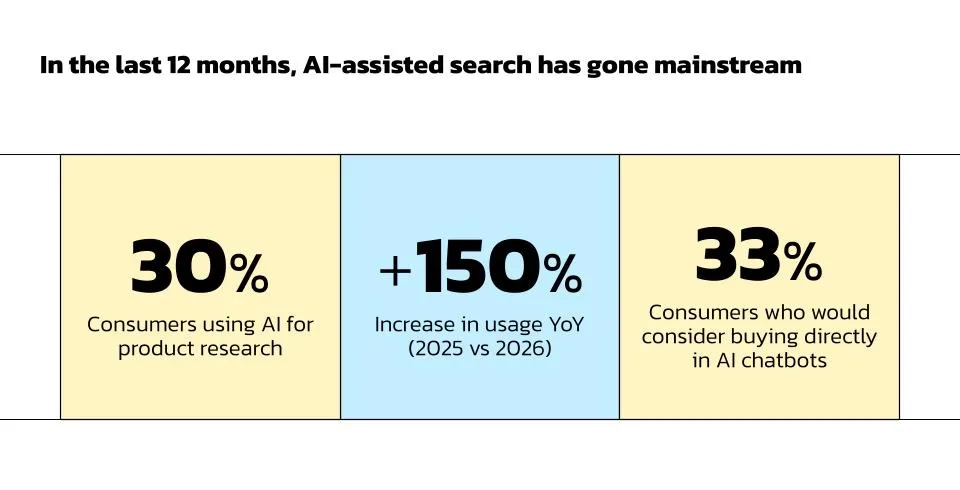
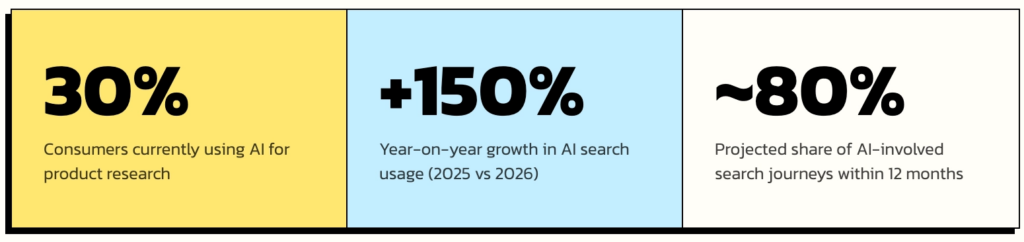
The data paints a clear picture of AI’s burgeoning influence. Currently, an impressive 30% of consumers are leveraging AI for product research, a stark increase from just 12% a year prior. This growth is further amplified by the increasing prevalence of AI Overviews in search results. Roughly 40% of Google search results now feature these AI-generated summaries, meaning a substantial segment of users are encountering and consuming AI-curated answers without explicitly selecting them.
When these two trends are combined – active AI search usage and passive exposure through AI Overviews – the share of search journeys involving AI in some capacity is already approaching 60%. Projections from industry analysts like Brainlabs suggest this figure could soar to 80% within the next twelve months, assuming current growth rates persist. This trajectory has profound implications for virtually every aspect of organic search strategy.
Brainlabs’ research categorizes consumers into three distinct groups based on their search behaviors. The largest segment, comprising approximately 69% of users, are "Traditionalists" who exclusively rely on established search engines. A rapidly growing cohort, the "Augmenters," making up around 30% of consumers, utilize both traditional search engines and AI platforms within a single research journey. These users are not abandoning familiar tools but are instead integrating AI as an additional research layer, particularly for complex queries. The smallest group, "Dissenters," representing fewer than 1%, exclusively employ AI platforms for their searches. The significant growth within the "Augmenters" segment highlights a nuanced adoption pattern where AI is seen as a complementary tool rather than a complete replacement.
AI SEO: More Than Just a Rebrand of Traditional SEO
The notion that AI search is merely a rebranding of traditional SEO is an increasingly untenable one. While current AI search models share some similarities with traditional search, the divergence is widening at a pace that many digital marketing teams are struggling to match. Crucially, there isn’t a monolithic "AI search" experience; rather, there are at least four major platforms, each employing distinct AI models, adhering to different guidelines, and maintaining varied relationships with Google’s search index.
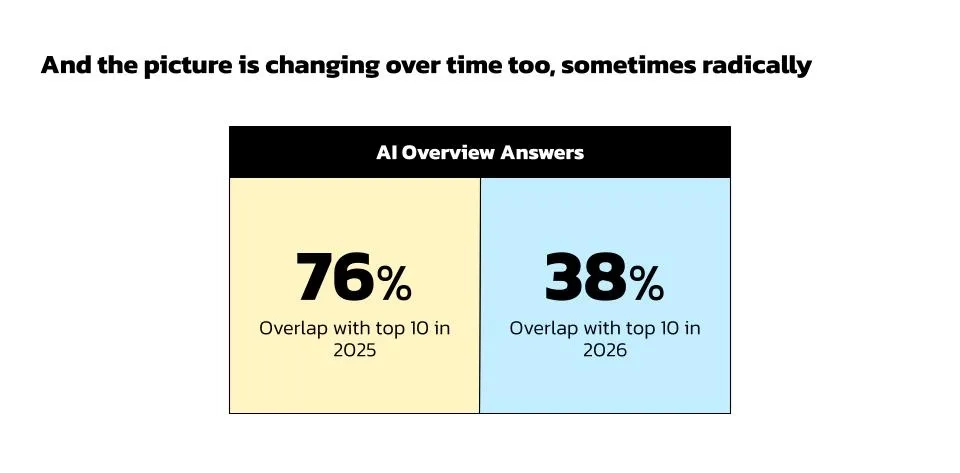
A particularly revealing statistic pertains to Google’s own AI product, Gemini. Despite being a Google offering, Gemini cites pages from Google’s top 10 search results only 15% of the time. This data point underscores a critical shift: an SEO strategy built solely on achieving top-10 rankings in traditional Google search offers limited efficacy for platforms like Gemini or ChatGPT. The overlap between AI Overviews and Google’s top 10 results has also seen a dramatic reduction, falling from 76% to approximately 38% in 2026. This diminishing correlation signals a fundamental change in how information is surfaced and prioritized by AI.
Deconstructing LLM Citation Mechanisms
To effectively navigate the AI search landscape, it’s imperative to understand how Large Language Models (LLMs) determine which sources to cite in their responses. This process is inherently different from Google’s traditional ranking algorithms.
The core of LLM response generation involves several key stages:
- Grounding: When presented with a prompt, an LLM first assesses whether it needs to access external data or can rely solely on its pre-existing training data. For most complex queries, particularly those involving product research, external data retrieval is essential.
- Query Fan-Out: The LLM breaks down the original prompt into dozens of related, granular "micro-questions." For intricate prompts, this process can involve tens of these micro-queries running concurrently.
- Deep Index Search: For each micro-query, the LLM initiates a search across Google’s index, extending its reach beyond the typical top 10 results to encompass the top 100 and even further. This broad search scope represents a significant departure from traditional SEO’s focus on top-tier rankings.
- Content Selection: The LLM then evaluates the retrieved content, prioritizing direct answer blocks, headings that precisely match the micro-question, hard statistical data, and freshness signals such as a recent "last updated" date.
- Comparison and Validation: Sources are further refined by comparing their relevance and authority against higher-authority references. A page that directly answers a specific micro-question, even if from a less authoritative domain overall, can potentially outrank higher-authority pages that bury the answer within lengthy editorial content.
Optimizing for LLM Citation: Key Strategies
Based on observed trends, three optimization approaches have demonstrated consistent success in increasing AI citations:
- Query Fan-Out Analysis: Understanding the specific micro-questions that LLMs generate from a given prompt is crucial. Building FAQ sections that directly address these micro-questions has been shown to measurably increase AI citations.
- Embedding Similarity Analysis: This technique measures the semantic resemblance between a brand’s content and the content that is currently being cited by LLMs. Across client tests conducted by Brainlabs, this approach has yielded an average increase of 140% in AI citations.
- Content Freshness as a Technical Requirement: For time-sensitive topics, treating content freshness as a non-negotiable technical requirement is essential. Regularly refreshing high-demand pages on a monthly basis, for instance, is becoming a minimum standard.
The Measurement Challenge in AI Search
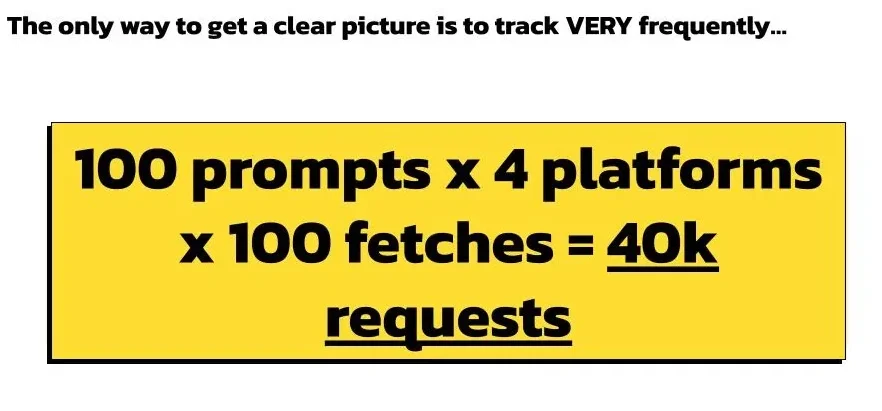
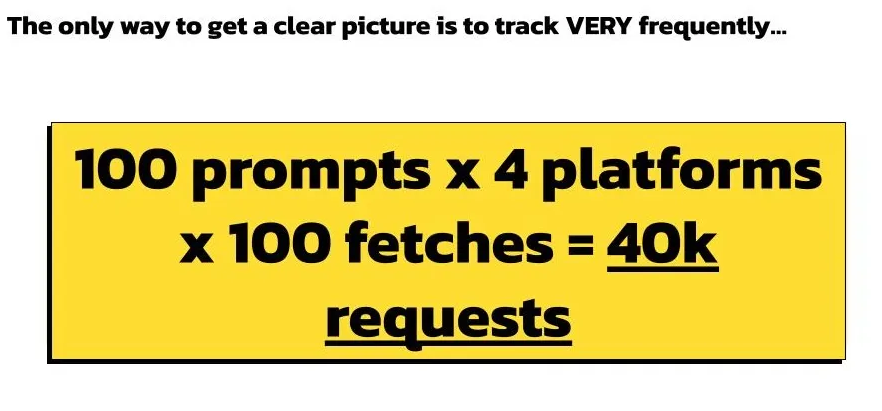
Accurately measuring AI search performance presents a significant hurdle due to the lack of first-party data from major AI platforms. Unlike traditional search engines, AI platforms do not currently provide access to actual user queries at scale. This absence of direct data necessitates reliance on proxies and estimations, introducing inherent uncertainty into any measurement framework.
The prevailing methodology involves converting existing keyword data into likely prompts, tracking these prompts through one of the over 30 available third-party AI tracking tools, and monitoring brand visibility over time as an indicator of real-world performance. However, this approach is fraught with noise. Across different AI models, only approximately 23% of citations remain active after 14 days. Furthermore, there is a limited consensus between platforms regarding brand recommendations, with only about 45% agreement on which brand to recommend first. Fewer than 5% of query sets exhibit perfect agreement across all major AI platforms, highlighting the variability and unreliability of current tracking methods.
Practical Measurement Approaches for Today’s AI Landscape
Despite the challenges, several practical measurement approaches are proving effective in the current AI search environment:
- AI Referral Tracking in GA4: Implementing AI referral tracking within Google Analytics 4 (GA4) provides a foundational layer for understanding traffic originating from AI search. This involves setting up specific tracking parameters to identify users who have interacted with AI search tools.
- Prompt Tracking with Third-Party Tools: Utilizing specialized third-party AI tracking tools allows for the monitoring of brand visibility and citation rates for a defined set of prompts. While imperfect, this offers a directional understanding of performance.
- Brand Visibility as a Proxy: Measuring brand visibility within AI search results serves as a key proxy for performance. This involves tracking how often a brand’s content is featured or cited across various AI platforms.
- Citation Longevity Studies: Understanding how long citations remain active is crucial for evaluating the sustained impact of AI visibility. Analyzing the decay rate of citations provides insights into the dynamic nature of AI search results.
- Cross-Platform Recommendation Agreement: While challenging, monitoring the degree of agreement between different AI platforms on brand recommendations can offer a qualitative understanding of a brand’s perceived authority and relevance.
- Consensus Across Query Sets: Evaluating the consistency of AI responses across a diverse set of query sets helps to identify potential biases or inconsistencies in how different AI models interpret and respond to information.
Agentic Search: The Next Frontier

The evolution of AI search is poised for another significant leap with the emergence of "agentic search." This paradigm shift, anticipated by industry leaders, envisions AI moving beyond simply providing information to actively managing research and decision-making on behalf of consumers. Sundar Pichai, CEO of Google, has indicated that 2027 could be an important inflection point for the widespread adoption of agentic search, transforming search into an "agent manager."
In this emerging agentic model, AI agents will conduct research in mere seconds, filter options down to specific recommendations, and even facilitate transactions, all without the consumer needing to leave the AI platform. ChatGPT’s Instant Checkout and Google’s Universal Commerce Protocol are early indicators of this trend. While these agents will still require information, the critical question becomes which content and data sources they will trust sufficiently to cite and act upon.
Preparing for the Agentic Search Era
To proactively position for the advent of agentic search, businesses can adopt the following strategies:
- Content Structuring for Direct Answers: Optimizing content to provide clear, concise, and direct answers to potential user queries is paramount. This involves using structured data, clear headings, and readily digestible information that LLMs can easily extract.
- Building Authoritative and Trustworthy Content: As AI agents become more discerning, the emphasis on establishing genuine authority and trustworthiness in content will intensify. This includes rigorous fact-checking, transparent sourcing, and demonstrating deep expertise in a given domain.
- Focusing on Unique Data and Insights: Providing original research, proprietary data, and unique insights will become increasingly valuable. AI agents will seek out sources that offer novel information not readily available elsewhere, differentiating brands that invest in original content creation.
Where to Begin: A Strategic Roadmap
The transition to an AI-centric search environment demands a strategic and phased approach. For businesses looking to adapt and thrive, the following starting points are recommended:
- Prioritize Measurement: Begin by establishing robust AI referral tracking within GA4. Identify two to three priority product categories and initiate tracking for 50 to 100 related prompts at a low frequency. While the data may not be perfect, it will provide crucial directional insights into AI search performance.
- Conduct a Content Audit: Audit priority content against the key signals that LLMs prioritize: freshness dates, direct-answer formatting, structured data, and heading-level relevance to anticipated micro-questions. A targeted refresh of high-demand pages, incorporating these principles, can reveal whether these changes positively impact citation rates before scaling efforts.
- Develop a Roadmap for Divergence: The overlap between traditional SEO and AI SEO is diminishing. The organizations best positioned in the coming years will be those that proactively build capabilities for AI-driven search today. The window of opportunity to get ahead of this curve, rather than simply react to it, is closing rapidly.
The AI search revolution is not a future event; it is happening now. By understanding the underlying data, adapting to the evolving mechanisms of AI content retrieval, and strategically preparing for the next wave of agentic search, businesses can navigate this transformative period and secure their visibility in the digital future.









