admin
admin
In an era marked by unprecedented complexity and an explosion of information, B2B marketers are facing a significant paradigm shift. The traditional approaches to content creation and distribution are no longer sufficient to cut through the noise and connect with modern buyers. This evolving landscape necessitates a strategic framework that prioritizes customer needs and builds enduring relationships. Enter Best Answer Marketing (BAM), a B2B marketing framework designed to create content that not only stands out but also cultivates trust and instills confidence throughout the entire customer journey. As B2B marketing becomes increasingly intricate, the core tenet of being the definitive "best answer" wherever customers are seeking information boils down to three fundamental pillars: visibility, belief, and ultimately, selection. This in-depth analysis will explore each of these pillars, providing B2B marketers with actionable insights on how to transform their brands into trusted "Best Answer Brands."
The current B2B environment is characterized by several potent forces that have dramatically amplified its complexity. Data from 6Sense reveals that a staggering 94% of B2B buyers now leverage Artificial Intelligence (AI) during their purchasing processes. This reliance on AI is intertwined with the fragmentation of information sources, with buyers engaging with an average of over 10 distinct channels to gather insights, as noted by McKinsey. Furthermore, the decision-making process itself has become more intricate, with buying committees averaging 13 internal stakeholders and an additional 9 external individuals involved in making a purchase decision, according to Forrester. This intricate web of influencers and information touchpoints demands a sophisticated approach to marketing.
In response to these challenges, some B2B brands have adopted a strategy of simply producing "more content," often with significant AI assistance in its creation or formulation. While AI can undoubtedly accelerate content generation, this approach risks contributing to a sea of AI-generated sameness, making it increasingly difficult for brands to differentiate themselves. Research from Adobe highlights that 82% of B2B brands are focusing on content that directly answers customer questions. However, the effectiveness of this strategy hinges not just on answering questions, but on which questions are being addressed, how they are answered, where these answers are delivered, who is providing them, and crucially, why. While the tools to optimize content for AI discovery and adhere to Google’s EEAT (Experience, Expertise, Authoritativeness, Trustworthiness) guidelines are widely accessible, true differentiation lies in the strategic application of these principles.
The central question facing B2B marketers today is: When everyone has access to the same strategies and resources via AI, how can any brand truly stand out, build trust, and inspire the confidence necessary to drive purchasing decisions?
One compelling approach to achieving this lies in a robust thought leadership strategy, underpinned by original research, amplified through influencer collaborations, and disseminated through content formats designed to create engaging experiences that meet the omnichannel expectations of contemporary buying groups. TopRank Marketing, in collaboration with Ascend2, has published original research titled "The State of B2B Thought Leadership in 2026," which delves into the intersection of original research, influence, and content. Complementing this is a "Best Answer Marketing Playbook" series, offering a practical model for implementation. These resources have garnered significant attention, underscoring the appetite for strategies that move beyond generic content.

To effectively navigate the escalating complexity of B2B marketing in 2026 and beyond, a strategic pause is necessary. Marketers must shift their focus from thinly spread efforts aimed at optimizing for mere efficiency to a concentrated effort on delivering the answers that buyers genuinely need. As the promise of AI and content creation evolves from purely mechanical output to a more meaningful, human-centric approach, B2B brands have a critical opportunity to move beyond blending in and instead, ascend to the status of "Best Answer Brands." This transformation can be achieved by meticulously focusing on three core pillars: Be Visible, Be Believed, and Be Chosen.
Be Visible: Capturing Attention in a Crowded Digital Ecosystem
The fundamental principle of visibility is simple: you cannot win if you are not present. However, in today’s saturated digital environment, simply churning out more content is a recipe for obscurity. This "more content" approach is precisely what many competitors are doing, resulting in a deluge of information that buyers quickly scroll past in search of something truly compelling. If your content manages to halt a buyer’s scrolling, you have mere seconds to make a meaningful impression. To optimize for visibility across Large Language Models (LLMs), search engines, platforms like LinkedIn, and other influential sources, a Best Answer Marketing strategy must consider four critical elements: relevance, reach, creativity, and integration.
Relevance: Understanding the Buyer’s Inquiry
The cornerstone of being the "best answer" is a profound understanding of the questions your customers are asking. This necessitates diligent question research, drawing from a multitude of sources. These sources can include direct customer feedback, sales team insights, customer support logs, social listening tools, and analysis of search queries related to your industry and offerings. By deeply understanding the pain points, challenges, and aspirations of your target audience, you can ensure your content directly addresses their needs, making it inherently relevant.
Reach: Meeting Buyers Where They Are
Visibility is intrinsically linked to "where" your message appears. With the understanding that search activity now occurs "everywhere," as highlighted by SparkToro’s research, prioritizing the right channels is paramount. Audience intelligence tools, such as SparkToro, are invaluable for identifying where your buyers are discovering and validating information. This is particularly crucial given that 61% of B2B buyers prefer a self-serve sales approach and would rather avoid direct interaction with a sales representative, according to Gartner.
While Google remains a dominant force in B2B discovery, the rapid adoption of AI tools like ChatGPT, Gemini, and Perplexity is capturing significant attention from B2B marketers. Research conducted by TopRank Marketing and Ascend2, surveying 797 senior B2B marketers, identified the top channels for distributing B2B thought leadership. These consistently include:
- Search Engines (Google, Bing): Still the primary gateway for initial research and problem identification.
- LinkedIn: A crucial platform for professional networking, industry insights, and content amplification.
- Industry Publications/Websites: Trusted sources for specialized knowledge and expert opinions.
- Webinars/Virtual Events: Engaging formats for in-depth exploration of topics and direct interaction.
- Company Blogs/Websites: Central hubs for brand-specific information and resources.
Beyond these primary channels, other important avenues include email marketing, word-of-mouth referrals, influencer collaborations, earned media, paid advertising, broader social media engagement, and in-person events. Prioritization should be guided by a clear understanding of where your audience congregates and which channels are most effective at each stage of the buyer journey.
Creativity: Breaking Through the Monotony
In the overwhelming "sea of sameness," creativity emerges as a powerful differentiator. Visual ingenuity, compelling copywriting, original ideas, authentic human narratives, and emotionally resonant storytelling are often underdeveloped in B2B marketing, presenting a significant opportunity for visibility. The adage "facts tell, stories sell" remains profoundly true. Buyers are increasingly seeking more meaningful and nuanced messaging that genuinely connects with their perspectives, empathizes with their constraints, and fosters authentic connections. The movement to "break free from boring B2B" has been a long-standing call to action, and brands that embrace creative expression are more likely to capture and retain buyer attention.
Integration: A Coordinated Approach to Visibility
However, creativity alone, deployed in isolated channels, is ephemeral and quickly forgotten. For creative efforts to be truly impactful, they must be coordinated and integrated across all relevant touchpoints. Given the increasing size of buying committees and their diverse information-gathering habits, integrated messaging and creative strategies are essential for building the mental availability required for consideration. This coordinated approach ensures that a brand’s message is consistently reinforced, creating a stronger impression and increasing the likelihood of being remembered.

Be Believed: Cultivating Trust and Credibility
Capturing a customer’s attention is only the first step; if they don’t trust the information provided, that attention is wasted. LinkedIn research indicates that 94% of marketers agree that trust is paramount to B2B success. In the fragmented discovery environment, the challenge for B2B brands extends beyond merely building trust to inspiring genuine belief. The foundation of belief is trust, and within the Best Answer Marketing framework, a "Trust System" is integral. This system leverages an integrated approach to messaging and creative execution to foster credibility through several key mechanisms:
- Authenticity: Demonstrating genuine understanding and empathy for buyer challenges, rather than a purely transactional approach.
- Transparency: Openly sharing information, methodologies, and even limitations, builds confidence.
- Consensus: Garnering endorsements and validation from trusted third parties, influencers, and peers.
- Consistency: Delivering a unified message and brand experience across all touchpoints.
- Evidence-Based Insights: Backing claims with original research, data, and customer success stories.
Within B2B marketing, the objective has shifted from simply informing customers to evoking an emotional response. This is the critical difference between mere trust and profound belief. Architecting trust is the bedrock upon which belief is built, achieved through consistent messaging and a consensus among influential sources that a brand is the preeminent answer or the most viable solution. The integration of these tactics creates a more robust foundation of trust, enabling B2B brands to inspire belief that they are, in fact, the best answer for their customers’ needs.
Be Chosen: Securing the Purchase Decision
The three pillars of the Best Answer approach are intrinsically linked and build upon one another. To be chosen, a brand must consistently be visible and trusted. However, being chosen involves more than just possessing the right facts, delivering exceptional content experiences, and establishing credibility. It transcends whether a brand is objectively the best solution in its category. Being chosen requires decision confidence. How well can the buying group articulate and defend their decision to select your solution over all others?
Ultimately, being the "best answer" means a brand is visible in the most relevant ways, present on the channels where buyers are actively searching, validated through consensus among trusted sources, and delivers answers through content experiences that resonate with the entire buying group. This confluence of factors leads to selection not only by search engines and LLMs but also by trusted entities within the buyer’s ecosystem – whether it’s a respected industry publication, a prominent thought leader on LinkedIn, or a peer offering recommendations on platforms like Reddit.
Determining when a brand is truly "chosen" has become more challenging in an era of zero-click searches and LLMs that don’t always cite sources. The focus shifts from whether content drives a click to a more profound question: "Did this content change what buyers know, trust, or do next?" Several indicators can signal successful selection:
Brand Propagation: Your Ideas Gain Traction
- LLM and Search Engine Citation: When your unique ideas, narratives, or research are cited, summarized, or modeled by AI and search engines, it signifies that your content is influencing answers at the highest level of discovery, even without a direct click. This is a powerful indicator of being chosen.
- Subtle Brand Mentions: Observe how your brand’s concepts or data are woven into the output of AI tools or search results, demonstrating your influence on the information landscape.
Brand Consistency: Dominating Key Channels
- Disproportionate Visibility: Achieving consistent and significant visibility across the channels that matter most to your audience is evidence that your answers are being discovered repeatedly throughout the buyer journey.
- Differentiation in Content: If your content is indistinguishable from competitors, you risk invisibility. Consistently publishing unique, relevant, and high-value content across chosen channels builds this essential consistency.
- Omnichannel Presence: Ensuring a cohesive brand experience and message across all touchpoints, from initial discovery to post-purchase engagement.
Brand Persuasion: Buyers Arrive Informed and Ready
- Pre-Sold or Well-Informed Buyers: High-intent buyers arriving with a strong understanding of your solutions and confidence in your brand indicates that your "best answer" content has effectively reduced uncertainty and built decision confidence.
- Mental Availability: Your brand has successfully established mental availability among the vast majority of buyers who are not actively in-market, positioning you favorably when they eventually enter the buying cycle.
- Shortlist Inclusion: Your content has moved buyers from a passive awareness state to being a strong contender when they transition to the active 5% actively seeking solutions.
Brand-Driven Pipeline: Tangible Business Impact
- Pipeline Quality Correlation: The confidence instilled by "best answer" content directly impacts decision-making and the defense of those decisions. This can be correlated with pipeline metrics such as:
- Increased Deal Velocity: Shorter sales cycles due to informed buyers.
- Higher Win Rates: Greater likelihood of closing deals due to established trust and confidence.
- Larger Deal Sizes: Buyers more willing to invest in a trusted, well-understood solution.
- Improved Customer Lifetime Value: Long-term relationships built on a foundation of trust and consistent value.
Being chosen is not a singular event but a continuous process. It is the cumulative value of consistent presence where and when buyers are looking, coupled with familiarity, trust, and belief. By creating mental availability through consistent cross-channel efforts and fostering decision confidence through proof and building consensus, brands can significantly increase their likelihood of selection. For a deeper understanding of how to measure these intricate metrics, exploring resources on "BAM Unified Analytics" is recommended.
Conclusion: Is Your Brand the Best Answer?
In the dynamic and increasingly complex world of B2B marketing, the "Best Answer Marketing" framework offers a clear and actionable path for brands to not only survive but thrive. By focusing on being visible, believed, and ultimately chosen, B2B marketers can move beyond generic content strategies and build enduring relationships with their customers. The ability to consistently provide relevant, credible, and persuasive answers wherever buyers are seeking them is no longer a competitive advantage, but a fundamental necessity.
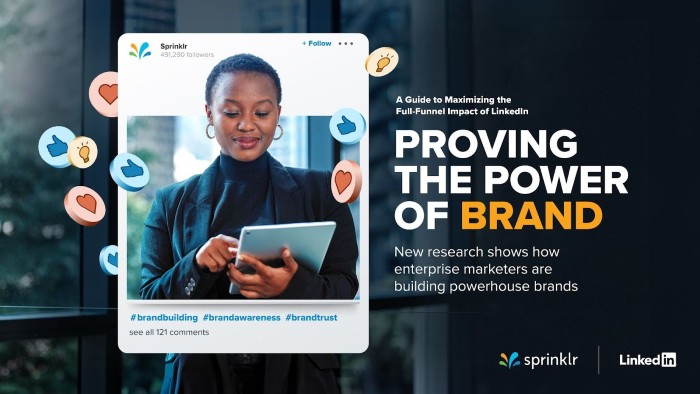
For an illustration of Best Answer Marketing in practice, the case study featuring Sprinklr and LinkedIn demonstrates its potential, delivering substantial impressions, engagement, and qualified leads. Furthermore, examining successful B2B influencer marketing campaigns, such as those executed by TopRank Marketing for Adobe, Smartsheet, Microsoft Teams, LinkedIn, Dell, Demandbase, and Monday.com, offers tangible examples of how influence and creative content can drive significant results.
To ascertain whether the Best Answer Marketing approach aligns with your brand’s objectives, reviewing the "BAM Action Plan" or engaging directly with experts can provide the necessary clarity and guidance to navigate the future of B2B marketing successfully. The ultimate question remains: Is your brand truly the best answer for what your customers are looking for? The answer to this question will define your success in the evolving B2B landscape.