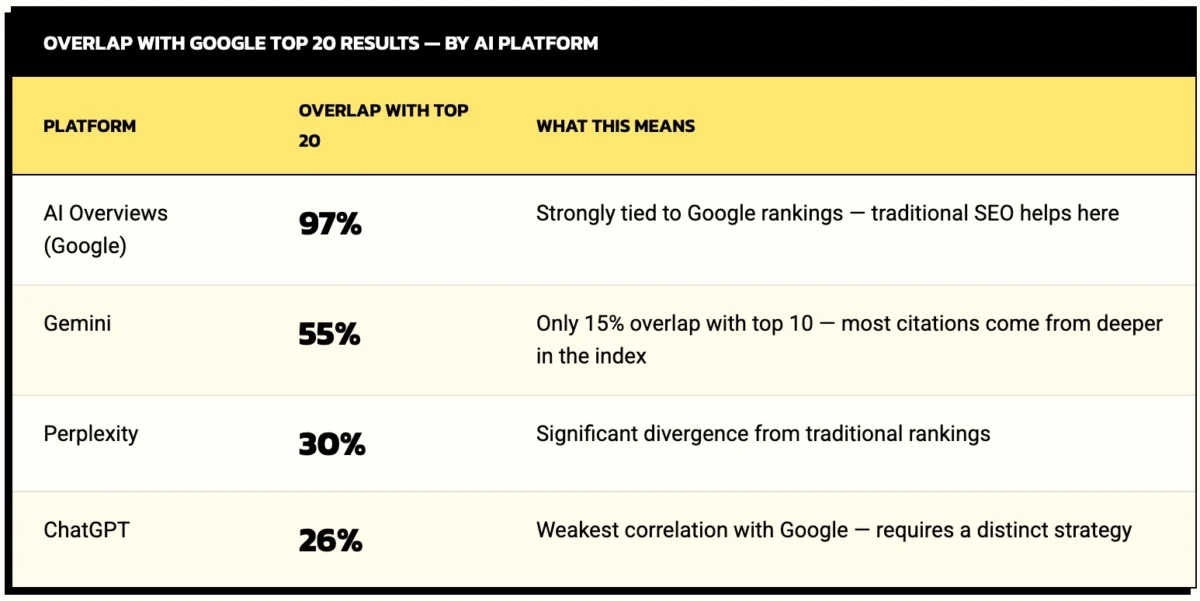
The digital landscape is undergoing a seismic shift, and the increasing integration of Artificial Intelligence into search behavior is no longer a distant possibility but a present reality. Data emerging from industry analysis indicates a dramatic acceleration in consumer adoption of AI-powered search tools, compelling businesses and marketers to re-evaluate their digital strategies. What was once a niche technology is rapidly becoming a mainstream research methodology, fundamentally altering how users discover information and products online.
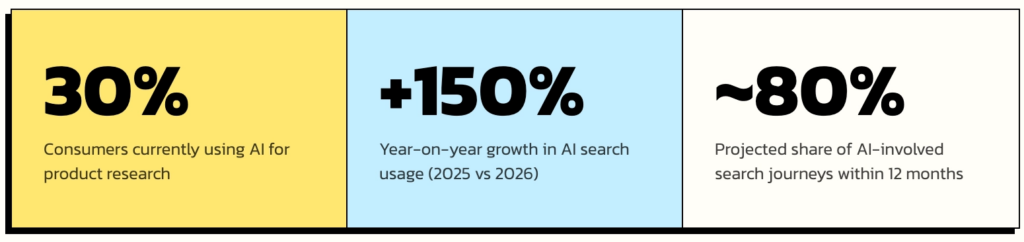
The most striking statistic reveals that 30% of consumers are now actively utilizing AI for product research, a significant leap from just 12% a year prior. This surge is amplified by the pervasive presence of AI-generated content within traditional search results. Currently, approximately 40% of Google search results feature an "AI Overview," presenting users with AI-synthesized answers without explicit user selection. This means a substantial portion of the online population is passively engaging with AI-generated content, even when not actively seeking it out.
When these two trends are combined – active AI search and passive exposure to AI Overviews – the share of search journeys incorporating AI in some capacity is already approaching 60%. Projections from Brainlabs, a leading digital marketing agency, suggest this figure could climb to an astonishing 80% within the next twelve months, assuming current growth rates persist. Such rapid expansion necessitates a fundamental rethinking of established organic search strategies.
Understanding the Evolving Searcher: From Traditionalists to Augmenters

Brainlabs’ research further categorizes consumers into three distinct groups based on their search habits. The largest segment, "Traditionalists" (approximately 69%), continues to rely exclusively on established search engines like Google. However, the growth engine lies within the "Augmenters" (around 30%). This group employs a hybrid approach, utilizing both traditional search engines and AI platforms at various stages of their research journeys. They haven’t abandoned their familiar tools but have integrated AI as an additive layer, particularly for navigating complex queries. The smallest segment, "Dissenters" (fewer than 1%), exclusively uses AI platforms for their information needs. The burgeoning "Augmenter" category signifies a powerful trend: users are seeking the best of both worlds, leveraging AI for efficiency and depth while retaining the familiarity of traditional search.
AI SEO: More Than Just a Rebrand
The distinction between traditional Search Engine Optimization (SEO) and the emerging field of AI SEO is becoming increasingly pronounced. While current AI search models share enough similarities with traditional search that immediate, wholesale strategy overhauls may not be necessary, the divergence is accelerating. This widening gap poses a significant challenge for teams that have not yet adapted.
A critical factor is the diverse nature of AI search. There isn’t a single monolithic AI search engine; rather, multiple major platforms exist, each with its own underlying models, distinct operational guidelines, and varying relationships with existing search indexes. This fragmentation means a strategy tailored for one AI platform may not translate effectively to another.
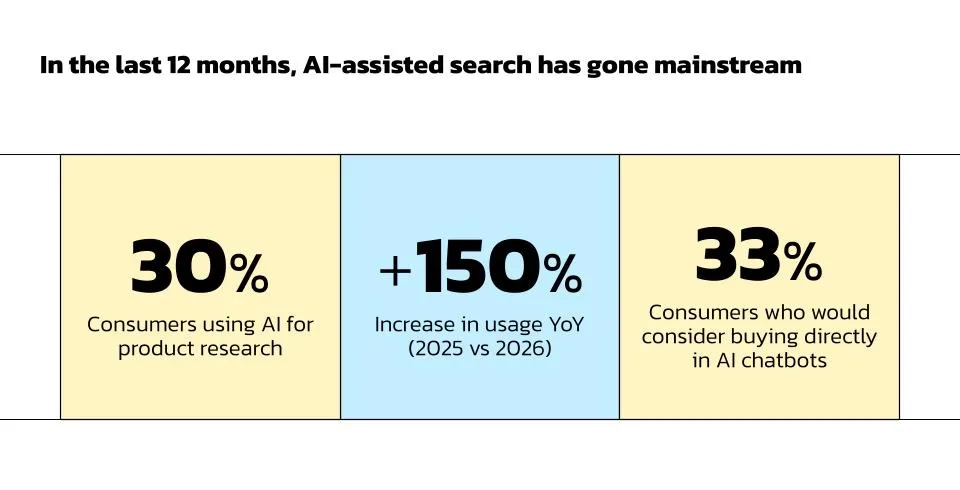
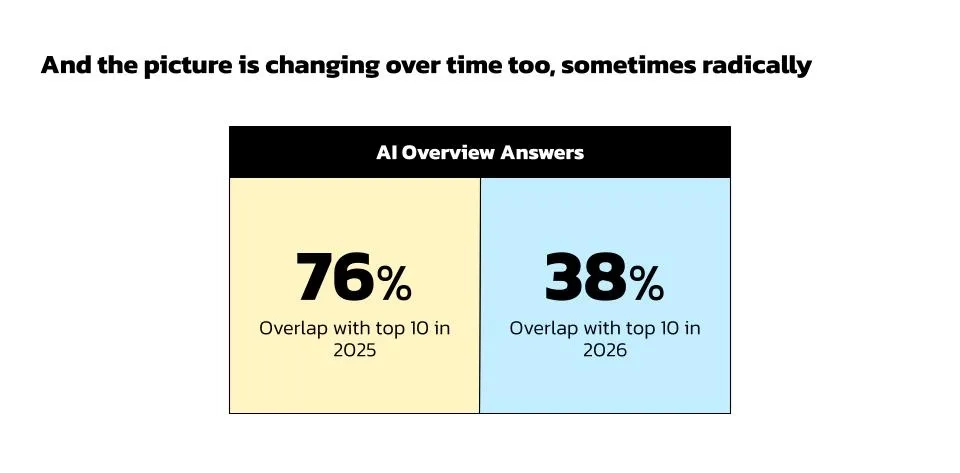
A particularly telling statistic highlights this divergence: Google’s own AI product, Gemini, cites pages from Google’s top 10 search results only 15% of the time. This is a significant departure from the foundational principle of traditional SEO, which heavily emphasizes achieving top-10 rankings. An SEO strategy built solely around excelling in Google’s traditional top-10 would be largely ineffective for platforms like Gemini or ChatGPT. Furthermore, the overlap between AI Overviews and Google’s top 10 results has diminished considerably, falling from 76% to approximately 38% in 2026, underscoring the growing independence of AI-driven information retrieval.
The Inner Workings of AI Citation: How LLMs Decide What to Cite
To effectively navigate the AI search landscape, it’s crucial to understand how Large Language Models (LLMs) generate responses and select their citations. This process differs fundamentally from Google’s traditional page ranking algorithms.
When an LLM, such as Gemini, receives a user prompt, it first determines whether external data is required or if its existing training data is sufficient. For most product research queries, external data is essential. The LLM then initiates a "query fan-out" process, breaking down the original prompt into dozens, or even hundreds, of related micro-questions. For complex prompts, these micro-queries can be processed simultaneously.
Following this, the LLM performs a "deep index search." Unlike traditional SEO’s focus on the top 10 results, LLMs scan Google’s index across the top 100 search results and often beyond. This broader scope is the first significant deviation from conventional SEO practices.
The "content selection" phase involves the LLM identifying specific elements within search results. It prioritizes direct answer blocks, headings that precisely match a micro-question, hard statistical data, and freshness signals, such as a recent "last updated" date.
Finally, the LLM engages in "comparison and validation." Sources that offer low consensus or are not perceived as high-authority are filtered out. Critically, a page that directly answers a specific micro-question can outrank higher-authority pages that bury their answers within lengthy editorial content. This emphasizes the importance of clarity and directness in content creation.
Optimizing for LLM Citations: Practical Strategies
Three key optimization approaches have consistently yielded positive results in attracting AI citations:
- Understanding Query Fan-Out: By studying the micro-questions that LLMs generate from user prompts, businesses can build targeted FAQ sections and content that directly addresses these specific queries. This has led to measurable increases in AI citations.
- Embedding Similarity Analysis: Employing embedding similarity analyses helps measure how closely a website’s content aligns with the content that LLMs are currently citing. Across Brainlabs’ client tests, this approach has resulted in an average increase of 140% in AI citations.
- Prioritizing Content Freshness: Treating content freshness as a technical requirement is paramount, especially for time-sensitive topics. Monthly refreshes of high-demand pages are becoming a minimum standard to ensure content remains relevant and discoverable by LLMs.
The Measurement Conundrum: Navigating the Data Black Hole
Measuring AI search performance presents a significant challenge due to the scarcity of first-party data from major AI platforms. While Google and Bing have begun to provide limited AI performance data through tools like Google Search Console’s Generative AI report, this data primarily offers impressions, not the granular query and click data essential for effective optimization decisions.
While impressions and page performance metrics are valuable for establishing baselines and tracking general trends, they leave critical questions unanswered: What specific queries are users employing? What are the subsequent conversational threads and follow-up questions? And how does search behavior differ within standalone AI applications like Gemini? This data gap necessitates reliance on third-party measurement solutions.
The current standard practice involves converting keyword data into likely prompts, tracking these prompts across the more than 30 available third-party AI tracking tools, and monitoring brand visibility as a proxy for actual performance. However, this approach is hampered by significant data noise. Across various AI models, fewer than 23% of citations remain active after just 14 days. Furthermore, there is only about a 45% agreement between platforms on which brand to recommend first, and fewer than 5% of query sets exhibit perfect consensus across all major AI platforms.
Practical Measurement Approaches for Today’s AI Search Environment
Despite the measurement complexities, several practical approaches are proving effective:
- AI Referral Tracking in GA4: Implementing AI referral tracking within Google Analytics 4 provides initial insights into traffic originating from AI sources.
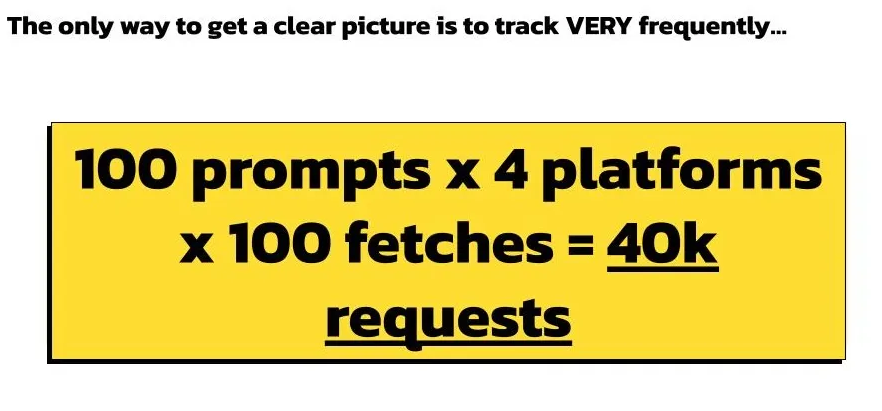
- Prompt-Based Tracking: Focusing on tracking a curated set of 50 to 100 high-priority prompts at a low frequency for specific categories can yield directional data. While not perfect, this provides valuable initial signals.
- Content Audit Against LLM Signals: Conducting a thorough audit of priority content against key LLM signals—freshness dates, direct-answer formatting, structured data, and heading-level relevance to likely micro-questions—is crucial.
- Targeted Content Refresh: A strategic refresh of high-demand pages, incorporating the identified LLM optimization principles, can demonstrate the impact on citation rates before scaling efforts.
Agentic Search: The Imminent Next Frontier

The current paradigm, where AI acts as a layer on top of search, is poised for another significant transformation. Sundar Pichai, CEO of Google, has indicated that search is evolving into an "agent manager," where AI agents will conduct research, make decisions, and even facilitate transactions on behalf of consumers. This "agentic search" model envisions AI agents performing research within seconds, filtering to a recommendation, and seamlessly managing the transaction, all without direct consumer intervention within the AI platform. Products like ChatGPT’s Instant Checkout and Google’s Universal Commerce Protocol are early indicators of this shift.
While these AI agents will handle the research and decision-making, they will still require reliable information sources. The critical question for content creators and businesses will be: which content and data sources will these agents trust enough to cite and act upon?
Preparing for the Agentic Future: Proactive Steps
To prepare for the advent of agentic search, businesses should consider the following proactive measures:
- Establish Robust Data Integrity: Ensure the accuracy, reliability, and verifiability of the data and content provided. Agentic AI will likely prioritize sources that demonstrate a high degree of trustworthiness and factual accuracy.
- Optimize for Directness and Actionability: Content needs to be structured for immediate comprehension and actionability. This means clear, concise language, readily available data, and a focus on providing solutions or answers directly.
- Develop Unique and Authoritative Content: In an environment where AI agents are making decisions, content that offers unique insights, proprietary data, and demonstrable authority will be highly valued. Generic or easily replicated information may be overlooked.
Where to Begin: A Phased Approach to AI Search Adaptation
The transition to an AI-centric search environment requires a strategic and phased approach. The journey begins with a commitment to measurement. Implementing AI referral tracking in GA4 and selecting priority categories for focused prompt analysis will provide foundational data, even if imperfect. This initial step is crucial for understanding the directional shifts in user behavior.
The next critical phase involves auditing existing content against the signals that LLMs prioritize. This includes meticulously reviewing freshness dates, ensuring direct-answer formatting, integrating structured data, and verifying the relevance of headings to anticipated micro-questions. Conducting a targeted refresh of high-demand pages based on these principles will offer tangible evidence of their impact on citation rates, informing broader content strategy scaling.
Finally, the development of a long-term roadmap for divergence is essential. The diminishing overlap between traditional SEO and AI SEO signifies a fundamental shift in how online visibility will be achieved. Businesses that proactively build capabilities to address the unique demands of AI search now will be best positioned to thrive in the coming years. The window of opportunity to lead this transformation, rather than simply react to it, is rapidly narrowing. The future of search is here, and adaptation is no longer optional, but imperative.