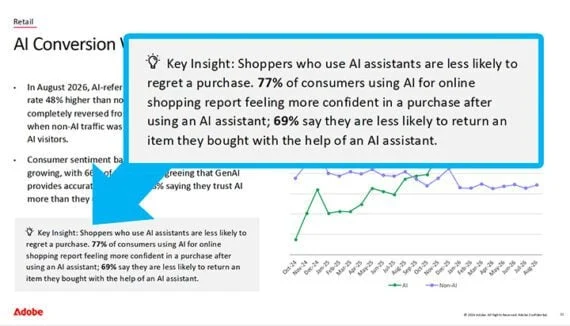
The integration of Artificial Intelligence into e-commerce has moved beyond experimental phases, with AI-referred traffic to online stores surging by an astonishing 4,700% in the past year, according to Adobe. Despite this dramatic increase in AI-driven customer engagement, a significant gap persists: only 7% of companies have managed to scale AI solutions beyond the initial testing stages. This disconnect between the burgeoning hype surrounding AI and its tangible business outcomes often boils down to a critical decision: selecting the right tools rather than simply acquiring more.
This report delves into the leading AI e-commerce tools that are demonstrably boosting revenue, prioritizing functionality and impact over marketing gloss. Unlike many “best-of” lists curated by software vendors, this analysis is independently compiled, offering candid insights into pricing, hidden cost structures, and real-world user feedback.
A crucial aspect to consider upfront is the evolving landscape of online discoverability. AI-powered search engines such as ChatGPT and Perplexity are now answering between 12% and 18% of user queries, fundamentally altering how consumers find products and influencing the relevance of various e-commerce tools.
Here is a comprehensive ranking of AI e-commerce tools designed to deliver measurable results:
| # | Tool | Best For | Category | Starting Price |
|---|---|---|---|---|
| 1 | Shopify Magic + Sidekick | Baseline AI for Shopify stores | Platform-native | Free |
| 2 | Klaviyo | Email and SMS revenue generation | Marketing | Free / $20/mo |
| 3 | Gorgias | High-volume Shopify customer support | Customer Support | $10/mo |
| 4 | Tidio + Lyro | Budget AI chat for smaller stores | Customer Support | Free / $29/mo |
| 5 | Fin by Intercom | Highest customer support resolution rates | Customer Support | $0.99/resolution |
| 6 | Jasper AI | Brand-consistent content at scale | Content | $39/mo |
| 7 | Algolia | AI site search for large product catalogs | Search | Free / $0.50 per 1K |
| 8 | Triple Whale | DTC analytics and attribution | Analytics | Free / $179/mo |
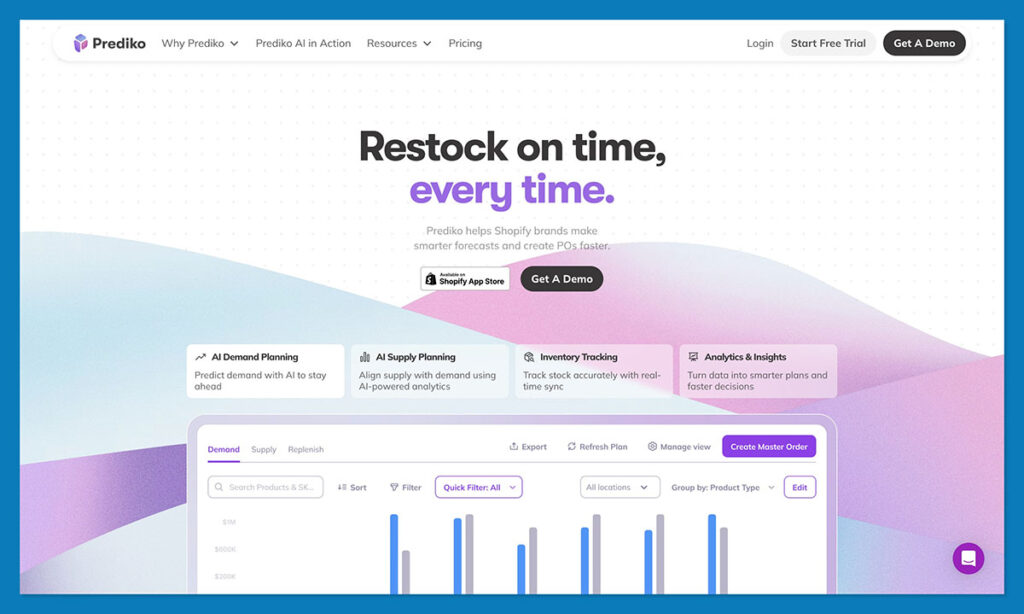
| 9 | Prediko / Cogsy | Inventory forecasting | Operations | $49/mo |
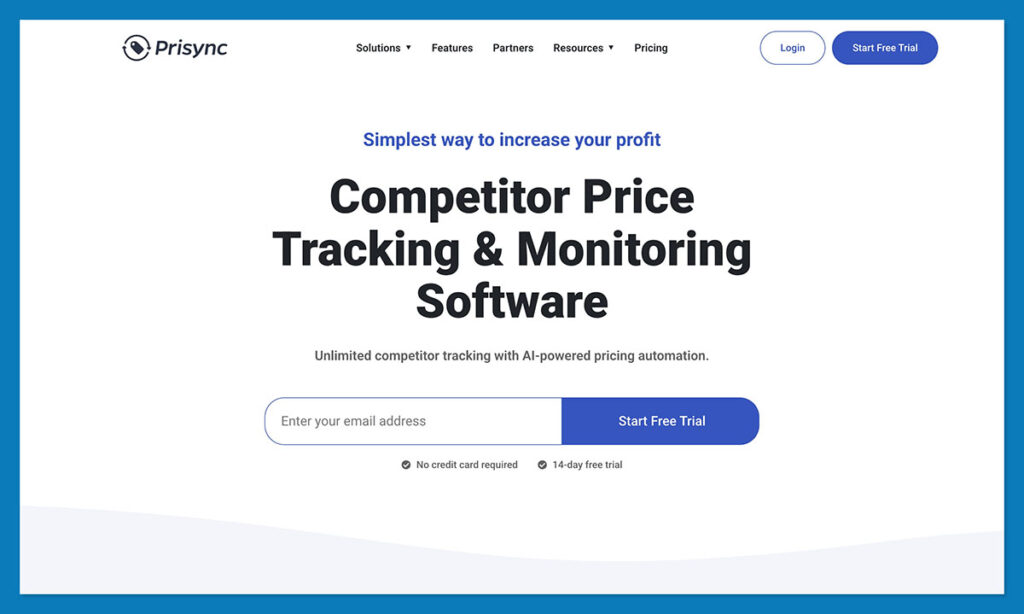
| 10 | Prisync | Competitor pricing and repricing | Pricing | $59/mo |
| 11 | Photoroom | Scalable product photo enhancement | Creative | $9.99/mo |
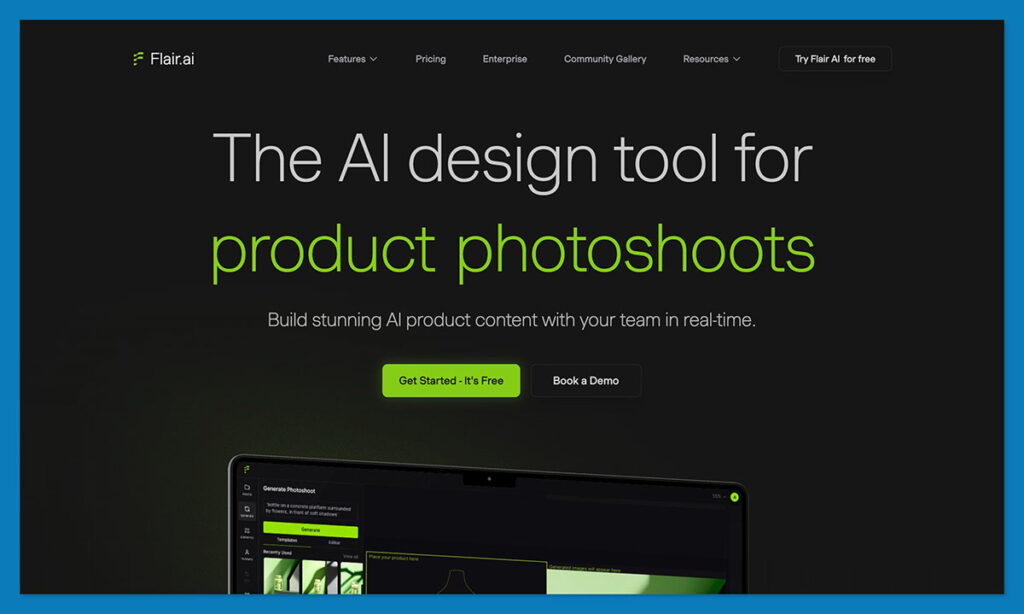
| 12 | Flair AI | Lifestyle product imagery generation | Creative | $10/mo |
| 13 | Ringly.io | AI voice support for phone channel | Customer Support | ~$0.38/call |
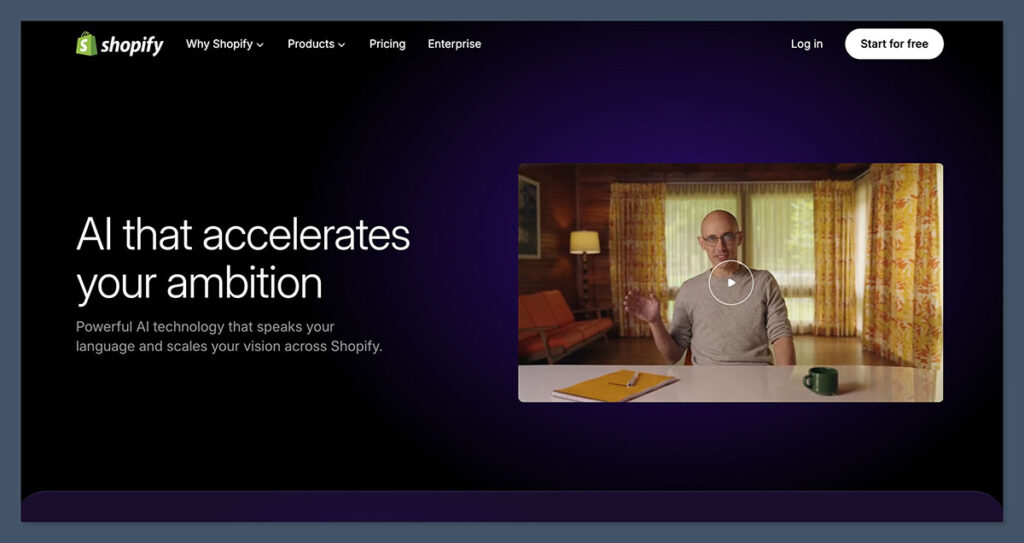
Shopify Magic and Sidekick: The Foundational AI for Shopify Merchants
For the majority of online stores operating on the Shopify platform, the most impactful AI tool is often the one that comes at no additional cost and is readily integrated into their existing backend. Shopify Magic, alongside its conversational assistant Sidekick, offers a robust suite of AI functionalities that have significantly enhanced the platform’s capabilities. The platform’s Winter 2026 “Renaissance Edition” alone introduced over 150 AI-driven updates, rapidly closing the gap between basic functionality and sophisticated performance.
Merchants are reporting substantial time savings. For instance, one entrepreneur, Kwame Chambers, utilized Shopify Magic to generate 500 product descriptions in just two hours, a task that would have previously required two weeks of manual effort and an estimated copywriting cost of $2,500. For solo operators, the daily time savings can range from five to ten hours, translating to an annual value of $13,000 to $26,000, assuming an hourly rate of $50.
Key Features:
- AI-powered product description generation
- Automated product tagging and SEO metadata creation
- Image background removal and enhancement
- Content generation for marketing emails and social media posts
- Conversational AI assistant (Sidekick) for quick queries and content refinement
Pros:

- Free for all Shopify subscribers, providing immediate value.
- Seamless integration within the Shopify admin interface.
- Constantly evolving with new features and improvements.
- Significant time-saving potential for content creation and store management.
Cons:
- Content may require editing for nuanced brand voice and specific marketing objectives.
- Lacks deep analytical capabilities or advanced strategic insights found in dedicated third-party tools.
- May not be sufficient for highly complex or specialized content needs.
Best For: Every Shopify store seeking a cost-effective, integrated AI solution to streamline daily operations and content creation.
Skip the Upgrade Hunt If: You primarily need hero product copy, in-depth analytics, or advanced content strategy, as these areas are better addressed by specialized tools like ChatGPT, Claude, or dedicated analytics platforms.
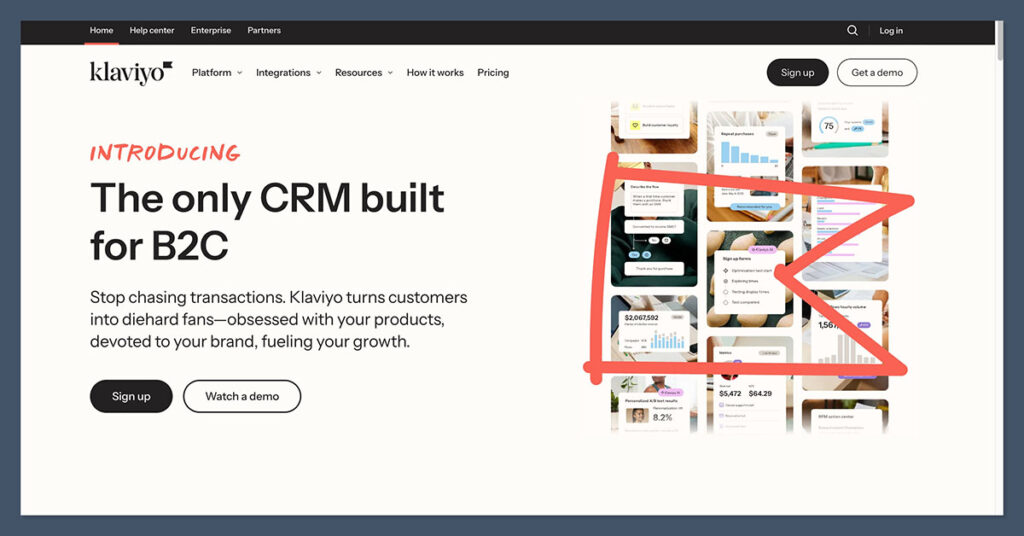
Klaviyo: Revolutionizing Email and SMS Marketing with AI
In the realm of e-commerce marketing, AI-assisted email campaigns are proving to be a powerful revenue driver, generating an impressive 18 times more revenue per recipient than their manually managed counterparts. Klaviyo stands out as a leading platform that capitalizes on this potential, offering a sophisticated approach to email and SMS marketing that can significantly impact a store’s bottom line. The platform’s abandoned-cart recovery flows, for example, have demonstrated a remarkable 33x difference in revenue per recipient compared to generic email blasts, yielding $3.65 per recipient versus $0.11.
Klaviyo’s AI capabilities are deeply embedded within its automated workflows, rather than being an afterthought. Predictive analytics allow for precise segmentation based on estimated next order dates, churn risk, and lifetime customer value. This intelligence ensures that messages are delivered through the channels individual customers are most likely to engage with. The platform’s March 2026 “Composer” feature enables the rapid creation of multi-channel campaigns from simple text prompts, while the App Embed integration provides real-time tracking of customer behavior directly from Shopify stores. This fusion of AI-driven insights and seamless integration translates to reduced manual segmentation efforts and optimized revenue per campaign.
LifeStraw, an outdoor equipment retailer, experienced a remarkable 111% surge in AI-driven sales after implementing Klaviyo’s Customer Agent, underscoring the platform’s effectiveness.
Key Features:
- AI-powered predictive analytics for customer segmentation (LTV, churn risk, next order date).
- Automated multi-channel campaign creation based on customer behavior.
- Real-time Shopify data integration for personalized messaging.
- Advanced A/B testing and campaign optimization.
- “Composer” feature for AI-generated campaign content.
Pricing:
- Free Tier: Up to 250 active profiles, 1 marketing domain, and 150 campaigns per month.
- Paid Tiers: Starting at $20/month, scaling with the number of active profiles, offering more features and support.
Pros:
- Exceptional revenue generation through hyper-personalized marketing.
- Intelligent segmentation and automation reduce manual effort.
- Strong integration with Shopify and other e-commerce platforms.
- Provides deep customer insights to inform marketing strategies.
Cons:
- Pricing can become substantial as the customer base grows, especially with the shift to total active profile billing.
- Requires careful management of list hygiene to mitigate “Dead Profile Tax.”
- Can have a learning curve for users new to advanced email marketing concepts.
Verdict: Klaviyo is an indispensable tool for any e-commerce business serious about customer retention and maximizing marketing ROI. However, it is crucial to implement proactive list hygiene strategies from the outset to manage costs effectively. For smaller businesses seeking more straightforward multi-channel messaging, Omnisend offers a comparable solution starting at $16/month.
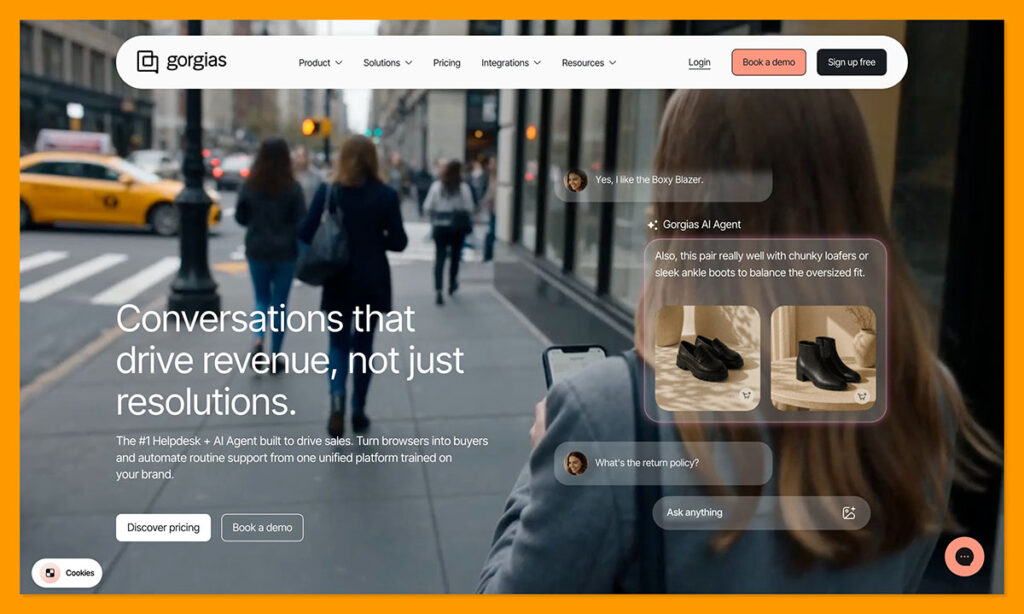
Gorgias: The AI-Powered Helpdesk for High-Volume E-commerce Support
For online retailers grappling with a high volume of customer inquiries, particularly those related to order status and refunds, Gorgias offers a powerful AI-driven solution. The repetitive nature of questions like “Where is my order?” and “Where is my refund?” constitutes a significant portion of e-commerce customer support, and Gorgias is designed to automate these common queries efficiently. Its native integration with Shopify allows the AI to not only answer questions but also directly process refunds, update shipping addresses, and manage customer subscriptions, streamlining operations for busy stores.
The effectiveness of Gorgias’s AI is directly tied to its deep integration with the Shopify ecosystem. This allows for contextualized support actions that go beyond simple ticket deflection. Merchants can expect initial automation rates of around 30-40%, which can climb significantly over two to four months as the system is trained with custom macros and a well-maintained help center.
Key Features:
- AI-powered ticket automation for common customer inquiries.
- Direct integration with Shopify for order management, refunds, and subscription changes.
- Unified inbox for managing communications across email, chat, social media, and SMS.
- Automated responses and macros to speed up resolution times.
- Customer data integration from Shopify for personalized support.
Pricing:
- Starter: $10/month for basic features and limited ticket volume.
- Basic: $60/month with increased ticket volume and advanced features.
- Pro & Advanced: Higher tiers with more extensive features and support.
Pros:
- Significantly reduces response times and support workload.
- Direct order management capabilities streamline customer service.
- Native Shopify integration provides seamless data flow.
- Scalable to meet the demands of growing businesses.
Cons:
- Can be more expensive than other AI support tools, especially for smaller businesses.
- Achieving high automation rates requires initial setup and ongoing training.
- May not be as cost-effective for very low ticket volumes.
Verdict: For Shopify stores with a revenue exceeding $1 million and a substantial volume of customer support inquiries, Gorgias offers a compelling blend of AI automation and order management capabilities within a single helpdesk solution. It strikes a balance between the cost-effectiveness of budget tools and the comprehensive functionality required for enterprise-level support.
Tidio and Lyro: Accessible AI Support for Smaller E-commerce Ventures
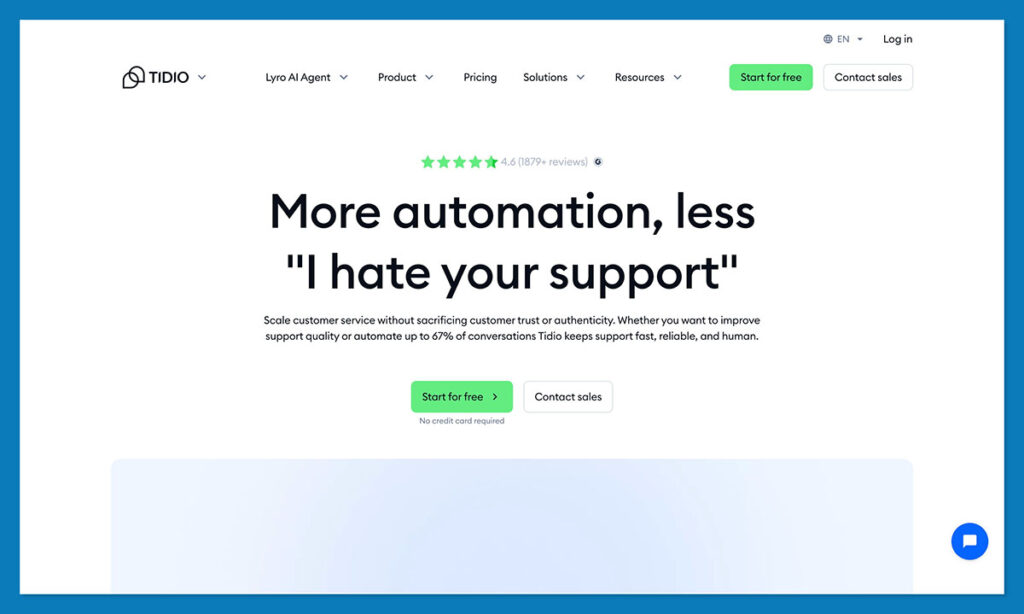
Smaller e-commerce businesses often require AI solutions that are both fast to implement and budget-friendly. Tidio, with its Lyro AI agent, provides an accessible entry point into AI-powered customer support. Lyro can be deployed within two hours with no developer intervention, making it ideal for businesses looking for immediate relief from repetitive customer queries.
Lyro’s strength lies in its ability to train on existing help documentation, FAQs, and product pages, enabling it to respond to common questions in the brand’s voice. The platform also features a unified inbox that aggregates customer interactions from chat, email, Instagram, WhatsApp, and Messenger, simplifying management for solo operators. Furthermore, Lyro is designed with a sales-oriented approach, capable of guiding visitors towards making a purchase.
However, it’s crucial to acknowledge the potential for AI chatbots to “hallucinate” or provide inaccurate information. Data indicates that 56% of brands cite hallucination as a primary deployment concern, and 64% of customers still prefer human interaction for emotionally charged issues. Therefore, maintaining a clear and easy handoff to a human agent remains paramount.
Key Features:
- Rapid AI chatbot deployment with minimal technical expertise.
- Training on existing store content for brand-aligned responses.
- Unified inbox for managing multiple communication channels.
- Sales-focused features to guide customers toward conversion.
- Live chat and chatbot functionality.
Pricing:
- Free: Basic live chat and limited chatbot features.
- Chatbots Plan: Starts at $29/month, offering more advanced chatbot capabilities and features.
Pros:
- Extremely fast and easy setup.
- Affordable pricing for small businesses.
- Combines live chat and AI support effectively.
- Intuitive interface and user-friendly experience.
Cons:
- AI accuracy can sometimes be a concern, requiring human oversight.
- May not be suitable for stores with extremely high ticket volumes.
- Limited order management capabilities compared to more advanced platforms.
Best For: Stores handling fewer than 500 tickets per month that require quick, affordable AI chat with an integrated sales nudge.
Skip It If: You need AI to directly manage orders or if your support volume consistently exceeds 500 tickets monthly, in which case Gorgias or Fin would be more appropriate.
Fin by Intercom: Maximizing Customer Support Resolution Rates
For businesses prioritizing the highest possible rate of customer support ticket resolution, Fin by Intercom emerges as a standout solution. With an impressive 70% to 84% resolution rate reported by e-commerce brands and an average of 67% across over 7,000 customers, Fin achieves a near-zero hallucination rate of approximately 0.01%. Its unique pricing model, charging only $0.99 per resolution, ensures that businesses pay solely for successful outcomes, aligning costs directly with performance.
Peddle, an e-commerce client utilizing Fin, reported annual savings of $163,000 and a 67% reduction in email response times. This metric highlights the significance of resolution rate over mere “deflection rate,” which can sometimes mask unresolved customer issues.
Key Features:
- Industry-leading resolution rates for customer support inquiries.
- Pay-per-resolution pricing model for cost efficiency.
- AI trained on vast datasets for high accuracy and minimal hallucinations.
- Seamless integration with existing support workflows.
- Ability to handle complex customer issues effectively.
Pros:
- Unparalleled resolution rates significantly improve customer satisfaction.
- Cost-effective model based on actual problem-solving.
- High accuracy minimizes the risk of misinformation.
- Reduces strain on human support agents.
Cons:
- Can become expensive for businesses with very high volumes of non-resolvable queries.
- May require significant integration effort depending on existing systems.
- Limited direct order management capabilities compared to platform-specific tools.
Verdict: For higher-volume e-commerce businesses where customer support quality directly impacts retention, Fin by Intercom presents a compelling case. Thorough trial periods are recommended to assess the per-resolution cost based on specific ticket volumes and complexities.
Jasper AI: Ensuring Brand Consistency in Content Creation
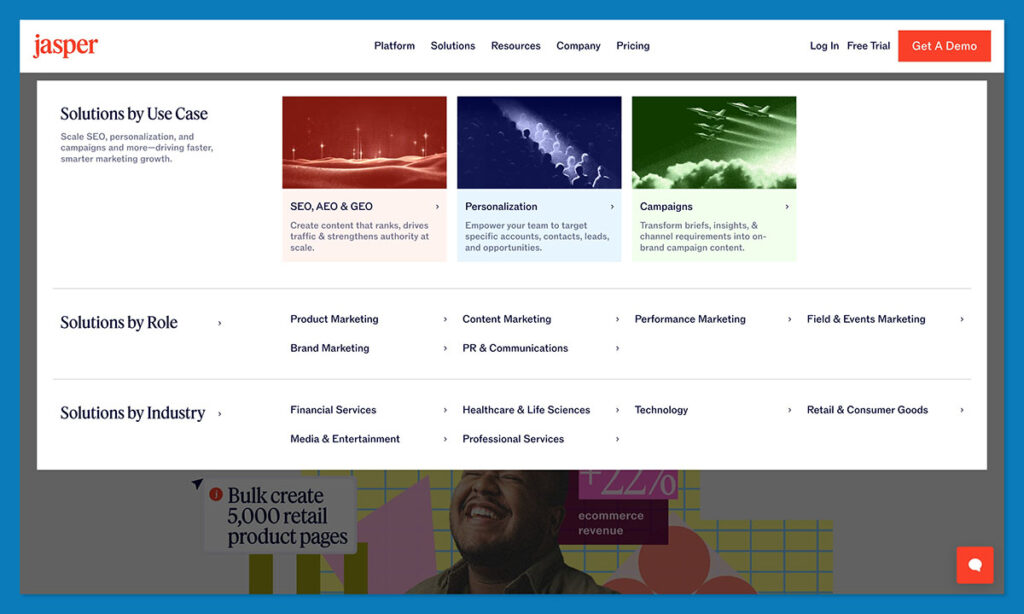
The challenge of producing consistent, high-quality content at scale is a significant hurdle for many e-commerce businesses. While raw AI models like ChatGPT can generate content rapidly, they often result in a generic and undifferentiated brand voice. Jasper AI addresses this by offering a “Brand Voice” feature that allows businesses to train the AI on their existing copy, ensuring that every piece of content—from product descriptions to marketing emails—maintains a cohesive and recognizable brand tone.
Jasper provides over 100 e-commerce-specific templates and “Campaign Workflows” that facilitate coordinated multi-channel launches. The platform also supports shared seats, enabling teams to collaborate while adhering to the established brand voice. For businesses managing extensive product catalogs, this consistency is a key differentiator.
In testing, Jasper’s product descriptions were found to be approximately 85% ready for publication, saving roughly 20 minutes per product compared to manual writing. This efficiency boost frees up content teams to focus on higher-level strategy and refinement.
Key Features:
- Brand Voice training for consistent tone and style.
- Over 100 e-commerce specific templates.
- Campaign Workflows for integrated marketing efforts.
- Collaboration features for teams.
- High-quality content generation for various marketing needs.
Pricing:
- Creator: $39/month for individuals and small teams.
- Teams: $99/month with enhanced features and collaboration tools.
- Business: Custom pricing for enterprise-level needs.
Pros:
- Ensures strong brand consistency across all content.
- Saves significant time and resources in content creation.
- Offers a wide range of templates for various marketing needs.
- Facilitates team collaboration on content projects.
Cons:
- Can be more expensive than general AI writing tools for solo users.
- Content still requires human review and editing for optimal results.
- May not offer the same level of deep customization as custom-trained models for highly niche needs.
Comparison: While ChatGPT Plus at $20/month offers robust AI writing capabilities, Jasper excels for teams producing over 20 content pieces monthly that require a unified brand voice. For solo operators, ChatGPT Plus with effective custom instructions can be highly effective. Shopify Magic offers integration benefits for direct content publishing within the Shopify ecosystem.
Algolia: Enhancing Site Search for Large Product Catalogs
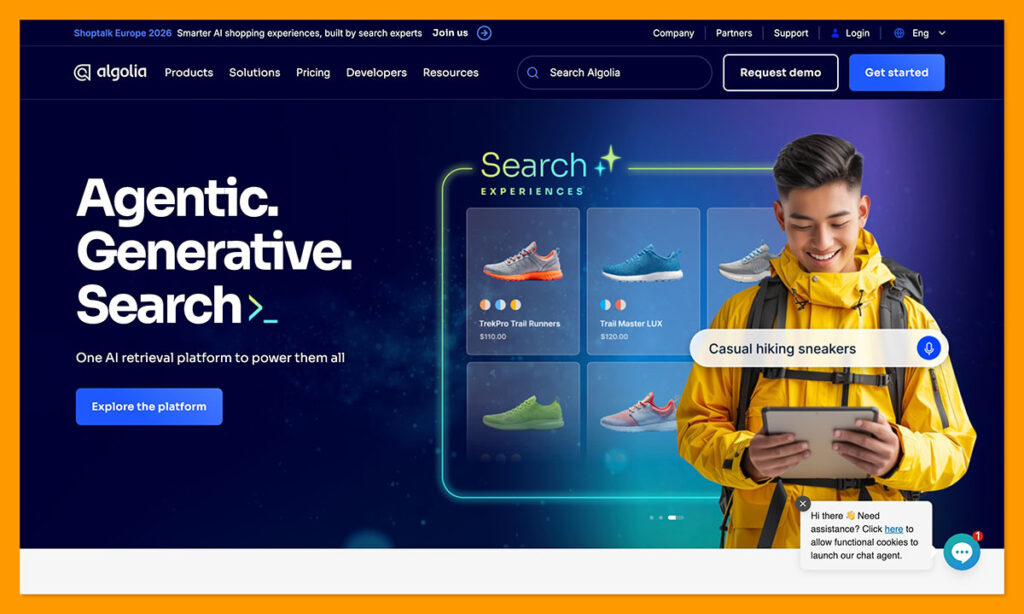
Effective site search is crucial for customer experience and conversion rates. For e-commerce stores with extensive product catalogs, generic search functionality often leads to customer frustration and lost sales. Algolia’s AI-powered site search, specifically its NeuralSearch technology, addresses this by understanding user intent rather than merely matching keywords.
NeuralSearch combines keyword and vector search, enabling it to surface relevant products even when search queries do not precisely match product titles. For instance, a search for “warm jacket for hiking” can accurately identify suitable items, even if those exact phrases are not used in the product listings. Algolia delivers results globally in under 100 milliseconds and allows for configurable merchandising rules to promote specific products. Furthermore, it provides an API for integrating catalog data with external AI agents, making it a powerful tool for large, dynamic product inventories.
Key Features:
- AI-powered NeuralSearch for intent-based product discovery.
- Blends keyword and vector search for comprehensive results.
- Ultra-fast search response times globally.
- Configurable merchandising rules to influence product visibility.
- API for external AI agent integration.
Pricing:
- Grow: Starts at $0.50 per 1,000 search queries, with a free tier for basic usage.
- Enterprise: Custom pricing for larger deployments.
Pros:
- Significantly improves product discoverability and conversion rates.
- Handles large and complex product catalogs effectively.
- Provides a fast and seamless search experience.
- Offers advanced customization and integration options.
Cons:
- Can be expensive for businesses with very high search query volumes.
- Requires careful configuration and optimization to maximize effectiveness.
- The AI premium for advanced features necessitates a clear ROI justification.
Verdict: Algolia becomes a valuable investment once a store’s catalog exceeds approximately 1,000 SKUs and poor search performance is demonstrably impacting conversion rates. It’s advisable to leverage the standard “Grow” tier until data clearly supports the incremental cost of AI-enhanced search.
Triple Whale: AI-Driven Analytics and Attribution for DTC Brands
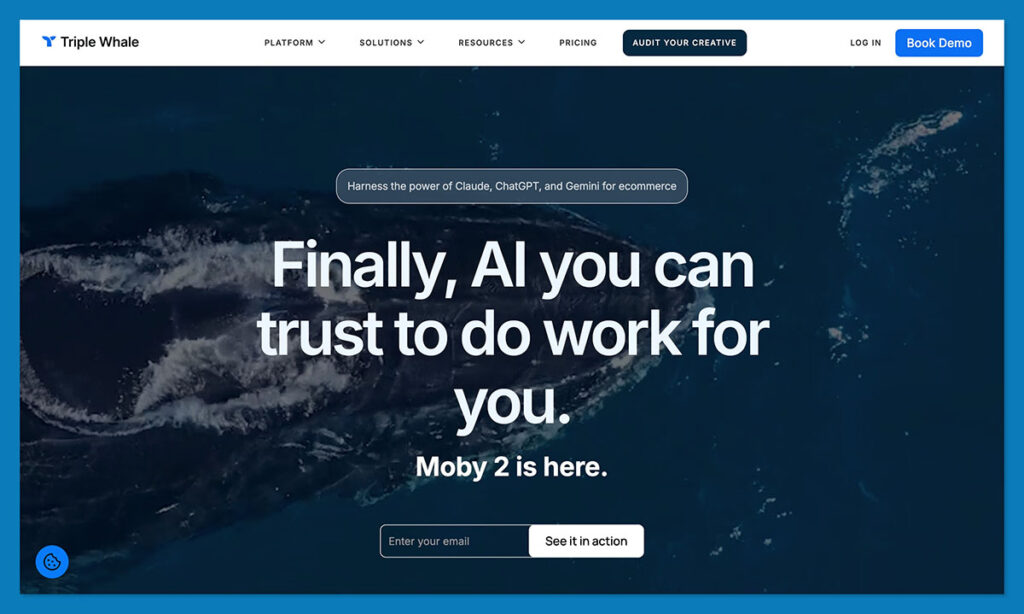
Accurate marketing attribution is fundamental for optimizing advertising spend and driving profitable growth, especially for Direct-to-Consumer (DTC) brands. Triple Whale offers a comprehensive solution for multichannel attribution, consolidating data from platforms like Meta, Google, and TikTok into a single, unified dashboard. Its AI assistant, Moby, allows users to query marketing performance in plain English, such as identifying campaigns that drove the most first-time buyers.
The platform’s Creative Analytics feature highlights the top-performing ad assets, while built-in metrics for Lifetime Value (LTV), Customer Acquisition Cost (CAC), and Return on Ad Spend (ROAS) are tailored to the needs of DTC businesses. Triple Whale aims to provide a single source of truth, eliminating the discrepancies often found across multiple reporting dashboards.
Key Features:
- Multichannel attribution reporting.
- AI assistant (Moby) for natural language queries.
- Creative Analytics to identify high-performing ad assets.
- DTC-focused LTV, CAC, and ROAS calculations.
- Integration with major advertising platforms and e-commerce systems.
Pricing:
- Free Tier: Limited features for basic analytics.
- Paid Tiers: Starting at $179/month, scaling with features and data volume.
Pros:
- Provides a clear and consolidated view of marketing performance.
- AI-driven insights simplify complex data analysis.
- Optimizes ad spend by identifying effective channels and creatives.
- Tailored for the specific needs of DTC brands.
Cons:
- The paid tier is most beneficial for businesses with significant ad spend.
- May require supplementary tools for advanced incrementality measurement.
- Can have a learning curve for users new to attribution modeling.
Verdict: For DTC brands investing $15,000 or more monthly in paid media, Triple Whale’s paid tier offers substantial value. Below this threshold, the free plan provides a solid foundation, with a re-evaluation recommended as ad spend increases. For precise incrementality measurement, pairing Triple Whale with a tool like Northbeam is advisable.
Prediko / Cogsy: Intelligent Inventory Forecasting for Profit Protection
Inventory management is a critical, albeit often overlooked, aspect of e-commerce profitability. AI-driven demand forecasting tools like Prediko and Cogsy play a vital role in preventing the silent cash leaks caused by stockouts and overstock. Cogsy’s surge alert system, for example, enabled an outdoor retailer to absorb a 300% demand spike, saving $150,000.
These tools prevent lost sales due to stockouts and reduce the capital tied up in excess inventory. Caraway, a home goods brand, utilized Cogsy’s Smart Replenishment to decrease stockouts by 75%, maintain a 98% inventory turnover rate, and save over 20 hours weekly. Collectively, these AI solutions can reduce holding costs by 20-30% and cut forecast error by 20-50% compared to manual planning methods.
Key Features:
- AI-powered demand forecasting.
- Stockout and overstock prevention alerts.
- Automated replenishment suggestions.
- Inventory turnover rate optimization.
- Integration with major e-commerce platforms.
Pricing:
- Prediko: Starts at $49/month.
- Cogsy: Custom pricing based on business needs.
Pros:
- Directly impacts profitability by optimizing inventory levels.
- Prevents lost sales and reduces carrying costs.
- Saves significant time on manual inventory planning.
- Provides data-driven insights for better stock management.
Cons:
- Requires a sufficient amount of historical sales data for accurate forecasting.
- May not be cost-effective for businesses with very small product catalogs.
- Accuracy is dependent on the quality and consistency of sales data.
Best For: Stores with over 100 SKUs and at least six months of sales history experiencing stockout or overstock challenges.
Skip It If: Your business has fewer than 100 SKUs or is less than six months old, as forecasts may not have enough data to outperform human judgment.
Prisync: Dynamic Pricing and Competitor Monitoring
In competitive e-commerce markets, staying ahead of competitor pricing is essential for maintaining market share and profitability. Prisync offers an AI-driven solution that monitors competitor pricing around the clock and can automatically reprice products to stay competitive, while adhering to pre-set margin floors.
The platform tracks an unlimited number of competitor URLs, identifies Minimum Advertised Price (MAP) violations, and flags competitor stock-outs, providing opportunities to adjust pricing strategically. Prisync integrates with major e-commerce platforms, but its effectiveness hinges on accurate product matching between your catalog and those of your competitors.
Key Features:
- Automated competitor price monitoring.
- Dynamic repricing based on customizable rules.
- MAP violation and stock-out alerts.
- Unlimited competitor URL tracking.
- Integration with major e-commerce platforms.
Pricing:
- Starter: $59/month for basic features.
- Pro & Business: Higher tiers with more advanced features and support.
Pros:
- Helps maintain competitive pricing and protect profit margins.
- Automates a time-consuming manual process.
- Provides valuable market intelligence on competitor strategies.
- Supports repricing across multiple e-commerce platforms.
Cons:
- Effectiveness depends heavily on accurate product matching.
- Less valuable for businesses with unique or highly differentiated products.
- Requires careful configuration of repricing rules to avoid price wars.
Verdict: Prisync is most beneficial for stores with 50+ SKUs operating in price-sensitive and competitive product categories, such as electronics. Businesses selling unique, handmade, or Minimum Advertised Price (MAP) protected items will find less utility in this tool.
Photoroom: Scalable AI for Professional Product Photography
High-quality product photography is paramount for online sales, but professional shoots can be prohibitively expensive and time-consuming. Photoroom offers an AI-powered solution that simplifies product image enhancement, enabling businesses to generate clean, white-background listing images at scale. For marketplace sellers, Photoroom provides a cost-effective way to achieve professional-looking visuals.
The core technology involves advanced background removal, capable of precisely isolating products even with intricate details like hair or transparent packaging. Photoroom’s Batch Mode allows for the simultaneous processing of hundreds of images, while template-driven outputs ensure visual consistency across listings and advertisements. Its robust mobile app also allows for shooting and editing directly from a smartphone.
Key Features:
- AI-powered background removal for clean product shots.
- Batch processing for efficient handling of large image volumes.
- Template-driven outputs for consistent branding.
- Mobile app for on-the-go editing.
- Automatic product enhancement tools.
Pricing:
- Pro: $9.99/month for access to all features and unlimited exports.
- Free Tier: Limited features and exports.
Pros:
- Significantly reduces the cost and time associated with product photography.
- Produces professional-quality images quickly and efficiently.
- Batch processing is ideal for high-volume sellers.
- Easy to use, even for individuals with no design experience.
Cons:
- Primarily focuses on background removal and basic enhancements, not scene creation.
- May require some manual touch-ups for highly complex product images.
- Less suitable for creating styled lifestyle imagery.
Comparison: While Photoroom excels at creating clean, studio-style product shots, Flair AI (discussed next) is better suited for generating lifestyle imagery. Many businesses utilize both tools to cover their diverse visual content needs.
Flair AI: Generating Lifestyle Product Imagery with AI
For brands that rely on visually appealing lifestyle imagery to connect with their target audience, Flair AI offers a creative solution. Instead of investing in expensive photoshoots, Flair AI generates styled scenes around product images, providing a cost-effective alternative for creating editorial-quality visuals. This is particularly beneficial for small brands with limited studio budgets.
The platform’s workflow involves dragging a product image onto a canvas, after which Flair AI generates a surrounding scene with appropriate props, surfaces, and lighting. It is particularly effective for apparel, beauty, and home goods, where styled backdrops significantly enhance product appeal. However, AI’s current limitations mean it struggles with reflective surfaces like jewelry, glassware, or metal, where traditional photography remains superior.
Key Features:
- AI-generated lifestyle scenes around product images.
- Customizable props, surfaces, and lighting.
- Ideal for apparel, beauty, and home goods.
- Cost-effective alternative to traditional photoshoots.
- Quick iteration and generation of multiple scene variations.
Pricing:
- Starter: $10/month for limited credits.
- Creator: $25/month with more credits.
- Pro: $50/month with the most credits and features.
Pros:
- Enables creation of high-quality lifestyle imagery on a budget.
- Provides creative scene variety without physical production.
- Faster iteration compared to traditional photoshoot processes.
- Accessible for small businesses and independent designers.
Cons:
- Struggles with reflective and transparent product materials.
- May require regeneration to achieve desired results.
- Less suitable for highly technical product visualization.
Best For: Visual product categories requiring creative scene variety on a tight budget.
Skip It If: You sell jewelry, glassware, or metal products, as AI currently struggles with rendering these materials accurately.
Ringly.io: Automating Voice Support for the Phone Channel
While many AI solutions focus on text-based communication, the phone channel remains a significant touchpoint for customer service. Ringly.io offers AI-powered voice support, automating routine inbound calls such as order status inquiries, return requests, and basic product questions. This service operates at approximately $0.38 per call, representing a substantial cost saving compared to the industry average of $2.35 per call for human agents. By handling these routine queries, Ringly.io allows human support teams to focus on more complex and high-value customer interactions.
Key Features:
- AI-powered voice response for inbound customer calls.
- Handles routine inquiries like order status and returns.
- Seamless handover to human agents for complex issues.
- Cost-effective alternative to traditional call centers.
- Integration with existing CRM and support systems.
Pros:
- Significant cost savings on inbound call handling.
- Frees up human agents for more critical tasks.
- Provides 24/7 availability for basic customer support.
- Improves efficiency of the phone support channel.
Cons:
- Less effective for highly complex or emotionally charged customer issues.
- Requires clear scripting and training for optimal performance.
- May not be necessary if your customer base rarely uses the phone.
Verdict: For e-commerce businesses that receive a steady volume of inbound calls, Ringly.io presents one of the most cost-effective AI implementations available. If phone inquiries are not a significant part of your customer service strategy, this tool may not be a priority.

Strategic AI Implementation: Sequencing for Success
The key to unlocking the true potential of AI in e-commerce lies not in acquiring a multitude of tools, but in strategically implementing the right solutions to address specific bottlenecks. The principle of starting with the tool that solves your most pressing problem and proving its ROI before expanding is a prudent approach that many vendor-driven guides overlook.
Data supports this phased strategy: 89% of companies utilizing AI report positive returns on investment, with an average payback period of approximately nine months. Sequencing investments rather than stockpiling tools is crucial for sustainable growth.
A recommended rollout order, based on common e-commerce needs:
- Month 1: Content Enhancement: Begin with Shopify Magic (free) for foundational tasks or ChatGPT Plus ($20/month) for more nuanced content creation.
- Month 2: Email Marketing Optimization: Implement Klaviyo, focusing on setting up core flows like abandoned-cart and welcome series on its free tier.
- Month 3: Customer Support Automation: For businesses with under 500 tickets monthly, Tidio’s free plan is a good starting point. For higher volumes, consider Gorgias or Fin.
- Subsequent Months: Introduce analytics (Triple Whale), inventory forecasting (Prediko/Cogsy), pricing intelligence (Prisync), and visual content tools (Photoroom/Flair AI) as specific business pains arise.
The following table outlines a strategic tool adoption roadmap based on store stage:
| Store Stage | Priority Tools | Rough Monthly Cost |
|---|---|---|
| Solo / Under $500K | Shopify Magic (free) + ChatGPT Plus + Klaviyo (free) + Tidio (free) | ~$20-50 |
| Growing / $500K-$1M | Add Klaviyo (paid) + Gorgias or Tidio (paid) + Photoroom | ~$150-250 |
| Scaling / $1M-$10M | Add Triple Whale ($15K+ ad spend) + Prediko/Cogsy (100+ SKUs) + Algolia or Prisync (as needed) | ~$300-800 |
The Future of E-commerce: Generative Engine Optimization (GEO)
A significant trend shaping the future of e-commerce is Generative Engine Optimization (GEO), which focuses on making product data discoverable and citeable by AI search engines. AI search platforms now account for 12-18% of queries, and shoppers referred by AI convert at a 31% higher rate. To capitalize on this, e-commerce businesses must structure their product data to be easily understood by AI. This involves prioritizing concrete specifications over marketing adjectives, implementing Schema 2.0 structured data, and ensuring real-time synchronization of pricing and stock levels to build trust with AI crawlers.
Frequently Asked Questions
Which AI e-commerce tool should I implement first?
Prioritize the tool that addresses your most significant pain point. If content creation consumes excessive time, start with Shopify Magic or ChatGPT Plus. If customer support is overwhelming, opt for Tidio’s free plan (under 500 tickets) or Gorgias/Fin for higher volumes. For weak email revenue, establish Klaviyo’s free tier with essential automated flows.
Is Shopify Magic sufficient, or do I need third-party AI tools?
Shopify Magic effectively handles routine tasks like product tagging, SEO metadata, basic descriptions, and image background removal, saving considerable time. However, it often produces generic content requiring refinement and lacks the advanced analytics and strategic depth of specialized third-party tools like ChatGPT or Claude, which are better suited for direct sales-driving copy.
Why did my Klaviyo bill increase without adding subscribers?
As of February 18, 2025, Klaviyo’s billing model shifted from “actively emailed contacts” to “total active profile count.” This means all subscribed contacts contribute to billing, regardless of recent engagement. To manage this “Dead Profile Tax,” establish a Sunset Flow to suppress inactive contacts (no opens/clicks in 180 days) for cost control.
How accurate is the 60% AI support automation claim?
Real-world automation rates typically range from 26% to 56%, often falling short of the advertised 60%. Most businesses achieve 30-40% automation initially, gradually increasing over months with system training and content optimization. The focus should be on resolution rate (actual problem-solving) rather than deflection rate (simply preventing human contact).
What is GEO and why is it important for e-commerce?
GEO, or Generative Engine Optimization, involves structuring product data so AI search engines (like ChatGPT and Google AI Overviews) can easily cite your products. With AI search now driving a significant portion of queries and AI-referred shoppers converting at higher rates, optimizing for AI discoverability is becoming a fundamental requirement. This includes using concrete specifications, Schema 2.0 data, and real-time pricing/stock synchronization.
What is the best budget AI product photography tool?
For clean, marketplace-ready images, Photoroom Pro ($9.99/month) is highly effective. For styled lifestyle scenes, Flair AI starts at $10/month. Pebblely offers a free tier for basic testing. Avoid AI for jewelry, glassware, or metal products due to current limitations with reflective surfaces.