

The highly anticipated 2026 FIFA World Cup has officially commenced, marking a significant shift in how UK advertisers can engage with one of the world’s largest sporting spectacles. With an expanded format featuring 48 teams and a staggering 104 matches spread across three North American host nations, the tournament presents a unique set of challenges and opportunities for media planners. The substantial time difference means many games will air between midnight and 3 am British Summer Time (BST), a stark contrast to the more viewer-friendly 9 pm to 10 pm window for England’s crucial group stage fixtures. This temporal distribution necessitates a re-evaluation of media strategies, placing a greater emphasis on the substantial catch-up audience that is projected to be larger and more consistent than in any previous World Cup. The effectiveness of advertising strategies will hinge on understanding the tournament’s unique structure and the evolving capabilities of programmatic advertising in 2026.
Navigating the 2026 World Cup Landscape for UK Advertisers
This year’s World Cup presents a dual broadcast landscape for UK audiences, with the BBC and ITV sharing exclusive rights to all 104 matches. Both broadcasters are offering free-to-air coverage, albeit with differing advertising models. The BBC will air approximately 54 matches, including the highly anticipated clash between England and Ghana, entirely without commercial breaks. ITV, on the other hand, will broadcast 51 matches, including England’s other two group games, offering both traditional direct-sold linear advertising slots and a programmatic advertising route through its streaming platform, ITVX.
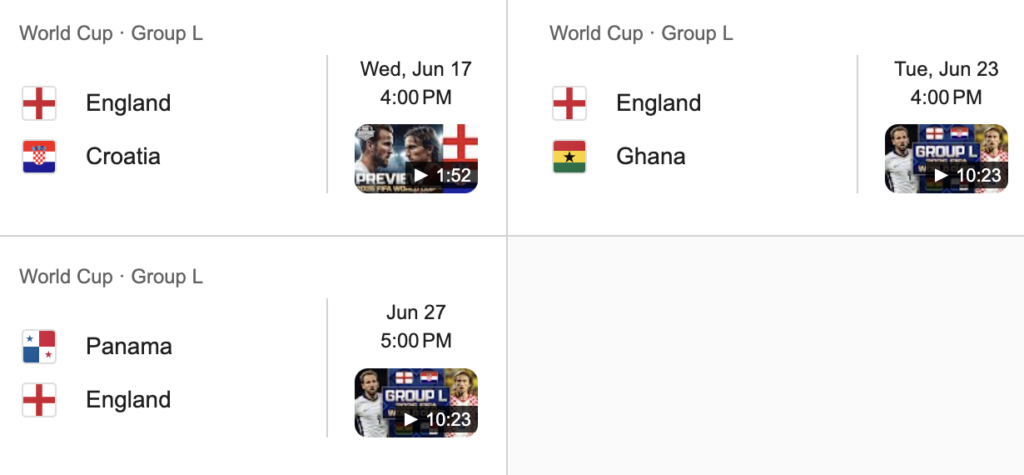
England’s group stage schedule offers a welcome respite from the overnight viewing patterns that will dominate much of the tournament. Their opening match against Croatia on June 17th is slated for 9 pm BST on ITV, followed by the Ghana game on June 23rd at 9 pm BST on the BBC, and a final group fixture against Panama on June 27th at 10 pm BST on ITV. These prime-time slots are expected to draw substantial live linear audiences, and premium advertising inventory surrounding these matches was reportedly sold out months in advance. Advertisers who secured these packages are positioned to benefit from high-quality audience engagement during these key fixtures. For those who did not, the direct linear window for these particular games is now closed.
However, the viewing patterns for matches beyond England’s group stage are set to be significantly different. Powerhouse nations such as Brazil, Argentina, Spain, and France are scheduled to play during UK overnight hours. This temporal arrangement will naturally lead to the formation of a substantial catch-up audience that will engage with content the following day. This persistent daily catch-up pattern, extending for the entire month-long tournament, is what defines the 2026 World Cup as a genuinely novel media environment for advertisers.
The Maturation of TV, Sports, and Programmatic Advertising
The advertising industry has witnessed a significant evolution in the infrastructure for purchasing live sports inventory programmatically. Major platforms like Google DV360 now offer access to Sky Sports inventory, with agencies like Brainlabs among the early adopters. Similarly, The Trade Desk has been actively developing its live sports capabilities at scale. StackAdapt, a prominent Demand-Side Platform (DSP), has also introduced a purpose-built workflow for programmatic live event buying on Connected TV (CTV), notably piloting this with NBCUniversal during the Winter Olympics in Milan. The availability of live sports inventory across programmatic platforms has expanded considerably over the past year, transitioning live sport from a niche programmatic offering to a robust and reliably purchasable media category.
Beyond the immediate live broadcast window, a significant portion of the sports-watching audience engages with “shoulder content”—the supplementary material that surrounds live matches. This includes post-game interviews, punditry analyses, tactical breakdowns, and reaction pieces. Recent trends show a substantial surge in engagement with this type of content on platforms like YouTube and official broadcaster channels. This is where a considerable segment of the sports audience now resides, and it is fully accessible through programmatic channels. The reach of a major sporting moment no longer solely depends on the broadcaster that held the live rights; for instance, Sky Sports’ YouTube channel garnered over 5 million views of content related to the Paris Olympics, despite the BBC holding the primary broadcast rights in the UK.
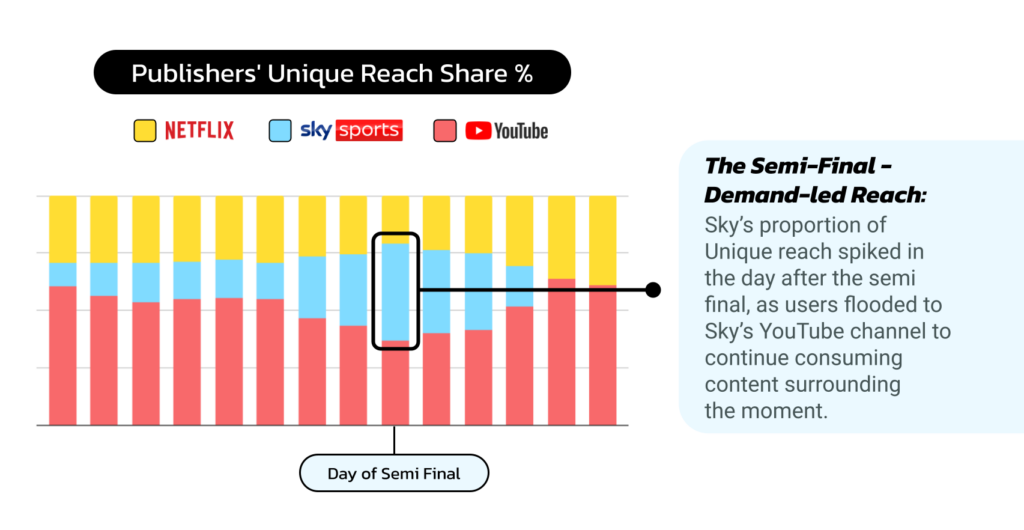
Extensive testing over the past year, particularly during the Women’s Euros, has demonstrated the efficacy of a “Unified CTV” approach. This strategy combines live sports buying with the placement of aligned shoulder content across platforms such as Sky YouTube, Netflix, and YouTube. Research detailed in the Brainlabs paper, “Unified CTV II: The Big Broadcast moments,” highlights the substantial volume of engaged audiences acquired through such campaigns. Around crucial matches, like semi-finals, a broadcaster’s share of unique reach can spike dramatically as audiences flock to their channels for highlights, interviews, and pre-match build-up.
One campaign achieved remarkable results, delivering 142% of planned reach for 100% of the budget, accompanied by a 77% uplift in product searches and a 61% increase in brand searches. This indicates not only the ability to attract hard-to-reach, engaged audiences but also the growing appetite for this form of content consumption. Supporting this trend, research published in 2026 by Cadent and YouTube revealed that six out of ten individuals aged 18-44 prefer watching a creator’s breakdown of a major sporting event over the event itself. This data underscores the robustness of the infrastructure and the alignment with evolving audience behaviors. Whether engaging with live sport, catch-up content, shoulder programming, or content from trusted football voices, programmatic advertising in 2026 offers an unprecedented opportunity to connect with audiences during major sporting events.
Total TV Opportunities for the 2026 World Cup
At Brainlabs, the concept of “Total TV” encompasses both linear and digital viewing. The 2026 World Cup presents a wealth of such opportunities, potentially exceeding the scope of a single article. However, the tournament’s unique characteristics—its scale, duration, and global timings—combined with advancements in programmatic CTV, highlight several particularly relevant avenues for advertisers.
Live Linear and ITVX Integration
The live England matches primarily represent a linear television opportunity. ITV’s direct-sold packages surrounding these fixtures are considered the premium advertising offering, promising high audience quality for those who have secured them. For advertisers who missed out on these direct deals, ITVX provides a programmatic entry point into live match streaming. With 40 million registered users and over 20,000 audience targeting options, ITVX offers access to the live broadcast, though competition for inventory during the highest-demand fixtures is anticipated.
FIFA on YouTube: A New Frontier
YouTube’s partnership with FIFA introduces a novel layer of targetable inventory for the World Cup. For the initial ten minutes of every match, live streams will be available on broadcaster YouTube channels. Furthermore, full highlight packages will now feature advertising inventory for the first time. Through DV360, advertisers can secure named channel placements directly on the official FIFA channel, the ITV Sport channel, and within the creator network that FIFA has integrated into the tournament coverage. This provides a direct connection to highly engaged football enthusiasts within a familiar digital environment.
The Daily Catch-Up Window
ITVX will also host a dedicated 24/7 World Cup channel throughout the tournament, featuring classic matches and FIFA-produced content. The catch-up opportunity is distinct: many non-England games will conclude in the UK between 2 am and 5 am. Viewers who are passionate enough to follow these matches will subsequently turn to ITVX and YouTube the following morning, exhibiting high intent and contextual relevance. This significant catch-up window opens daily for the entire month, offering consistent advertising touchpoints.
Beyond Official Broadcast Rights
The audience engaged with football during a tournament is arguably more valuable than at almost any other time of the year. For the 2026 World Cup, the build-up and catch-up periods are predicted to be even more substantial. Data from the 2022 tournament indicated that four out of five viewers spent time with content outside of the live match window, with digital platforms collectively accumulating 170 billion minutes of football viewing. This figure is expected to be surpassed in 2026.
This robust appetite manifests in two primary content categories. Firstly, shoulder programming such as Sky Sports’ post-match interviews, expert analysis, and punditry panels attract sports-engaged audiences irrespective of broadcast rights and are targetable via DV360. Beyond traditional broadcasters, shows like Goalhanger’s “The Rest Is Football,” which streams daily on Netflix featuring prominent football personalities, exemplify the strong demand for such supplementary content.
Secondly, creator reaction content—including reaction videos, tactical analyses, and fan-driven coverage—benefits from creators being granted physical tournament access for the first time. As previously mentioned, research indicates a significant preference among younger demographics for creator-led breakdowns of major sporting events. Advertising opportunities are available through named channel placements, topic and keyword targeting, and specific sports fan audience segments across both shoulder programming and creator content. The key insight is that advertisers do not need to secure official World Cup broadcast rights to capitalize on the tournament’s immense reach; being a part of the broader football ecosystem is sufficient.
Is It Too Late to Capitalize on the World Cup?
While some advertising windows have undoubtedly closed—premium linear TV packages and direct-sold deals are typically secured well in advance—the programmatic CTV landscape offers substantial and timely opportunities. For advertisers who may feel they have missed the initial launch, the answer is unequivocally no, it is not too late. The daily catch-up window, alongside the extensive build-up content, provides ample opportunities to engage with audiences. From official FIFA content and broadcaster shoulder programming to creator-led discussions and broader football commentary, the advertising potential remains significant.
The audience that was actively building anticipation for the opening game and catching up on overnight results is already engaged. A substantial portion of this audience can be reached programmatically today. Furthermore, if England progresses deep into the tournament, the flexibility of programmatic advertising becomes even more critical. Knockout fixtures are inherently more difficult to plan for in advance, and the programmatic layer can scale dynamically with the unfolding narrative in ways that fixed, direct-sold linear campaigns cannot.
More than ever before, the 2026 World Cup represents a hybrid advertising model for television. Linear television remains the optimal choice for capturing the peak audience engagement during the most significant live moments. However, CTV offers a consistent daily catch-up layer and provides an unparalleled ability to reach diverse sports-engaged audiences across platforms like Sky Media, ITVX, and YouTube throughout the tournament. While the live action of the World Cup commenced yesterday, the programmatic advertising opportunities have, in many respects, only just begun, with the CTV landscape presenting a more expansive and dynamic arena than ever before. The implications for advertisers are clear: a strategic blend of traditional and digital approaches is essential to harness the full power of this global sporting event.









