A thorough review of 247 Shopify themes has culminated in the selection of 13 exemplary options for clothing stores in 2026, meticulously chosen based on design quality, mobile performance, and robust support for crucial marketing channels post-launch. Key recommendations include Dawn as the premier free, all-around solution for nascent clothing businesses, Blum for fashion-forward brands prioritizing visual impact, and Impulse for those operating in the high-end and luxury fashion segments. This guide provides an in-depth analysis of these themes, categorized by store type and use case, encompassing both complimentary and premium selections. Beyond these specific recommendations, the article delves into critical considerations for theme commitment, such as mobile performance scores, product display functionalities, SEO architecture, and marketing compatibility, offering a holistic framework for informed decision-making in the competitive e-commerce landscape.
The Evolving Landscape of E-commerce for Apparel
The apparel sector continues to dominate the Shopify platform, with 2026 data indicating approximately 795,413 active clothing shops, ranging from independent boutiques to large-scale retailers. This prevalence underscores the critical need for online storefronts that are not only aesthetically pleasing but also highly functional and optimized for conversion. The digital retail environment is dynamic, with consumer expectations continually evolving, particularly concerning mobile experience and personalized marketing. As reported by Contentsquare’s 2026 Digital Experience Benchmark, mobile devices accounted for a staggering 77% of all retail site traffic in 2025, highlighting the undeniable imperative for mobile-first design and performance.
Shopify’s "Online Store 2.0" (OS 2.0) themes represent a significant advancement, offering enhanced modularity, greater customization capabilities, and improved performance. This evolution allows merchants more flexibility in building unique brand experiences without extensive coding knowledge, a crucial factor for clothing brands where visual identity and brand storytelling are paramount. The themes reviewed herein reflect the cutting edge of OS 2.0 development, integrating features designed to meet the demands of modern e-commerce.
Methodology and Key Findings
The selection process involved an exhaustive evaluation of 247 themes, narrowing the field to 13 based on a stringent set of criteria. Each theme was assessed for its design aesthetics, ensuring it aligns with contemporary fashion trends and diverse brand identities. Mobile performance was rigorously tested using PageSpeed Insights, with scores reflecting load times and user experience on mobile devices. Crucially, the themes’ inherent capabilities to integrate with and support various marketing channels—such as email capture, pop-ups, and customer segmentation—were a primary determinant, acknowledging the interconnectedness of storefront design and marketing efficacy. All themes chosen incorporate built-in email capture functionalities.
The comprehensive analysis revealed a diverse pricing structure for premium themes, ranging from $170 to $500 for a one-time purchase, while five excellent free options provide accessible entry points for new businesses. Performance metrics, specifically mobile scores from PageSpeed Insights (verified in August 2026), varied, but consistently highlighted themes optimized for speed and responsiveness.
Quick Comparison: Best Shopify Themes for Clothing at a Glance (August 2026)
| Theme | Price (one-time purchase) | Free Option | Mobile Score (PageSpeed Insights) | Best For |
|---|---|---|---|---|
| Dawn | Free | Yes | 66 | New stores, general use |
| Blum | $170 | No | 58 | New fashion brands |
| Fashionopolism | $200 | No | 50 | Growing apparel brands |
| Impulse | $500 | No | 53 | High-end and luxury fashion |
| Prestige | $400 | No | 73 | Editorial and storytelling brands |
| Symmetry | $420 | No | 68 | Large catalogs |
| Cascade | $350 | No | 69 | Established apparel retailers |
| Streamline | $420 | No | 73 | Trendy and lifestyle brands |
| Shine | $300 | No | 66 | Mid-market fashion stores |
| Colorblock | Free | Yes | 73 | Modern boutiques |
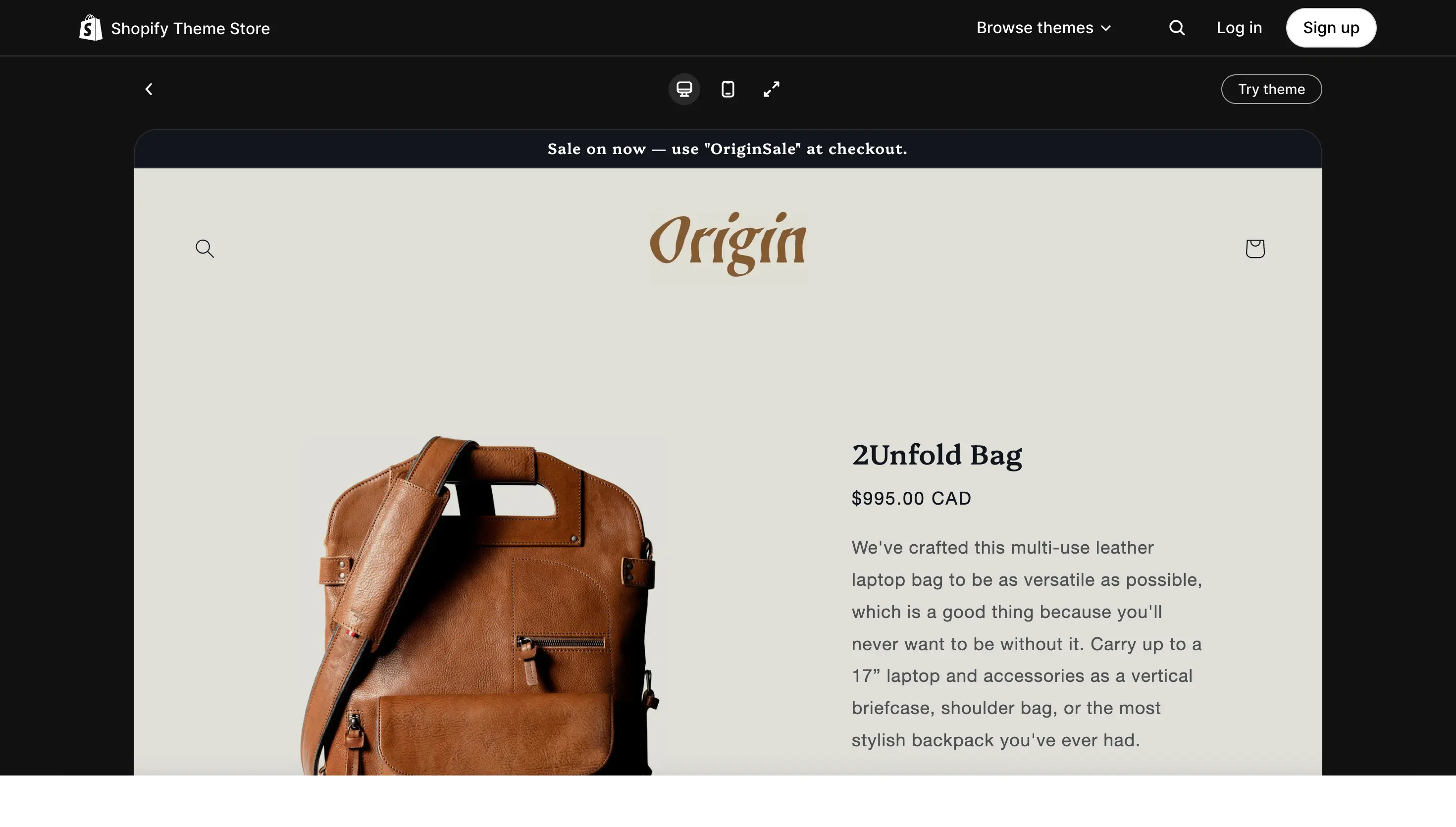
| Origin | Free | Yes | 73 | Handmade and streetwear brands |
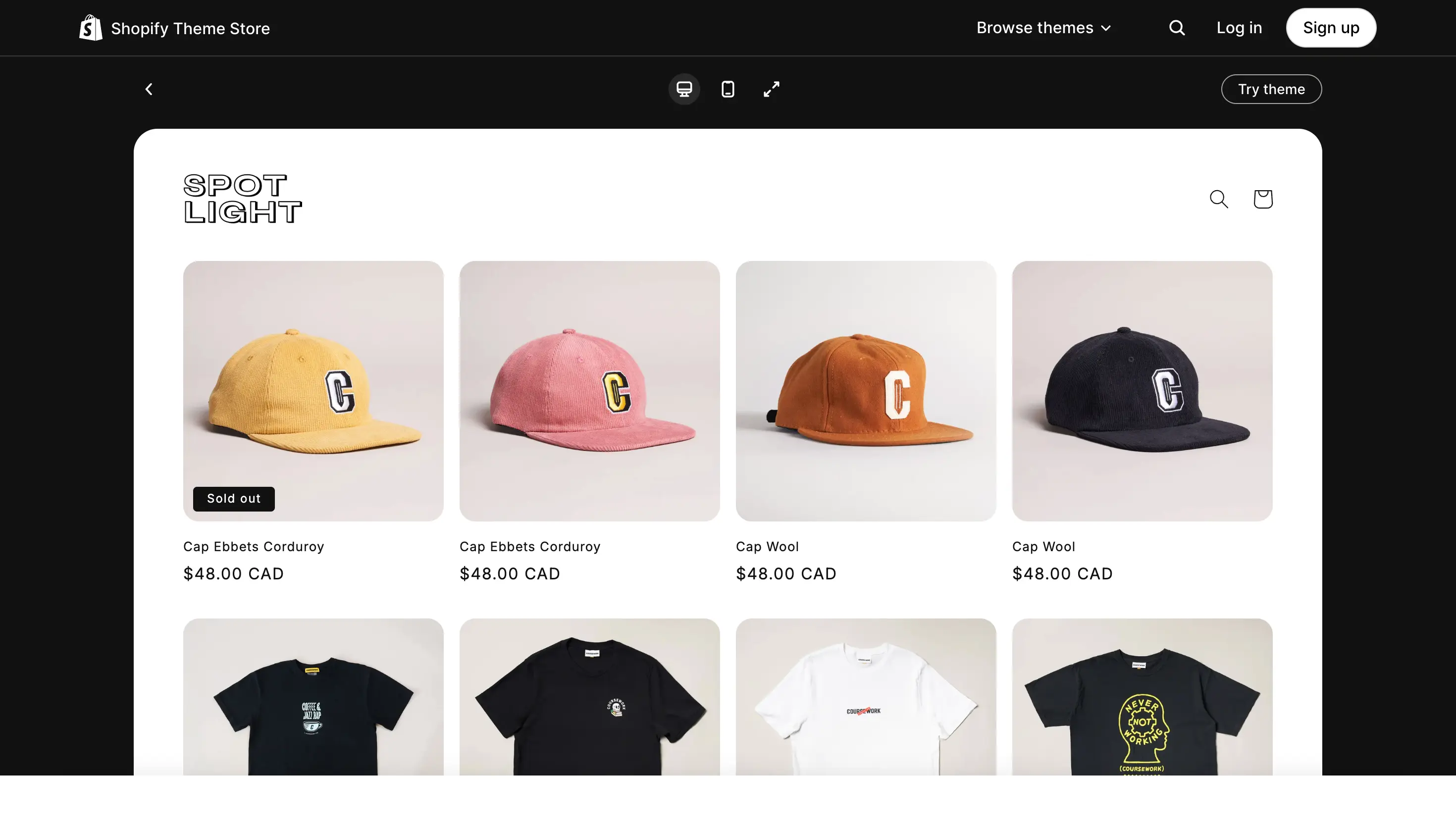
| Spotlight | Free | Yes | 72 | Boutique and luxury-adjacent stores |
| Ride | Free | Yes | 69 | Athletic and outdoor apparel |
Performance evaluated using PageSpeed Insights; results may vary slightly on repeat tests.
Deep Dive: Top Picks for Shopify Clothing Themes
The identified themes are categorized by their optimal use case, providing a tailored selection rather than a universal ranking.
Free Essentials: High-Quality Foundations for Every Brand
For businesses just starting or operating on a limited budget, Shopify’s free themes offer robust functionality without compromising on design. These themes are continuously developed and supported by Shopify, ensuring long-term viability and compatibility with platform updates.
-
Dawn – The All-Rounder for Beginners
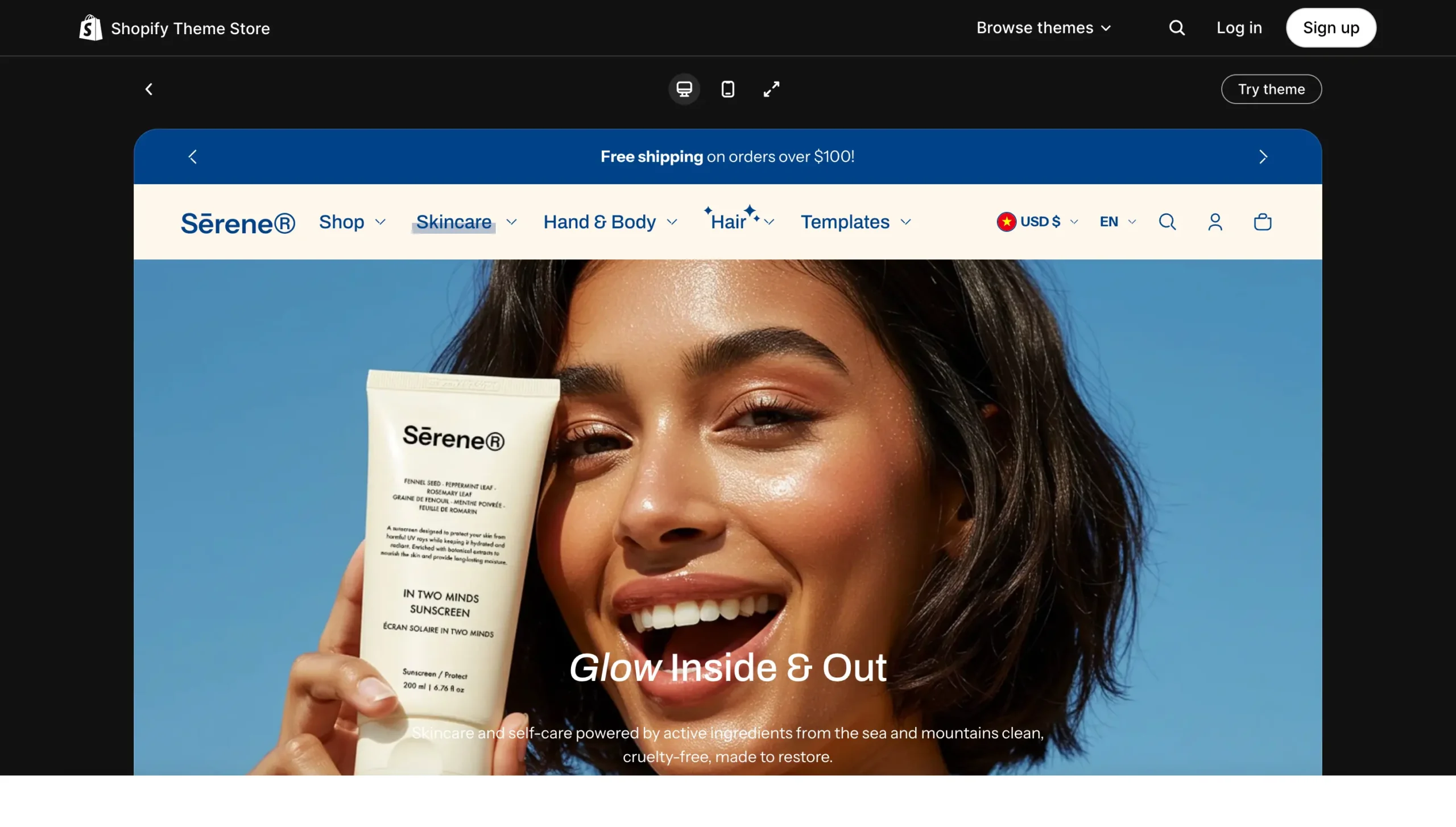
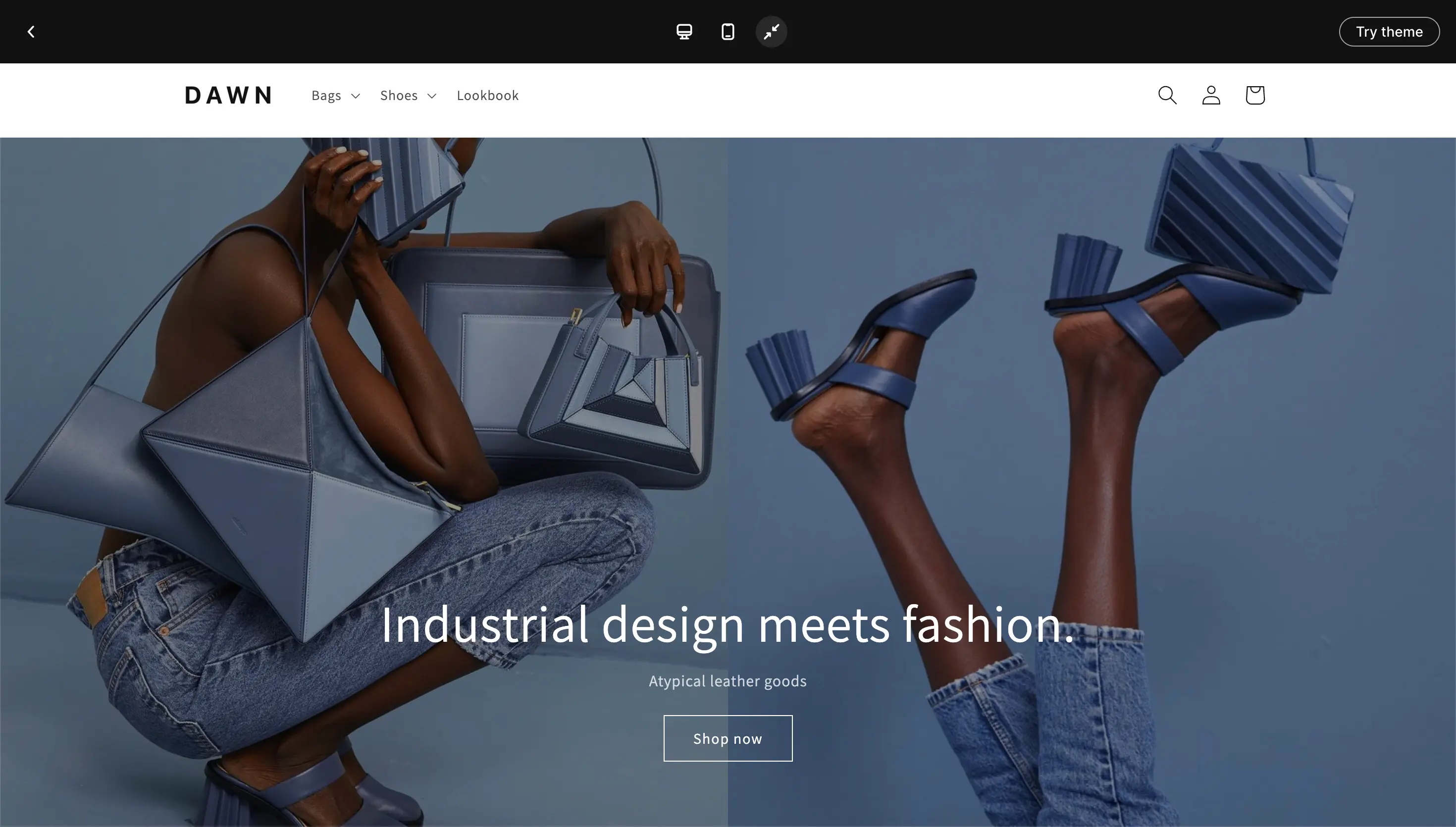
As one of Shopify’s official OS 2.0 themes and a widely adopted option, Dawn is celebrated for its straightforward, lightweight design and ongoing development. Its minimalist approach effectively highlights high-quality product photography, making it ideal for new clothing brands or those with budget constraints for design. Brands like Camille La Vie and BLANK Wardrobe successfully leverage Dawn’s clean aesthetic. While its customization options are somewhat limited, and it lacks native upsell features, Dawn provides an excellent foundation, allowing brands to easily upgrade later.- Main Limitation: Restricted customization and no native upsell options.
- Best For: New clothing stores and brands evaluating Shopify.
- Key Features: Minimalist design, fast loading, mobile-first, robust OS 2.0 architecture.
-
Colorblock – Distinctive Design for Modern Boutiques
Another official free Shopify theme, Colorblock, stands out with its bold, grid-based layout and strong visual contrast. It empowers brands to weave long-form storytelling into editorial sections, balancing narrative with vibrant, customizable elements. This theme is particularly well-suited for modern boutiques aiming to create a memorable visual identity without investing in a paid solution.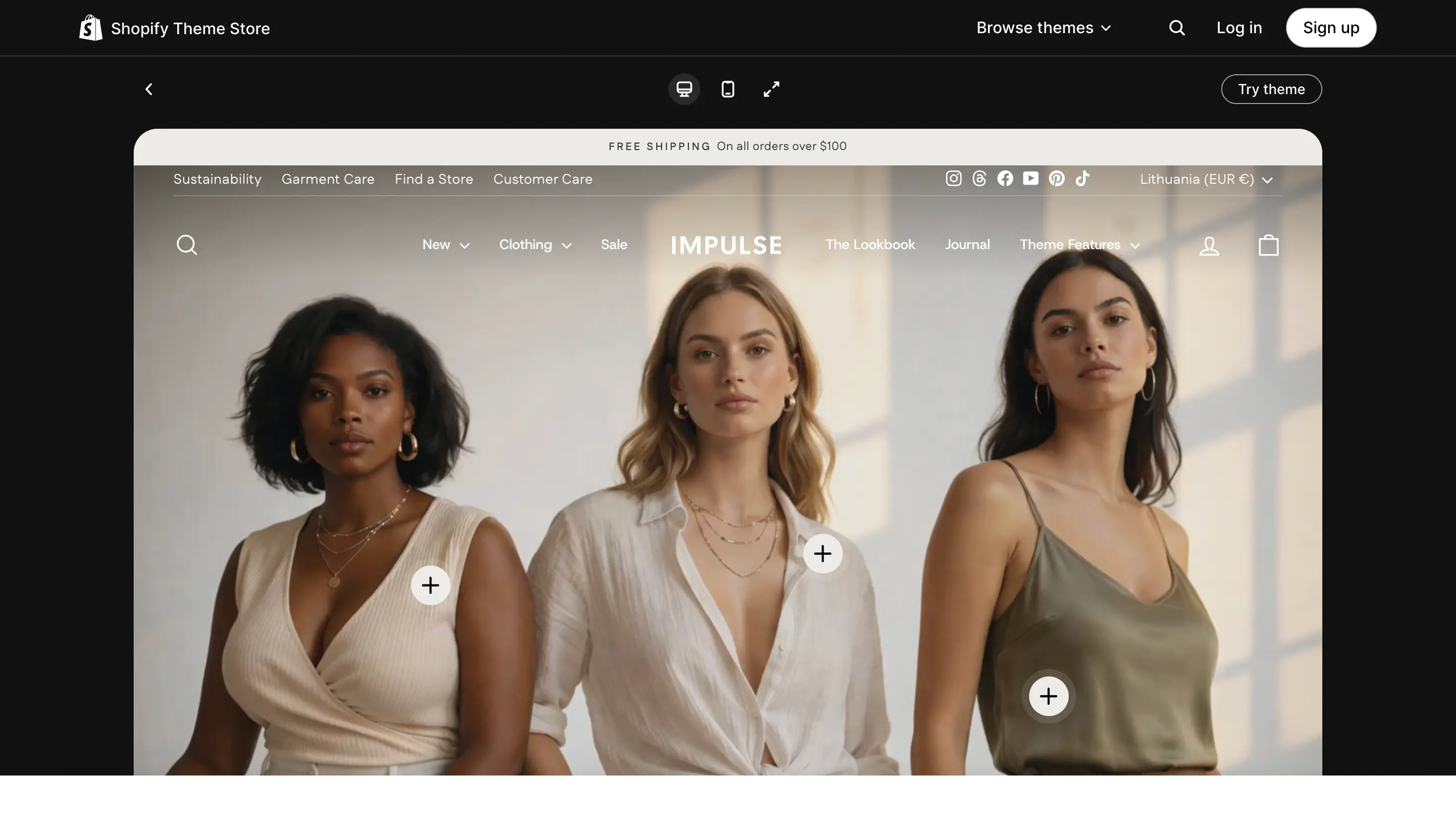
- Main Limitation: Its distinct design can be restrictive for brands seeking extensive customization beyond its core aesthetic.
- Best For: Modern boutiques desiring a unique visual presence.
- Key Features: Grid layout, editorial sections, strong visual contrast, customizable sections.
-
Origin – Emphasizing Individuality for Artistic Brands
Origin is tailored for businesses that prioritize uniqueness, particularly handmade, independent, or niche clothing brands. It offers substantial visual control for aesthetic-driven brands who value individual expression over a conventional retail look. While some functional limitations might necessitate additional apps, Origin excels at showcasing brand personality.- Main Limitation: May require supplementary apps for advanced functionality.
- Best For: Artistic brands emphasizing unique personality and aesthetic.
- Key Features: Strong visual control, personality-driven design, flexible content blocks.
-
Spotlight – Polished Simplicity for Focused Collections
Positioned as a free alternative to premium themes like Blum or Impulse, Spotlight offers a clean, refined look ideal for small to medium-sized brands with a curated selection of hero products. It provides a functional Shopify store experience, though its straightforward design means it lacks many advanced marketing features found in paid themes and may present bottlenecks for rapidly expanding product catalogs.- Main Limitation: Limited advanced marketing features and potential scalability issues for large catalogs.
- Best For: Boutique or luxury-adjacent brands launching focused or limited-edition collections.
- Key Features: Clean design, refined aesthetics, strong product focus.
-
Ride – Action-Oriented for Athletic and Outdoor Apparel
Ride features an action-oriented design specifically built for brands in the active lifestyle and sportswear sectors. Its long-form text and content blocks allow for contextualizing individual products with impactful visuals, effectively showcasing use cases. However, its niche focus limits its applicability to sports and outdoor brands, and like many OS 2.0 themes, it offers fewer built-in features compared to premium options.- Main Limitation: Niche-specific design limits broader applicability and offers fewer built-in features.
- Best For: Athletic and outdoor apparel brands.
- Key Features: Action-oriented design, long-form content support, impactful visuals for use cases.
Value-Driven Innovation: Bridging the Gap to Premium
These paid themes offer a compelling balance of features, design, and cost, catering to brands ready to invest in a more robust online presence without the highest price tag.
-
Blum – Best Value for New Fashion Brands ($170)
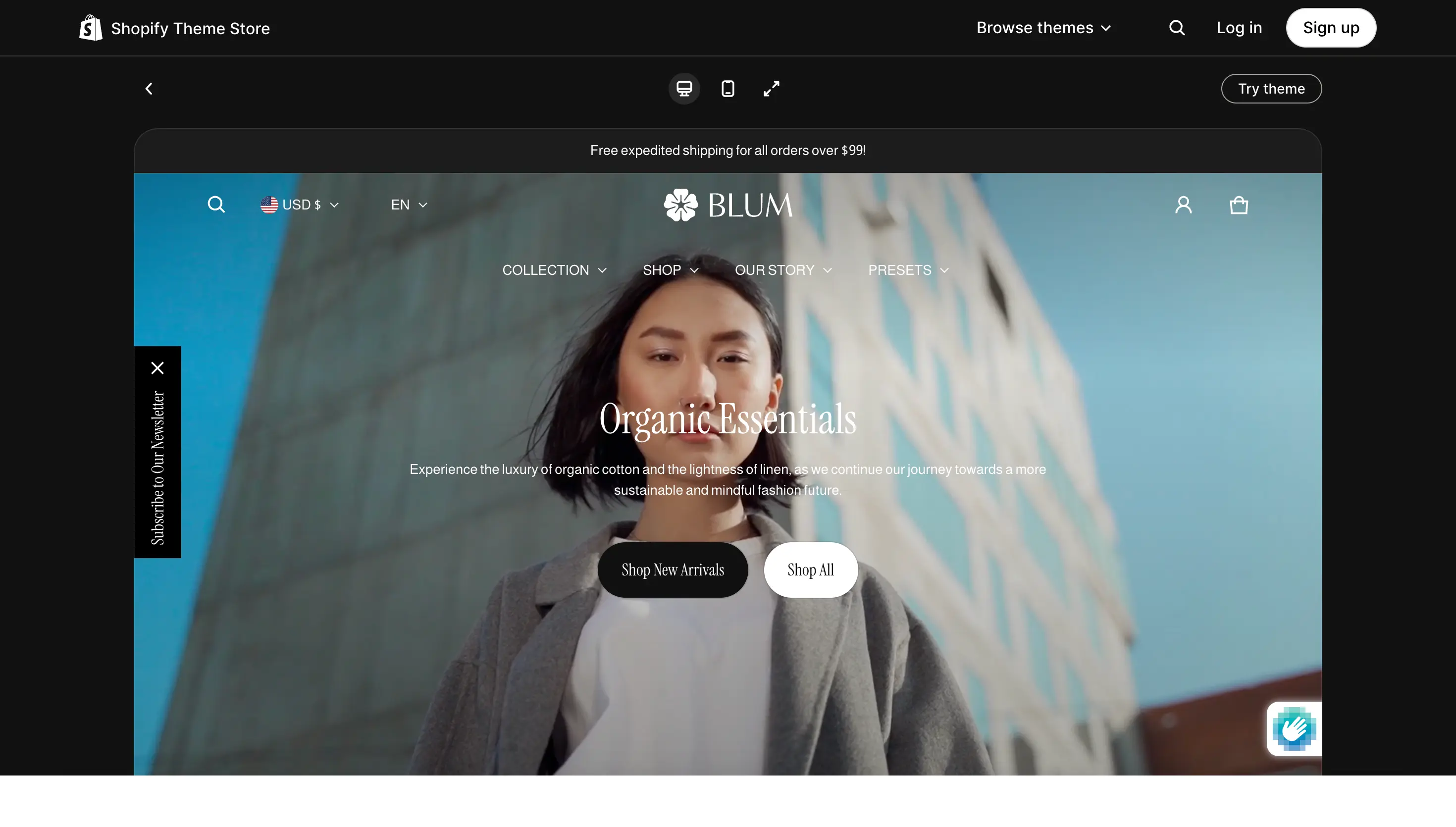
Blum is a paid theme purpose-built for fashion, beauty, and lifestyle stores. At $170, it offers exceptional value, providing a polished, media-rich layout with over 30 pre-built sections and AI-assisted section creation. Its native features, such as color swatches, sticky add-to-cart, mega menus, and interactive lookbooks, significantly reduce the Total Cost of Ownership (TCO) by minimizing the need for monthly app subscriptions, potentially saving merchants $40-$60 per month. Brands like Kaleidoscope Collective benefit from its comprehensive features.- Main Limitation: Requires high-quality images and videos to fully leverage its visual-centric design.
- Best For: New fashion and direct-to-consumer (DTC) brands.
- Key Features: Media-rich layout, 30+ pre-built sections, AI section creation, native conversion tools (color swatches, sticky add-to-cart, mega menus, lookbooks).
-
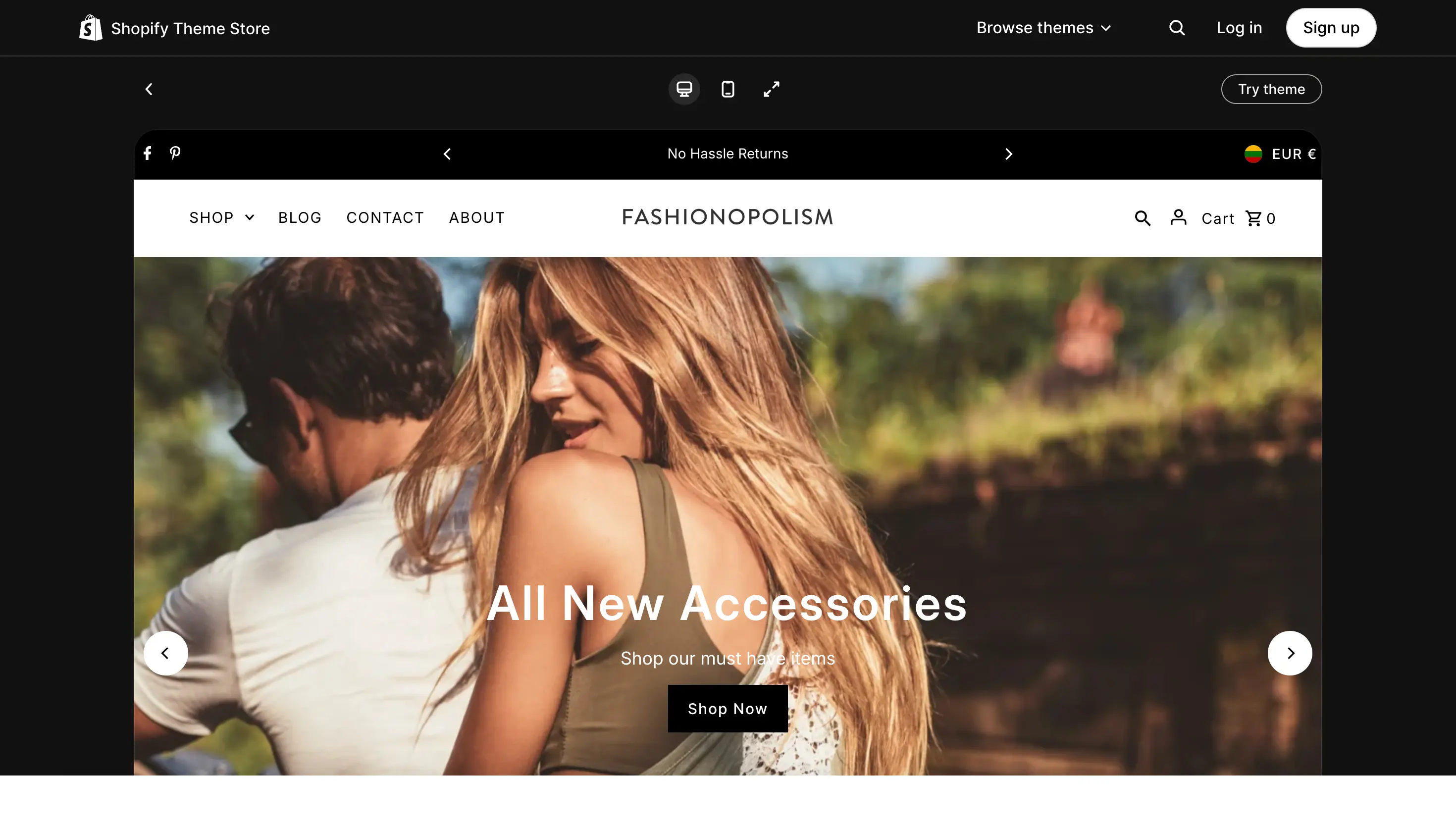
Fashionopolism – Scaling for Growing Apparel Brands ($200)
Designed to evolve with growing brands, Fashionopolism supports expanding catalogs and increasing traffic. Its 30+ customizable sections enable merchants to adapt their store layout as new collections arrive. Priced at $200, it smoothly handles medium-to-large inventories with advanced filtering and multi-tier mega menus. Built-in quick add-to-cart and pop-up features are designed to boost conversion rates and average order value, making it a popular choice for brands like Foxblood and Ahed.- Main Limitation: Its extensive features may be overwhelming or unnecessary for smaller brands.
- Best For: Mid-sized clothing brands aiming to scale annual revenue from $50,000 to $200,000.
- Key Features: 30+ customizable sections, advanced filtering, multi-tier mega menus, quick add-to-cart, pop-up features.
-
Shine – Sophistication for Mid-Market Fashion Stores ($300)
Shine occupies a strategic position between budget-friendly and luxury-tier themes, offering a cohesive, conversion-focused layout for $300. Originally designed for beauty brands, it now serves mid-market apparel stores seeking a refined webstore aesthetic. It includes essential marketing features like promo banners, pop-ups, and countdown timers as standard, enabling medium-sized brands to manage seasonal sales spikes without relying on numerous external apps.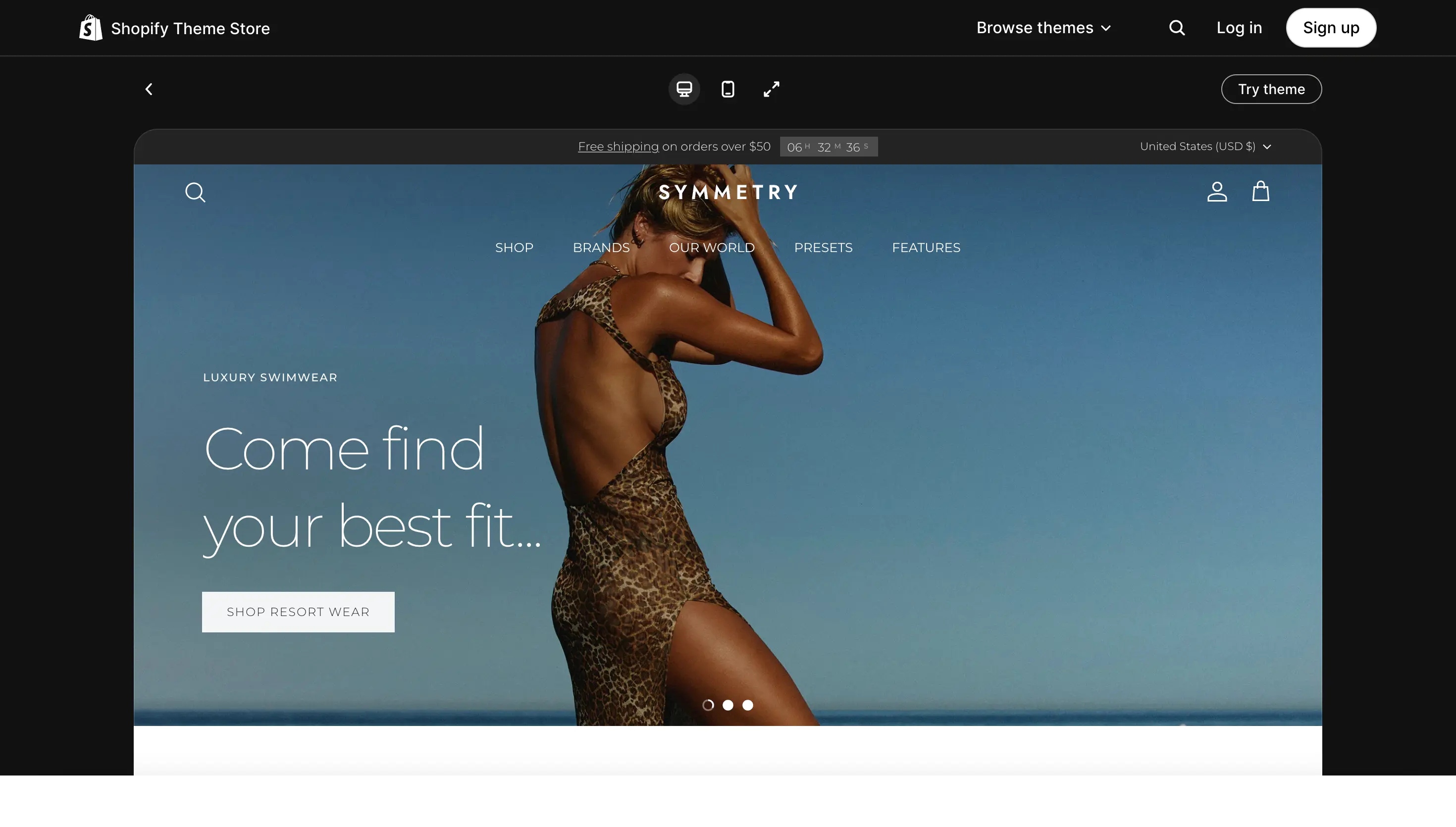
- Main Limitation: Lacks side-by-side product comparison grids, which can be a drawback for brands with extensive catalogs requiring detailed comparisons.
- Best For: Mid-market fashion stores seeking a sophisticated webstore feel.
- Key Features: Cohesive design, conversion-focused layout, promo banners, pop-ups, countdown timers.
Luxury & Editorial: Crafting Premium Brand Experiences
For high-end and luxury brands, these themes provide the sophisticated design, advanced features, and storytelling capabilities necessary to convey exclusivity and premium value.
-
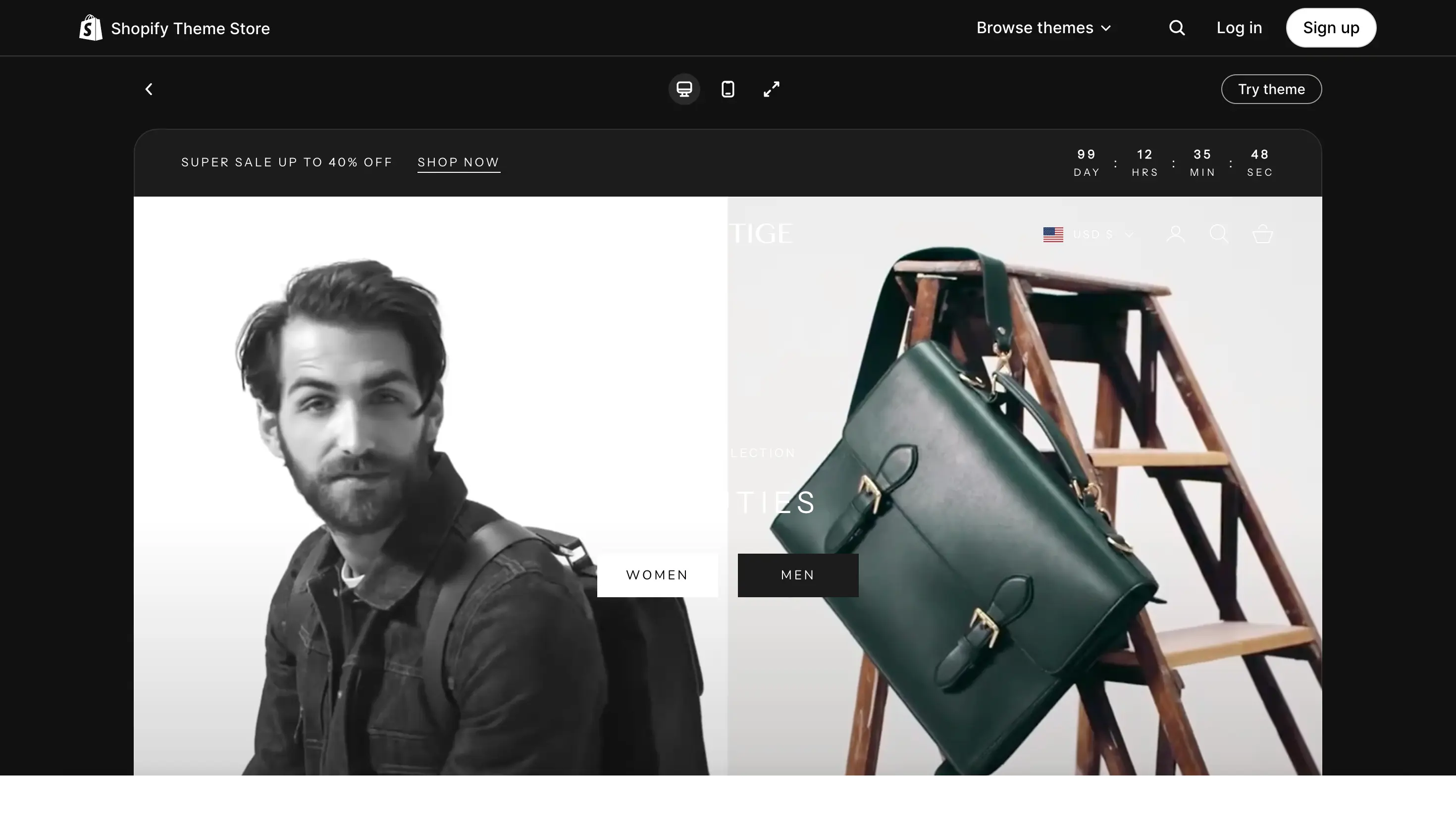
Prestige – Editorial Excellence for Storytelling Brands ($400)
Prestige is meticulously crafted for visual storytelling, featuring full-width imagery and content-first product pages that allow a brand’s narrative to resonate as strongly as its product visuals. Priced at $400, it’s favored by luxury brands for its elegant design and robust native marketing and conversion tools. Its package includes advanced visual merchandising, built-in conversion tools, and over 30 configurable sections, ensuring a responsive and brand-reflective online presence.- Main Limitation: Requires optimized high-resolution visuals to prevent performance degradation.
- Best For: Fashion brands where brand narrative and storytelling are central to the purchase decision.
- Key Features: Visual storytelling focus, full-width imagery, content-first product pages, advanced visual merchandising, 30+ configurable sections, built-in conversion tools.
-
Impulse – Mobile-First Luxury and High-End Fashion ($500)
Impulse is a premium Shopify theme renowned in the high-end and luxury fashion segments, reflected in its $500 price. It emphasizes extensive customization, allowing brands to utilize hero images for shoppable products and enhance conversions with cross-selling, countdown timers, promo elements, and trust badges. Crucially, Impulse is built with a mobile-first philosophy, ensuring a hyper-responsive design that delivers a unified, high-quality experience across all devices.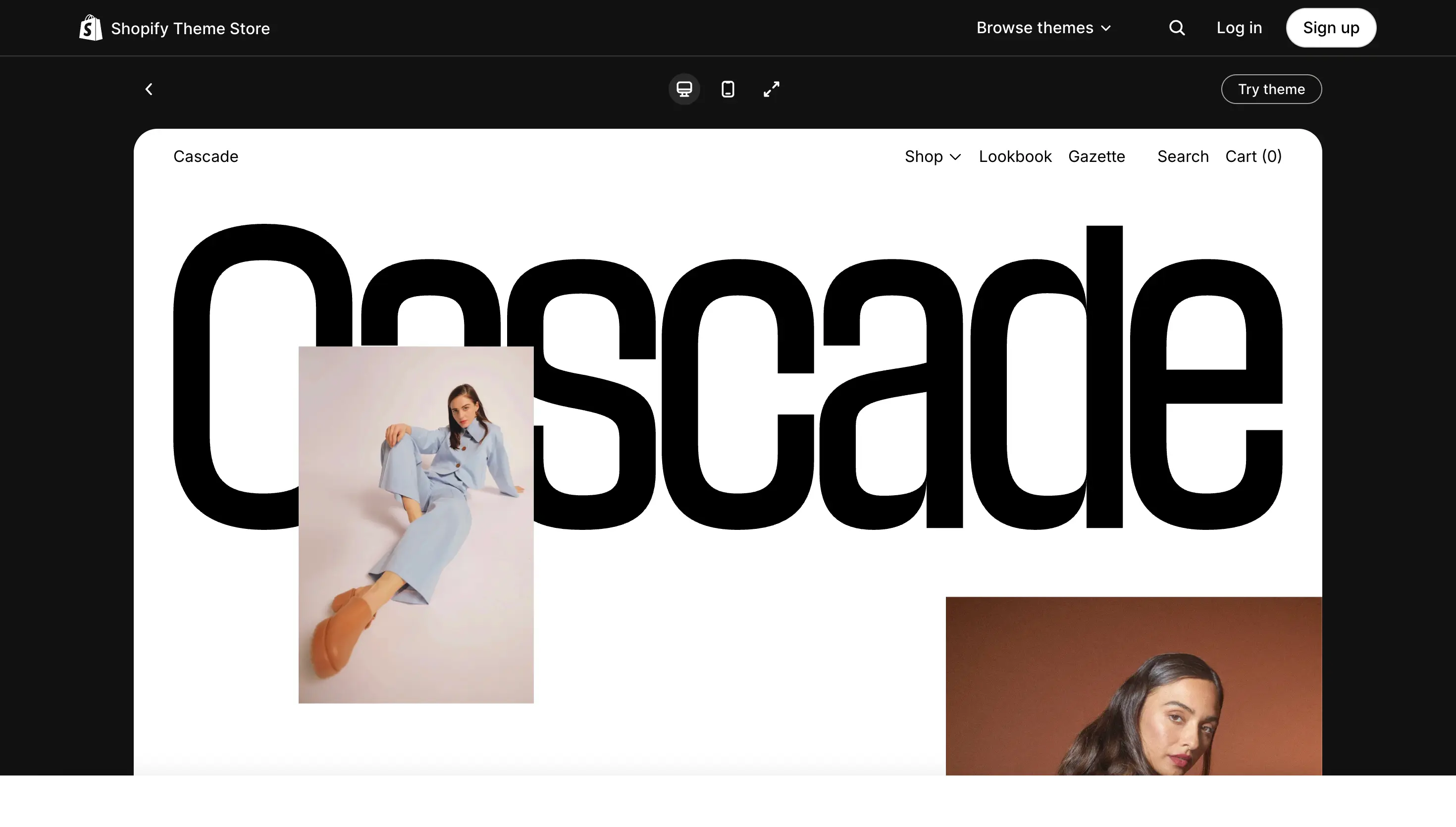
- Main Limitation: Its comprehensive features and high price point may be overkill for smaller brands.
- Best For: High-end and luxury clothing brands with a premium market position.
- Key Features: Extensive customization, hero images, cross-selling, countdown timers, promo elements, trust badges, hyper-responsive mobile-first design.
-
Symmetry – Unrivaled for Large Catalogs ($420)
Developed by seasoned Shopify Theme Partners with over 16 years of experience, Symmetry is a high-end theme suitable for a broad spectrum of merchants, particularly those with extensive inventories. For $420, it offers highly customizable drag-and-drop sections, advanced filtering options, and a user-friendly design. Symmetry consistently ranks among Shopify’s top-selling themes, further supported by a responsive customer service team. Its ability to manage hundreds of SKUs without overwhelming navigation is a significant advantage.- Main Limitation: May require a higher degree of technical proficiency to navigate its extensive configurations.
- Best For: Established apparel retailers with deep product ranges and 100+ SKUs.
- Key Features: Highly customizable drag-and-drop sections, advanced filtering, comprehensive mega menus, straightforward design, responsive support.
-
Cascade – Narrative-Focused for Established Retailers ($350)
Cascade, priced at $350, employs a unique masonry-style, narrative-focused layout that groups diverse content types to tell a cohesive brand story. It masterfully combines significant editorial capabilities with robust e-commerce features, allowing merchants to integrate text, images, and product listings seamlessly while maintaining steady page performance. This theme creates a flowing user experience, guiding visitors through multiple product catalogs. However, its specialized focus might limit its appeal to certain brands.- Main Limitation: Niche narrative focus may not suit all brand aesthetics or business models.
- Best For: Experienced retailers generating $200,000 to $1,000,000+ in annual revenue, prioritizing brand storytelling.
- Key Features: Masonry-style layout, narrative focus, strong editorial capabilities, seamless content integration, steady page performance.
-
Streamline – Dynamic for Trendy and Lifestyle Brands ($420)
Built by the same developers as Impulse, Streamline shares a premium feel but distinguishes itself with robust support for high-volume and fast mobile shopping. At $420, its standout feature is exceptional video support, which, combined with dynamic storytelling elements and collapsible product description tabs, makes it ideal for campaigns, flash sales, and trend-driven brands. This theme is engineered for bold, fast-paced brands, making it less suitable for those with a more traditional or understated aesthetic.- Main Limitation: Primarily designed for mobile-first use, which might require specific content strategies.
- Best For: Trend-driven and lifestyle-focused clothing brands.
- Key Features: High-volume mobile shopping support, excellent video integration, dynamic storytelling elements, collapsible product description tabs.
Critical Selection Criteria for Your Store
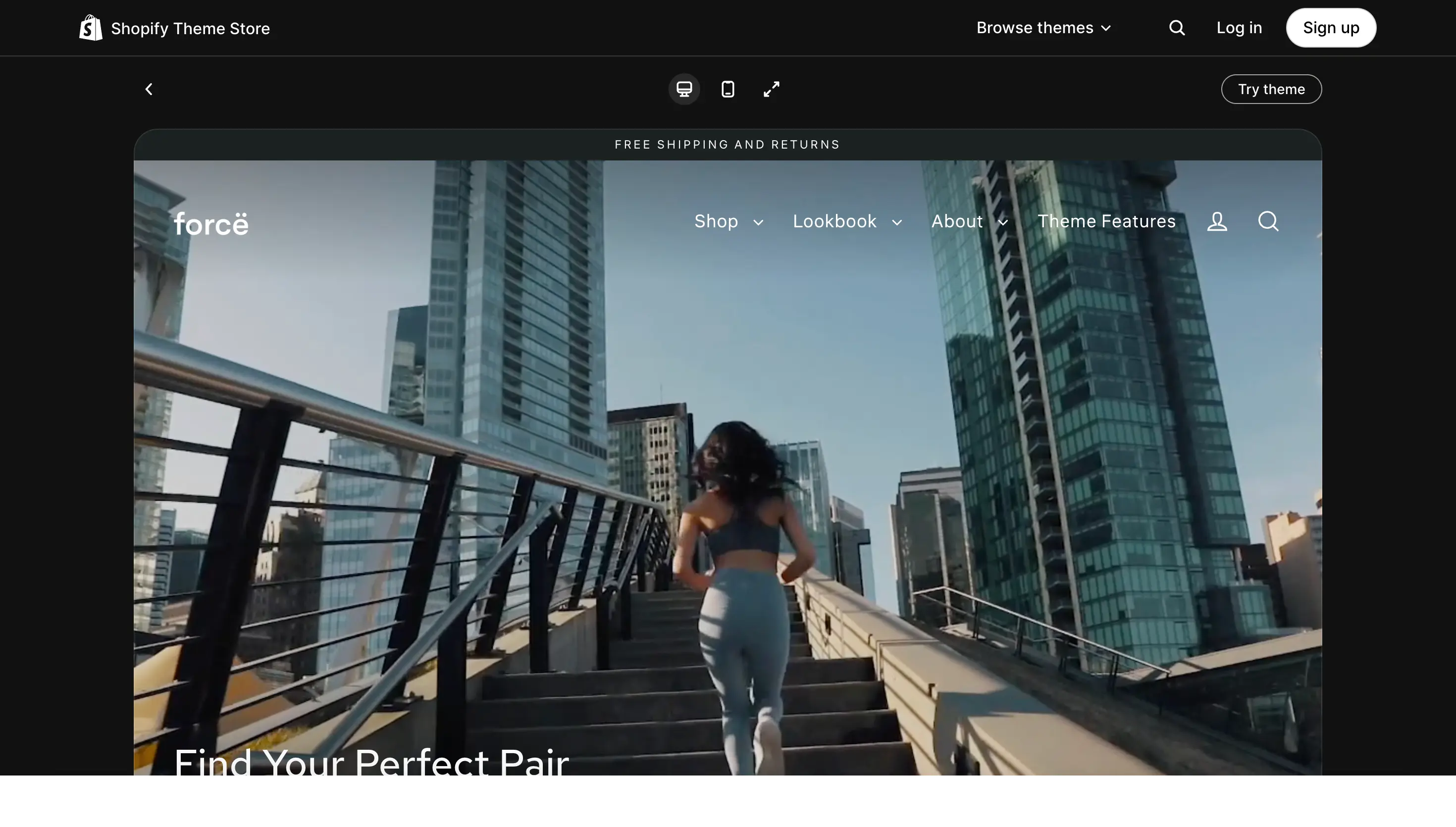
Choosing the right Shopify theme extends beyond aesthetics. A truly great theme for a clothing store expertly balances four fundamental elements: mobile performance, product display optimization, compatibility with marketing platforms, and robust SEO architecture.
-
Mobile Performance: The Modern Imperative
Given that mobile devices drive the vast majority of retail traffic, a theme’s mobile performance is non-negotiable. A slow-loading theme can deter visitors before they even reach a product page, directly impacting conversion rates. Common culprits for poor performance in fashion stores include uncompressed lookbook images, high-resolution lifestyle videos, and excessive app script bloat. Strategies like lazy loading and WebP compression for images can significantly mitigate these issues. Before committing, testing a theme’s demo URL with Google PageSpeed Insights (selecting the mobile option) provides an objective measure of its speed and responsiveness. -
Product Display Features: Streamlining the Purchase Journey
For clothing stores, effective product display features are crucial for reducing friction between browsing and buying. Essential elements include:- Color Swatches: Allow shoppers to easily visualize and compare different product options.
- Size Charts: Reduce sizing-related returns, a significant cost for apparel businesses.
- Quick-Buy Buttons & Sticky Add-to-Cart: Shorten the path to checkout, directly increasing conversion rates.
- Lookbook Layouts: Help customers visualize how different pieces can be styled together, reducing purchase uncertainty and cart abandonment.
-
Email Capture and Marketing Compatibility: Building Lasting Relationships
Marketing channel support is foundational for sustainable growth. Omnisend’s 2026 e-commerce marketing report highlighted that abandoned cart and welcome messages alone generated 76% of all automated orders. Every successful customer journey begins with an email address, typically collected via a theme’s pop-up or newsletter sign-up. Prioritizing themes with seamless integration for email and SMS marketing platforms, such as Omnisend, enables brands to cultivate customer relationships from the outset, turning initial sign-ups into detailed segmented lists for targeted campaigns.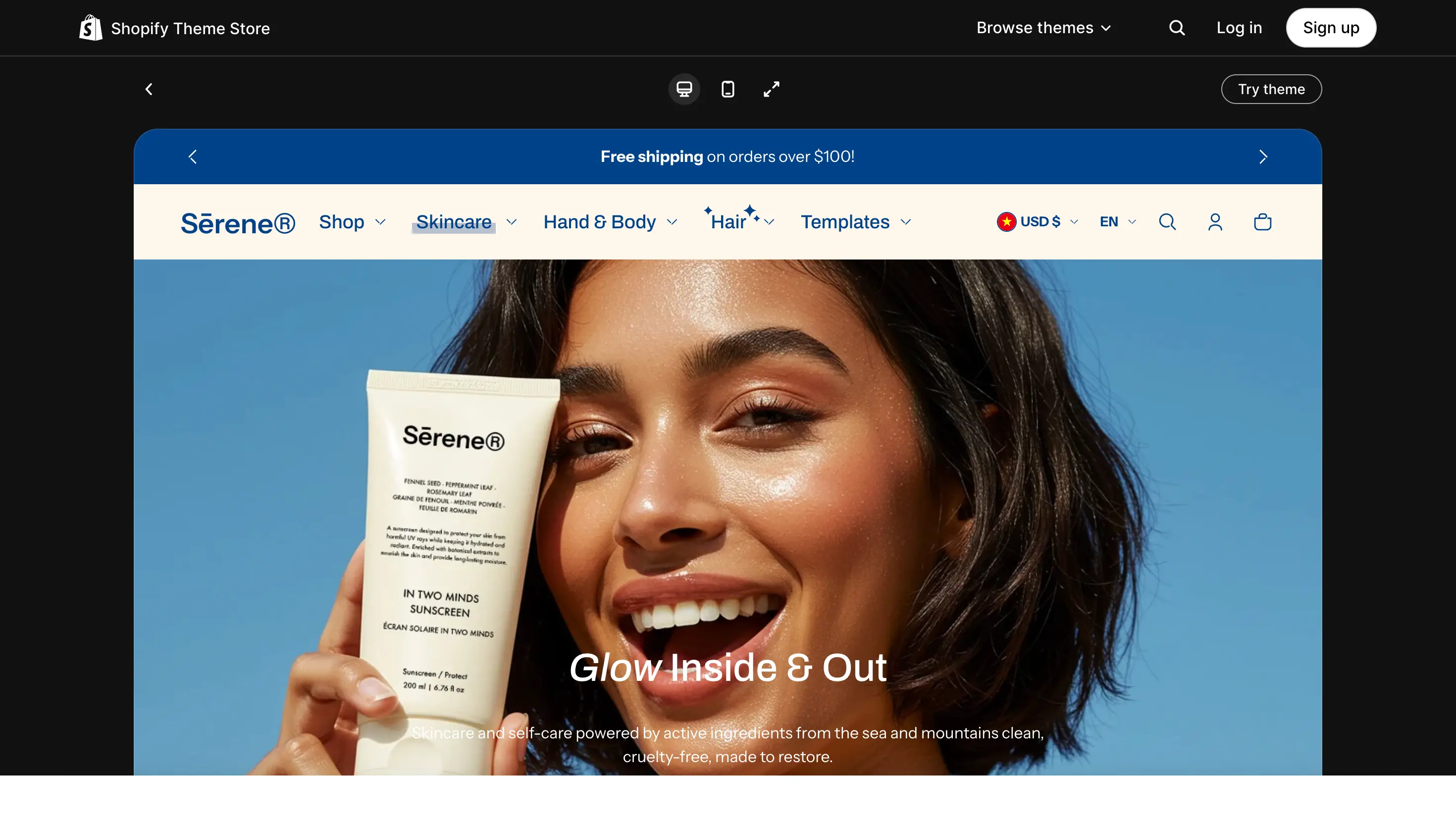
-
SEO Architecture: Ensuring Discoverability
Beyond keyword optimization, a strong Shopify theme must offer robust technical SEO support. This includes:- Clean Code: Ensures search engine crawlers can efficiently index your site.
- Schema Markup: Helps search engines understand your product data, leading to richer search results.
- Customizable Meta Titles & Descriptions: Allows for precise optimization of search engine listings.
- Fast Loading Speed: A critical ranking factor for Google.
- Mobile Responsiveness: Essential for ranking well in mobile search results.
Before You Choose: A 10-Point Checklist
To ensure your chosen Shopify theme aligns perfectly with your brand’s vision and operational needs, consider this comprehensive checklist:
- Mobile Responsiveness: Does it look and perform flawlessly on all devices?
- Page Speed: Is it fast, especially on mobile, to prevent bounce rates?
- Customization Options: Does it offer enough flexibility to reflect your brand’s unique identity?
- Product Display: Are there robust features like color swatches, size charts, and zoom capabilities?
- Navigation: Is the menu intuitive and easy for customers to browse large catalogs?
- Marketing Integration: Does it seamlessly connect with email/SMS platforms for lead capture and automation?
- SEO Friendliness: Is its code clean, and does it support essential SEO elements?
- Customer Support: Is reliable support available from the theme developer?
- Reviews & Reputation: What do other merchants say about the theme and its developer?
- Scalability: Can it grow with your business, accommodating future inventory and traffic increases?
Strategic Theme Selection: Matching Your Business Stage
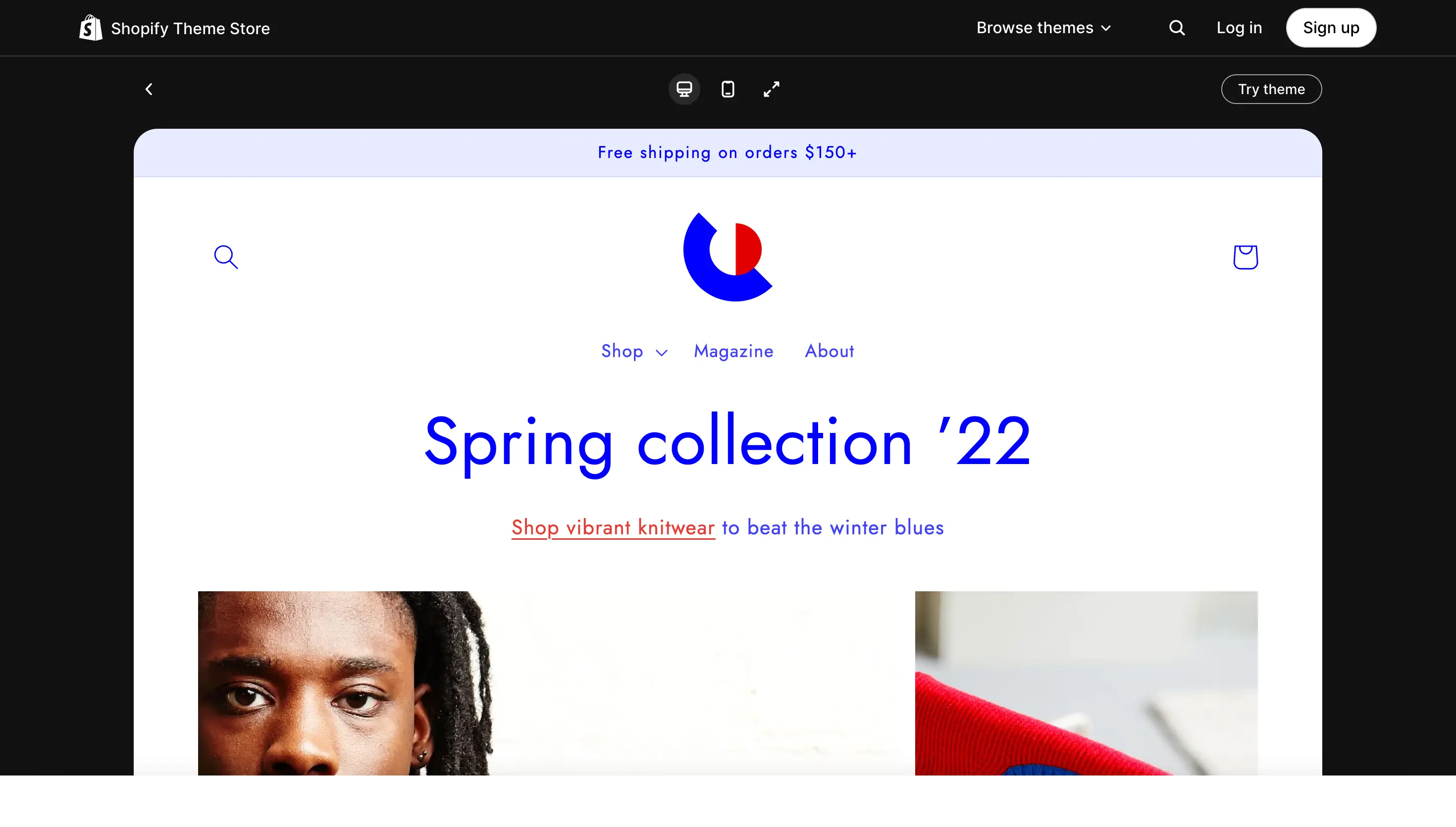
The ideal Shopify theme is largely dictated by your current business stage and projected growth trajectory. This strategic alignment ensures that your storefront supports your operational capabilities and marketing ambitions.
Theme Recommendations by Store Growth Stage:
| Store Stage | Revenue Range | Recommended Themes |
|---|---|---|
| New Brands and Boutiques | Pre-launch to $50,000 | Dawn, Blum, Colorblock, Origin, Spotlight, Ride |
| Growing Fashion Brands | $50,000–$200,000 | Fashionopolism, Shine, Blum |
| Established Apparel Retailers | $200,000–$1,000,000 | Cascade, Prestige, Symmetry, Streamline, Impulse |
| Large-Catalog and Enterprise Stores | $1,000,000+ | Symmetry, Impulse, Prestige |
For example, a niche boutique or newly established clothing business might find Dawn or Blum to be ideal starting points, offering essential features and design without significant upfront investment. Conversely, a large clothing store with annual revenues exceeding $1,000,000 would benefit immensely from themes designed to handle extensive catalogs and high traffic, such as Symmetry or Impulse, which provide advanced filtering, mega menus, and robust performance.
Test Before You Commit: A Prudent Approach
Shopify’s Theme Store provides a crucial advantage: the option to test any paid theme before purchase. This allows merchants to install a demo version, build out their entire store with real products, and thoroughly test the layout and functionality without financial commitment. This "try before you buy" approach is invaluable for ensuring the theme meets all specific requirements. The purchase is only finalized upon publishing the shop, offering a critical window for evaluation and mitigating the risk of dissatisfaction, as theme purchases are generally final.
Beyond the Theme: The Imperative of Integrated Marketing
While a compelling theme attracts visitors, strategic marketing is what converts them into loyal customers. Forbes Advisor reported that half of surveyed marketers identify email marketing as their most impactful channel. Implementing robust email capture mechanisms with targeted automated flows—such as welcome series, abandoned cart reminders, and win-back campaigns—is essential for nurturing customer relationships. Leading Shopify clothing stores consistently demonstrate that sustained revenue growth stems from balancing visually appealing themes with sophisticated, segmented email and SMS marketing strategies.
Omnisend, an all-in-one email and SMS marketing platform, offers seamless integration with numerous Shopify themes. This allows brands to effortlessly sync sign-ups from their theme’s pop-ups or newsletter sections, transforming them into detailed, segmented lists. Omnisend’s free plan provides access to core e-commerce features, enabling businesses to test automated welcome, cart abandonment, and win-back flows. Customers leveraging Omnisend report an impressive return of $79 for every $1 spent, underscoring the power of integrated marketing. A notable success story is MUSS, a Latvian wellness e-commerce brand, which migrated to Omnisend and witnessed a 41% year-on-year increase in email open rates and a 13% rise in revenue per recipient.
Final Verdict for the Best Shopify Theme for Clothing
For new businesses, Dawn continues to be a top contender due to its free accessibility and sophisticated features that rival many paid options. Blum stands out for its exceptional value at $170, offering a powerful feature set for new fashion brands ready to invest. High-end and luxury brands will find themes like Symmetry, Prestige, and Impulse indispensable, providing the stylish design and advanced functionalities required to maintain a premium brand image. Regardless of the choice, successful theme selection hinges on aligning the theme with the brand’s near-future growth projections, ensuring strong marketing channel compatibility, robust SEO support, and impeccable mobile optimization. These elements collectively form the bedrock of a thriving online clothing store in 2026.
Frequently Asked Questions
-
What is the best Shopify theme for a clothing store?
There isn’t a single "best" theme, as suitability depends on brand specifics. Dawn is an excellent all-round free option for beginners, Blum suits fashion-first brands, Colorblock offers contrasting layouts, and Ride benefits athletic/outdoor brands. The ideal choice aligns with your brand’s style, budget, and growth stage.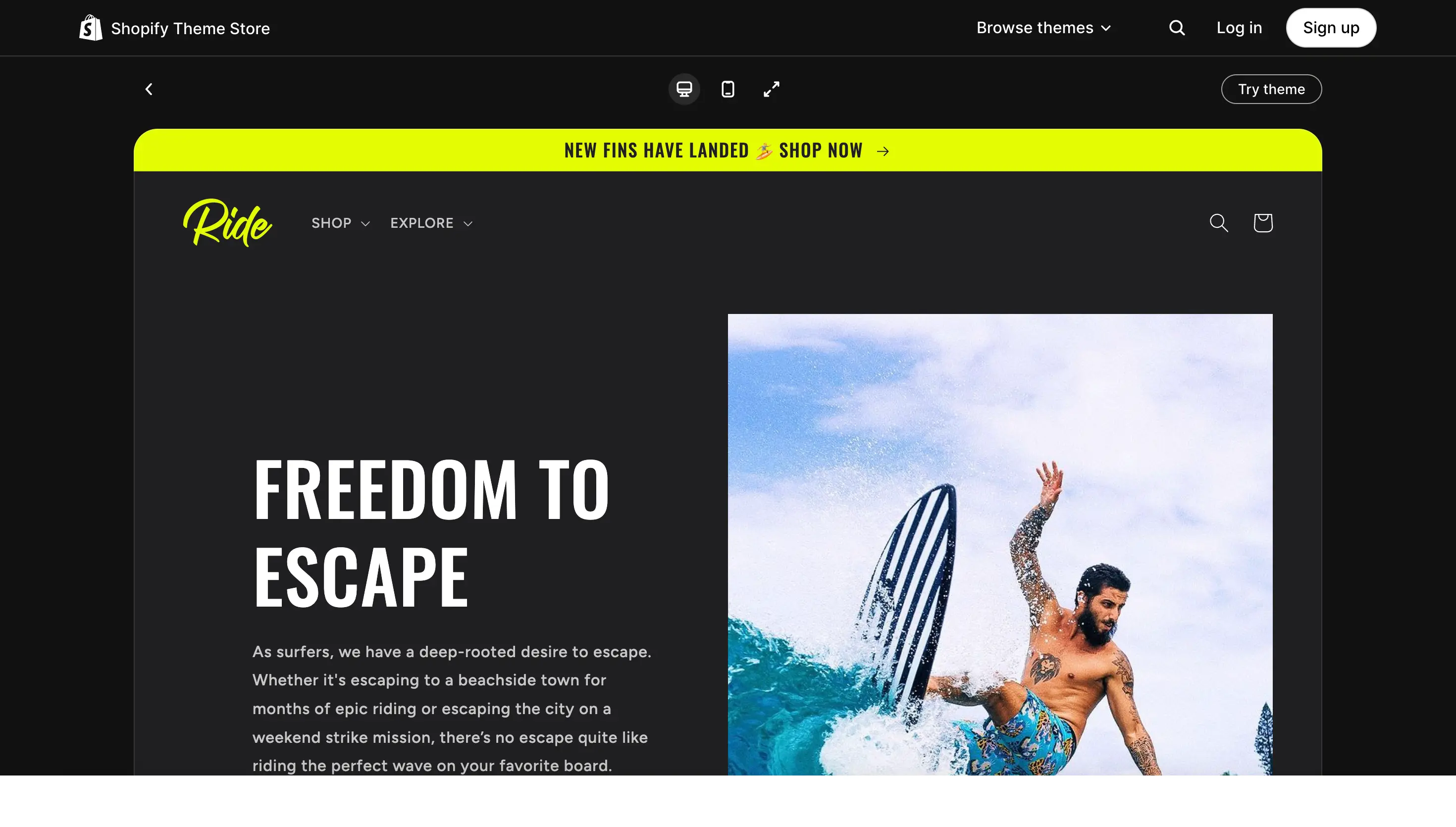
-
What is the best free Shopify theme for clothing?
Dawn is widely recognized as one of Shopify’s best official free themes for clothing brands, offering a clean design and strong visual focus. However, Colorblock, Origin, Spotlight, and Ride are also strong free alternatives, each catering to different aesthetic and functional needs. -
Do clothing brands use Shopify?
Yes, apparel is the largest category on Shopify. As of 2026, there are 795,413 active apparel shops registered on the platform, ranging from small independent boutiques to large international retailers. -
What Shopify theme is best for a large clothing catalog?
Symmetry is highly recommended for large clothing catalogs, offering advanced features like comprehensive mega menus and robust filtering options to efficiently manage and navigate hundreds of SKUs without overwhelming the user. -
What is the difference between free and paid Shopify themes for clothing stores?
The primary differences lie in the breadth of features and pre-built design options. Paid themes generally offer a more sophisticated and extensive suite of native functionalities, reducing the reliance on third-party apps and potentially lowering the Total Cost of Ownership. Free themes focus on providing core functionalities and a solid foundation.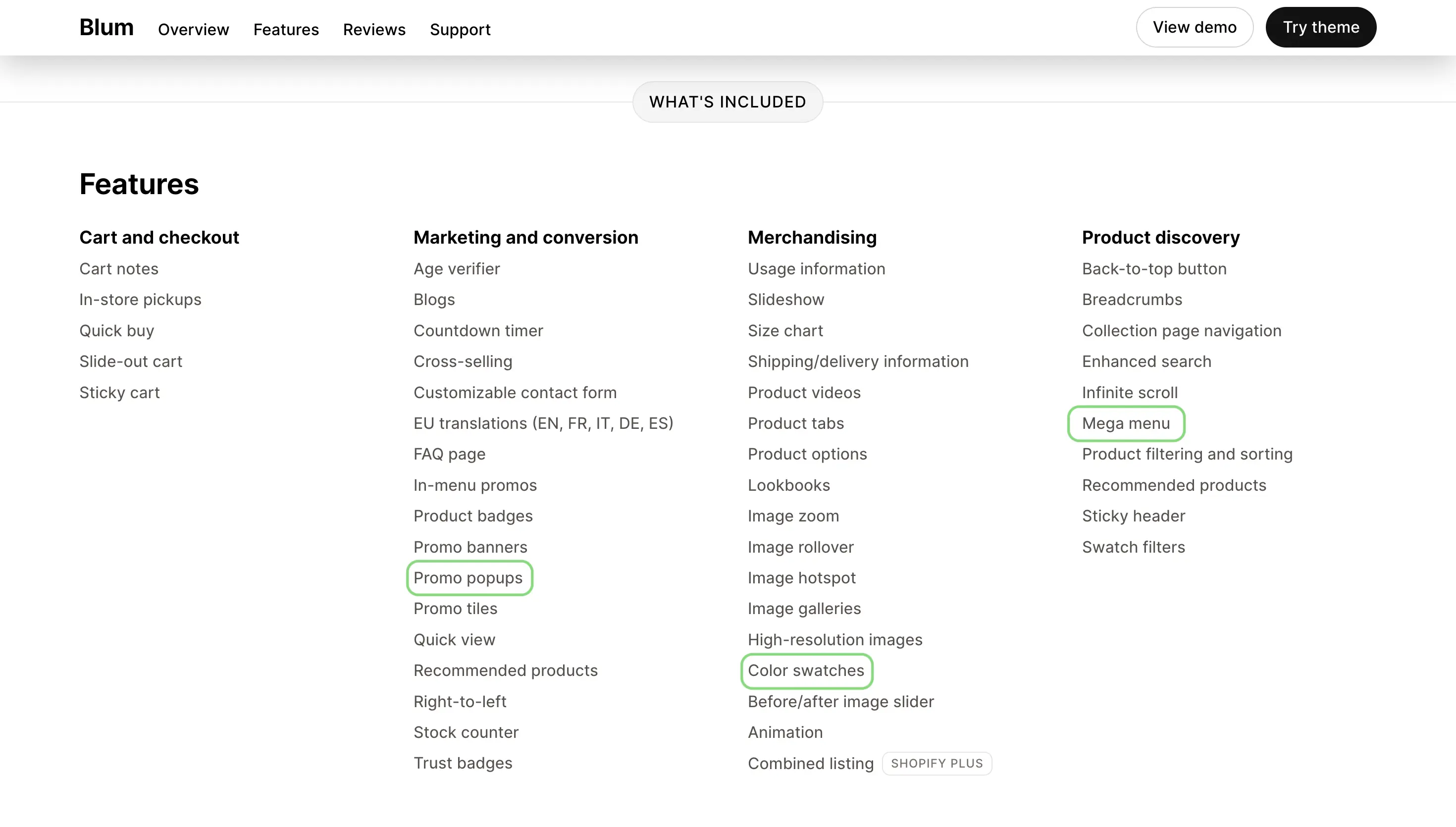
-
How do I choose a Shopify theme for my clothing brand?
To choose the best theme, objectively evaluate your brand identity, current size, and future growth goals. Prioritize themes that offer strong mobile performance, optimized product display features, seamless marketing compatibility, and robust SEO architecture. Always test the theme thoroughly before making a final commitment.