

The strategic selection of an email platform extends far beyond a simple feature comparison; it represents a critical operational decision that can profoundly influence a business’s growth trajectory, team productivity, and adherence to performance and compliance benchmarks. As companies expand, their email infrastructure must evolve to support escalating sending volumes, sophisticated collaboration requirements, and stringent regulatory demands. Against this backdrop, a notable trend has emerged in the digital marketing sphere: a growing number of businesses are opting to transition their email marketing operations from established providers like Mailchimp to platforms offering specialized scalability and enhanced functionalities, such as Sinch Mailjet. This shift, observed across various sectors, underscores a broader industry movement towards more robust, flexible, and developer-friendly email solutions.
The Evolving Landscape of Email Marketing Platforms

Published on June 5, 2026, this analysis delves into the strategic considerations driving businesses to migrate from Mailchimp to Sinch Mailjet, offering a meticulous, step-by-step guide for migrating contacts, email templates, and essential reporting data. The decision to switch email service providers (ESPs) is often precipitated by a confluence of factors, including the need for greater control over deliverability, more transparent and scalable pricing models, advanced API capabilities, and superior collaborative tools for diverse marketing teams. Industry analysts have increasingly pointed to the limitations some legacy platforms face in keeping pace with the demands of rapidly scaling businesses that require high-volume transactional emails alongside sophisticated marketing campaigns.
For many growing enterprises, the initial allure of user-friendly interfaces and broad feature sets offered by platforms like Mailchimp can eventually give way to challenges related to cost-effectiveness at scale, integration complexities, or the absence of highly specialized features critical for complex email strategies. Sinch Mailjet, a prominent player in the transactional and marketing email space, has positioned itself as an attractive alternative by offering solutions tailored for high-volume senders and teams requiring deep customization and robust infrastructure. The emphasis on unlimited contacts, powerful collaboration features, advanced automation capabilities, and proven deliverability expertise cited by Sinch Mailjet resonates with businesses seeking to optimize their email outreach and ensure maximum inbox placement.
Key Drivers for Platform Transition
The decision to migrate from one email platform to another is rarely impulsive. It typically follows a period of evaluation where businesses assess their current platform’s ability to meet evolving needs. Several core areas frequently emerge as primary motivators for such a transition:
- Scalability and Cost Efficiency: As contact lists grow and sending volumes increase, pricing structures can become a significant concern. Platforms offering unlimited contacts and transparent, volume-based pricing, like Sinch Mailjet, often present a more predictable and cost-effective solution for businesses experiencing rapid expansion.
- Deliverability Expertise and Reputation Management: Maintaining a strong sender reputation and ensuring high deliverability rates are paramount for email marketing success. Businesses increasingly seek ESPs that provide advanced tools, dedicated support, and proven infrastructure to optimize inbox placement and minimize bounces or spam classifications.
- Collaboration and Team Workflow: For larger marketing teams or agencies, robust collaboration features are essential. The ability to manage multiple users, assign roles, and streamline campaign creation and approval processes within the platform can significantly enhance operational efficiency.
- Advanced Automation and Segmentation: While many platforms offer basic automation, growing businesses often require more sophisticated segmentation capabilities, complex multi-step journeys, and deeper integration with other CRM or e-commerce systems to deliver highly personalized and timely communications.
- API and Developer-Friendly Features: Companies with in-house development teams or those requiring deep integration with custom applications often prioritize platforms with comprehensive APIs and robust documentation, enabling greater flexibility and control over their email infrastructure.
- Compliance and Data Security: With an ever-tightening regulatory landscape (e.g., GDPR, CCPA), businesses require ESPs that demonstrate a strong commitment to data privacy, security, and provide tools to manage consent and data processing effectively.
These factors collectively contribute to the strategic rationale behind migrating to a platform better aligned with a business’s long-term digital communication strategy.
Chronology of a Strategic Migration: From Mailchimp to Sinch Mailjet
The process of migrating an email marketing infrastructure, while potentially daunting, can be streamlined through a structured approach. This guide outlines the essential steps involved in transferring critical assets from Mailchimp to Sinch Mailjet, emphasizing best practices for a seamless transition.
Pre-Migration Planning and Data Audit (Implicit but Crucial First Step)
Before initiating any technical migration, businesses should undertake a thorough audit of their existing Mailchimp account. This involves identifying all active contact lists, segments, automations, templates, and reporting data. A critical aspect of this phase is data hygiene: cleaning contact lists by removing inactive subscribers, duplicates, or unengaged contacts can significantly improve deliverability and reduce costs on the new platform. Furthermore, defining the mapping strategy for contact fields between Mailchimp and Sinch Mailjet is essential to ensure all valuable subscriber data is transferred accurately. This preparatory step, though not explicitly listed in the original steps, is foundational for a successful migration.
Step 1: Migrating Your Contacts from Mailchimp to Sinch Mailjet

The accurate and complete transfer of contact data is the cornerstone of any ESP migration. This process ensures continuity of communication with existing subscribers while maintaining compliance with opt-in statuses.
- Access Mailchimp Account: Begin by logging into your Mailchimp account, the source platform for your contact data.
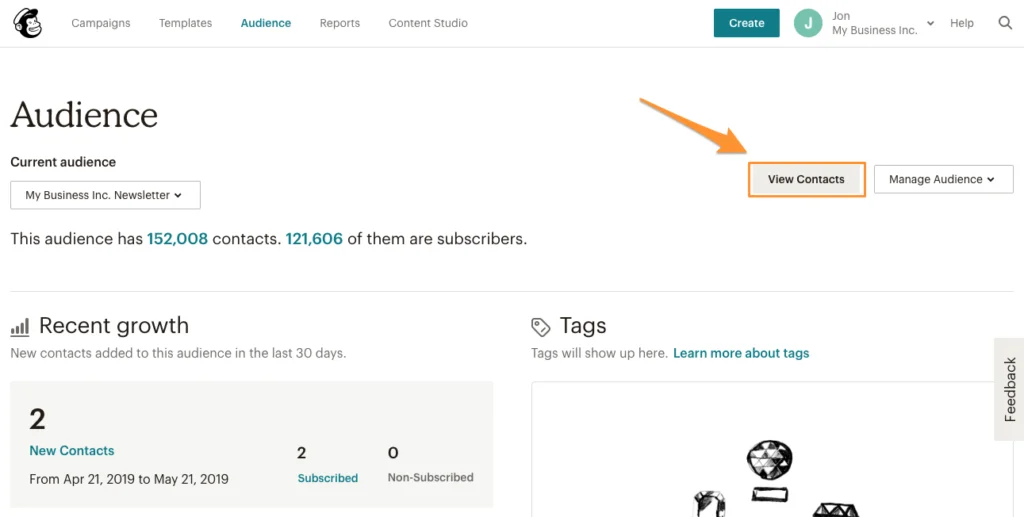
- Navigate to Audience: From the main menu, select "Audience," then click "View Contacts" to access your subscriber lists. This central hub contains all the email addresses and associated data you wish to migrate.
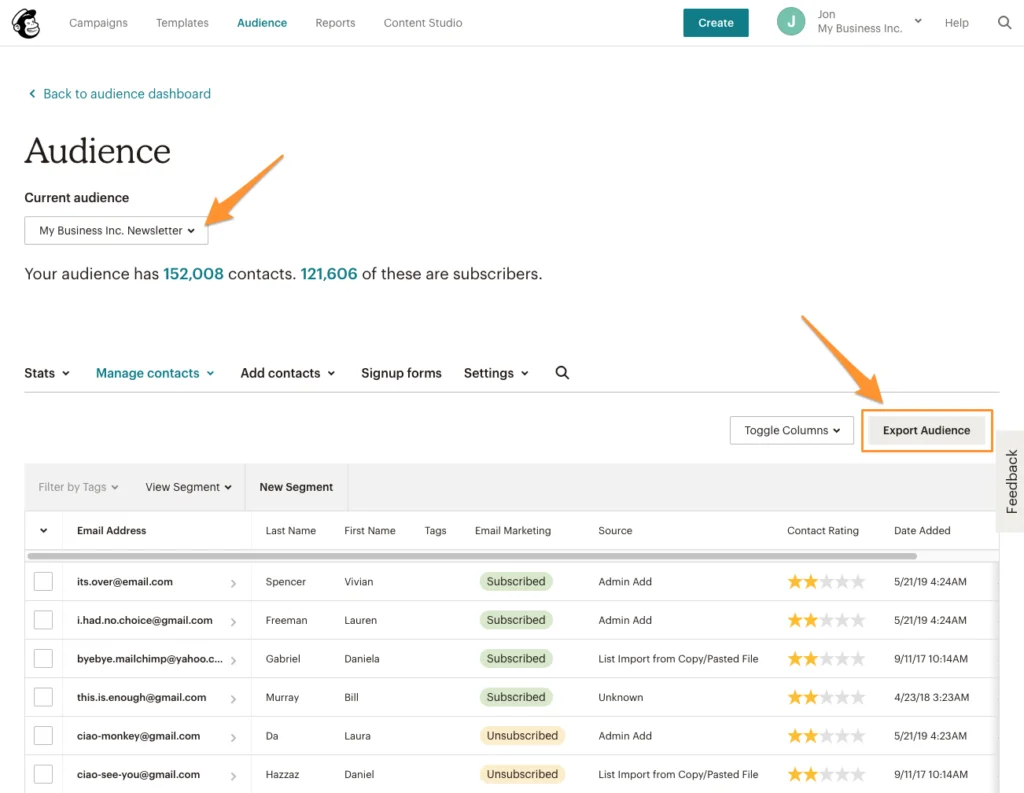
- Export Audiences: Identify each audience (contact list) you need to export. Click the "Export Audience" button. It is imperative to repeat this action for every distinct audience list within your Mailchimp account to ensure no segment of your subscriber base is overlooked. This granular approach allows for better organization upon import into Sinch Mailjet.
- Download and Unzip CSV Files: After initiating the export, Mailchimp will prepare a downloadable archive, typically a ZIP file containing one or more CSV files. Download this file to your local machine and unzip it. You will usually find separate CSV files for subscribed and unsubscribed members, a crucial distinction for compliance.
- Prepare for Sinch Mailjet Import: With your contact data extracted, log in to your Sinch Mailjet account. A key best practice at this stage is to import each Mailchimp audience into a separate contact list within Mailjet. This mirrors your existing segmentation and allows for targeted campaigns.
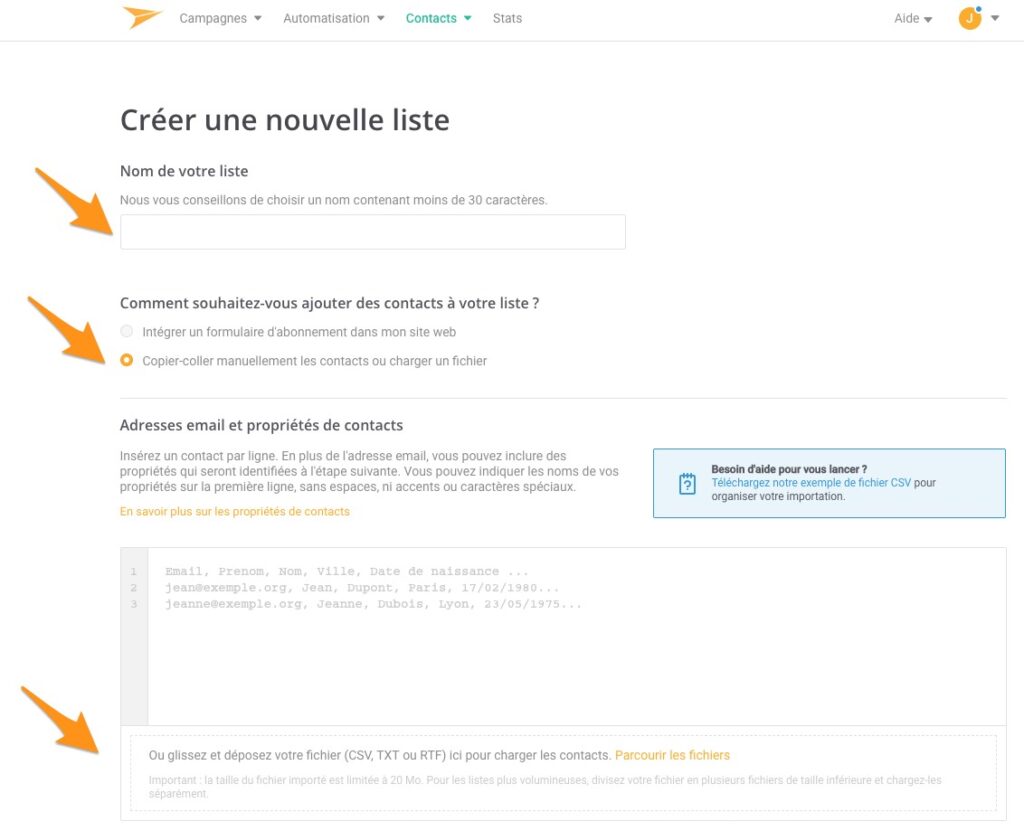
- Create New Contact Lists in Sinch Mailjet: In your Mailjet account, navigate to "Contacts" > "Contact Lists," and select "Create a new list." Choose the option to "Paste contacts manually or upload a file," then proceed to upload the respective CSV file containing your subscribed contact data for the current list.
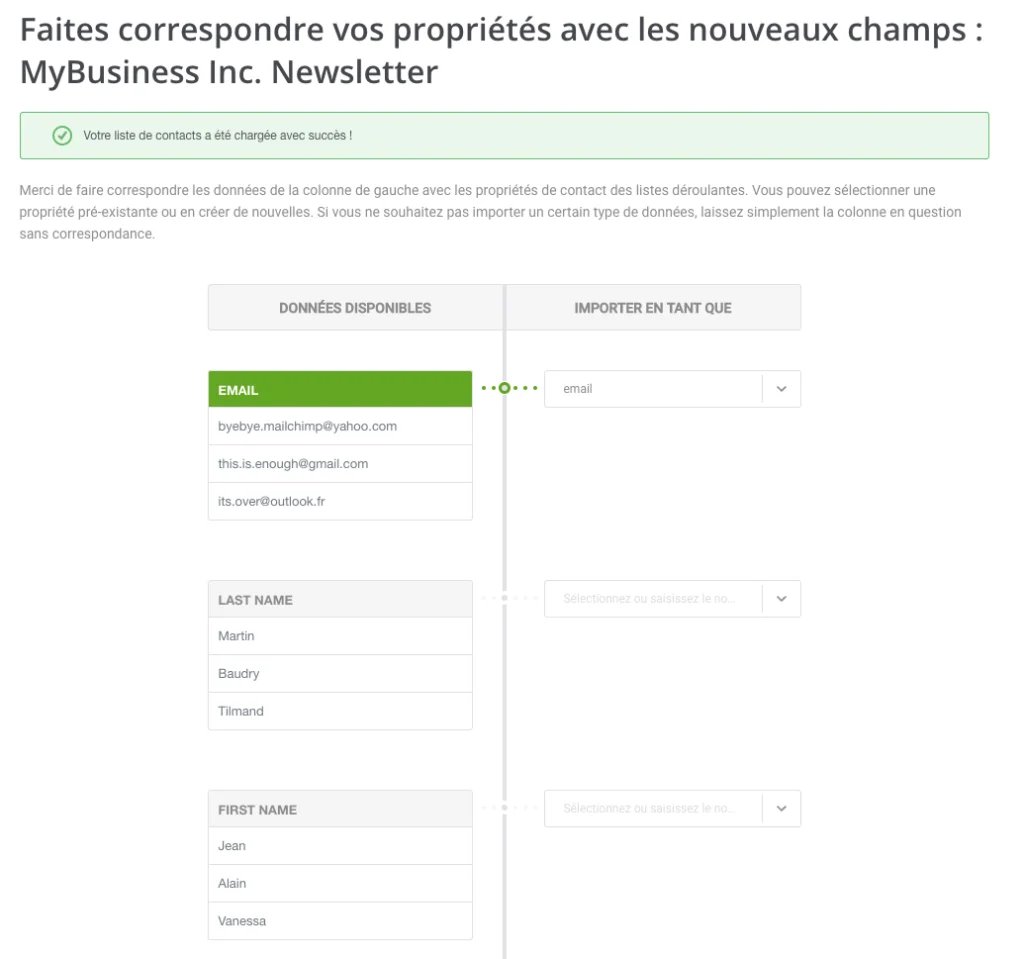
- Map Contact Fields: During the upload process, Sinch Mailjet will prompt you to map the fields from your CSV file (e.g., "Email Address," "First Name," "Last Name," "Company," "Birthday") to corresponding contact properties within Mailjet. This step is critical for preserving all rich subscriber data, which can then be leveraged for advanced segmentation and personalized email campaigns. Once mapping is complete, click "Save and continue."
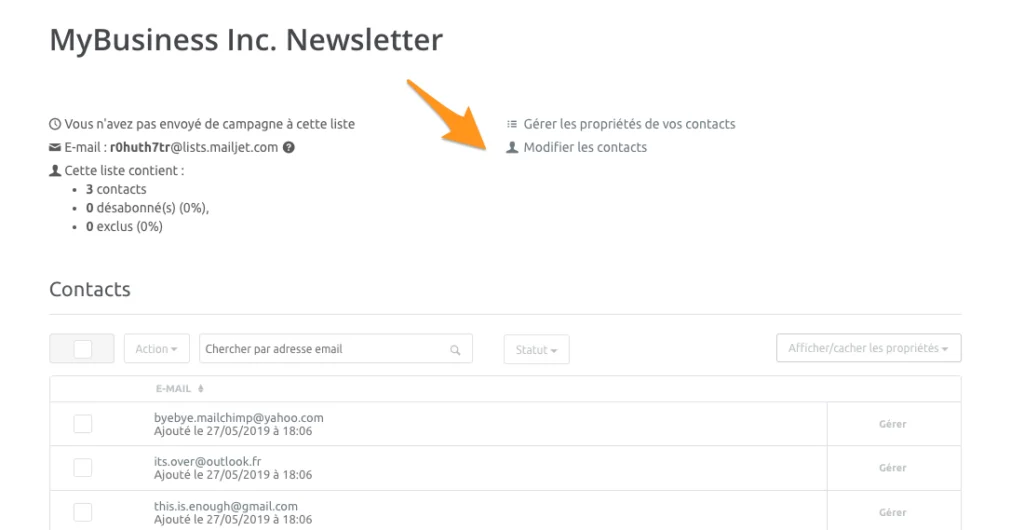
- Import Unsubscribed Contacts for Compliance: This is a vital step often overlooked, yet crucial for maintaining sender reputation and legal compliance (e.g., CAN-SPAM, GDPR). After importing your subscribed list, return to the "Contact Lists" section, select the newly created list, and click "Manage contacts."
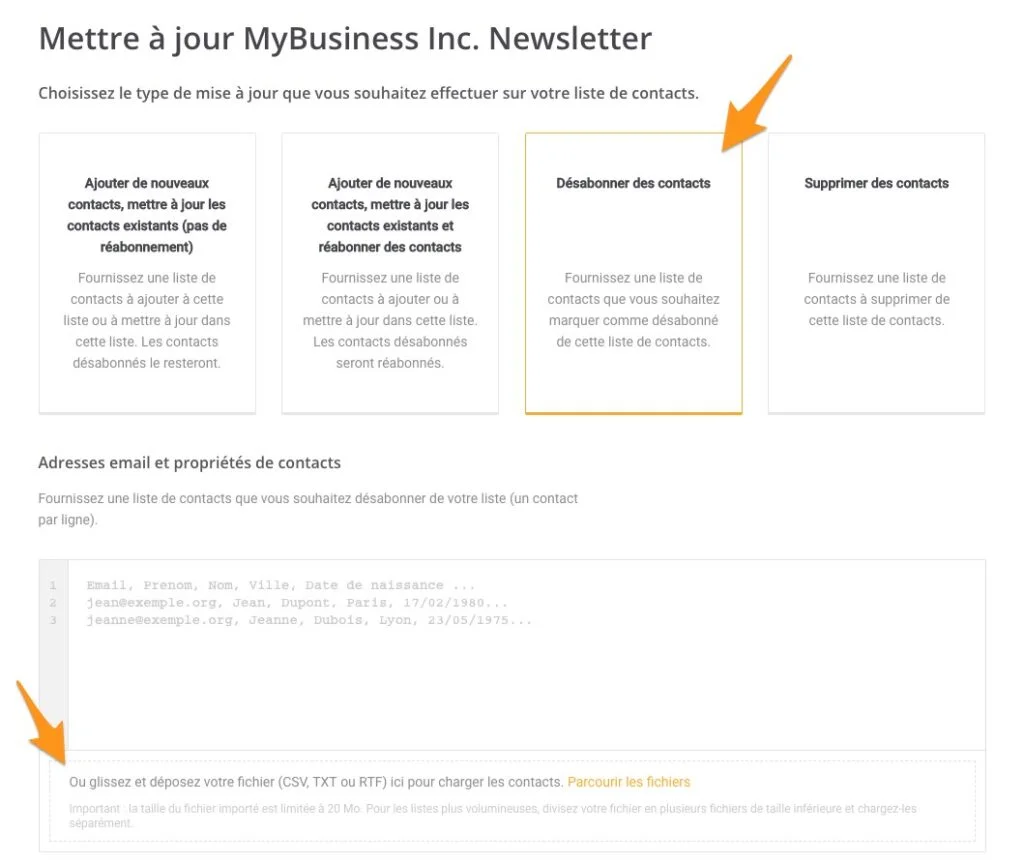
- Update List with Unsubscribed Data: Choose "Unsubscribe contacts" as the update type. Drag and drop the CSV file containing your unsubscribed contacts (obtained from the Mailchimp export). Map any necessary fields. This action will ensure that contacts who previously opted out from your communications in Mailchimp are not inadvertently re-subscribed or emailed from Sinch Mailjet, thereby upholding their preferences and preventing potential compliance issues and damage to your sender reputation.
Step 2: Migrating Your Email Templates
While direct, editable template export from Mailchimp to Sinch Mailjet’s visual editor is not typically supported due to underlying platform differences, businesses have practical options to avoid starting from scratch.
- Recreate Templates in Sinch Mailjet’s Editor: This option involves rebuilding your templates using Sinch Mailjet’s intuitive drag-and-drop Email Editor. While requiring an initial investment of time, this approach allows for full utilization of Mailjet’s native features, ensuring templates are fully responsive and optimized for the new platform’s capabilities. It also presents an opportunity to refresh designs and implement any desired improvements.
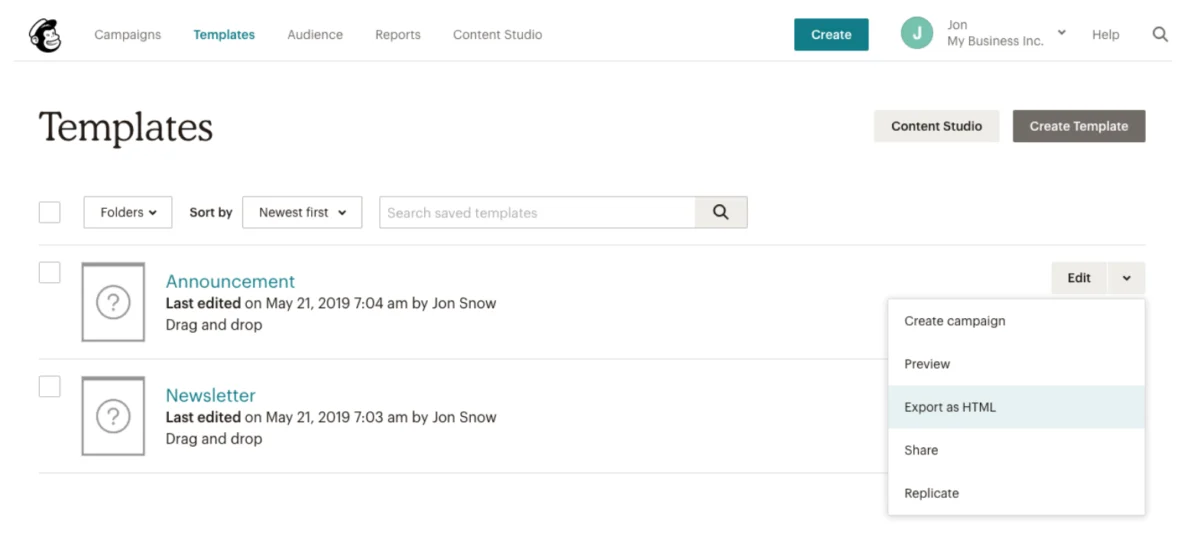
- Export and Import HTML: For those preferring to retain existing designs, Mailchimp allows templates to be exported as HTML.
- Export HTML from Mailchimp: In your Mailchimp account, go to "Templates." For each template you wish to migrate, click on the dropdown menu associated with it and select "Export as HTML." This will download the raw HTML code of your template.
- Import HTML into Sinch Mailjet: In your Sinch Mailjet account, navigate to "Campaigns" and select "Create a new template." Choose the "Code it in HTML" option. From there, you can either paste the HTML code directly or upload the HTML file you downloaded from Mailchimp. While this method preserves the design, it’s important to note that these templates will likely require manual adjustments for responsiveness and may not be fully editable within Mailjet’s visual editor, requiring HTML proficiency for future modifications. Businesses should test these imported templates rigorously across various email clients to ensure proper rendering.
Step 3: Exporting Your Reporting Data
Direct transfer of historical reporting data (e.g., open rates, click-through rates, bounce rates) between different ESPs is generally not possible due to proprietary data structures and metrics. However, preserving this historical context is invaluable for future performance analysis and benchmarking.
- Download All Reports from Mailchimp: In your Mailchimp account, go to the "Reports" section. Locate and select the option to "Download All Reports." This action will generate a comprehensive archive of your past campaign performance data.
- Archive and Analyze: While this data cannot be imported into Sinch Mailjet, it should be securely archived. This historical data serves as a crucial benchmark, allowing businesses to compare future campaign performance on Sinch Mailjet against past results. It also provides insights into long-term trends, subscriber engagement patterns, and the effectiveness of different content strategies employed prior to migration. New reporting in Sinch Mailjet will establish fresh baselines for ongoing performance monitoring.
Post-Migration Essentials: Optimizing for Success on Sinch Mailjet
With contacts and templates successfully migrated, the focus shifts to ensuring optimal performance on the new platform. Several critical configurations are necessary before sending your first campaigns from Sinch Mailjet.
- Domain Validation and Sender Address Configuration: It is paramount to validate all sending domains and sender addresses within your Sinch Mailjet account. This step confirms that you are authorized to send emails from these domains, a fundamental requirement for deliverability.
- SPF, DKIM, and DMARC Records: Configure your Sender Policy Framework (SPF), DomainKeys Identified Mail (DKIM), and Domain-based Message Authentication, Reporting, and Conformance (DMARC) records. These email authentication protocols are essential for verifying sender identity, preventing spoofing, and improving email deliverability by building trust with receiving mail servers. Proper configuration of these records is non-negotiable for maintaining a strong sender reputation and ensuring your emails reach the inbox.
- IP Warm-up Strategy: For high-volume senders, especially those migrating to a new sending IP address, implementing an IP warm-up plan is crucial. This involves gradually increasing sending volume over several days or weeks to build a positive reputation with internet service providers (ISPs). Rushing this process can lead to emails being flagged as spam.
- Thorough Testing: Before launching any live campaigns, conduct extensive testing of your new templates, automation workflows, and segmentation logic within Sinch Mailjet. Send test emails to various internal addresses and different email clients to ensure everything renders correctly and functions as intended.
Broader Impact and Implications for Digital Marketing
The trend of businesses migrating from platforms like Mailchimp to Sinch Mailjet highlights a maturation in the email marketing industry. Companies are no longer content with "good enough" solutions; they demand platforms that offer deep functionality, robust infrastructure, and the flexibility to adapt to complex and evolving marketing strategies.
Sinch Mailjet’s emphasis on features like unlimited contacts, which can significantly reduce costs for rapidly expanding businesses, coupled with powerful collaboration tools, aligns with the demands of modern, agile marketing teams. The platform’s advanced automation capabilities enable marketers to create highly personalized and timely customer journeys, a critical component of effective engagement in a competitive digital landscape. Furthermore, its focus on deliverability expertise provides peace of mind for businesses where email is a primary revenue driver or communication channel.
This migration pattern suggests that the market for email service providers is increasingly segmented, with specialized platforms catering to the distinct needs of different business sizes and operational complexities. While broad, all-in-one solutions might serve startups and smaller businesses effectively, scaling enterprises often require more granular control, deeper analytics, and more flexible API integrations that platforms like Sinch Mailjet are designed to provide. The broader implication is a continued evolution towards highly specialized and performance-driven email ecosystems that empower businesses to maximize their return on investment from email marketing.
The migration to Sinch Mailjet marks a strategic investment in a more scalable, collaborative, and performant email infrastructure. With contacts and templates now operational, businesses are well-positioned to leverage Sinch Mailjet’s full suite of features to enhance their audience engagement, streamline operations, and drive sustained growth.
Ready to explore the advantages Sinch Mailjet offers for growing your audience through unlimited contacts, powerful collaboration features, advanced automation capabilities, and industry-leading deliverability expertise?
- Create your free Sinch Mailjet account today.
- Discover how Sinch Mailjet compares comprehensively to Mailchimp.








