admin
admin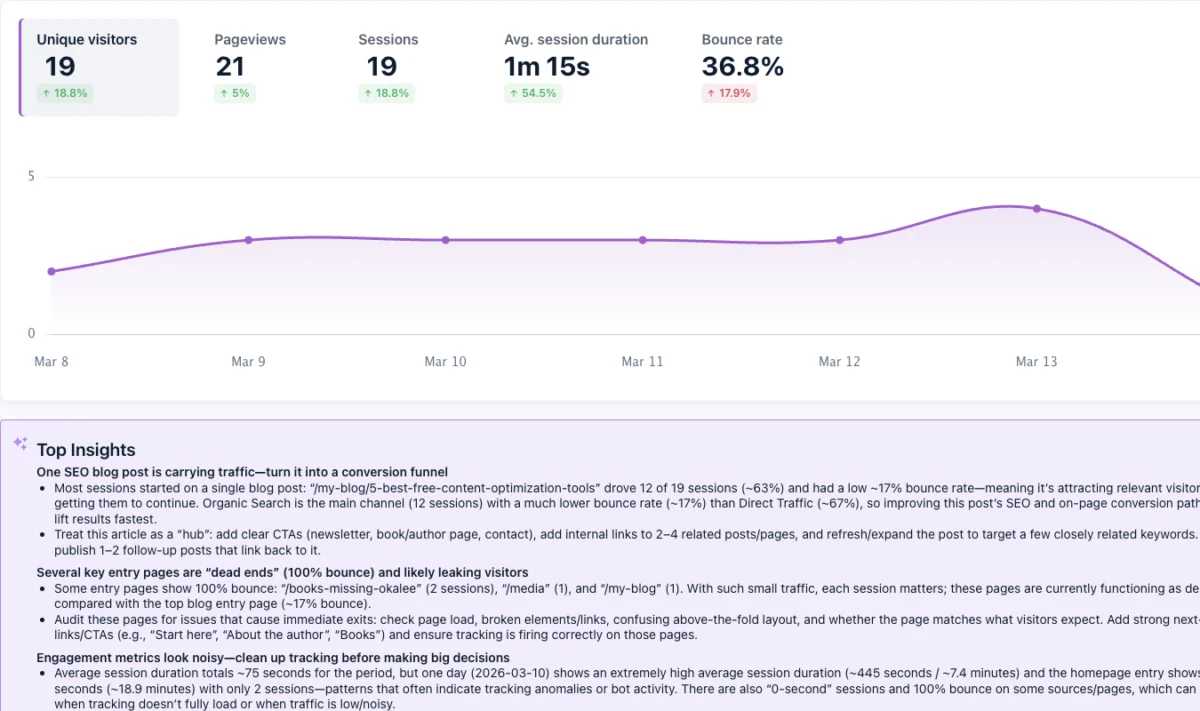
The landscape of digital measurement has undergone a seismic shift as businesses move away from simple pageview tracking toward deep behavioral insights. While Google Analytics has long served as the industry standard for monitoring website traffic, the rise of product-led growth has carved a significant niche for specialized tools like PostHog. As organizations evaluate their tech stacks in an increasingly data-conscious era, the choice between a dedicated product analytics platform and a traditional marketing-focused analytics suite has become a pivotal strategic decision. PostHog and Google Analytics, particularly when the latter is augmented by platforms like Crazy Egg, offer distinct methodologies for interpreting user behavior across websites, SaaS applications, and mobile platforms.
The Evolution of Digital Measurement and Market Positioning
To understand the current competition between PostHog and Google Analytics, one must look at the historical transition from Universal Analytics to Google Analytics 4 (GA4). In July 2023, Google officially retired its legacy platform, forcing millions of users into GA4—a system built on an event-based model rather than the traditional session-based approach. While this move brought Google closer to the architectural style of product analytics tools, it also introduced a level of complexity that left many marketing teams searching for more intuitive interfaces, such as those provided by Crazy Egg.
Simultaneously, the "Product Analytics" market has seen explosive growth, projected to reach over $30 billion by 2030. PostHog emerged within this trend as an open-source, engineer-centric alternative. Unlike Google, which prioritizes the "top of the funnel" (how users find a site), PostHog was designed to look at the "middle and bottom of the funnel" (how users interact with specific features within an application). This fundamental difference in philosophy dictates every feature, from data ingestion to the final reporting dashboard.
Comparative Architecture: Event-Based Tracking and Autocapture
At the core of both platforms is the concept of "events"—individual actions taken by a user, such as clicking a button or loading a page. However, the implementation of these events differs significantly.
PostHog utilizes an "Autocapture" feature that has become a hallmark of modern product intelligence. Upon integration, the tool automatically begins recording every click, change, and submission without requiring manual tagging from developers. This approach is particularly valuable for fast-moving startup environments where engineering resources are limited. For more granular needs, PostHog allows for manual event definition, enabling teams to attach specific properties—such as a user’s subscription tier or device type—to every action.
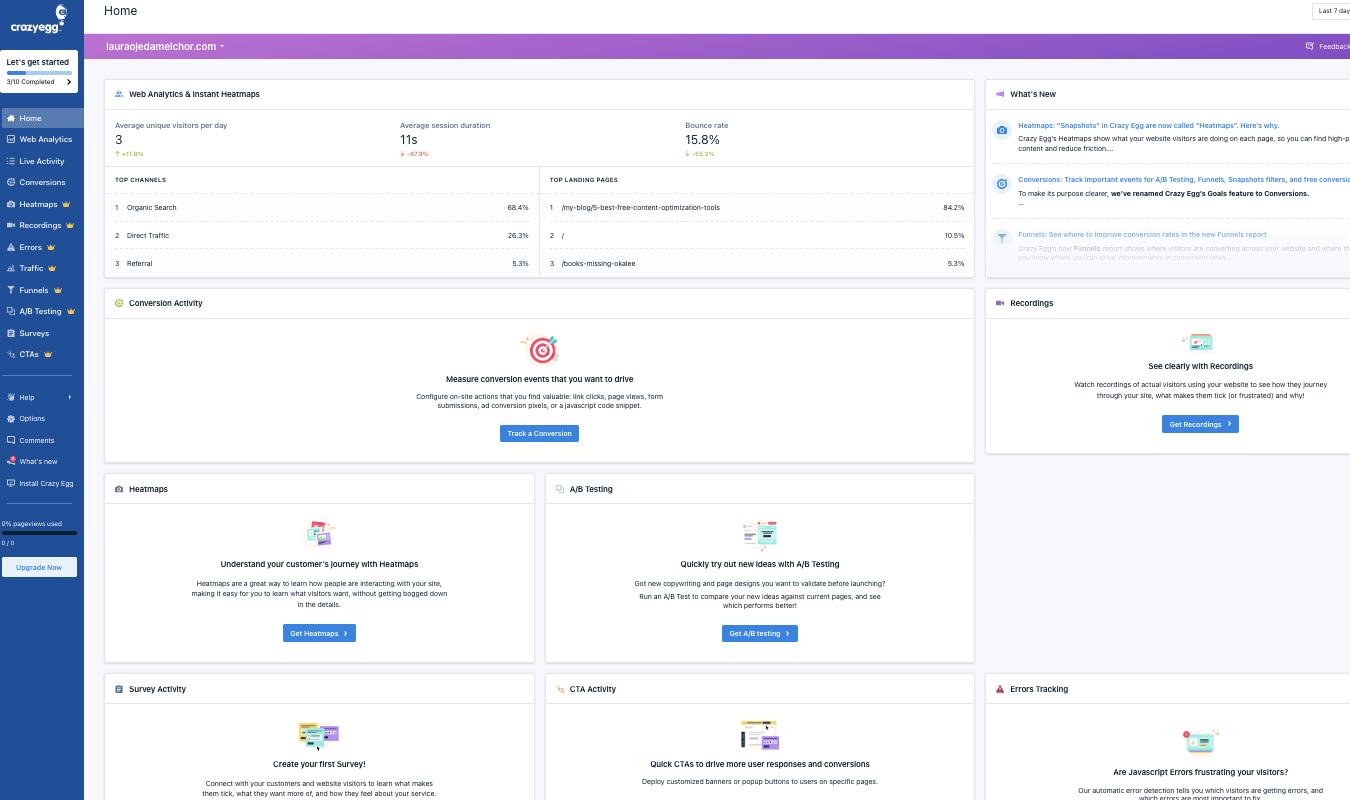
Google Analytics 4 also employs "Enhanced Measurement," which automatically tracks scrolls, outbound clicks, and site searches. However, GA4 is often criticized for its steep learning curve regarding custom event setup. To mitigate this, many enterprises integrate GA4 with Crazy Egg. This combination allows the data collection power of Google to be filtered through Crazy Egg’s more accessible dashboards. While GA4 provides the raw numbers, the integration ensures that those numbers are visualized in a way that marketing and UX teams can act upon immediately, bypassing the notoriously complex GA4 report builder.
Product Development vs. Marketing Optimization
The most stark contrast between these two ecosystems lies in their utility for product teams versus marketing teams. PostHog is not merely an analytics tool; it is a product development suite. It includes integrated "Feature Flags," which allow developers to toggle new features on or off for specific user segments. This enables "canary releases," where a new update is tested on 5% of the user base before a full rollout. PostHog also supports native A/B testing and experimentation, allowing teams to measure the impact of a new UI element on user retention directly within the same interface.
In contrast, Google Analytics remains the undisputed leader in marketing performance. It excels at attribution—identifying which ad campaigns, social media posts, or organic search terms led to a conversion. When used in tandem with Crazy Egg, this traffic data is enriched with "Heatmaps" and "Confetti Reports." These tools show exactly where visitors are clicking (or failing to click) on a landing page. While PostHog focuses on building the product, the GA4-Crazy Egg synergy focuses on optimizing the conversion path. For a website-based business, the ability to see a heatmap of a high-traffic blog post is often more valuable than the ability to manage feature flags.
Data Governance, Privacy, and Infrastructure
In an era defined by GDPR, CCPA, and increasing scrutiny over data residency, the infrastructure of an analytics provider is a major consideration. PostHog offers a unique advantage here through its open-source nature and self-hosting options. Organizations in highly regulated sectors—such as healthcare, fintech, and legal services—can host PostHog on their own private cloud servers (like AWS or Azure). This ensures that sensitive user data never leaves the organization’s controlled environment, providing a level of data sovereignty that Google Analytics cannot match.
Google Analytics operates entirely within Google’s global infrastructure. While Google provides robust security and compliance certifications, the data is essentially stored in a "black box" compared to PostHog’s transparent, open-source codebase. For many businesses, the convenience of Google’s managed service outweighs the need for total control. However, for those requiring "Privacy by Design," PostHog’s ability to be audited and self-managed is a significant differentiator.
The Role of Artificial Intelligence in Data Interpretation
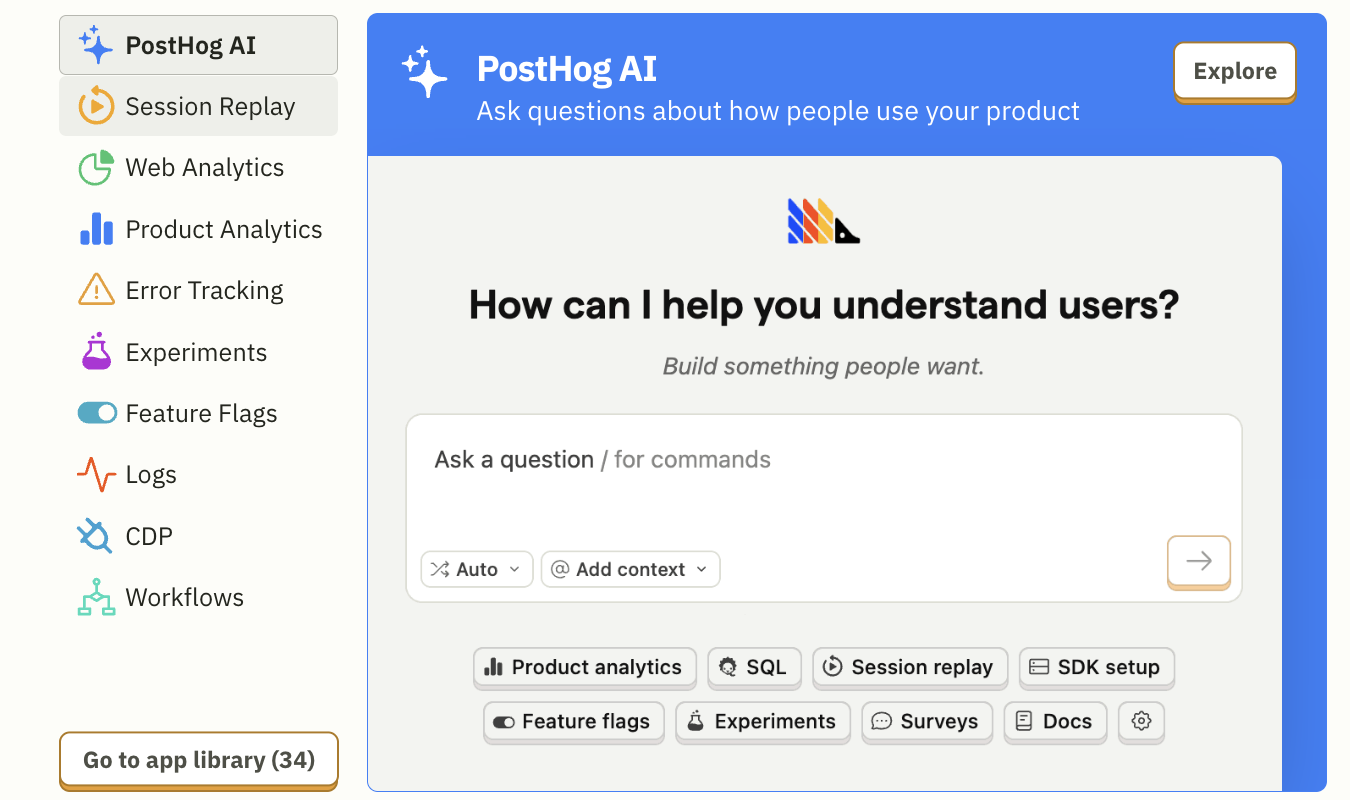
Both platforms have aggressively integrated Artificial Intelligence to help users navigate the "data deluge." PostHog’s AI implementation is primarily query-based and investigative. It acts as a "virtual data scientist," allowing users to ask natural language questions like, "Which cohort of users had the highest churn rate after using the new dashboard?" The AI then generates the relevant charts and summaries.
The Google Analytics and Crazy Egg integration takes a more proactive approach to AI. Rather than waiting for a user to ask a question, the system generates automated "Top Insights" and summaries. For instance, a user might open their Crazy Egg dashboard to find a bulleted list stating that mobile traffic from a specific region has a 20% higher bounce rate than average, accompanied by a recommendation to check for broken links on that specific page. This proactive insight model is designed for busy marketing managers who need to identify "low-hanging fruit" for optimization without performing deep-dive data surgery.
Economic Considerations: Pricing and Scalability
The pricing models of these tools reflect their target audiences. PostHog operates on a usage-based model with a generous free tier. This is ideal for startups that may have low volume but need high-end features like session replays and feature flags. As the product grows and the number of events increases, the cost scales proportionally.
Google Analytics 4 is free for the vast majority of users, with the "GA 360" enterprise tier reserved for massive corporations requiring higher data limits and specialized support. However, because GA4 lacks built-in visualization tools like heatmaps, businesses often factor in the cost of a Crazy Egg subscription. Crazy Egg offers straightforward, tiered pricing based on pageviews, making it easy for businesses to forecast their analytics spend. When comparing the two, PostHog often becomes more expensive as a product scales in complexity, whereas the GA4-Crazy Egg combination remains a cost-effective solution for high-traffic websites focused on conversion rate optimization (CRO).
Strategic Implications and Final Verdict
The decision between PostHog and Google Analytics is ultimately a question of business identity. For a company building a complex SaaS application or a mobile game, PostHog provides the "under-the-hood" visibility required to iterate on features and improve user retention. Its engineer-friendly environment and data ownership options make it a powerhouse for technical teams.
Conversely, for e-commerce sites, content publishers, and lead-generation businesses, the combination of Google Analytics and Crazy Egg remains the gold standard. The ability to track where traffic originates and then use heatmaps and session recordings to see how that traffic interacts with a website provides a complete loop for marketing optimization.
As the digital landscape continues to evolve, the "best" tool is no longer a single platform, but rather the one that aligns with an organization’s specific goals—be it the technical refinement of a product or the aggressive growth of web traffic and conversions. By understanding the architectural and philosophical differences between these platforms, decision-makers can ensure they are not just collecting data, but generating the specific insights required to drive their business forward.