In the increasingly saturated digital communication sphere, email marketers face a persistent challenge: how to ensure their messages not only reach but resonate with their target audience. The simple yet profound question of “What’s the best time to send my newsletter?” has evolved into a sophisticated strategic inquiry, with significant implications for campaign performance. Far from a mere scheduling preference, the timing of an email dispatch directly correlates with crucial metrics such as open rates and click-through rates (CTR), ultimately impacting return on investment and brand engagement. This article delves into the latest research and expert insights, providing a comprehensive guide for identifying optimal sending windows and refining overall email marketing strategies.
The Evolution of Email Timing Strategy
Early in the era of digital marketing, email sending strategies were often rudimentary. With less competition in the inbox, marketers could afford a more generalized approach, often relying on conventional business hours. However, as email became ubiquitous and inboxes grew increasingly cluttered, the need for precision timing became paramount. The shift from a “spray and pray” methodology to a data-driven, nuanced approach mirrors the broader evolution of digital marketing itself, where every interaction is scrutinized for optimization potential. The modern email landscape demands a strategic understanding of recipient behavior, moving beyond simplistic assumptions to embrace complex data analytics.
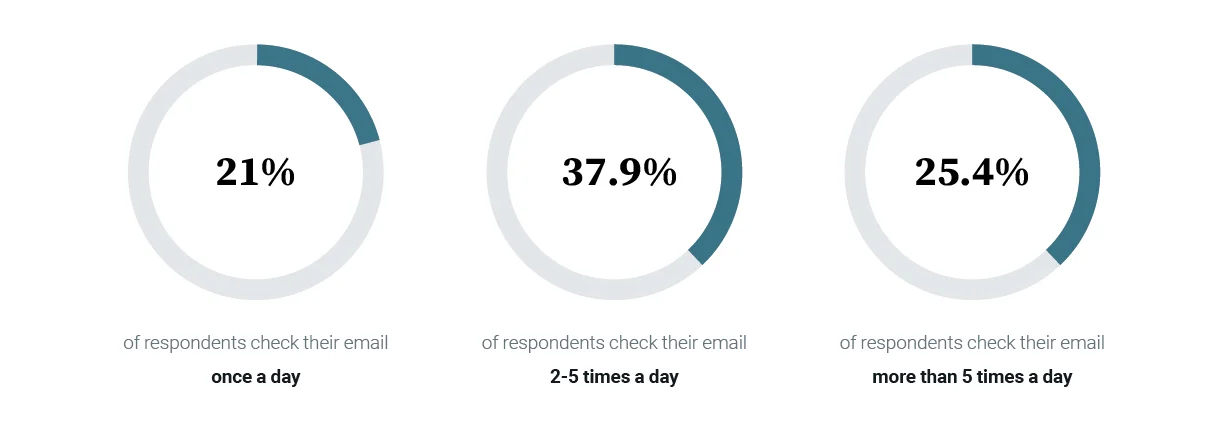
Initially, a common piece of advice was to send emails between 9 AM and 12 PM, aligning with typical workday routines. While this still holds some validity as a starting point, contemporary research reveals a far more intricate picture. The notion that recipients check their email only once or twice a day is outdated. According to Mailjet’s Email Engagement Report, a substantial 63.3% of users interact with their personal mailboxes at various points throughout the day. This constant engagement, however, does not automatically translate into active participation. The critical distinction lies between merely seeing an email and having the capacity and inclination to act upon it. This underlines why precise timing remains a cornerstone of effective email marketing, aiming to capture recipients when they are most receptive and unburdened by other priorities.
Global Peaks: Unpacking Hourly Engagement Data
To move beyond anecdotal evidence, comprehensive studies analyze billions of emails to pinpoint peak engagement times. Research conducted by Sinch Mailgun, leveraging vast datasets, reveals that 15:00 Coordinated Universal Time (UTC) consistently demonstrates the highest engagement in click-to-open ratios. This global peak indicates a critical window where opens and subsequent clicks are most likely to occur.
However, interpreting this UTC data requires careful consideration of local time zones. For instance, 15:00 UTC translates to 11 AM for Eastern Standard Time (EST) during summer months, 8 AM for Pacific Standard Time (PST), and 4 PM for Central European Time (CET). This highlights the imperative for marketers operating across different geographies to convert UTC timings accurately to their target audiences’ local hours. Failing to do so can lead to sending campaigns at suboptimal times, significantly diminishing their potential impact.
The granular data on hourly engagement provides deeper insights into daily routines. Open rates often show an initial surge in the morning as people start their day and check emails, followed by another peak around mid-day or early afternoon, aligning with lunch breaks or post-lunch work periods. Click rates, which signify deeper engagement, tend to mirror this pattern, often peaking slightly after open rates as recipients process their inboxes and decide which emails warrant further attention. The highest click-to-open ratios around 15:00 UTC suggest a moment when recipients are not only opening emails but are also prepared to interact with their content, perhaps after initial morning tasks are complete and before late-day commitments set in.
Geographical and Cultural Nuances: A Global Perspective
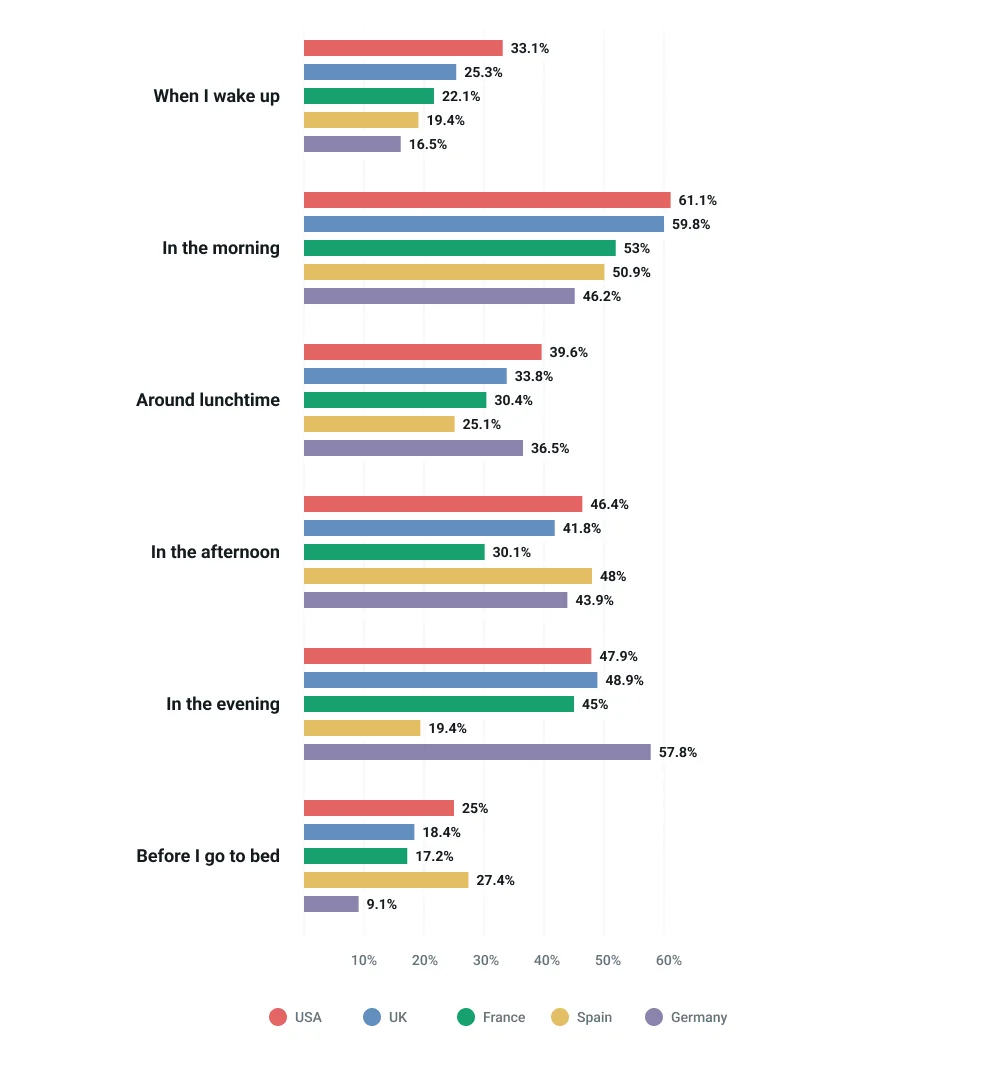
The “one-size-fits-all” approach to email timing is further undermined by significant variations in email habits across different countries and cultures. Mailjet’s Email Engagement Report underscores these fundamental differences, revealing distinct patterns that necessitate localized strategies.
Consider the example of Germany and Spain. The report indicates that German customers are more likely to engage with emails in the early evening, with 57.8% opening emails at this time. In stark contrast, only 19.4% of Spanish recipients exhibit similar behavior during the early evening. Conversely, 27.4% of Spanish participants reported checking emails late in the evening, just before bed, a habit observed in only 9.1% of Germans.
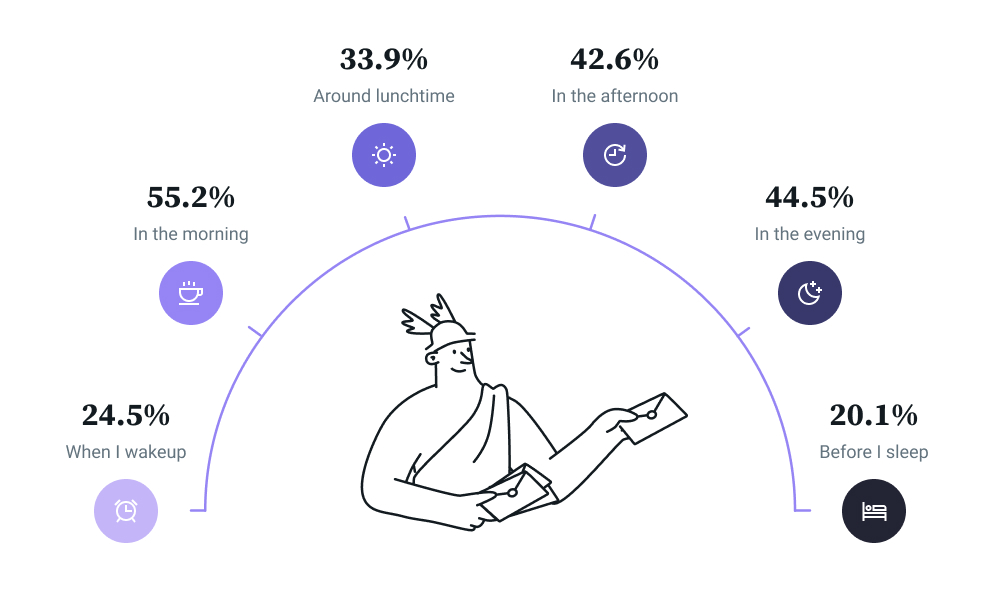
These disparities can be attributed to various factors, including national work cultures, daily schedules, commute times, and social habits. Countries with a strong nine-to-five work ethic might see higher engagement during specific workday hours, while cultures that prioritize extended lunch breaks or later evening activities might have different peak times. For example, a country with a long daily commute might see higher mobile email engagement during transit, while others might prefer checking emails once settled at home.
For global brands, this data is not merely interesting but critical. It mandates a robust audience segmentation strategy that goes beyond language or demographic data to include geographical location and associated cultural behaviors. Sending a campaign intended for a global audience without localizing the send time is akin to broadcasting a message in a language only a fraction of the audience understands. By segmenting audiences based on their region and tailoring send times accordingly, marketers can significantly enhance engagement and avoid the pitfall of sending messages when recipients are least receptive.
Weekly Rhythms: Best and Worst Days for Campaigns
Just as hourly patterns dictate optimal send times, the day of the week plays an equally crucial role in determining email campaign success. The overall sending schedule often hinges on whether the brand is B2B (business-to-business) or B2C (business-to-consumer) and the specific industry it operates within. However, overarching trends in open and click-through rates provide general guidelines for all marketers.
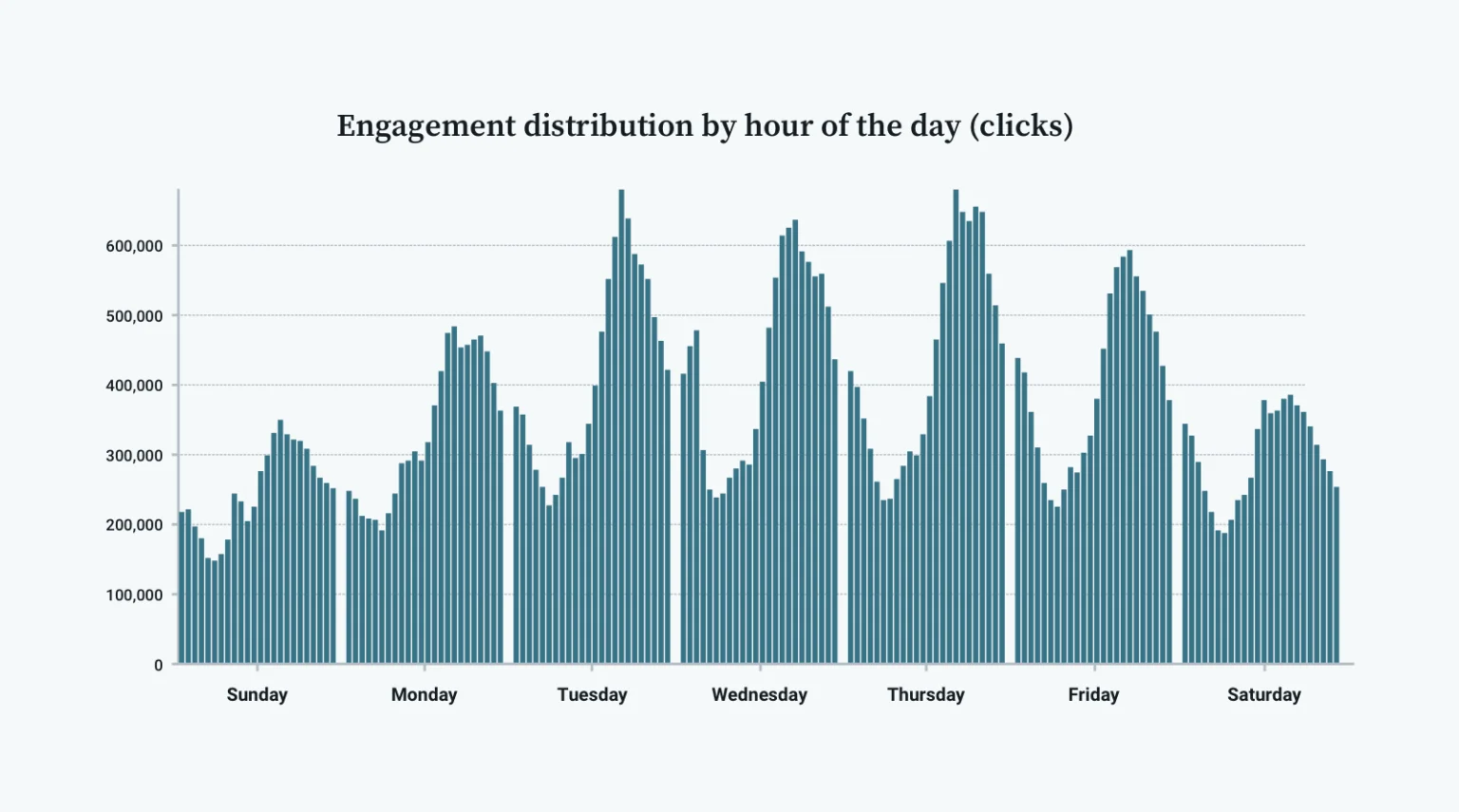
The Mid-Week Advantage: Data consistently points to Tuesdays through Thursdays as the days with the highest open rates. This mid-week sweet spot is attributed to several factors: Monday often involves catching up on weekend emails and planning the week, while Friday signals the winding down of the work week and a shift in focus towards personal activities. Tuesdays, Wednesdays, and Thursdays, therefore, represent a period when recipients are typically settled into their work routines, more focused, and more likely to engage with professional or informational content. Click-through rates generally follow this trend, peaking during these mid-week days.
While Tuesdays and Thursdays often show slightly higher engagement, Wednesday remains a strong contender. For marketers planning to send emails twice a week, a strategic combination like Tuesday and Thursday is often recommended. Sending campaigns on consecutive days, such as Tuesday and Wednesday or Wednesday and Thursday, risks overwhelming recipients, potentially leading to lower engagement for the second email or even unsubscribes due to perceived inbox clutter.
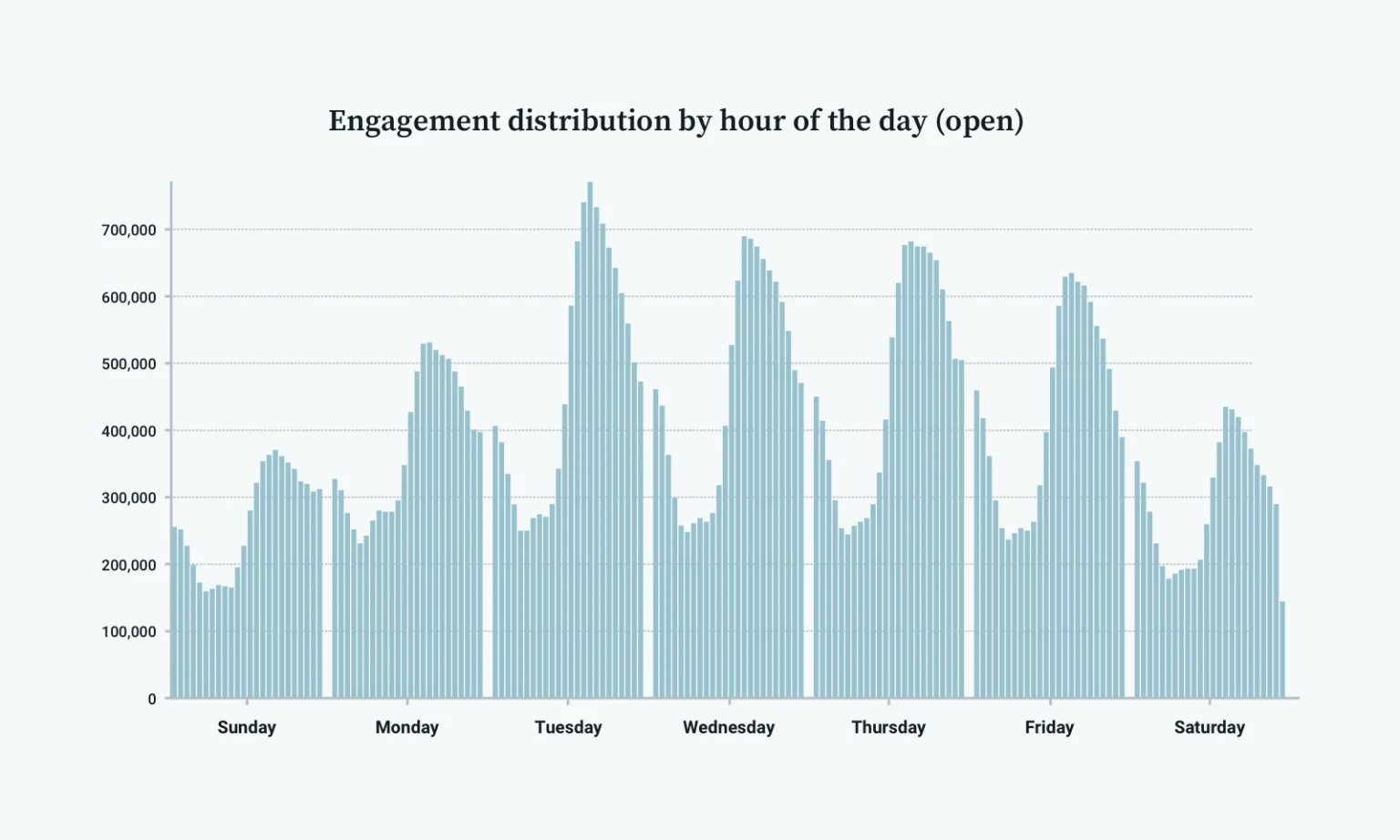
The Weekend and Monday Conundrum: Weekends, particularly Saturdays and Sundays, consistently rank as the worst days for email engagement. During these days, individuals are typically focused on leisure, family, and personal errands, making emails a low priority. The exception to this rule might be for highly specific, lighthearted content that aligns with weekend leisure activities, such as promotions for weekend events or hobby-related newsletters. However, for most marketing campaigns, avoiding weekends is a prudent strategy.
The debate between Friday and Monday as the “lesser of two evils” for sending emails is ongoing. Historically, both days have been perceived as suboptimal. However, recent research indicates that Fridays often outperform Mondays in terms of both open and click-through rates. Mondays are characterized by inbox overload from the weekend and the mental shift required to plan the week ahead, making recipients less receptive to new marketing messages. Fridays, while not as strong as mid-week, might benefit from reduced inbox competition as other marketers avoid the end of the week. Recipients might also be more open to engaging with content that offers a mental break or prepares them for the weekend.
B2B vs. B2C: Tailoring to User Context
The distinction between B2B and B2C email marketing is paramount, as professional and personal email usage patterns diverge significantly. B2B recipients primarily interact with their inboxes during working hours, often on weekdays, while B2C recipients exhibit more varied behavior, extending into evenings and weekends.
For B2B campaigns, optimal send times generally align with the traditional workday. Early mornings (after the initial inbox clear-out), late mornings (before lunch), and early afternoons (post-lunch) are often effective. Tuesdays, Wednesdays, and Thursdays remain the strongest days. B2B content typically aims to inform, educate, or drive business decisions, requiring a recipient’s professional mindset. Sending B2B emails outside of these windows risks them being buried under a fresh wave of emails the next workday or simply ignored as recipients are not in a professional frame of mind.
Conversely, B2C email strategies require greater flexibility. Depending on the product or service, optimal times can extend into evenings and, in some cases, weekends. For instance, an e-commerce brand selling fashion might find success sending promotional emails in the evening when consumers are relaxing and browsing online. A travel company might see higher engagement on a Sunday evening when people are planning their next getaway. The key lies in understanding the consumer journey and when they are most likely to be thinking about or needing the product/service offered.
The importance of well-defined marketing personas cannot be overstated here. By understanding the demographics, psychographics, daily routines, and device usage of different subscriber segments, marketers can craft highly targeted sending schedules. A persona representing a busy professional will likely engage differently than one representing a student or a retiree. These insights form the bedrock of an effective, persona-driven email marketing strategy.
The Business Imperative: Why Sending Time Matters
The investment in crafting compelling email content—powerful copy, catchy subject lines, and clear calls-to-action—can be entirely undermined if the email fails to reach the recipient at an opportune moment. In a crowded inbox, visibility is paramount. Emails that land at the top of the inbox when a recipient is actively checking it stand a significantly higher chance of engagement than those buried beneath a deluge of later messages.
Optimizing email send times is not merely about achieving higher vanity metrics; it has tangible business benefits:
- Increased Open Rates: More recipients see your message.
- Higher Click-Through Rates: More recipients interact with your content and calls-to-action.
- Improved Conversion Rates: Enhanced engagement often translates directly into more leads, sales, or desired actions.
- Enhanced Sender Reputation and Deliverability: Email service providers (ESPs) observe engagement. High open and click rates signal positive recipient interaction, which can improve future deliverability and inbox placement. Conversely, low engagement can negatively impact sender reputation.
- Reduced Unsubscribe Rates: When emails are relevant and well-timed, recipients feel less overwhelmed and are less likely to opt out.
- Maximized ROI: By ensuring your carefully crafted campaigns reach the right audience at the right time, you maximize the return on your marketing efforts.
As highlighted by research, “86.4% of respondents say having time to read an email is an important factor in determining whether to open it.” This statistic underscores a fundamental truth: it’s not enough for an email to be present in the inbox; the recipient must also have the bandwidth to consume and act on its content. Understanding customer behavior, habits, and time zones is therefore crucial for ensuring your message is not only seen but also processed and engaged with.
Methodology for Optimal Timing: A Data-Driven Approach
Given the multifaceted nature of optimal email timing, a rigid adherence to generalized rules is insufficient. The most effective strategy involves a continuous cycle of data analysis, hypothesis formulation, testing, and refinement.
Leveraging Existing Data: The first step for any marketer is to tap into their own treasure trove of historical data. Most email service providers (ESPs) offer detailed analytics dashboards that track open rates, click-through rates, and other engagement metrics by hour and day. By reviewing past campaign performance, marketers can identify existing patterns specific to their audience. For instance, if a specific newsletter consistently performs well on Tuesday mornings, this provides a strong starting hypothesis for future sends.
The Power of A/B Testing: A/B testing is indispensable for pinpointing optimal send times. This involves sending variations of a campaign to different segments of your audience and comparing their performance. For example, a marketer could test three different send times for a weekly newsletter over three consecutive weeks: 10 AM, 1 PM, and 9 PM. Alternatively, a single campaign could be split, sending to half the list in the early morning and the other half in the afternoon, then analyzing which segment yielded better results. This scientific approach allows marketers to gather empirical evidence specific to their unique subscriber base.
Segmentation and Personalization: As demonstrated by the geographical and B2B/B2C variations, segmenting audiences is critical. Marketers should consider segmenting their lists by:
- Time Zone: Essential for global audiences.
- Geography/Culture: To account for regional behavioral differences.
- Engagement History: High-engagement subscribers might have different optimal times than less engaged ones.
- Persona/Customer Type: B2B vs. B2C, specific industry roles, or demographic groups.
Consistency vs. Adaptability: While consistency in sending schedule can build anticipation and trust with an audience, marketers must also remain adaptable. For regular weekly newsletters, sending on the same day consistently is beneficial. However, during holidays, special events, or unforeseen circumstances, deviating from the schedule might be necessary to capture attention when recipients are most likely to engage. Prioritizing engagement over strict adherence to a schedule is often the wiser choice.
Conclusion: The Art and Science of Email Timing
Ultimately, there is no universal “best time” to send an email campaign. The optimal schedule is a dynamic interplay of various factors: the nature of the business, the demographics and behaviors of its customers, the type and frequency of emails sent, and the specific campaign objectives. Age, daily habits, and geographical location significantly influence engagement metrics.
In the competitive landscape of digital communication, mastering the art and science of email timing is a strategic imperative. By combining broad industry insights with granular, audience-specific data and a commitment to continuous A/B testing, marketers can unlock the full potential of their email campaigns. Tools offered by advanced email marketing services, such as robust analytics dashboards, segmentation capabilities, and A/B testing features, empower marketers to precisely track, analyze, and optimize their sending strategies, ensuring their messages land at the perfect moment for maximum impact. The future of email marketing lies not just in what you say, but precisely when you say it.