The Out of Home Advertising Association of America (OAAA) has unveiled a significant update to its OpenOOH venue taxonomy, a move poised to unlock greater programmatic trading and enhance transparency within the burgeoning out-of-home (OOH) advertising sector. Announced on Tuesday, February 10th, 2026, this revised taxonomy aims to bridge the gap between the traditional, venue-based categorization of OOH inventory and the granular precision demanded by modern programmatic buyers. The initiative marks a crucial step in aligning OOH with the rapidly evolving landscape of omnichannel advertising, particularly its integration with retail media and connected TV (CTV) strategies.
Addressing Programmatic Buyers’ Demands for Granularity
For years, the OOH industry has relied on broad venue categories, such as “retail” or “transit,” to classify its vast inventory. While this approach served the direct-sold market, it proved insufficient for programmatic buyers who require precise data to make informed bidding decisions. The lack of granular detail not only hindered the seamless integration of OOH into programmatic workflows but also eroded confidence among buyers when publishers and Supply-Side Platforms (SSPs) bundled media of disparate quality under generic labels. This opacity risked undermining the transparency essential for the healthy growth of programmatic OOH.
The OAAA’s updated OpenOOH taxonomy, first introduced in 2020, directly addresses these pain points. The new specification introduces a sophisticated “parent/children/grandchildren” hierarchical schema. This structure allows media owners to meticulously categorize their digital screens, moving beyond simplistic venue types to detailed location specifics. For instance, a digital screen situated in an airport’s baggage claim area can now be precisely identified as “transit/airports/baggage claim.” This level of specificity stands in stark contrast to the previous, broader classification of simply “transit.”
Evolution of the Taxonomy and Working Group
The development of this enhanced taxonomy was spearheaded by the OpenOOH Taxonomy Working Group, which diligently worked on the new specifications throughout the previous year. In a strategic move to ensure continuous development and maintenance of the standard, the OAAA is integrating this specialized working group into its standing OAAA Taxonomy Committee. This consolidation aims to streamline future updates and foster a more cohesive approach to maintaining the OOH industry’s classification standards.
Premesh Purayil, CTO at OOH publisher OUTFRONT Media, highlighted the critical need for this evolution. “Programmatic advertisers need an easier way to use OOH inventory as an extension of their omnichannel campaigns, particularly for retail media and CTV buys,” Purayil stated. He emphasized that the previous reliance on generic categories obscured the nuanced value of specific OOH placements, making it challenging for advertisers to execute sophisticated targeting strategies.
Anna Bager, President and CEO of the OAAA, echoed this sentiment, underscoring the strategic importance of programmatic integration. “By bringing OOH media classification more in line with programmatic buying, out-of-home publishers can capitalize on the recent explosion of programmatic CTV and retail media spend in recent years,” Bager explained. She pointed to the OOH industry’s robust recovery and sustained growth, noting 18 consecutive quarters of ad revenue growth. This trend included a significant 4.5% year-over-year improvement in Q3 2025, during which advertisers invested a record $2.13 billion for the third quarter, according to OAAA data. Despite this impressive rebound, Bager acknowledged that OOH remains predominantly a direct-sold channel, with open-auction programmatic accounting for only a fraction of total ad spend. The limitations of the existing taxonomy were identified as a key barrier to broader programmatic adoption.
Deprecating Legacy Fields for Enhanced Accuracy
Historically, the OpenRTB specification allowed media owners and SSPs to utilize a “venueTypeString” field – essentially a free-text field – to manually input more detailed information about the exact location of an OOH screen. While this offered a degree of flexibility, Purayil pointed out a significant drawback: “Free text fields can be hard for programmatic systems to read accurately because they tend to be inconsistently applied across platforms.” This manual approach was prone to errors, inconsistencies, and a lack of standardization, making it difficult for automated buying systems to interpret and utilize the data reliably.
The new taxonomy directly addresses this by eliminating the need for the “venueTypeString” field altogether. By establishing a structured, hierarchical schema, the OAAA ensures that venue information is standardized and machine-readable. This deprecation of the legacy free-text field removes guesswork and significantly enhances the accuracy and efficiency of programmatic OOH transactions. The OAAA has reportedly reached out to the IAB Tech Lab to discuss the integration of the new taxonomy into the OpenRTB specification and the formal deprecation of older fields, although a response was not available at the time of publication.
Democratizing OOH and Enabling Omnichannel Extension
The implications of this enhanced taxonomy extend far beyond mere technical improvements; they promise to democratize access to OOH inventory and empower advertisers with unprecedented targeting capabilities.
Precision Targeting for CPG and Niche Brands
With more granular categories, advertisers can now pinpoint specific OOH inventory that aligns with their target audiences and campaign objectives. Purayil elaborated on this benefit: “Advertisers can zero in on the OOH inventory they want to use for omnichannel audience extension.” For instance, Consumer Packaged Goods (CPG) brands can now target specific types of retail environments where their products are actually sold, moving away from the generic “retail” umbrella. This precision allows for more relevant ad placements and a more efficient use of advertising budgets.
Furthermore, the taxonomy provides advertisers with greater flexibility regarding ad placement within venues. A potato chip brand might specifically seek out street-facing displays in the windows of local bodegas, recognizing this as a prime point of purchase. Conversely, a pharmaceutical brand might prioritize screens located near pharmacy counters within drug stores, ensuring their message reaches consumers at a critical decision-making moment.
Navigating “Sorta CTV” Placements
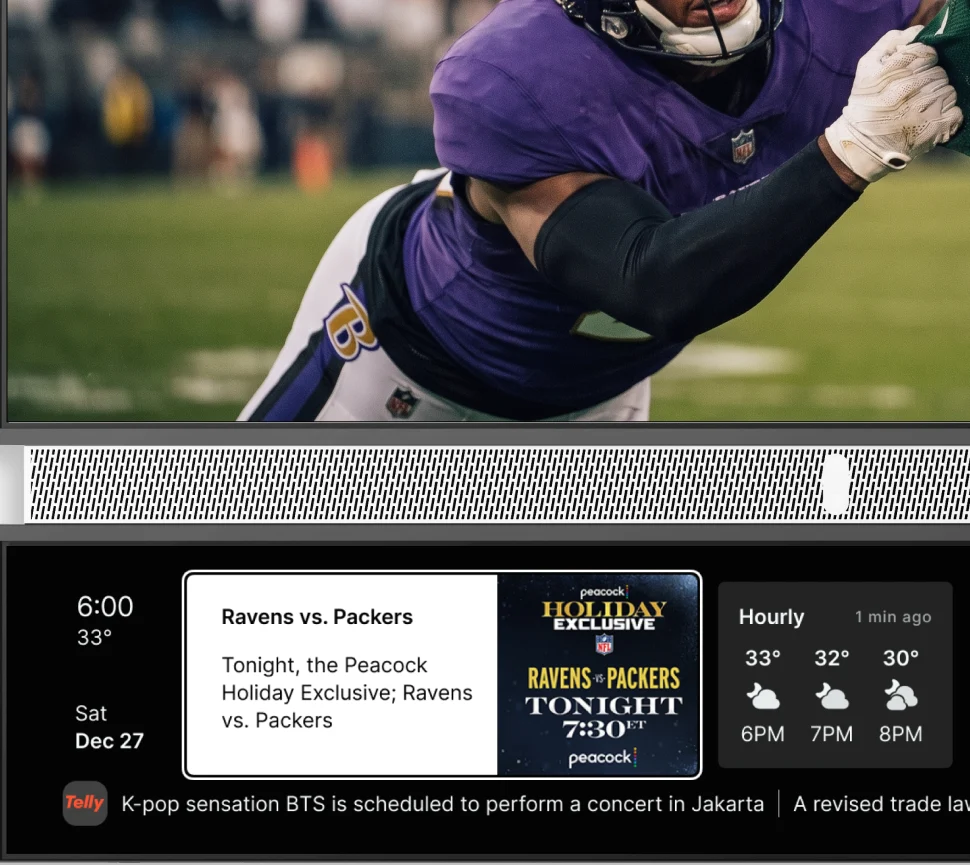
The granular classification also addresses the nuanced challenge of “sorta CTV” OOH placements – digital screens located in environments that also feature television content, such as bars. Purayil explained, “more granular targeting also helps advertisers avoid buying ‘sorta CTV’ OOH placements, like TVs mounted in bars.” A brand whose creative relies heavily on audio might choose to bypass these environments to ensure its message is fully conveyed. In contrast, a brand targeting sports fans with visually driven creative where audio is less critical might deliberately target these “sorta CTV” inventory types to expand their reach.
This ability to distinguish between different types of OOH placements, especially those that blur the lines with traditional video, is crucial for advertisers looking to optimize their omnichannel strategies. It allows for a more strategic allocation of media spend and ensures creative is matched with the most appropriate contextual environment.
Empowering Smaller Publishers and Streamlining Buys
Beyond advertiser benefits, the new taxonomy is poised to level the playing field for smaller, niche OOH publishers. Large OOH platforms often benefit from established relationships with specialist agencies and direct sales teams, who are familiar with their inventory structures. Smaller publishers, lacking this advantage, can now leverage the standardized taxonomy to make their inventory more accessible and attractive to programmatic buyers.
“By adopting the new taxonomy, smaller OOH publishers can make their inventory easier to activate programmatically,” Purayil noted. This standardization simplifies the buying process for agencies and advertisers alike, enabling them to execute buys across a mix of large and small publishers within their existing omnichannel programmatic workflows. This could potentially shift revenue from private marketplace deals towards the open marketplace, provided the programmatic execution makes strategic sense.
“The revenue is already flowing in heavily through the private marketplace side,” Purayil observed. “But this could potentially move some of that revenue into the open marketplace, if it makes sense.” This suggests a future where programmatic OOH becomes a more fluid and integrated component of broader digital advertising strategies.
Industry Context and Future Outlook
The OAAA’s proactive approach to refining its taxonomy reflects the broader industry’s drive towards greater automation and data-driven decision-making. The significant growth in OOH ad revenue, as evidenced by the OAAA’s latest figures, signals a strong market demand. However, the continued dominance of direct-sold channels indicates an opportunity for programmatic to capture a larger share of this expanding market.
The updated OpenOOH taxonomy is not merely a technical update; it is a strategic enabler. By providing the granular data that programmatic buyers demand, the OAAA is fostering an environment where OOH can compete more effectively with other digital channels like CTV and retail media networks. This move is expected to lead to increased programmatic OOH spend, greater efficiency for advertisers, and a more transparent and robust OOH ecosystem overall. The integration of the OpenOOH Taxonomy Working Group into the OAAA Taxonomy Committee ensures a sustained focus on evolving these standards, positioning the OOH industry for continued innovation and growth in the programmatic era.