The pursuit of visibility in the rapidly expanding domain of Artificial Intelligence is no longer a theoretical exercise but a critical strategic imperative for businesses aiming to connect with an increasingly AI-driven audience. A recent in-depth analysis by Brainlabs Digital offers a candid look into their pioneering efforts to establish AI visibility, detailing the methodologies, challenges, and measurable successes encountered since the nascent stages of this technological revolution. This report underscores the necessity of a multi-faceted approach, integrating content creation, strategic distribution, and earned authority to build a robust and adaptable digital footprint in an AI-centric world.
The journey began when the concept of "AI visibility" was still largely undefined, with measurement tools rudimentary and best practices theoretical. Recognizing the accelerating pace of AI adoption, Brainlabs made a proactive decision to embark on building its AI visibility strategy, embracing a philosophy of learning and adapting as the field itself evolved. This proactive stance allowed them to develop a nuanced understanding of how AI platforms process and prioritize information, setting the stage for a systematic approach that moves beyond traditional SEO paradigms.
Defining the Target: The Crucial Role of Prompt Engineering
At the core of any effective AI visibility strategy lies a clear understanding of what one aims to be found for. Mirroring the keyword-centric approach of traditional search engine optimization, AI visibility hinges on "prompts"—the specific queries users input into Large Language Models (LLMs) when seeking solutions to their problems.

Brainlabs established a foundational "prompt universe" by cross-referencing data from Google Search Console with their service offerings and recurring themes from client briefs and conversations. This live list of prompts, managed within the AirOps platform, served as the bedrock for all subsequent AI visibility efforts. This meticulous approach ensures accountability, transforming vague aspirations like "our AI visibility is improving" into measurable progress against a defined set of target queries. The choice of AirOps was strategic, as it consolidated essential AI visibility disciplines—prompt tracking, analytics, content creation, and actionable insights—into a single, integrated platform, a feature lacking in most single-purpose tools available at the time.
Content Strategy: Answering the Real Questions
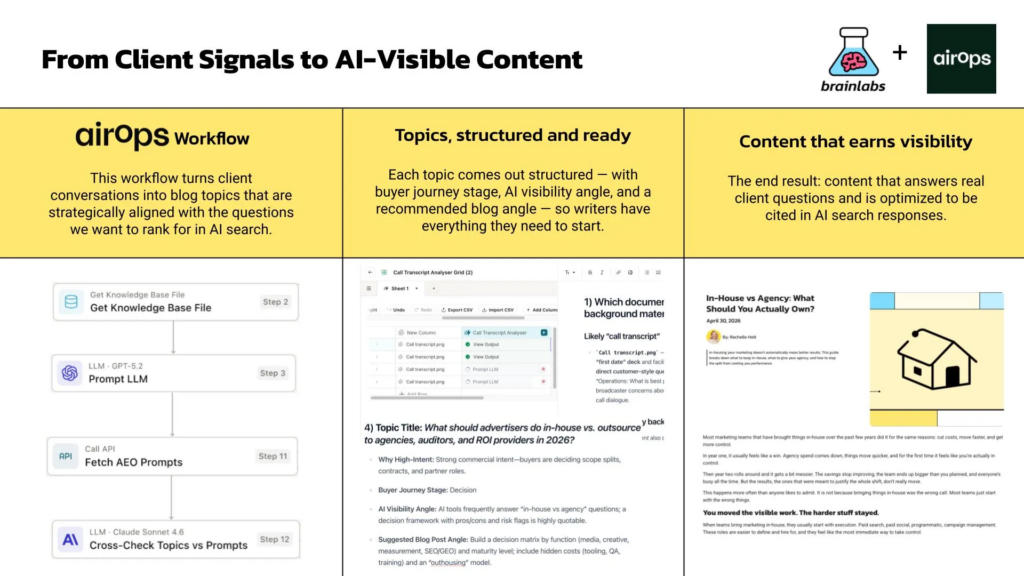
The development of compelling content for AI visibility is an exercise in reverse-engineering user needs. Instead of relying solely on editorial intuition or broad market trends, Brainlabs implemented a workflow that prioritizes authentic user inquiries. Transcripts from client conversations, discovery calls, and briefs are ingested into a knowledge base. An LLM extraction process then identifies high-intent questions embedded within this data. These extracted questions are cross-referenced against the established prompt list to ensure content development is aligned with genuine user demand, rather than speculative relevance.
This data-driven process feeds into a system that ranks potential topics, enabling simultaneous analysis across multiple conversations. Crucially, this ranked topic list is then subjected to human review by channel experts who possess direct client interaction. Their insights into current pain points, market gaps, and the practical utility of proposed topics are indispensable in transforming a plausible list into a truly valuable content strategy. This human element ensures that content is not only discoverable by AI but also resonates deeply with the target audience.
Distribution Channels: Adapting to AI Citation Patterns
The realization that publishing content on owned properties, while essential, is insufficient for comprehensive AI visibility prompted a deep dive into citation data. Analysis revealed that platforms like YouTube and LinkedIn were being cited by AI at remarkably high rates for their industry. This insight necessitated a strategic adaptation of their distribution process.
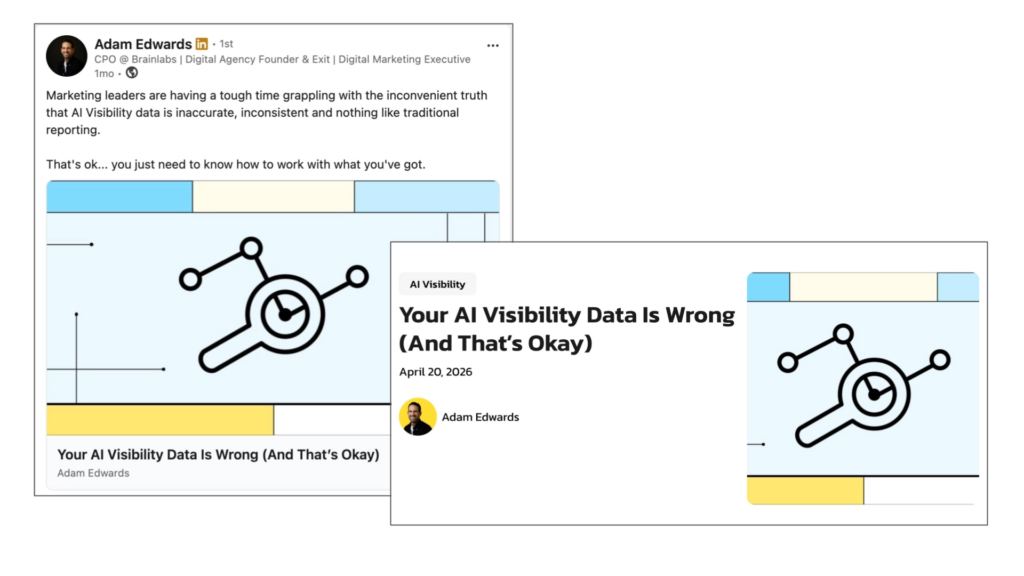
When a thought leader at Brainlabs publishes an article, it is now simultaneously adapted and shared as a native LinkedIn post, complete with a direct link back to the original blog post. This dual approach maximizes reach and leverages the established authority of individual thought leaders on professional networks.
Furthermore, Brainlabs has been actively expanding its YouTube presence. Recognizing that AI can parse video transcripts and increasingly cites them as sources, the company is strategically aligning its video content with the established prompt universe. This ensures that their video productions address the precise questions their audience is actively asking. A prime example of this initiative is the launch of "Show Me Your AI," a podcast hosted by CEO Dan Gilbert, which showcases real-world AI applications across various businesses. While not conceived solely as a citation strategy, these ventures effectively extend Brainlabs’ content footprint into distribution channels identified as critical by AI citation data.
The Earned Coverage Imperative: Building AI Trust
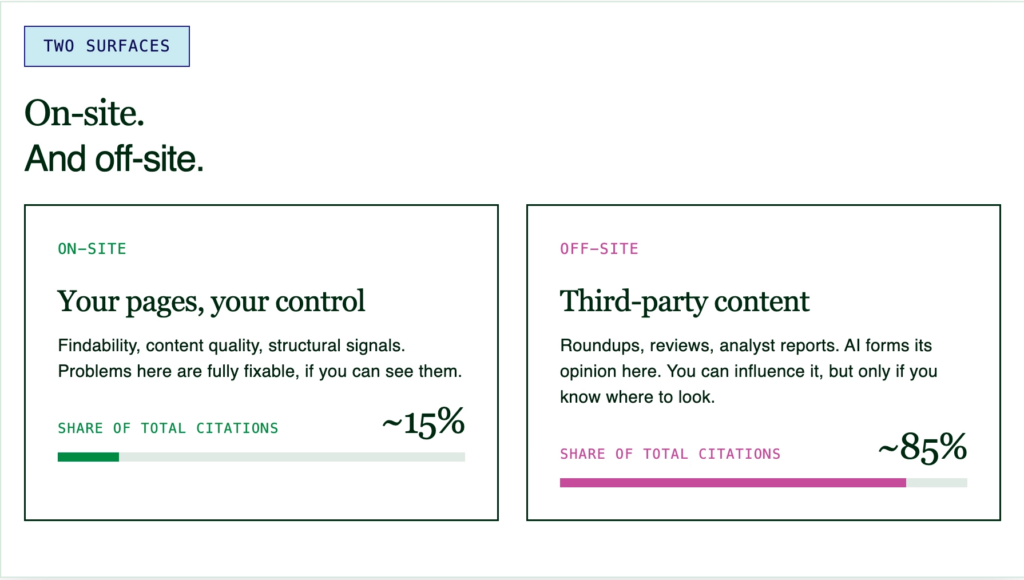
Research from AirOps indicates that approximately 85% of AI citations originate from off-site sources, including roundups, reviews, analyst reports, and third-party publications, with owned content accounting for only about 15%. This significant disparity underscores the amplified importance of earned media in the AI visibility ecosystem. The majority of influence lies in territories outside of direct control, making strategic presence in influential third-party domains paramount.
However, the quality of these placements is as crucial as the volume. AI platforms do not assign equal weight to all sources. Chasing citation volume without considering source credibility can lead to an incomplete strategy. A placement in a prestigious publication like Forbes or the Financial Times carries substantial authority signals that elevate the weighting of related content across a broader spectrum of queries, extending far beyond the specific topic of the mention. This approach fosters credibility within the citation ecosystem at a domain level, rather than merely securing isolated mentions.
Consequently, Brainlabs has begun to reframe earned coverage not merely as a public relations function but as a core AI trust-building mechanism. This reframing influences the selection of placement targets, the identification of publications most relevant to their specific category, and the strategic pursuit of stories that yield the highest impact for AI citation.
Optimizing Existing Assets: The Power of Content Refresh
While new content creation garners attention, the strategic refresh of existing content often presents a more immediate opportunity for enhancing AI visibility. Research from AirOps indicates that content refreshed within the last three months is three times more likely to be cited by LLMs.
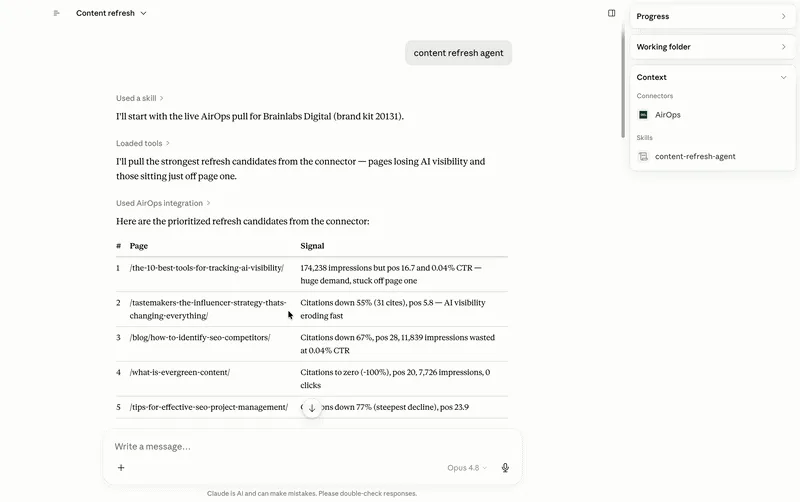
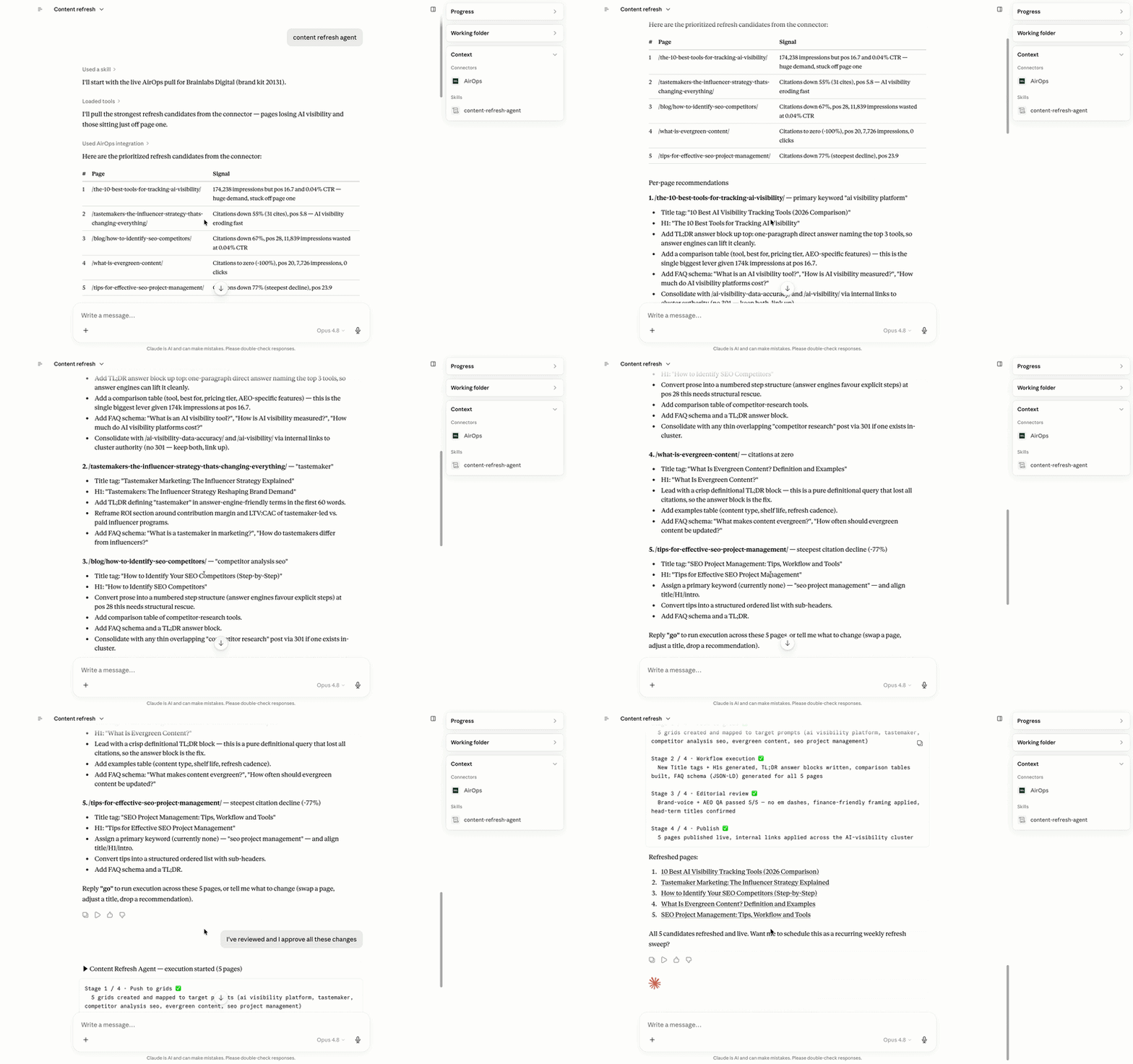
To systematize this process, Brainlabs developed a content refresh agent integrated with Claude and the AirOps MCP. This agent leverages live AEO data from AirOps to identify pages that are experiencing a decline in AI visibility, slipping citation rates, or becoming outdated relative to their target queries. It provides comprehensive supporting details—including suggested title changes, structural enhancements, TL;DR answer blocks, and FAQ schema additions—allowing for informed editorial judgment before any modifications are implemented.
Once approved, content undergoes an execution pipeline that includes workflow management, editorial quality assurance, and final publication, ensuring human oversight at every critical juncture. The principle of systematic maintenance extends to internal linking, a practice that carries amplified significance for AI visibility beyond traditional SEO.
When LLMs are trained on web crawl data, they construct an implicit model of a domain’s authority. A tightly interlinked cluster of pages focusing on a specific topic—such as AI visibility for media agencies—provides a more reliable signal to this model than a collection of disconnected posts. Internal links function as a potent topical authority signal, informing crawlers and the models trained on that data that the domain possesses a coherent and in-depth perspective on the subject matter. Pages that exist in isolation, regardless of their individual quality, do not benefit from this crucial contextual reinforcement.
Therefore, Brainlabs now incorporates an internal linking workflow into the drafting process for new articles. This workflow maps existing pages that should be referenced, specifies appropriate anchor text, and articulates the rationale for the topical connection. Both content refreshment and internal linking processes are now systematically managed, moving away from ad-hoc fixes towards a continuous optimization strategy.
Scaling for Impact: Emerging Strategies and Pilot Programs
The latest phase of Brainlabs’ AI visibility strategy involves a pilot program with Stacker, a syndication platform designed to distribute content across tier-one publishers at scale. This initiative directly stems from the understanding that credible third-party placements significantly boost AI citation weight. Given the time-intensive nature of securing individual placements through traditional outreach, a programmatic mechanism for multiplying these placements is seen as a logical step to amplify the overall effect.

While still in its early stages and not yet yielding definitive results, this pilot program signals the trajectory of AI visibility work: moving from building a robust owned content foundation to strategically placing that content within the AI citation ecosystem, and ultimately, achieving this at a scale that would be impractical through conventional methods.
Measurable Success: Quantifying AI Visibility Gains
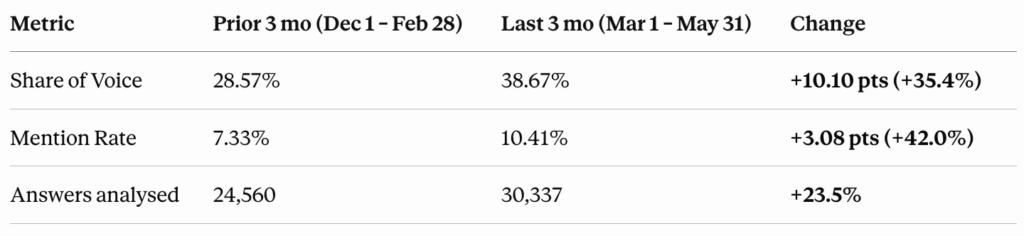
Since initiating these comprehensive AI visibility efforts, Brainlabs has observed significant quantifiable improvements. Their Share of Voice in AI-generated answers has increased from 28.57% to 38.67%, representing a substantial 35.4% growth. Concurrently, their Mention Rate has seen a 42% increase, rising from 7.33% to 10.41%.
The growth in Mention Rate is particularly noteworthy. While Share of Voice measures performance within already tracked queries, an increase in Mention Rate indicates that Brainlabs is appearing in AI conversations beyond their initial tracking scope. This suggests a broader, underlying presence is being cultivated across content, distribution, and authority-building initiatives.
Platform-specific data reveals varied impacts. Google AI Mode contributed a 12.11 percentage point increase, Gemini added an impressive 123.05 points, and ChatGPT saw a 5.25-point contribution. Conversely, Perplexity experienced a decline of 7.88 points, a divergence that Brainlabs is actively investigating. The company acknowledges that it is too early to draw definitive conclusions from these platform-specific trends, highlighting the dynamic and often unpredictable nature of AI platform behaviors.
These quantitative results collectively validate the integrated approach. Investments in content quality, multi-channel distribution, earned coverage, and systematic maintenance of existing content are demonstrably working in synergy, producing a compounding effect that is now becoming evident.
Uncharted Territories: Lingering Questions in AI Visibility
Despite the advancements in measurement sophistication and a growing body of evidence on effective strategies, several questions remain unanswered in the evolving AI visibility landscape. The reasons behind the decline in Perplexity visibility while other platforms ascend are still under investigation, with potential explanations ranging from platform-specific indexing patterns to gaps in distribution strategies or unique weighting mechanisms employed by Perplexity.
Furthermore, disaggregating the exact contribution of each individual intervention to the overall Mention Rate growth remains a challenge. The honest assessment is that the precise attribution to any single tactic versus the cumulative effect of increased content volume is difficult to isolate fully.
Perhaps the most significant uncertainty stems from the rapid evolution of the AI platforms themselves. Citation logic that proves effective today may undergo substantial changes within the next six months. This inherent volatility underscores the critical need for adaptive systems and continuous monitoring.
Conclusion: A Stacked Approach to AI Dominance
The Brainlabs Digital analysis concludes that AI visibility is not a singular tactic but rather a comprehensive "stack" of interconnected strategies. This stack comprises the creation of high-quality content, its strategic distribution across relevant channels, the cultivation of earned authority signals, and systematic, ongoing maintenance of existing assets. Excelling in one layer while neglecting others inevitably leaves results on the table. While the process of building an optimal AI visibility stack is ongoing, the directional validity of this multi-pronged approach is sufficiently clear to warrant continued investment and strategic focus. The journey into AI visibility is a marathon, not a sprint, requiring continuous adaptation and a deep understanding of the ever-shifting digital terrain.