The dynamic nature of social media platforms means that content creators and digital marketers are in a constant battle to keep pace with evolving technical specifications, particularly regarding image dimensions. In 2026, the necessity of correctly sized visual assets is more critical than ever, directly impacting content reach, user engagement, and the fundamental consistency of a brand’s online presence. Failure to adhere to these often-shifting guidelines can result in pixelated images, awkward cropping, or underperforming advertisements, all of which detract from a professional brand image and diminish the effectiveness of marketing campaigns. This guide provides the most current image size requirements for all major social networks, offering essential insights for maintaining visual integrity across the digital sphere.
The rapid proliferation of visual content has reshaped digital communication. Platforms, in their quest to offer optimal user experiences and introduce new features, frequently adjust their algorithms and display formats. These changes, though seemingly minor, necessitate constant vigilance from marketers. An image perfectly optimized for Instagram’s feed might be severely cropped on X (formerly Twitter) or appear stretched on LinkedIn if not adapted. This ongoing evolution underscores the strategic importance of precise image sizing, transforming it from a mere technicality into a core component of effective digital strategy.
![Social media image sizes for all networks [September 2026]](https://blog.hootsuite.com/wp-content/uploads/2023/01/Social-Media-Image-Sizes-2023.png)
The Criticality of Visuals in Digital Strategy
Visual content consistently outperforms text-only posts in terms of engagement across virtually all social media platforms. High-quality, correctly formatted images grab attention, convey messages instantly, and are more likely to be shared. When images are improperly sized, they can suffer from poor resolution, unwanted cropping that cuts off key elements like logos or faces, or inefficient use of screen real estate. This not only diminishes the aesthetic appeal but also signals a lack of professionalism, potentially eroding audience trust and brand perception. Furthermore, social media algorithms often favor content that is well-optimized for their respective platforms, meaning correctly sized images can lead to increased organic reach and visibility. For advertisers, precision in image dimensions is paramount, as ad performance can be directly tied to visual clarity and adherence to platform specifications.
![Social media image sizes for all networks [September 2026]](https://blog.hootsuite.com/wp-content/uploads/2025/12/Social-media-image-sizes-for-all-networks-December-2025-556x556.png)
Platform-Specific Image Size Guidelines for 2026
Understanding the nuances of each platform is key. While some dimensions remain relatively stable, others are subject to frequent adjustments.
![Social media image sizes for all networks [September 2026]](https://blog.hootsuite.com/wp-content/uploads/2025/12/Social-media-image-sizes-for-all-networks-January-2026-1-620x465.png)
Instagram Image Sizes: Crafting a Visually Cohesive Feed
Instagram continues its reign as a premier visual platform, accommodating a variety of orientations while subtly prioritizing a vertical crop for grid display.
- Profile Picture: 320 x 320 pixels (minimum). Displayed as a circle, ensuring central alignment of key features is crucial.
- Post Sizes:
- Square: 1080 x 1080 pixels (1:1 aspect ratio). Ideal for universal consistency.
- Landscape: 1080 x 566 pixels (1.91:1 aspect ratio).
- Vertical: 1080 x 1350 pixels (4:5 aspect ratio). This offers maximum vertical screen presence in the feed.
- Carousel: Supports all three aspect ratios above.
- Stories Image Size: 1080 x 1920 pixels (9:16 aspect ratio). Full-screen vertical for immersive content.
- Reels Sizes: 1080 x 1920 pixels (9:16 aspect ratio). Reels are Instagram’s answer to short-form video, designed for vertical viewing.
- Ads Image Sizes:
- Feed (Square): 1080 x 1080 pixels.
- Feed (Landscape): 1080 x 566 pixels.
- Feed (Vertical): 1080 x 1350 pixels.
- Stories/Reels Ads: 1440 x 2560 pixels. Instagram recommends keeping text and logos clear of the top 14%, bottom 35%, and 6% on each side to avoid cropping by UI elements.
X (formerly Twitter) Image Sizes: Optimizing for a Multimedia Experience
X continues its evolution, with a growing emphasis on multimedia. Visuals are vital for standing out in fast-moving feeds.
![Social media image sizes for all networks [September 2026]](https://blog.hootsuite.com/wp-content/uploads/2025/04/Social-media-image-sizes-Instagram-620x558.jpg)
- Profile Photo: 400 x 400 pixels (recommended). Displayed as a circle.
- Header Photo: 1500 x 500 pixels (recommended). A wide banner to showcase brand identity.
- In-Stream Photos:
- Minimum: 600 x 335 pixels (for displaying without cropping).
- Recommended: 1200 x 675 pixels (16:9 aspect ratio).
- Images with multiple photos: X automatically crops previews, but users can expand. Aim for consistency across images in a multi-photo post.
- Ads Image Sizes:
- Single and Multi-image Tweets: Minimum 600 x 335 pixels; Recommended 1200 x 675 pixels.
- Website Card Image: 800 x 418 pixels (1.91:1) or 800 x 800 pixels (1:1).
- App Card Image: 800 x 418 pixels (1.91:1) or 800 x 800 pixels (1:1).
Facebook Image Sizes: Bridging Desktop and Mobile Audiences
Facebook’s vast user base spans both desktop and mobile, requiring a flexible approach to image optimization.
- Profile Picture: 320 x 320 pixels (recommended). Displayed as a circle.
- Cover Photo: 851 x 315 pixels (recommended). Displayed differently on desktop (820 x 312 pixels) and mobile (640 x 360 pixels). Critical elements should be within the central safe zone.
- Timeline Photo and Post Sizes:
- Square: 1200 x 1200 pixels (1:1 aspect ratio).
- Landscape: 1200 x 630 pixels (1.91:1 aspect ratio).
- Vertical: 1200 x 1800 pixels (2:3 aspect ratio), though often cropped to 4:5 in feed.
- Facebook Stories Image Size: 1080 x 1920 pixels (9:16 aspect ratio).
- Facebook Ads Image Sizes:
- Feed Ads (Square): 1080 x 1080 pixels.
- Feed Ads (Landscape): 1200 x 628 pixels.
- Stories/Reels Ads: 1440 x 2560 pixels.
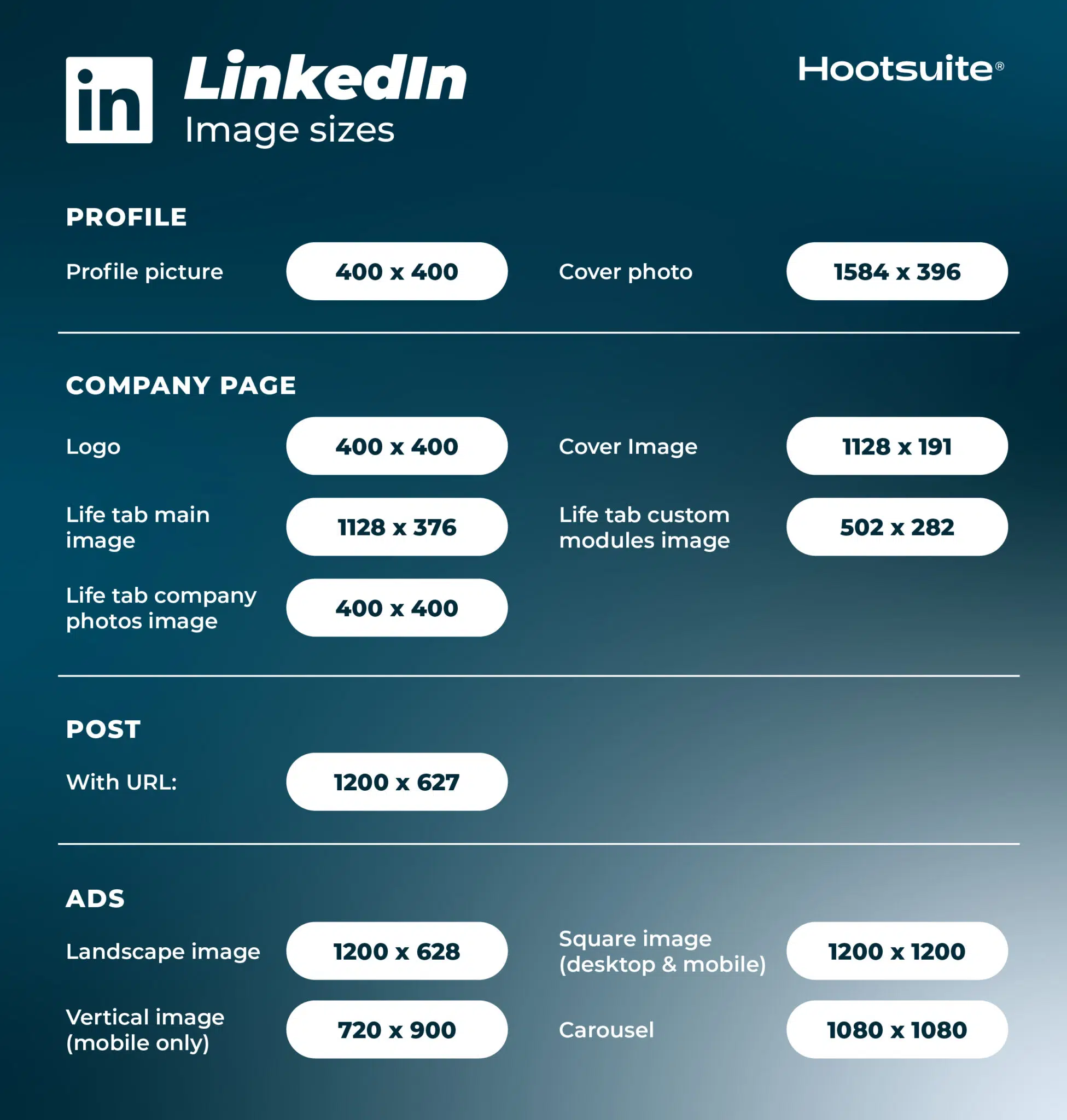
LinkedIn Image Sizes: Professional Branding in Focus
LinkedIn maintains a professional aesthetic, with image sizes designed to present a polished corporate or personal brand.
![Social media image sizes for all networks [September 2026]](https://blog.hootsuite.com/wp-content/uploads/2025/12/Social-media-image-sizes-for-all-networks-January-2026-1-1-620x629.png)
- Personal Profile:
- Profile Picture: 400 x 400 pixels (recommended).
- Background Photo: 1584 x 396 pixels (recommended).
- Company Pages:
- Company Logo: 300 x 300 pixels.
- Cover Image: 1128 x 191 pixels.
- Life Tab Hero Image: 1128 x 376 pixels.
- Post with URL (Link Preview): 1200 x 627 pixels (recommended).
- Image Posts: 1200 x 1200 pixels (1:1) or 1200 x 628 pixels (1.91:1).
- LinkedIn Ads Image Sizes:
- Image Ad: 1200 x 627 pixels.
- Carousel Ad: 1080 x 1080 pixels (1:1).
Pinterest Image Sizes: Visual Discovery and Inspiration
Pinterest is a discovery engine, making visually appealing and appropriately sized Pins crucial for visibility and click-throughs.
- Profile Image: 280 x 280 pixels (recommended).
- Profile Cover Photo: 800 x 450 pixels (minimum).
- Pins:
- Standard Pin: 1000 x 1500 pixels (2:3 aspect ratio). Pinterest emphasizes vertical images for optimal display.
- Long Pin: 1000 x 2100 pixels (approx. 1:2.1 aspect ratio).
- Square Pin: 1000 x 1000 pixels (1:1 aspect ratio).
- Collection Pins: 1000 x 1000 pixels (1:1) for the main image, with smaller images beneath.
- Pinterest Ads Image Sizes:
- Standard Ad: 1000 x 1500 pixels.
- Carousel Ad: 1000 x 1500 pixels (for each image).
- Shopping Ad: 1000 x 1500 pixels.
Snapchat Image Sizes: Ephemeral and Engaging
Snapchat’s focus on ephemeral content and augmented reality means images must be optimized for full-screen mobile viewing.
![Social media image sizes for all networks [September 2026]](https://blog.hootsuite.com/wp-content/uploads/2025/12/Social-media-image-sizes-for-all-networks-January-2026-3-620x753.png)
- Profile Picture: 320 x 320 pixels (recommended + minimum).
- Banner Image: 375 x 278 pixels (recommended).
- Snapchat Ads Image Size: 1080 x 1920 pixels (9:16 aspect ratio). Crucially, key visual elements should be within a "safe zone" to avoid being obscured by UI.
YouTube Image Sizes: The Visual Gateway to Video Content
As the world’s largest video platform, YouTube relies on compelling visual assets for channel branding and video discoverability.
- Profile Photo: 800 x 800 pixels (recommended). Displayed as a circle.
- Banner Image: 2560 x 1440 pixels (recommended). This responsive banner adapts across devices, requiring a "safe area" of 1546 x 423 pixels in the center to ensure visibility of critical content on all screens.
- Video Thumbnail Size: 1280 x 720 pixels (recommended, 16:9 aspect ratio). High-quality, engaging thumbnails are vital for attracting clicks.
- Podcast Playlist Thumbnail Size: 1280 x 1280 pixels (recommended).
TikTok Image Sizes: Short-Form Video Dominance
TikTok’s explosive growth is built on short-form vertical video, but static images and carousels are also increasingly important.
![Social media image sizes for all networks [September 2026]](https://blog.hootsuite.com/wp-content/uploads/2025/04/Social-media-image-sizes-LinkedIn-620x651.jpg)
- Profile Photo: 200 x 200 pixels (recommended).
- Video Size: 1080 x 1920 pixels (recommended, 9:16 aspect ratio).
- Carousel Size: 1080 x 1920 pixels (recommended, for each image in the carousel).
- TikTok Ads Image Sizes:
- Image Ad: 1080 x 1920 pixels.
- Carousel Ad: 1080 x 1920 pixels (for each image).
Bluesky Image Sizes: Emerging Decentralized Visuals
As a newer decentralized platform, Bluesky also has its own set of visual guidelines for maintaining content quality.
- Profile Picture: 1000 x 1000 pixels.
- Banner Image: 3000 x 1000 pixels.
- Image Post Size: Minimum 1000 pixels (height or width). Bluesky is flexible but recommends high resolution.
Threads Image Sizes: Instagram’s Text-Centric Companion
Threads, closely linked to Instagram, maintains some visual consistencies while catering to its unique text-first environment.
![Social media image sizes for all networks [September 2026]](https://blog.hootsuite.com/wp-content/uploads/2025/04/Social-media-image-sizes-Pinterest-620x517.jpg)
- Profile Image Size: 640 x 640 pixels. This typically mirrors the linked Instagram profile picture.
- Post Image Size: 1440 x 1920 pixels (recommended, 4:5 aspect ratio). While square (1:1) is also common, vertical images tend to dominate more screen space in the feed.
The Business Imperative: Why Precision Matters Beyond Aesthetics
The implications of incorrect social media image sizing extend far beyond mere visual appeal. From a business perspective, these seemingly minor details can significantly impact key performance indicators (KPIs). Incorrectly sized images often lead to:
- Reduced Engagement: Users are less likely to interact with content that appears unprofessional or broken.
- Lower Reach: Algorithms may deprioritize content that doesn’t fit platform specifications, limiting organic visibility.
- Brand Inconsistency: A fragmented visual identity across platforms dilutes brand recognition and trust.
- Wasted Ad Spend: Poorly presented ad creatives can lead to lower click-through rates and higher costs per acquisition.
- Negative User Experience: Images that load slowly due to excessive file size, or those that are frustratingly cropped, create a poor experience for the audience.
Industry reports frequently highlight that visually optimized content can see engagement rates 2-3 times higher than unoptimized content. In a competitive digital landscape, every advantage counts.
Strategies for Maintaining Compliance and Efficiency
Given the continuous flux of social media platforms, marketing teams need robust strategies to keep their visual content optimized.
![Social media image sizes for all networks [September 2026]](https://blog.hootsuite.com/wp-content/uploads/2025/04/Social-media-image-sizes-Snapchat-620x325.jpg)
- Dedicated Resource: Assigning a team member to monitor platform updates and image size changes is crucial.
- Template Creation: Developing a library of pre-sized templates for common post types across different platforms streamlines content creation.
- Automated Tools: Leveraging social media management platforms that offer built-in image resizing and optimization features can significantly reduce manual effort and error. For example, tools like Perch by Hootsuite allow users to upload images and then select network-optimized sizes from a drop-down menu, automatically adjusting dimensions to fit the chosen platform. This integration of design and publishing workflows ensures compliance and efficiency.
- Regular Audits: Periodically reviewing published content to ensure images are displaying correctly across devices and platforms.
- Training and Guidelines: Providing clear internal guidelines and training for content creators on best practices for image sizing and optimization.
Looking Ahead: The Future of Social Visuals
The trend towards highly immersive, dynamic, and personalized visual content is expected to continue. We may see an increase in AI-driven image optimization, where platforms automatically adjust content to fit various display contexts while maintaining quality. Adaptive layouts will likely become more sophisticated, demanding even greater flexibility from source assets. Furthermore, the rise of virtual and augmented reality applications within social ecosystems could introduce entirely new dimensions and sizing considerations. Staying agile and informed will remain a cornerstone of successful digital marketing.
In conclusion, mastering social media image sizes is not merely a technical exercise but a strategic imperative for any brand aiming for impactful digital engagement in 2026 and beyond. The ongoing evolution of social platforms necessitates a proactive, informed approach to visual content creation. By understanding and adhering to the precise dimensions required by each network, marketers can ensure their brand message is consistently delivered with clarity, professionalism, and maximum impact, ultimately driving better reach, higher engagement, and stronger brand loyalty.