The digital marketing landscape is undergoing a profound transformation with the ascendancy of artificial intelligence in search. What was once the domain of traditional search engine optimization (SEO), focused on "blue links" and organic rankings, is rapidly evolving into Answer Engine Optimization (AEO), where brands must ensure visibility within AI-generated responses. This paradigm shift is driven by a significant change in consumer behavior: according to McKinsey, a staggering 50% of consumers now leverage answer engines, with over 70% relying on them to pose questions and gather information. This indicates that a substantial portion of the consumer discovery journey now commences and often concludes within AI interfaces, prior to any direct engagement with a brand’s website.
The Emergence of AEO: A New Frontier in Digital Marketing
The rapid integration of generative AI into search experiences, exemplified by Google’s AI Overviews, ChatGPT, Perplexity, and Gemini, has created a critical new challenge and opportunity for marketers. Brands that fail to establish a visible presence in these AI-driven environments risk missing out on crucial early-stage influence and customer acquisition. AEO is not merely an extension of SEO; it represents a distinct discipline focused on optimizing content and brand signals to appear accurately, prominently, and safely within AI-summarized answers and conversational interfaces. This shift necessitates specialized tools to monitor, measure, and enhance a brand’s performance in these evolving search models.
Among the pioneering platforms addressing this need are Profound and Bluefish AI. These AI visibility and optimization tools offer marketers the capabilities to navigate this new terrain, providing insights into how their brands are referenced, cited, and positioned within AI-generated responses. As AEO gains strategic importance, marketing teams are meticulously evaluating these platforms to determine which solution offers the most robust visibility tracking, secure brand positioning, and demonstrable return on investment. This detailed analysis will explore the distinct offerings of Profound and Bluefish AI, highlighting their core functionalities, differentiating factors, and the strategic contexts in which each excels, alongside considering alternatives like HubSpot’s AEO tools.
Profound: Driving Proactive AI Search Visibility and Optimization

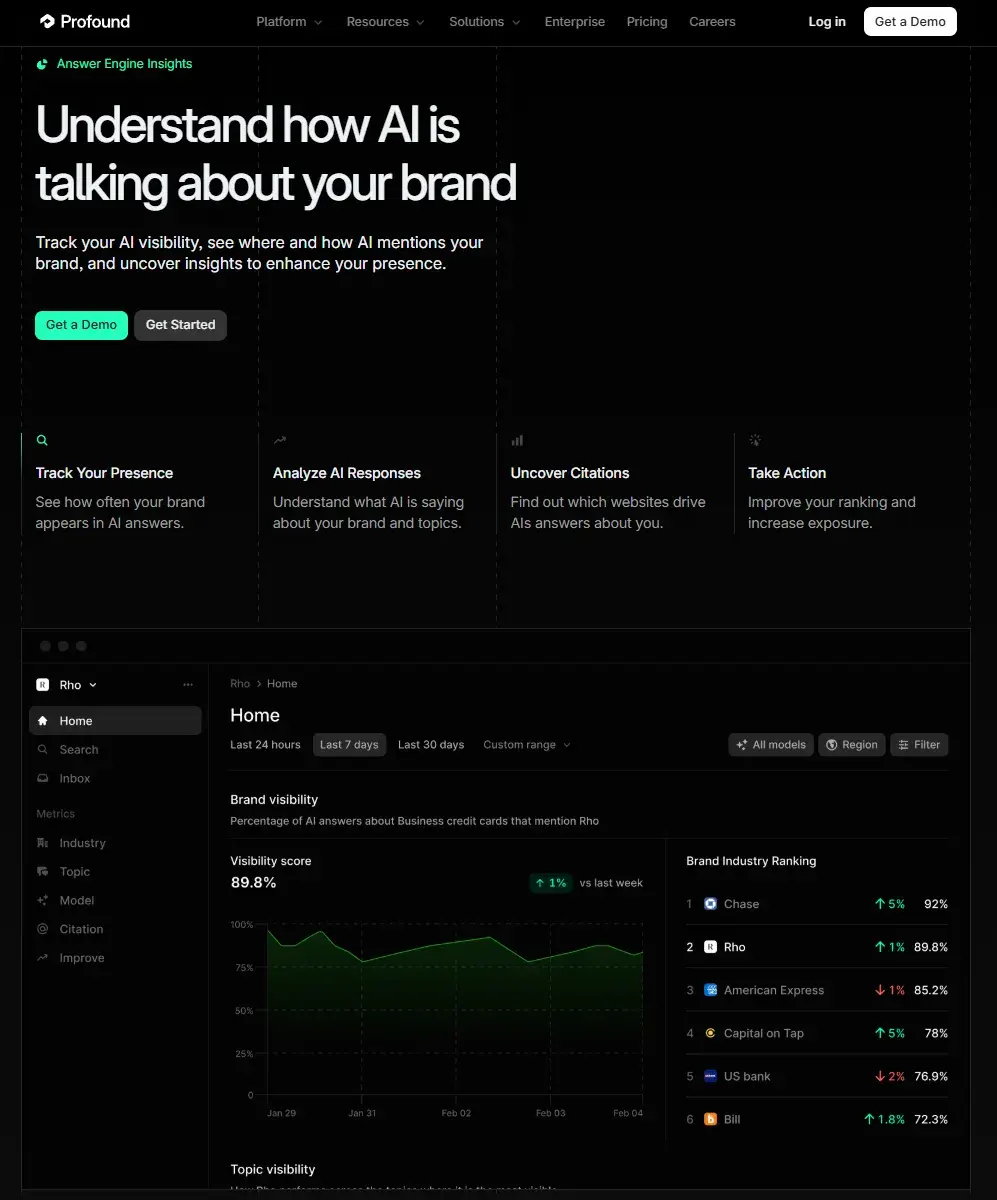
Profound positions itself as an enterprise-grade platform dedicated to AI search visibility and Answer Engine Optimization. Its primary objective is to empower brands to comprehend and enhance their representation within AI-generated answers. At its technological core, Profound excels in AI visibility tracking and sophisticated citation analysis. The platform meticulously monitors how brands are referenced across a diverse array of major AI systems, tracing the origin of citations and providing granular, prompt-level insights. This allows marketing teams to understand precisely where, when, and why their brand appears in AI responses, offering a level of detail crucial for proactive optimization.
For marketing and SEO leadership, Profound’s appeal lies in its comprehensive data depth, enterprise-ready reporting capabilities, and seamless workflow integrations. It is designed to bridge the gap between abstract AI search visibility metrics and tangible business outcomes. By connecting AI presence to measurable KPIs, Profound facilitates a shift from passive monitoring to aggressive, data-driven optimization strategies. As AI answers increasingly supplant traditional organic search listings, platforms like Profound are establishing the foundational infrastructure necessary for brands to effectively measure, attribute, and systematically improve their footprint within AI-driven search experiences. Its focus is on enabling brands to actively shape their narrative and presence in these new digital discovery channels.
Bluefish AI: Prioritizing Brand Safety and Risk Management in AI Search
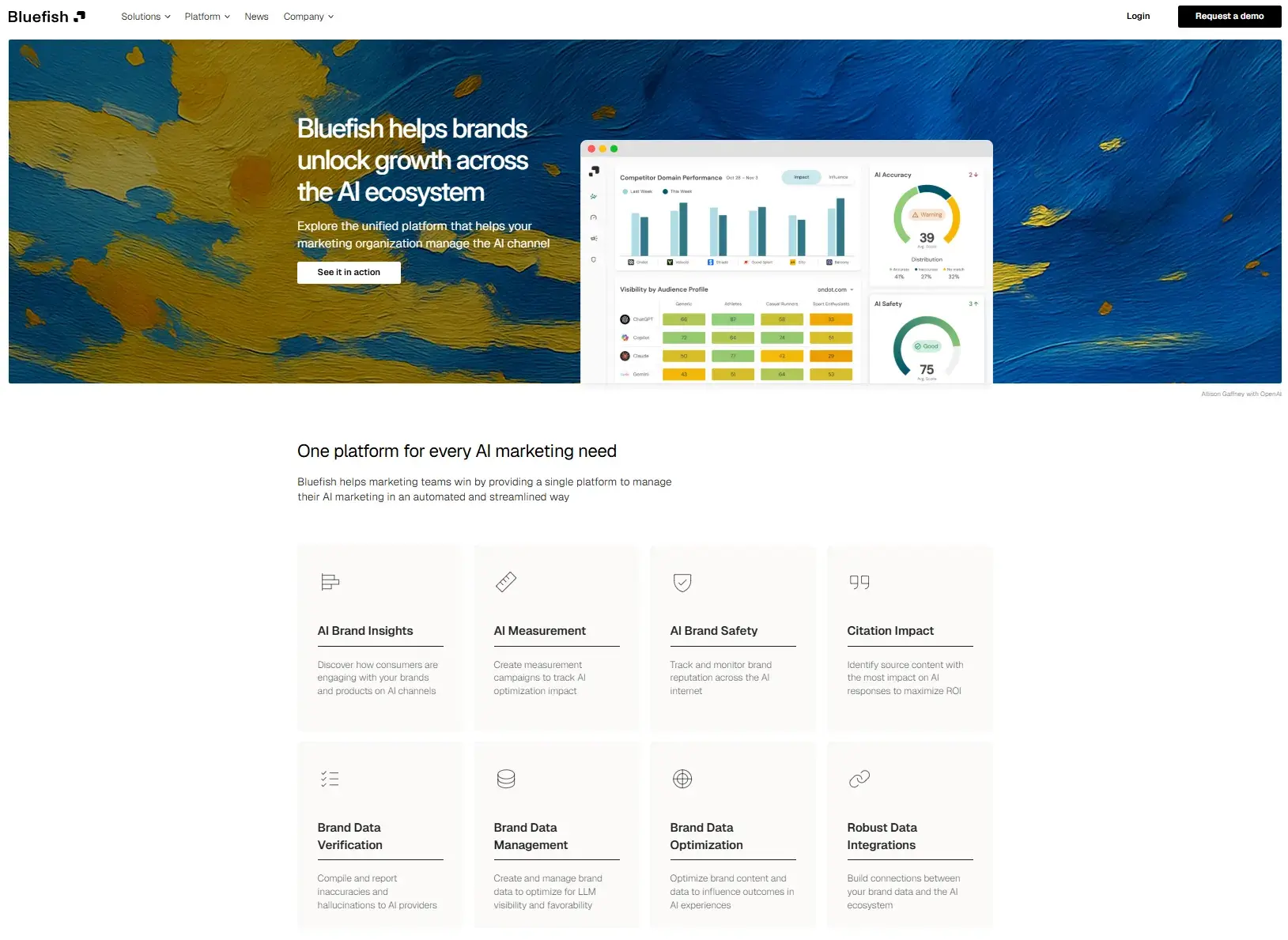
In contrast to Profound’s growth-centric approach, Bluefish AI emerges as an AI visibility and brand safety platform with a distinct emphasis on safeguarding brand integrity. While also designed to monitor brand references in AI-powered search and generated answers, Bluefish AI places paramount importance on risk management and the accuracy of information. This platform goes beyond mere visibility metrics, actively alerting teams to instances where their brand might be misrepresented, inaccurately associated with sensitive or harmful content within Search Generative Experiences (SGE), or appearing in AI responses that could pose significant reputational risks.
Bluefish AI’s value proposition is particularly compelling for organizations operating in highly regulated or risk-sensitive sectors such as healthcare, finance, legal services, and large-scale enterprise brands. For these entities, maintaining strict control over brand narrative and mitigating potential liabilities are non-negotiable. Bluefish AI provides context-rich insights, robust governance workflows, and advanced signal filtering mechanisms that enable marketers and compliance teams to retain command over how AI systems cite and present their content. As AI-generated answers become an integral part of the customer journey, tools like Bluefish AI offer a differentiated perspective on visibility, one that strategically couples optimization efforts with rigorous oversight, ensuring that brands not only track their presence but also proactively manage the inherent risks associated with that presence.
Initial Assessment: Leveraging HubSpot’s AEO Grader
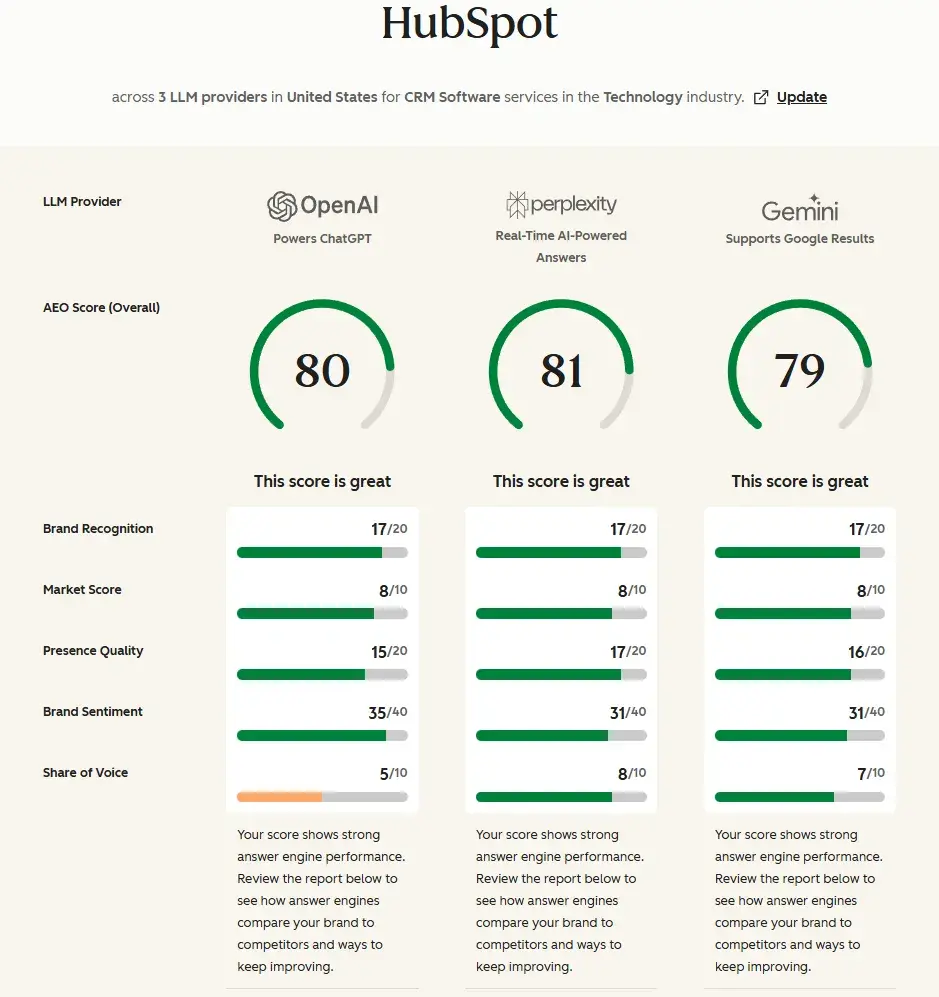
Before committing significant resources to an enterprise-level platform, many organizations find immense value in utilizing accessible, free AEO tools for initial benchmarking. HubSpot’s AEO Grader serves as an excellent starting point, offering a complimentary snapshot of how major answer engines represent any given brand. This tool provides marketing leaders with a swift and practical method to evaluate their current AI visibility before making substantial investments in specialized platforms like Profound or Bluefish AI.
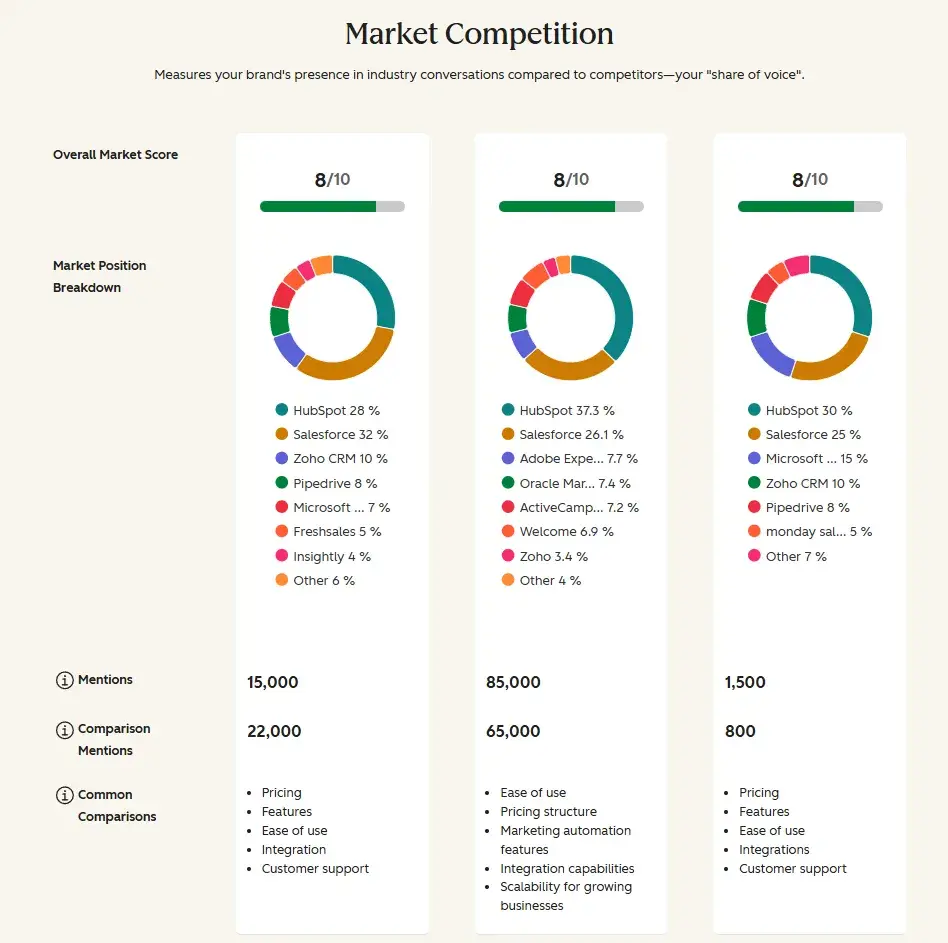
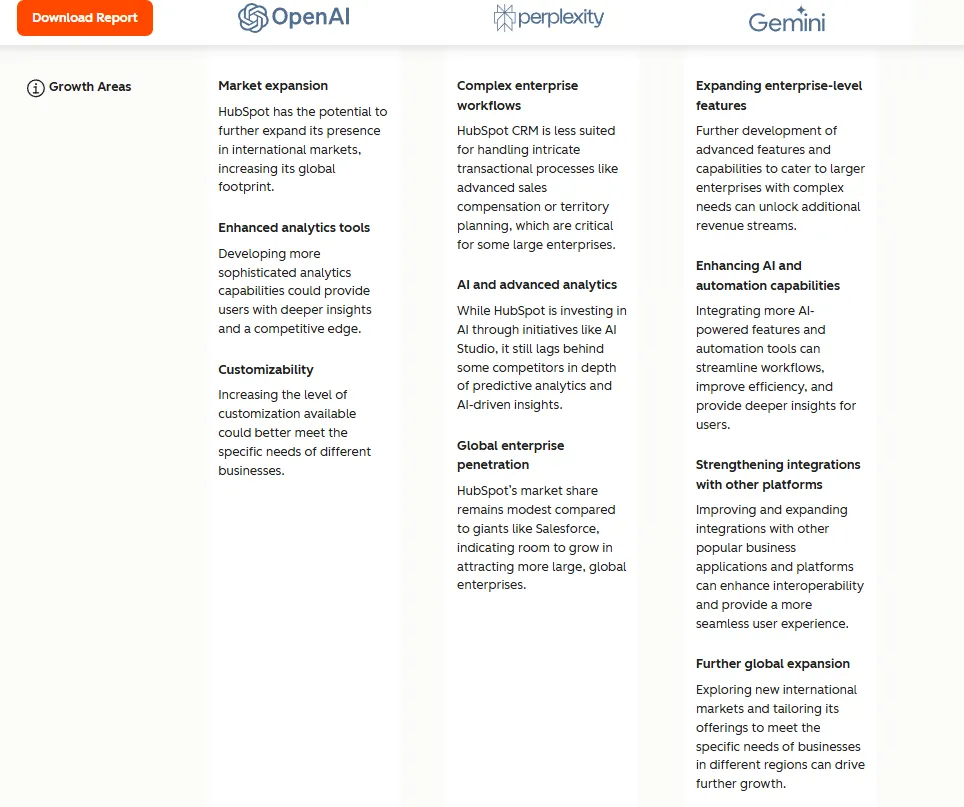
The HubSpot AEO Grader delivers a detailed breakdown of a brand’s performance across various AI systems. Marketers can analyze their competitive positioning, receive a visibility score, and ascertain the frequency of their brand’s citation relative to competitors within their industry. The "Market Competition" score clearly illustrates a brand’s standing, while integrated recommendations provide actionable insights for improving AI visibility. These recommendations can range from strategic adjustments to content creation and optimization, to identifying opportunities for enhancing online authority. The tool also provides a list of actionable steps, allowing marketers to address basic AEO issues using free resources before potentially "graduating" to more comprehensive paid solutions. This makes the HubSpot AEO Grader an invaluable first step in any brand’s AEO journey, helping to define the strategic need before platform selection.
Comparative Analysis: Profound vs. Bluefish AI
The decision between Profound and Bluefish AI hinges on a brand’s specific strategic imperatives and operational needs. A deeper comparison across key operational factors reveals their distinct strengths.
1. Supported AI Engines and Platform Coverage:
For marketers investing in AEO, the breadth of platform coverage is paramount. Consumers interact with multiple AI platforms, shifting between Google AI Overviews, ChatGPT, Perplexity, Gemini, Microsoft Copilot, and other emerging systems. Incomplete monitoring data can lead to misinformed decisions.
- Bluefish AI’s Approach: Bluefish AI strategically focuses on monitoring brand representation across key generative AI platforms that significantly influence consumer research and pose enterprise risk. Its coverage prioritizes widely adopted AI engines where misinformation or brand misrepresentation could inflict reputational damage. This approach caters to organizations that value safeguarding their presence in the most commercially and reputationally relevant AI ecosystems over tracking every experimental model.
- Profound’s Approach: Profound adopts a broader, visibility-first strategy. It supports a comprehensive range of AI engines, including Google AI Overviews, ChatGPT (across its various search functionalities), Perplexity, Claude, Gemini, Microsoft Copilot, Grok, DeepSeek, and other nascent models. Profound utilizes front-end capture and prompt-level tracking, enabling marketers to analyze response variations across multiple engines, compare citation order, and monitor competitive share of voice at scale. This makes it exceptionally strong for teams executing proactive, multi-engine AEO programs aimed at maximizing broad market presence.
- Winner: Profound generally offers broader platform coverage, making it ideal for teams focused on extensive, multi-engine AEO initiatives. Bluefish AI is more selective, focusing on high-impact platforms for brand safety.
2. Reporting Depth and Competitive Intelligence:
Effective AI visibility tracking must translate into actionable insights. Marketing leaders require more than simple mention counts; they need context, competitive positioning, and a deep understanding of how AI narratives are constructed and influenced.
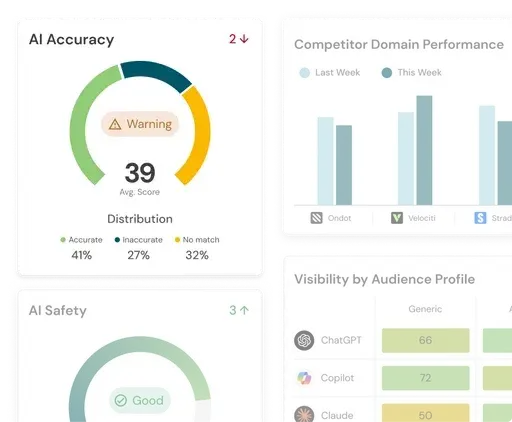
- Bluefish AI’s Approach: Bluefish AI’s reporting is tailored for brand safety monitoring and misinformation alerts. It excels at identifying instances where a brand is misrepresented, linked to sensitive topics, or inaccurately cited. Its reporting emphasizes signal clarity, offering real-time alerts for critical mentions, context-rich analysis of potential risks, and sentiment analysis within AI responses. This is invaluable for compliance-driven teams where narrative control is prioritized over aggressive optimization.
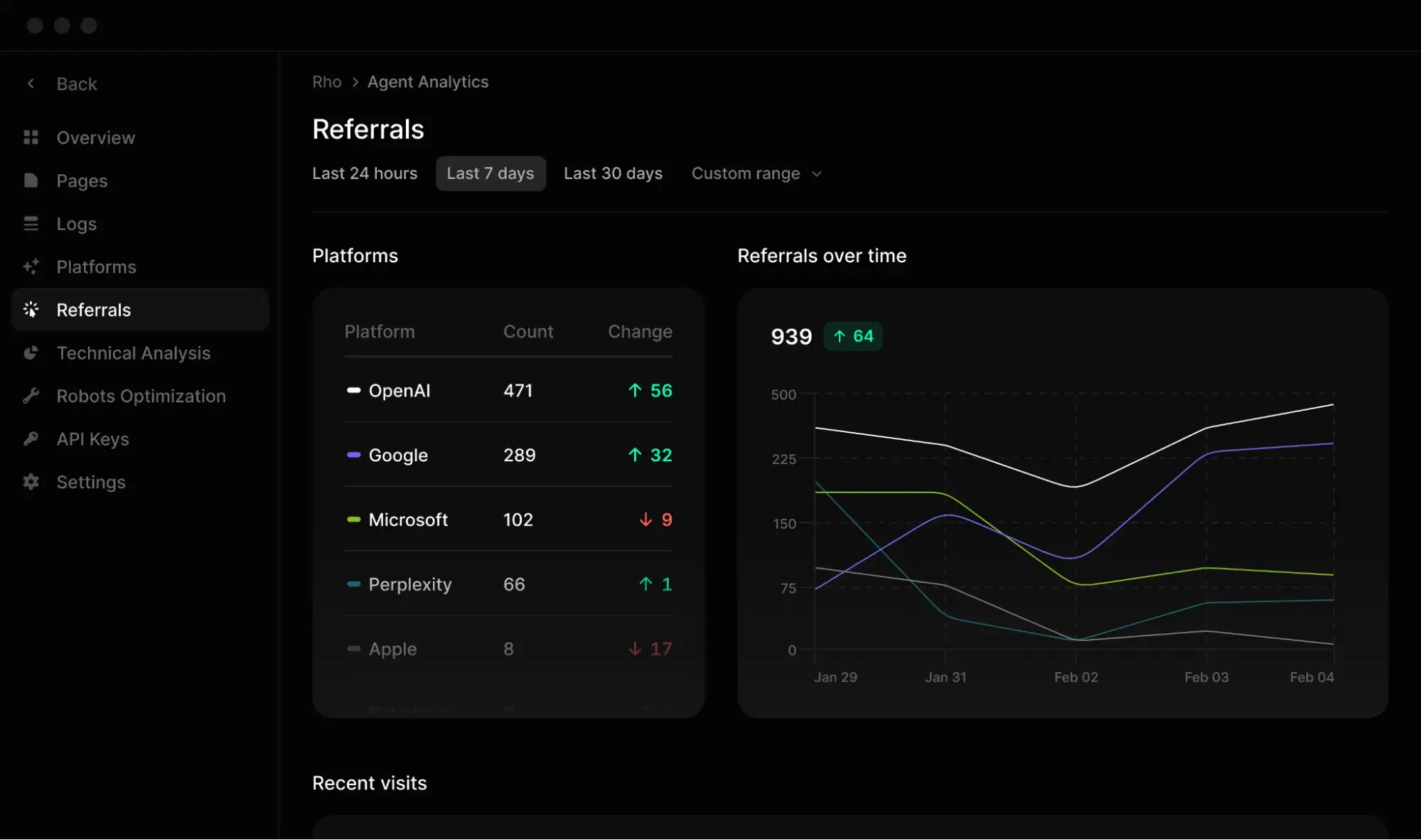
- Profound’s Approach: Profound leans heavily into analytical depth, specializing in comprehensive AI visibility tracking and granular citation analysis. It allows teams to meticulously evaluate citation order, calculate competitive share of voice, identify prompt-level variations, and assess cross-engine positioning. With its detailed tracking capabilities, marketers can analyze how content appears in AI responses, identify top-performing prompts, and gain insights into competitor strategies. This depth supports structured experimentation and robust attribution for teams treating AEO as a direct growth channel.
- Winner: Profound excels in analytical depth and competitive intelligence, ideal for growth-focused teams. Bluefish AI is stronger for brand safety and risk-focused reporting.
3. Integrations and Workflow Connectivity:
For AEO to deliver measurable ROI, it cannot operate in isolation. Both Profound and Bluefish AI recognize the need for integration with existing marketing and analytics ecosystems, including GA4, BI tools, and CRM systems like HubSpot.
- Bluefish AI’s Approach: Bluefish AI supports API access and data export functionalities, allowing organizations to feed AI monitoring insights into their broader reporting frameworks. Its integration focus is on governance workflows, efficient alert routing, and structured reporting mechanisms designed for compliance and brand management teams. This ensures that AI-related brand risks are promptly escalated to the relevant stakeholders.
- Profound’s Approach: Profound boasts an extensive integration ecosystem engineered to operationalize AEO insights across the entire marketing technology stack. It moves beyond standalone dashboards by connecting with content management systems (CMS), content delivery networks (CDNs), marketing intelligence tools, analytics platforms, and collaboration software. This ensures that AI visibility data is not isolated but becomes deeply actionable, integrating AI search signals into content creation, SEO performance analysis, paid media optimization, and overall customer journey mapping.
- Winner: Profound offers a more extensive integration ecosystem, making it superior for operationalizing AEO across the entire marketing stack. Bluefish AI focuses on integrations for governance and alert routing.
4. Pricing Structure, Onboarding, and Scalability:
The cost and scalability of AI tools are often decisive factors. Budgetary constraints, internal resource availability, and long-term growth projections significantly influence platform selection.
- Bluefish AI’s Approach: Bluefish AI does not publicly disclose its pricing tiers, onboarding procedures, or scalability options. Prospective clients are required to engage directly with their sales team for detailed information. This suggests a highly customized, enterprise-focused sales approach.
- Profound’s Approach: Profound is clearly positioned for enterprise and growth-oriented marketing organizations. It offers robust enterprise-grade security controls, compliance features, and structured onboarding processes tailored for large, distributed teams. Its implementation model often aligns with complex enterprise procurement cycles, encompassing stakeholder onboarding, governance setup, and technical integration planning. While this may entail a longer ramp-up period compared to lighter GEO tools, it supports scalable deployment across global regions and diverse business units. Profound offers defined paid packages starting from approximately $82.50/month for its Starter package (limited to ChatGPT), $332.50/month for Growth, with Enterprise pricing customized based on specific needs.
- Winner: Profound offers more transparent pricing and structured enterprise scalability, though its starter package is limited. Bluefish AI requires direct contact for pricing details, suggesting a more bespoke, high-end offering.
Strategic Considerations: Choosing the Right Platform for AEO
The optimal choice between Profound and Bluefish AI is not determined by a simple feature comparison, but rather by an organization’s core strategic priorities. AEO platforms serve to operationalize strategy, not create it. The fundamental question for any brand is: "Are we primarily optimizing for growth and attribution, or are we safeguarding brand integrity in AI-generated responses?"
- Choose Profound If: Your organization’s primary goal is aggressive, measurable AI visibility, content optimization, and competitive intelligence at scale. If you view AEO as a new growth channel and need granular data to attribute impact, conduct A/B testing, and integrate insights across your marketing tech stack, Profound’s comprehensive analytics and broad platform coverage make it an ideal fit.
- Choose Bluefish AI If: Your organization operates in a risk-sensitive industry (e.g., healthcare, finance, legal) or places a paramount emphasis on brand reputation and compliance. If your priority is to monitor for misinformation, prevent brand misrepresentation, and manage potential reputational risks within AI responses, Bluefish AI’s specialized brand safety features and alert systems will be more aligned with your strategic objectives.
The Broader Implications and Future Outlook of AEO
The shift towards AEO signifies a fundamental change in how brands must approach digital presence. It underscores the increasing importance of context, accuracy, and brand safety in an era dominated by generative AI. As AI models become more sophisticated and consumer reliance on answer engines grows, the strategic implications extend beyond marketing departments. Legal, compliance, and public relations teams will increasingly need to collaborate on AEO strategies to manage brand narratives and mitigate risks.
The landscape of AI-powered search is dynamic and rapidly evolving. New AI models and interfaces are constantly emerging, necessitating agile AEO strategies and tools that can adapt quickly. The future of AEO will likely involve even more sophisticated predictive analytics, personalized AI response optimization, and potentially direct integration into AI models for content suggestion and brand voice control.
Conclusion: Defining Your AEO Strategy First
Ultimately, the decision between Profound and Bluefish AI, or indeed any AEO platform, must be preceded by a clear articulation of a brand’s specific AEO strategy. The biggest mistake marketers can make is investing in a tool before defining whether their approach is primarily defensive (risk mitigation) or growth-driven (market expansion). Clarity on this foundational question simplifies the platform selection process and ensures that any investment supports measurable outcomes, rather than merely adding another dashboard to the marketing suite.
Before committing to either Profound or Bluefish AI, leveraging tools like HubSpot’s AEO Grader offers a practical and cost-effective first step. It provides a foundational benchmark of current AI visibility, enabling marketers to identify existing gaps and prioritize efforts. This initial assessment helps validate the need for a dedicated AEO platform and clarifies the specific functionalities required to achieve the brand’s strategic goals in the burgeoning world of AI-driven search. As AI continues to reshape online discovery, AEO will not just be an advantage but a necessity for maintaining a competitive edge and controlling brand narrative in the digital sphere.