rifanmuazin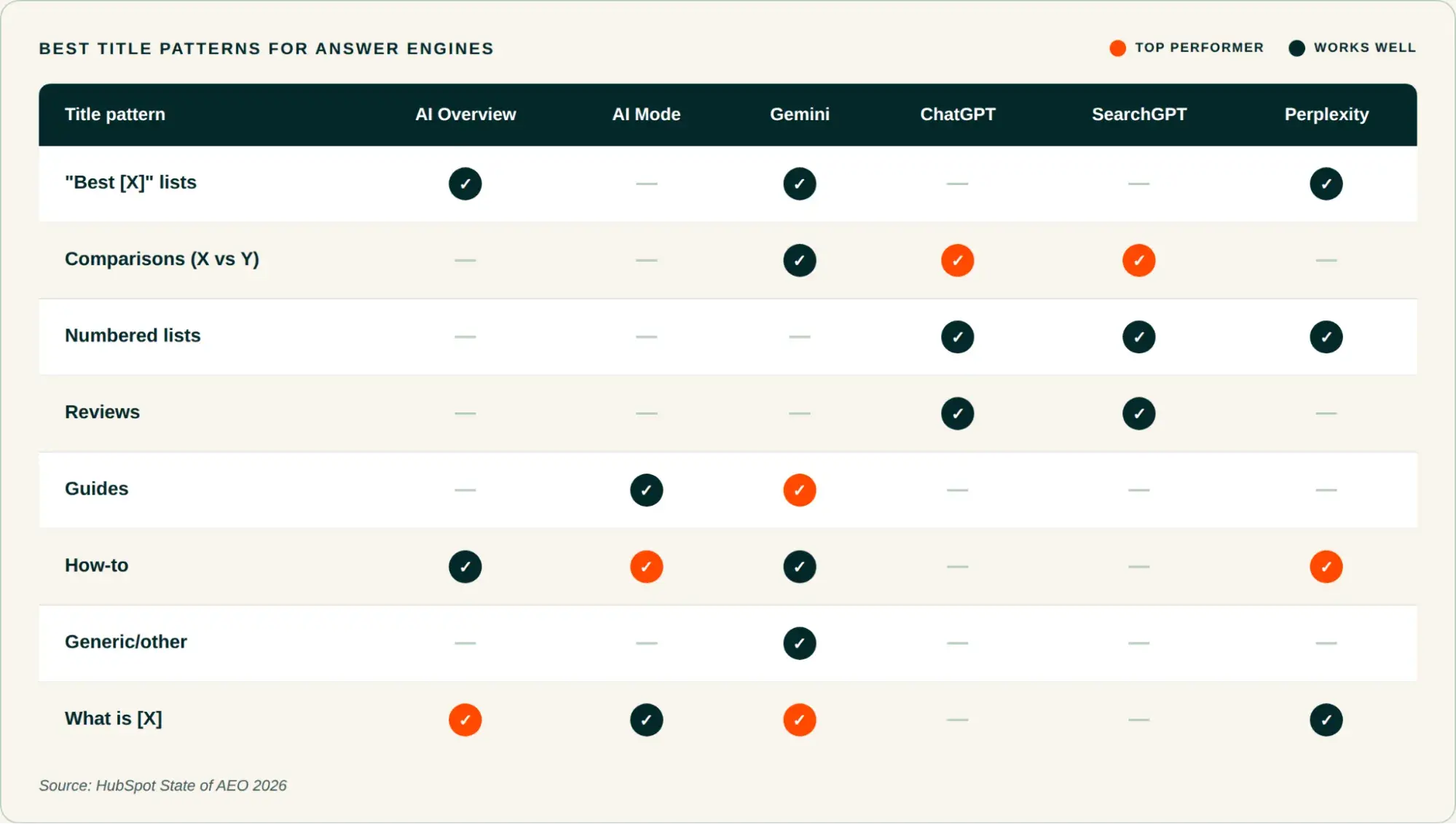
The digital marketing landscape is undergoing a profound transformation, driven by the rapid ascent of artificial intelligence in search. Brands worldwide are grappling with the imperative to adapt their strategies for Answer Engine Optimization (AEO), a new paradigm where AI-powered platforms like ChatGPT, Gemini, AI Overviews, and Perplexity synthesize information directly for users, often citing original sources. A crucial new body of research, spearheaded by HubSpot’s State of AEO 2026 report and Wix Studio’s AI Search Lab, offers critical insights into the on-page content formats most favored by these advanced AI systems, providing a strategic roadmap for marketers aiming to secure visibility in this evolving ecosystem.
The Rise of Answer Engine Optimization: A Paradigm Shift
The transition from traditional Search Engine Optimization (SEO) to AEO marks a pivotal moment in digital strategy. For decades, SEO focused on ranking websites high on search engine results pages (SERPs) to drive organic traffic. However, the proliferation of Large Language Models (LLMs) and generative AI has introduced a new layer where AI directly answers user queries, often reducing the need for users to click through to external websites. This shift compels brands to optimize their content not just for search algorithms, but for AI models designed to extract, synthesize, and cite information.
The HubSpot State of AEO 2026 report, analyzing thousands of citation themes between December 2025 and March 2026, alongside Wix Studio’s AI Search Lab research, which indexed over a million citations across 75,000 AI answers, collectively point to a clear hierarchy of content types that perform best. These studies provide a data-backed foundation for content creators, moving beyond speculation to offer actionable intelligence.
Key Findings: The Most-Cited Content Formats for AI
![On-page content formats answer engines actually favor [new research]](https://53.fs1.hubspotusercontent-na1.net/hubfs/53/best-on-page-content-formats-for-ai-1-20260525-6914910.webp)
The consensus from both independent 2026 datasets is unequivocal: listicles, articles (or blog posts), product pages, and category pages are the most effective on-page content formats for driving AI citations across the board. Notably, comparison content stands out as a singular winner for ChatGPT, boasting an impressive 95% citation rate—the highest recorded for any format on any engine. This high citation rate underscores ChatGPT’s preference for structured, comparative analyses when users seek distinctions between options.
- Listicles: Accounting for 21.9% of all citations in Wix Studio’s cross-engine data and 40.86% of citations on commercial queries, listicles excel for commercial intent queries such as “Best [X]” or “Top [N] [X]”. Their inherent structure with numbered or bulleted points makes them highly digestible for AI extraction.
- Articles/Blog Posts: These long-form informational pieces lead citations in AI Overviews (42% citation rate) and Gemini (76%) per HubSpot’s report. Wix Studio’s analysis further highlights their dominance, making up 45.48% of citations on informational queries. They are the go-to format for answering “What is X?” or “How does X work?” type questions.
- Product Pages: Critical for navigational and transactional queries, product pages achieve an 84% citation rate in Perplexity, according to the State of AEO. Wix Studio places them at 13.7% of all AI citations, concentrated heavily in transactional (24.88%) and navigational (21.95%) contexts. These pages serve users who already know what they’re looking for and require specific details or confirmation.
- Category Pages: Distinct from individual product pages, category pages earned 11.3% of all AI citations in Wix Studio’s research, particularly strong in navigational (18.31%) and commercial (12.42%) queries. They cater to users exploring options within a broader category, like “[Category] tools” or “[Category] software.”
- Comparison Content: While generally effective, comparison articles, specifically “X vs. Y” formats, are a powerhouse for ChatGPT with a 95% citation rate. This format directly addresses comparative commercial queries, offering side-by-side analyses that AI models can easily summarize.
The Anatomy of an AI-Citable Page: Beyond Format
The success of a content format in attracting AI citations is not solely dependent on its type. Both studies emphasize that content type is merely one of three critical on-page layers influencing citations. The most effective pages seamlessly integrate a suitable content format with an intent-matched title pattern and specific structural elements.
-
Intent-Matched Title Patterns: The title of a page serves as a primary signal for AI models. HubSpot’s data highlights the significance of patterns such as “What is X?”, “X vs. Y”, “How to X”, and “Best X”. For instance, “What is [X]?” titles dominate for informational queries, while “X vs. Y” is crucial for comparative searches. Including the year in the title (e.g., “Best X in 2026”) can also correlate with higher citations in AI Overviews, provided the content is genuinely refreshed annually.
-
Citation-Correlated Structural Elements: Beyond the overarching format and title, specific on-page elements significantly boost AI citation rates. These include:
- Statistics and Data: Concrete, verifiable facts and figures provide LLMs with direct, attributable claims.
- Visible Last-Updated Dates: Signal recency and relevance, a critical factor for AI models seeking up-to-date information.
- Author Bios: Establish authority and trustworthiness, helping AI models gauge the credibility of the source.
- FAQ Sections with Schema: Directly answer common questions in a structured format, which LLMs can easily extract and integrate into their responses. Implementing
FAQPageschema markup further enhances AI understanding.
Why LLMs Favor Specific Content Formats and Structures
![On-page content formats answer engines actually favor [new research]](https://no-cache.hubspot.com/cta/default/53/9dd5e54b-fbef-4dd0-bc44-1689feb1ea18.png)
The underlying reasons for AI’s preference for certain content formats stem from their operational mechanisms:
- Predictable Extraction: LLMs process information in “tokenized chunks,” not linearly like humans. Formats with consistent headers, short sections, and front-loaded answers (like a “TL;DR” summary) facilitate easier and more accurate information extraction. Research, such as a 2026 GEO-SFE preprint, indicates that structured formats (lists, tables) show 43% better LLM extraction accuracy compared to prose.
- Matching LLM Output Patterns: The favored content types—listicles, comparisons, step-by-step guides—often mirror the structured, summarized outputs that LLMs themselves generate. This congruence makes it easier for AI to process and reproduce information from such sources.
- Citation Signals: Schema markup (e.g.,
Article,HowTo,ItemList), visible dates, and author information act as explicit signals to crawlers and AI models, indicating content type, recency, and authority. These signals contribute to a page being deemed a trusted and attributable source. The GEO-SFE preprint found that structural changes alone could yield an average 17.3% citation lift across generative engines, even without altering the content’s meaning.
Strategic Application: Structuring Pages for AI Success
To capitalize on these insights, brands must implement a robust content strategy that integrates universal structural elements with format-specific optimizations.
Universal Structural Elements for All Pages:
- Clear H1 Tag: The primary heading should match the page’s intent and title pattern.
- TL;DR Summary: A concise “Too Long; Didn’t Read” section at the beginning provides an immediate answer for AI and users.
- Hierarchical Headings (H2s/H3s): Break down content into logical, short sections (ideally every 150-200 words) with descriptive headings.
- Descriptive FAQ Section: Address common questions with clear answers, ideally using
FAQPageschema. - Visible Last-Updated Date: Essential for signaling content freshness.
- Author Bio with Schema: Enhance credibility by attributing content to qualified authors.
Structured Data for AI (Schema Markup):
While not a guaranteed citation booster, schema markup is a fundamental SEO best practice that aids AI interpretation. Map each schema type to its appropriate page: Article for editorial, HowTo for guides, FAQPage for Q&A, ItemList for listicles, and include Author and Organization schema. This “good hygiene” indirectly influences how AI interprets and trusts your content.
Internal Links and Topic Clusters:
A well-organized internal linking strategy, built around topic clusters, enhances crawlability and understanding for both traditional search engines and AI. A pillar page broadly defining a topic, linked to supporting subtopic pages, creates a network of relevant content. This provides AI systems with a richer, interconnected set of pages to draw from, increasing the likelihood of citations across various related queries. Google’s own guidance confirms that generative AI features pull from the same index and ranking systems as traditional search.
![On-page content formats answer engines actually favor [new research]](https://53.fs1.hubspotusercontent-na1.net/hubfs/53/best-on-page-content-formats-for-ai-2-20260525-5829990.webp)
Format-Specific Templates for Maximum Impact:
- Long-Form Articles/Explainer Blog Posts (Informational):
- Title Pattern: “What is [X]?”, “Why does [X] happen?”, “How does [X] work?”
- Structure: Define the core concept upfront, break down complex ideas with subheadings, use statistics, include an author bio, and an FAQ section with
ArticleandFAQPageschema.
- Listicles/Best-of Posts (Commercial):
- Title Pattern: “Best [X]”, “Top [N] [X]”, “[X] tools”
- Structure: Start with an intro and selection criteria, use numbered H2s/H3s with brand names, include pros/cons for each item, a summary table, visible last-updated date, and
ItemListschema.
- Comparison Posts (Comparative Commercial):
- Title Pattern: “[Brand A] vs. [Brand B]”, “Is [X] better than [Y]?”
- Structure: Clearly state the comparison, use an intro summarizing key differences, a side-by-side comparison table, dedicated sections for each item, a recommendation, visible last-updated date, and
Articleschema.
- Product and Landing Pages (Navigational/Transactional):
- Title Pattern: Product or feature name.
- Structure: Clear product name and description, bulleted feature list, pricing, customer reviews/testimonials, images/videos, technical specifications in tables, and
ProductorItemListschema.
- Category Pages (Navigational/Commercial-Exploratory):
- Title Pattern: “[Category] tools”, “[Category] software”, “[Category] in [location]”
- Structure: Concise category description, filtered product listings, prominent H2s for subcategories, customer reviews/ratings for items, and
ItemListor relevant category schema.
Optimizing Existing Content for AEO
For brands with extensive content libraries, a strategic audit and optimization process is crucial. Focusing on pages that already perform well in organic search can yield immediate AEO benefits.
The 5-Step Quick Audit:
- Identify High-Traffic Pages: Prioritize content that already attracts organic visitors.
- Match Intent and Format: Ensure the page’s content type aligns with its primary buyer intent (informational, commercial, comparative, procedural, transactional).
- Check Title Patterns: Verify that the meta title and H1 align with recognized AI-favored patterns.
- Implement Structural Elements: Add or refine FAQs, last-updated dates, author bios, and relevant schema markup.
- Enhance “Chunkability”: Break down long paragraphs into shorter, digestible sections using bullet points, numbered lists, and bolded keywords.
Making Content More “Chunkable”: Restructure dense text by:
- Breaking long paragraphs into 2-3 sentences.
- Using bullet points for lists and features.
- Incorporating clear, descriptive subheadings.
- Bold important keywords and phrases.
- Front-loading answers or key information within sections.
Measuring AEO Performance and Governance
![On-page content formats answer engines actually favor [new research]](https://53.fs1.hubspotusercontent-na1.net/hubfs/53/best-on-page-content-formats-for-ai-3-20260525-9814874.webp)
The success of AEO initiatives requires a new approach to measurement and ongoing content governance.
AI Visibility Tracking:
Marketers need to track three key metrics across a defined set of prompts relevant to their business:
- Citation Rate: The percentage of times a brand’s content is cited in AI answers.
- Share of Voice: The proportion of citations a brand receives compared to competitors.
- Content Type Dominance: Which content formats are most frequently cited for specific queries.
Tools like HubSpot AEO can automate this tracking, providing visibility scores and benchmarking against competitors.
Page-Level Performance Mapping:
While AI visibility is crucial, it must be linked to business outcomes. Map each optimized page to its conversion role (e.g., demo sign-ups, content downloads) and track engagement and conversion rate changes post-optimization. Given that referrer data from AI engines can be incomplete, shifts in branded search volume and direct traffic can serve as proxy signals for AI-driven engagement.
Reporting Cadence:
A monthly review of tracked prompts and a quarterly audit of pages that gained or lost citation share are recommended. HubSpot AEO offers weekly score tracking and trend alerts to facilitate timely adjustments.
Content Governance Model:
To ensure long-term relevance, assign content cluster owners responsible for review cadences and updates triggered by:
- Significant citation drops.
- Competitor entry into AI answers.
- Major AI model releases (OpenAI, Anthropic, Google, Perplexity).
- Product or service updates.
A QA checklist before re-publishing should include verifying data accuracy, internal link integrity, schema validation, and meta descriptions.
Refresh Tactics:
Focus refreshes on elements that directly carry citation signals:
![On-page content formats answer engines actually favor [new research]](https://53.fs1.hubspotusercontent-na1.net/hubfs/53/best-on-page-content-formats-for-ai-4-20260525-9253081.webp)
- Update statistics and data.
- Refresh introductory summaries (TL;DR).
- Update visible last-updated dates.
- Expand or refine FAQ sections.
- Add new author bios or update existing ones.
Audience Alignment and Tooling:
The prompts tracked for AEO should directly reflect potential buyers’ concerns. Integrating CRM data into prompt suggestions, as offered by tools like HubSpot AEO in Marketing Hub Pro+, ensures that AEO efforts remain anchored to business context. AI content optimization tools can further streamline the process of making necessary content adjustments.
Key Considerations for the AEO Era:
- Schema Markup: While not a direct ranking factor, schema markup is essential for telling crawlers and AI models what kind of content a page contains, improving its interpretability. It must be accurate and reflect the page’s actual content to avoid violating guidelines.
- Content Refresh Frequency: There’s no fixed rule, but updates should be triggered by citation drops, competitor activity, or major AI model releases. Monthly visibility checks and quarterly audits are prudent.
- Controlling AI Crawlers: Brands can selectively block AI training crawlers (e.g., GPTBot, Google-Extended) via
robots.txtwhile allowing search-specific crawlers (OAI-SearchBot, Googlebot) to maintain AI search visibility. This granular control is vital for managing content usage. - Starting Point for Optimization: Prioritize content formats that align with the dominant intent of high-value buyer searches. Informational queries suggest articles, comparative queries point to comparison posts, and commercial queries favor listicles. Leveraging existing organic equity is the fastest route to AEO wins.
The era of AEO demands a sophisticated, data-driven approach to content creation and optimization. By understanding the specific content formats and structural elements favored by AI answer engines, brands can strategically position themselves to capture visibility, build authority, and drive business outcomes in this rapidly evolving digital landscape. The research from HubSpot and Wix Studio provides not just a snapshot of the current state but a crucial blueprint for future success in the AI-powered search world.

 Nana
Nana
 Laily UPN