Meta Verified, a subscription bundle offering a paid badge for Instagram, Facebook, and WhatsApp, has fundamentally reshaped the landscape of social media verification, moving beyond the traditional model of free validation for notable public figures and brands. This strategic initiative, launched by Meta Platforms, Inc., provides users and businesses with a suite of enhanced features, including a verified badge, proactive impersonation protection, direct access to customer support, and increased visibility across its platforms. The program’s introduction marks a significant pivot in Meta’s revenue strategy and its approach to platform integrity and user experience.
The Evolution of Social Media Verification: A Shift from Notability to Subscription
For years, the blue checkmark on platforms like Facebook and Instagram served as a coveted symbol of authenticity and notability, primarily granted to public figures, celebrities, and prominent brands to distinguish their official accounts from imposters. This "legacy verification" was free and based on strict criteria, often requiring extensive media presence and public interest. However, as social media platforms matured and the challenges of impersonation and account management grew, the limitations of this model became apparent. The process was often opaque, slow, and inaccessible to the vast majority of creators and small businesses who increasingly relied on these platforms for their livelihood.

The landscape began to shift dramatically with the introduction of paid verification on other major social media platforms, most notably with the rebranding of Twitter Blue to X Premium under Elon Musk. This move signaled a broader industry trend towards monetizing premium features and diversifying revenue streams beyond advertising. Meta, facing its own pressures from a fluctuating advertising market and a desire to enhance user trust and support, followed suit, announcing Meta Verified in February 2023. The company explicitly stated its goal was "to build a subscription offering that’s valuable to everyone, including creators, businesses and our community at large," signaling a long-term commitment to this new model.
Chronology of Meta Verified’s Rollout and Expansion
Meta Verified was initially announced by CEO Mark Zuckerberg in February 2023, with its first rollout beginning in Australia and New Zealand. The phased launch allowed Meta to test the program’s features, pricing, and user reception before a broader expansion.
- February 2023: Initial announcement and launch in Australia and New Zealand.
- March 2023: Expansion to the United States.
- Mid-2023: Gradual rollout to major markets globally, including Canada, the UK, and India, for individual creators.
- Late 2023/Early 2024: Introduction of Meta Verified for Business, extending the program to companies across Facebook, Instagram, and WhatsApp. This marked a crucial step in catering to the vast ecosystem of businesses leveraging Meta’s platforms.
- 2024-2025: Continuous refinement of features, pricing tiers, and eligibility criteria, with the program becoming widely available in most countries where Instagram, Facebook, and WhatsApp operate. The original waitlist and country restrictions from the initial launch were progressively lifted.
- Q3 2025: Meta reported that non-ad revenue, which includes Meta Verified subscriptions, contributed significantly to its financial results, reaching $690 million. This figure underscores the growing importance of subscription services to Meta’s overall business model.
- 2026: The program is fully mature and integrated, with established pricing and benefits for both individuals and businesses across its key platforms.
Understanding Meta Verified: Pricing, Eligibility, and Benefits

Meta Verified is designed as a comprehensive subscription bundle, differentiating itself from the legacy verification badge by offering a range of tangible benefits beyond just the blue checkmark.
Pricing Structure:
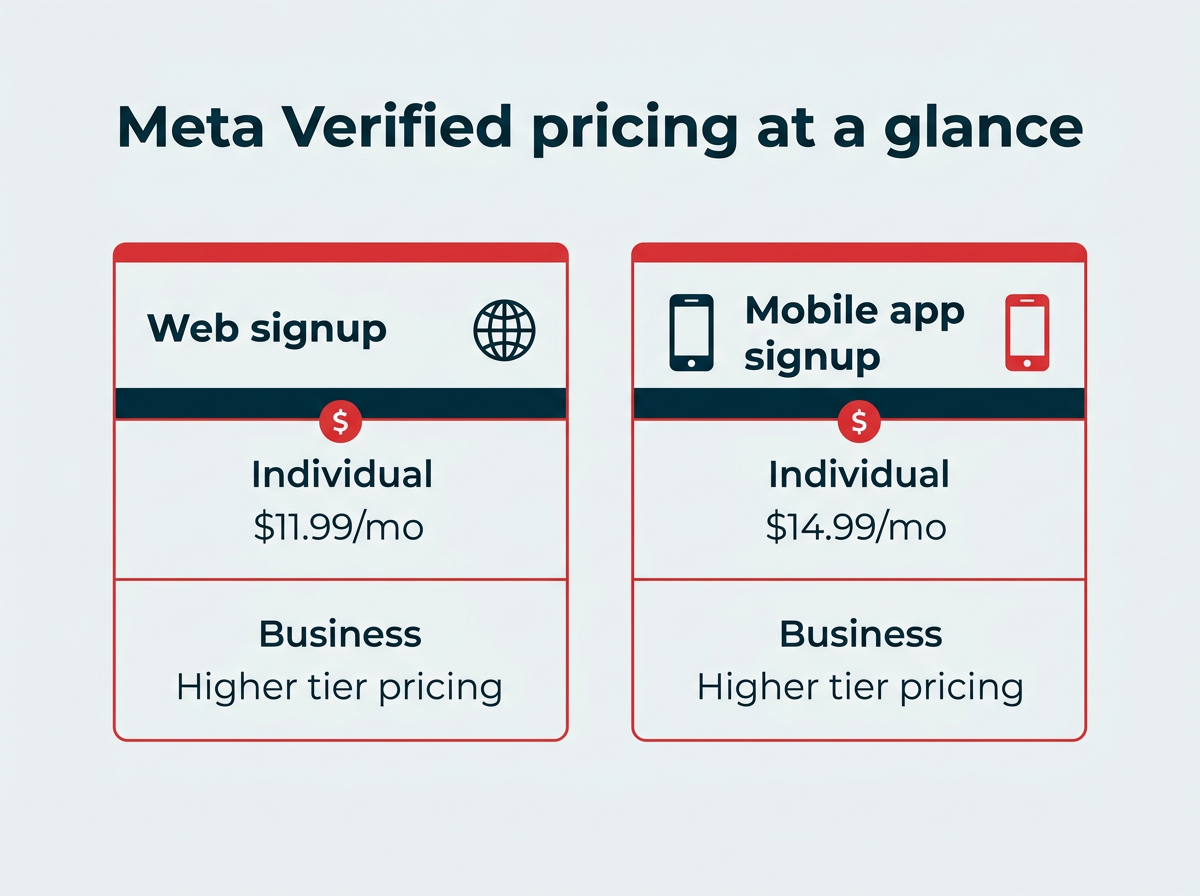
The cost of a Meta Verified subscription varies depending on the platform used for signup and the subscriber type (individual or business). This tiered pricing model reflects platform-specific costs and value propositions.
- Individual (Instagram or Facebook Standard Subscription):
- Web Signup: $11.99 per month. Signing up through the web interface bypasses app store fees, making it the more economical option.
- Mobile App Signup (iOS/Android): $14.99 per month. This higher rate accounts for the commission fees charged by Apple and Google for in-app purchases.
- Note: Each platform is billed separately. Verifying both an Instagram and a Facebook account requires two distinct subscriptions.
- Business (Facebook, Instagram, WhatsApp):
- Meta Verified for Business employs a tiered pricing model that begins at a higher rate than individual plans and scales upwards. The cost depends on the chosen features, the number of add-ons, and regional variations. Similar to individual plans, businesses are billed per platform. Specific rates are available in the Meta Business Help Center, reflecting country-specific pricing and plan levels.
Eligibility Requirements:
Meta Verified is now broadly available, but specific criteria must be met for both individuals and businesses to qualify.
-
Requirements for Individuals:
- Age: Must be 18 years or older.
- Profile Name: The profile name must match the name on a government-issued identification document.
- Government ID: A valid government-issued photo ID (e.g., driver’s license, passport) is required for identity verification. This ID must match the profile name and photo.
- Profile Picture: The profile picture must include the subscriber’s face, matching the government ID.
- Activity: Must have a public or private profile with a sufficient posting history.
- Community Standards: Adherence to Meta’s Community Standards and Terms of Service is mandatory.
- Two-Factor Authentication: Required for enhanced account security.
-
Requirements for Businesses:
- Business Account Type: Must be a legitimate business operating on Facebook, Instagram, or WhatsApp.
- Business Verification: Completion of Meta’s business verification process, which confirms the legitimacy of the entity.
- Community Standards: Strict adherence to Meta’s Community Standards and platform policies.
- Active Presence: An active and established presence on the chosen platform(s).
Key Benefits of Meta Verified:
The subscription bundle offers several compelling benefits designed to enhance trust, security, and visibility for subscribers.
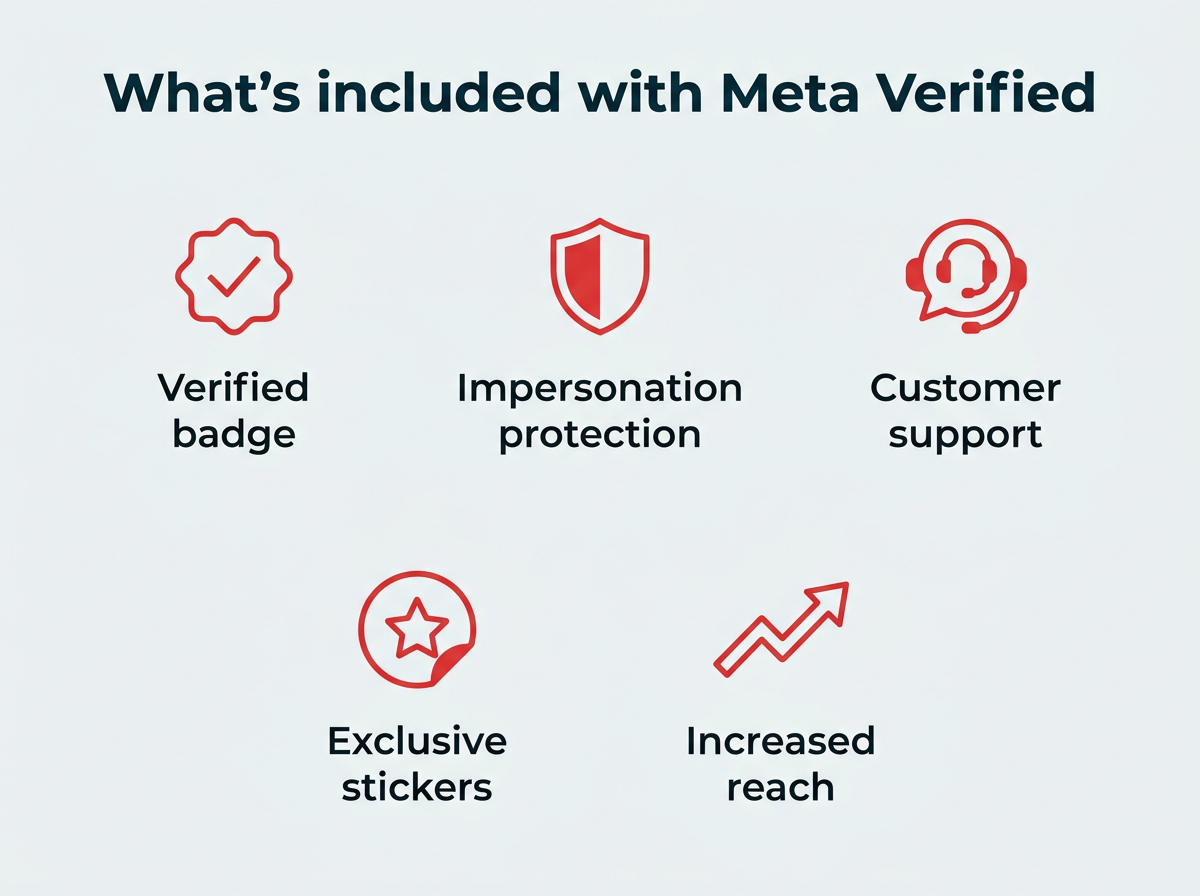
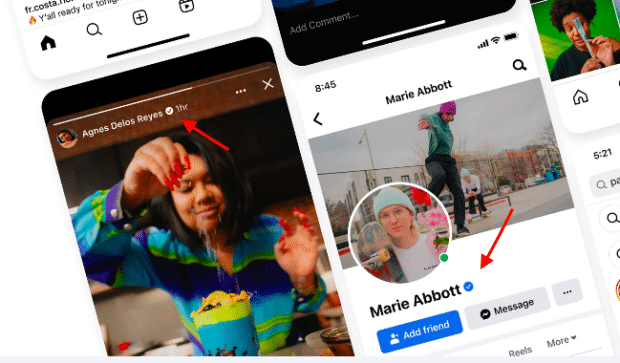
- Verified Badge: The iconic blue checkmark, identical to the legacy badge, signifies that the account has undergone a verification process and its identity confirmed by Meta. This visual cue helps build trust with audiences.
- Impersonation Protection: Subscribers benefit from proactive account monitoring, utilizing Meta’s advanced machine learning systems and human expert teams to detect and address imposter accounts. This is particularly valuable for creators and businesses whose online identity is crucial. Meta’s transparency reports highlight significant investments in AI and human review to combat fake accounts, resources that are now leveraged for Verified subscribers.
- Direct Customer Support: Access to real-time human customer support agents via live chat is a major draw. This dedicated support channel helps resolve common issues such as login problems, hacked accounts, and content disputes, offering a lifeline that was previously difficult to access for many users.
- Increased Reach and Visibility: Meta states that Verified participants may experience enhanced visibility in comments, search results, recommendations, and suggested accounts across Facebook and Instagram. This algorithmic boost can be particularly impactful for accounts with smaller followings, helping them to expand their audience more effectively, provided their content adheres to recommendation guidelines.
- Exclusive Stickers and Stars: Subscribers gain access to exclusive Stories stickers on Facebook and Instagram, as well as unique Reels stickers on Facebook, allowing for more creative and distinctive content. For Facebook, subscribers also receive 100 Stars per month to show support for other creators.
Meta Verified for Business and WhatsApp Integration
The expansion of Meta Verified to businesses underscores Meta’s recognition of the critical role its platforms play in commerce and customer engagement.
- Meta Verified for Business: This offering extends the subscription benefits to brands and companies. For businesses that previously struggled to meet the "notability" criteria for free legacy verification, this provides a direct pathway to a blue checkmark and enhanced features. The business subscription includes the verified badge, impersonation protection, dedicated account support, and on higher tiers, potentially enhanced profile features, and tools for lead generation. This empowers small and medium-sized businesses (SMBs) to establish a credible and secure presence, fostering greater customer trust.
- Meta Verified on WhatsApp: Integrating verification into WhatsApp Business is a strategic move for companies relying on the platform for customer service and communication. The verified badge appears next to the business name in chats and on the business profile, assuring customers they are interacting with an authentic entity. Alongside the badge, WhatsApp business subscribers receive impersonation monitoring and account support, crucial for maintaining secure and reliable customer interactions on a messaging-first platform.
Analysis of Implications and Industry Reactions
The introduction of Meta Verified has sparked diverse reactions and carries significant implications for users, creators, businesses, and Meta’s strategic direction.
Implications for Users and Creators:
- Democratization of Verification (with a cost): While legacy verification favored the already famous, Meta Verified opens the blue checkmark to a broader base of aspiring creators and professionals, albeit for a fee.
- Enhanced Trust and Security: For many, the impersonation protection and direct support offer genuine value, especially for those who have experienced account hacking or identity theft. This could lead to a more secure and trustworthy environment for interactions.
- Potential for a Two-Tiered System: Critics argue that paid verification could create a class system, where those who pay receive preferential treatment in terms of visibility and support, potentially marginalizing free users. The "increased reach" benefit, while explicitly stated to favor smaller accounts, still raises questions about algorithmic fairness.
- Impact on Authenticity: Some worry that linking verification to payment might dilute the badge’s original meaning as a symbol of "notability" and public interest, transforming it into a mere paid feature.
Implications for Businesses:
- Credibility and Brand Trust: For SMBs, Meta Verified offers an accessible way to instantly boost their credibility and customer trust, which can be invaluable in a competitive digital marketplace.
- Improved Customer Service: Direct access to human support can significantly streamline problem resolution, reducing downtime and enhancing operational efficiency for businesses heavily reliant on Meta’s platforms.
- Competitive Advantage: Businesses that adopt Meta Verified early may gain an edge in customer perception and potentially in algorithmic visibility compared to unverified competitors.
Implications for Meta:
- Revenue Diversification: Meta Verified is a cornerstone of Meta’s strategy to diversify its revenue streams beyond its primary advertising business. The reported $690 million in non-ad revenue for Q3 2025 demonstrates its growing financial contribution and resilience against advertising market fluctuations.
- Platform Integrity: By requiring government ID verification, Meta aims to improve account authenticity and reduce the prevalence of fake profiles, which has been a persistent challenge.
- Customer Experience: Providing dedicated customer support addresses a long-standing pain point for users, potentially improving overall satisfaction and loyalty.
- Response to Industry Trends: The move positions Meta competitively with other platforms that have also introduced paid verification, adapting to evolving user expectations and monetization models in the social media space.
Statements and Reactions:
Upon its initial launch, Meta Verified received a mixed reception. Industry observers and some users expressed skepticism about a "pay-to-play" model for what was once a symbol of organic notability. Concerns were raised about the potential for algorithmic bias and whether the benefits truly justified the cost. However, a significant segment of creators and businesses welcomed the move, particularly those who had struggled with impersonation or a lack of direct support. Many saw it as a practical solution to real problems, offering peace of mind and tangible operational advantages. Meta’s consistent messaging has emphasized the value proposition of the bundle of services, rather than just the badge itself, attempting to reframe the debate around utility rather than just status.
Comparison with Other Platform Verification Programs
Paid verification has become a notable trend across the social media landscape, reflecting broader shifts in monetization strategies.
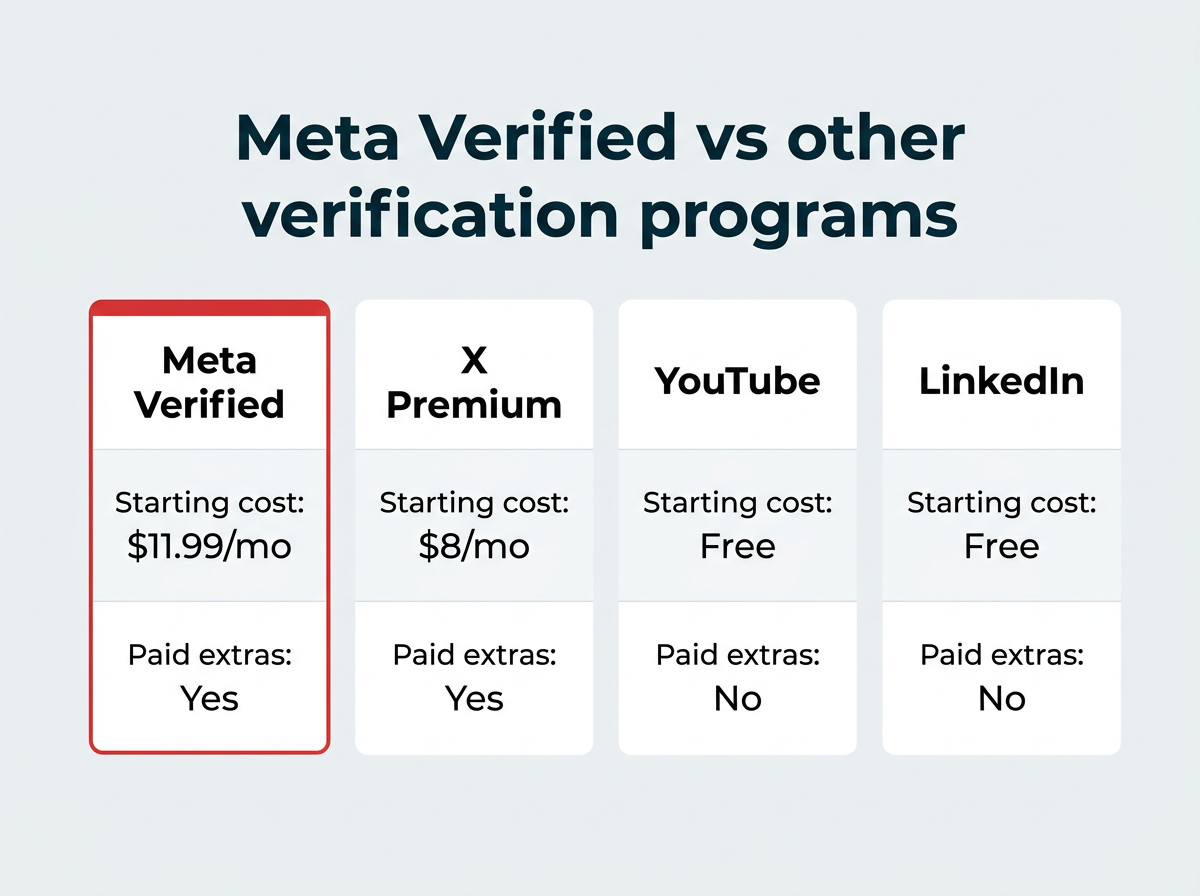
| Program | Starting Cost | Key Features | Eligibility |
|---|---|---|---|
| Meta Verified | $11.99/month (web) | Verified badge, impersonation protection, customer support, increased reach, exclusive stickers | Individuals (18+, ID match) and businesses meeting verification rules |
| X Premium | $8/month (web) | Blue checkmark, reduced ads, longer posts, edit button, reply boosting, longer video uploads | Any account meeting basic activity requirements |
| YouTube Verification | Free | Channel verification checkmark, no extra features | Channels with 100,000+ subscribers or notable status |
| LinkedIn Verification | Free | Verified identity or workplace badge | Anyone who verifies identity via third-party or employer email |
Meta Verified stands out as one of the pricier social media subscriptions, but it differentiates itself by bundling critical features like dedicated customer support and robust impersonation protection, which are often absent in free verification programs like YouTube or LinkedIn. While X Premium offers a broader set of content creation tools, Meta Verified focuses heavily on trust, security, and audience reach within its vast ecosystem.
How to Sign Up for Meta Verified
The application process for Meta Verified is streamlined and accessible across Meta’s various platforms.
-
On Instagram or Facebook (Mobile App):
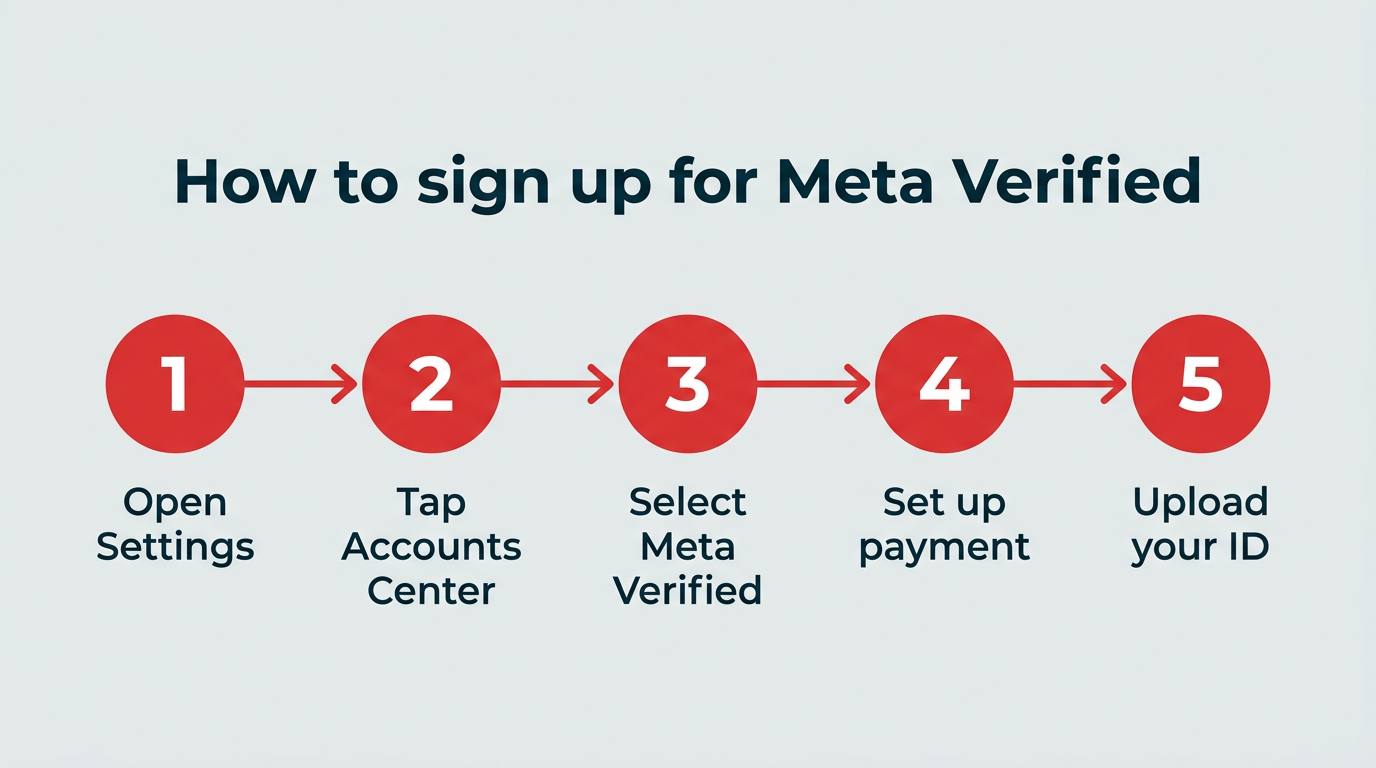
- Open the Instagram or Facebook app.
- Navigate to your profile and tap the three lines/hamburger menu (Instagram) or three dots icon (Facebook).
- Select Settings and privacy, then tap Accounts Center.
- Under Account Settings, tap Meta Verified.
- Select the profile you wish to verify.
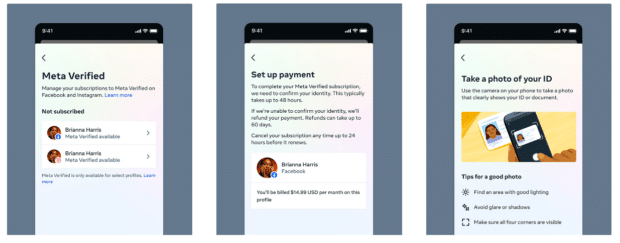
- Follow the prompts to set up your payment method.
- Upload a photo of your government-issued ID (e.g., passport, driver’s license) that matches your profile name and photo.
- Complete the identity verification process.
-
On Facebook (Web):
- Go to your Facebook profile on a web browser.
- Click the three dots icon next to your profile name.
- Select Subscribe to Meta Verified.
- Follow the on-screen instructions for payment and ID submission.
-
For Meta Verified for Business:
- Access the Meta Business Suite.
- Look for the Meta Verified for Business section or an option to subscribe within your business settings.
- Select the business account and desired platform (Facebook, Instagram, WhatsApp).
- Choose your preferred tier and payment plan.
- Complete the business verification process, which may involve submitting business documentation.
Verification typically takes up to 48 hours. Once verified, subscribers are advised that changing their username, profile name, date of birth, or profile photo will necessitate re-verification. It’s important to note that a separate application and payment are required for each platform (Instagram, Facebook, WhatsApp) if a user or business wishes to verify accounts across multiple services.
Conclusion
Meta Verified represents a significant evolution in social media verification, moving from a discretionary badge of notability to a paid subscription service offering a bundle of practical benefits. This strategic shift underscores Meta’s efforts to diversify revenue, enhance platform integrity, and provide better support and security to its vast user base, particularly creators and businesses. While the "pay-to-play" model has generated debate, the tangible advantages of impersonation protection, direct customer support, and increased visibility have proven valuable for many, establishing Meta Verified as a crucial component of the modern digital landscape and a testament to the ongoing transformation of social media monetization. As Meta continues to refine and expand the program, its long-term impact on user trust, platform economics, and the very definition of online authenticity will continue to unfold.