Menlo Park, California – Meta Platforms, Inc. concluded its highly anticipated Meta Connect 2026 conference this week, marking a definitive strategic pivot from its long-standing emphasis on the metaverse to an AI-first future. The event, held at Meta’s headquarters in Menlo Park, showcased a comprehensive suite of artificial intelligence-powered innovations, including significant advancements for its personal AI agent, Muse, bolstered data security measures, and strategic partnerships designed to expand agentic AI functionality. Alongside these software breakthroughs, Meta unveiled new models of its AI-integrated smart glasses and introduced a dramatically streamlined virtual reality (VR) headset, boasting a weight reduction of five times compared to its current Meta Quest 3.
The Strategic Reorientation: From Metaverse to AI Supremacy
For years, Meta CEO Mark Zuckerberg championed the metaverse as the internet’s next frontier, pouring billions into its development under the Reality Labs division. This vision, first articulated prominently in 2021 with the company’s rebranding, aimed to create immersive virtual worlds for work, play, and social interaction. However, the Meta Connect 2026 keynote speech delivered by Zuckerberg signaled a profound shift in priorities. He candidly acknowledged that while the initial belief was that the metaverse would precede the era of AI superintelligence, rapid and unforeseen advancements in artificial intelligence have necessitated a change in approach.
"When we first started building glasses, we believed that the metaverse would come first, then AI superintelligence would come later," Zuckerberg explained, elaborating on the rationale behind the company’s initial metaverse-centric focus. "But advances in AI meant that it needed to change its approach, and put AI functionality front of mind." This recalibration underscores a broader industry trend where the transformative potential of generative AI has reshaped technology roadmaps across the board, pushing companies to integrate AI capabilities at every level of their product ecosystems. Meta’s strategic pivot aligns with the escalating global competition in AI, where companies like OpenAI, Google, and Microsoft are making aggressive strides. This shift is not an abandonment of the metaverse entirely, but rather a reordering of foundational technologies, with AI now serving as the primary enabler for future immersive experiences.
Unveiling Muse: Meta’s Personal AI Agent Takes Center Stage
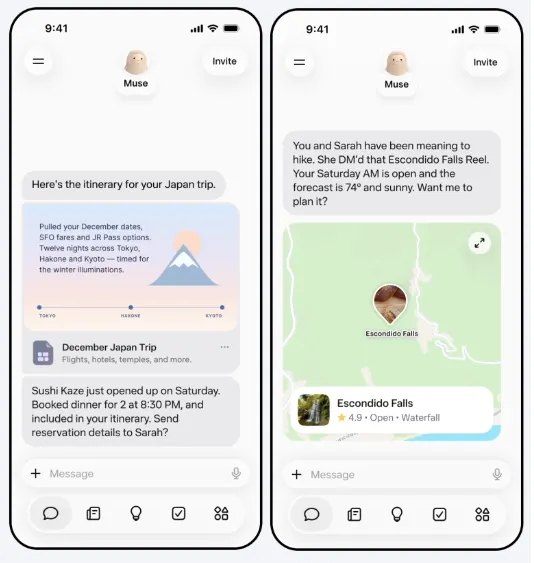
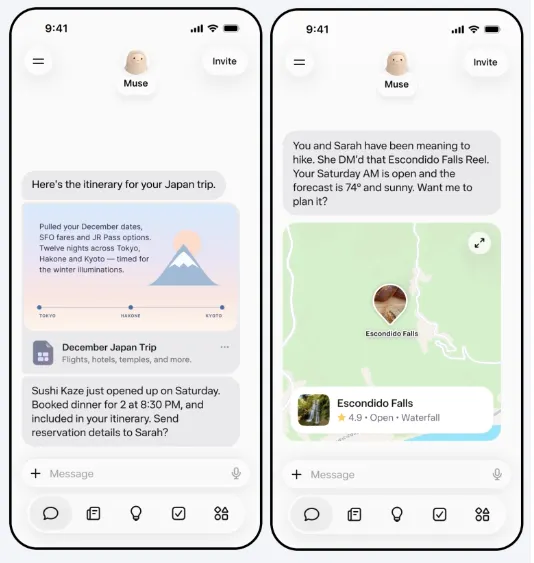
At the heart of Meta’s new AI-first strategy is Muse, the company’s personal AI agent, positioned as the primary conduit for delivering these advanced functionalities to users. Zuckerberg emphasized Muse’s role as the "centerpiece" of Meta’s broader technological evolution. The agent is designed to be a proactive, intelligent companion capable of performing complex tasks and offering personalized assistance, moving beyond simple conversational AI.
A critical aspect highlighted was Muse’s advanced data protection mechanisms. Meta announced the implementation of Meta Secure VM, a private data process powering Muse that ensures robust security protocols. Zuckerberg explicitly stated that not even Meta itself would have access to the private data processed by Muse, directly addressing widespread user concerns about privacy in AI interactions. This move is a direct response to increasing scrutiny over how large language models and AI agents handle sensitive personal information, aiming to build user trust from the outset.
Further enhancing Muse’s capabilities, Meta’s Chief AI Officer, Alexandr Wang, detailed upcoming innovations. These include the assignment of email addresses for Muse agents, significantly improving their functional capacity by allowing them to independently manage communications, schedule appointments, and interact with external services more autonomously. This is a crucial step towards true "agentic AI functionality," where the AI can take initiative and complete multi-step tasks without constant human prompting.
Wang also unveiled a series of pivotal partnerships with leading retailers and service providers, including Walmart, BestBuy, Gap, Sephora, Expedia, Instacart, and Wayfair. These collaborations are designed to enable seamless Muse integration with their respective platforms, allowing users to leverage their AI agent for tasks such as personalized shopping recommendations, travel bookings, and grocery orders directly through conversational prompts. This network of partnerships is critical for Muse to evolve from a mere chatbot into a truly indispensable digital assistant embedded across various aspects of daily life.
Beyond functional enhancements, user personalization remains a priority. Zuckerberg announced that Muse users will soon have the ability to customize their agent’s voice, adding another layer of individuality and comfort to interactions. Geographically, Muse’s availability is expanding, with Canada now joining the U.S. as regions where the personal AI agent can be accessed.
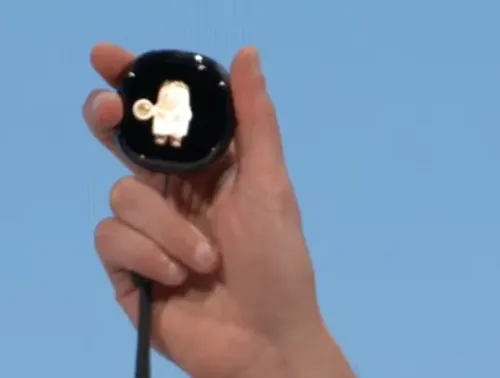
Perhaps one of the more intriguing announcements was the preview of Muse Charm, a still-in-development, Tamagotchi-like physical device. This compact form factor is envisioned to provide constant access to a user’s Muse agent, offering an alternative and perhaps more tactile interaction method than relying solely on AI glasses or other digital interfaces. This concept hints at Meta’s exploration of ambient computing, where AI is seamlessly integrated into the environment in unobtrusive ways.
The Evolution of AI Glasses: Privacy, Design, and Enhanced Audio
Following the deep dive into Muse, Meta’s AI glasses took center stage, with a significant emphasis on addressing previous privacy concerns. Zuckerberg directly confronted recent public apprehension regarding unauthorized recording through the devices and the potential for content captured via the glasses to be accessed by Meta staff. In response, Meta is rolling out private processing for Meta Glasses, mirroring the security measures of Muse. This ensures that user information captured through the glasses remains inaccessible even to Meta employees, aiming to rebuild and strengthen user trust in the privacy safeguards of wearable technology.
Audio capabilities received substantial upgrades, with Zuckerberg outlining improved audio elements, including updated support for hearing-impaired users, making the technology more inclusive. A notable addition to the lineup is the introduction of audio-only AI glasses. These devices provide connectivity to Meta AI without the inherent privacy concerns associated with camera capture, offering a less intrusive entry point for users primarily interested in hands-free AI interaction and audio experiences.
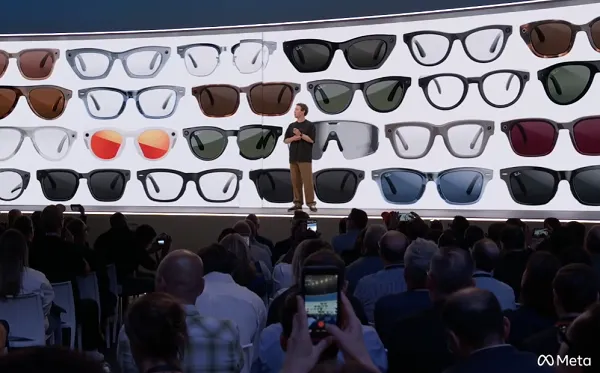
The next generation of Meta’s smart eyewear, the Ray-Ban Meta Gen 3 device, was also showcased. This iteration features a slimmed-down frame, enhancing wearability and aesthetic appeal, coupled with a longer battery life, addressing common user feedback for extended utility. The Gen 3 glasses will incorporate new capture modes and, significantly, Dolby Atmos spatial audio capture. This advanced audio technology promises to better re-create the immersive soundscapes of scenes recorded through the device, offering a more faithful and rich auditory experience.
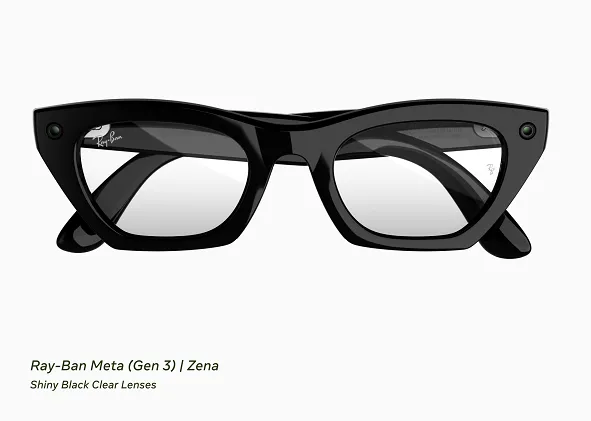
Further expanding the product line, Zuckerberg previewed additional new AI glasses models, including stylish Aviator and Zena styles, alongside an updated Adventurer device, which will be available at a more accessible price point of $249.
In a move to blend technology with pop culture, Meta announced a new collaboration with K-Pop superstar Lisa. This partnership will yield custom Lisa-inspired glasses, reminiscent of the frames previously launched with Kylie Jenner. These exclusive glasses will also feature unique charms inspired by Lisa’s pets, demonstrating Meta’s strategy to leverage celebrity endorsements and lifestyle integration to broaden the appeal of its wearable tech.
Finally, an update was provided on Meta’s more advanced Meta Display glasses, which have faced supply constraints and been sold out for months. Zuckerberg confirmed that Meta is now actively catching up with demand and is working to make the Display model available in more regions, indicating a strong market interest in these more sophisticated AR capabilities.
Next-Level VR: The Lightweight Leap into Immersive Experiences
Concluding the hardware announcements, Zuckerberg, alongside Reality Labs chief Andrew Bosworth, offered a comprehensive overview of Meta’s next-generation VR glasses. These new devices represent a monumental leap in form factor, weighing an astonishing five times less than the current Meta Quest 3 headset. This dramatic weight reduction is a game-changer for VR adoption, promising significantly improved comfort and extended wearability, addressing one of the most persistent barriers to widespread consumer acceptance of VR technology.
The engineering marvel behind this weight reduction lies in Meta’s adoption of a tethered model. As explained by Meta, "The VR Glasses handle the sensors and display, while the puck, connected by an optical tether, handles compute, battery, and storage, and conveniently clips to your pocket or bag." By externalizing the heavy computing and battery components into a separate, portable "puck," Meta has managed to create a much lighter and less cumbersome head-mounted display. This design choice, while potentially introducing a physical tether, optimizes comfort for prolonged use, especially for experiences like watching movies or extended gaming sessions.
The next-gen VR device will seamlessly integrate with the user’s Muse AI bot, allowing for intuitive management of various aspects through conversational prompts. This deep integration means users can control their VR environment, access information, or even interact with virtual characters using natural language, blurring the lines between the digital and AI assistant. The new VR glasses will launch with a range of experiences specifically designed to showcase the power of Meta’s evolving VR tools, including high-fidelity 3D movies and immersive live sports.
Despite the stated pivot to AI, VR remains a critical component of Meta’s long-term roadmap. Zuckerberg articulated a compelling vision for the new VR device, stating it will "essentially integrate a great cinema, virtual computer and gaming experience within a single device, and will provide a glimpse into the future of digital connection." This positions the new VR glasses not just as a gaming console, but as a versatile platform for entertainment, productivity, and social interaction, aiming to deliver on the original promise of the metaverse in a more refined and comfortable package.
The Meta VR glasses will be priced at $1299 and are slated for shipment in Spring, positioning them as a premium offering in the evolving VR market, potentially competing with high-end devices like the Apple Vision Pro, albeit with a different approach to spatial computing.
Privacy and Security: A Central Pillar of Meta’s New Strategy
Across all major announcements at Meta Connect 2026, privacy and data security emerged as a paramount concern and a central theme of Meta’s new AI-first strategy. The repeated emphasis on features like Meta Secure VM for Muse and private processing for AI glasses underscores a clear understanding of the public’s apprehension regarding pervasive AI and wearable technology.
The company’s proactive measures to ensure that neither Muse nor the AI glasses allow Meta staff to access user information directly addresses previous controversies and general unease about corporate access to personal data. This commitment is crucial for fostering user adoption, particularly for devices that are designed for constant presence and interaction within a user’s personal space. By establishing a robust framework for data isolation and user control, Meta aims to differentiate its offerings in a market increasingly sensitive to privacy breaches and algorithmic transparency.
Industry Implications and Competitive Landscape
Meta Connect 2026 represents a pivotal moment for Meta and the broader tech industry. The explicit pivot to an AI-first strategy, while acknowledging past metaverse ambitions, signals a pragmatic response to market realities and technological advancements. This move places Meta in direct competition with established AI leaders like Google and Microsoft, as well as innovative startups like OpenAI, in the race to develop and deploy advanced AI agents.

The partnerships announced for Muse, integrating it with major e-commerce and service platforms, are crucial for creating a truly useful and embedded AI assistant. This strategy of broad integration could give Muse a significant advantage by making it a pervasive tool across various consumer touchpoints, potentially outcompeting standalone AI assistants that lack such deep platform connections.
In the wearable technology space, the new AI glasses and the dramatically lighter VR headset position Meta as a serious contender against rivals like Apple, which has recently entered the mixed reality market with its Vision Pro. Meta’s approach, offering a range of AI glasses from audio-only to more advanced display models, caters to different user needs and price points, aiming for broader market penetration. The $249 Adventurer glasses, for instance, offer an accessible entry point. The tethered design of the new VR headset, while a departure from self-contained units, prioritizes comfort—a key factor that could resonate with consumers who find current VR headsets too heavy or bulky for extended use. The $1299 price tag positions it as a premium device, but one that is significantly more affordable than some high-end competitors, potentially broadening the market for high-fidelity VR experiences.
The company’s renewed focus on privacy, particularly for always-on devices, is a strategic imperative. Building user trust through transparent and robust privacy protections will be critical for the long-term success of Meta’s AI and wearable ambitions.
Looking Ahead: The Future of Digital Connection
Meta Connect 2026 clearly articulated Meta’s revised vision for the future of digital connection. It is a future where AI serves as the intelligent layer orchestrating interactions across various devices, from personal agents like Muse to immersive VR and AR experiences. The integration of Muse across AI glasses and VR headsets suggests a unified ecosystem where AI is not just a feature, but the core operating system, making technology more intuitive, personalized, and seamlessly integrated into daily life.
While the metaverse remains part of the long-term roadmap, it is now envisioned as an AI-powered metaverse, where intelligent agents and personalized experiences drive engagement. The focus on lightweight, comfortable, and privacy-conscious hardware, combined with sophisticated AI software, indicates Meta’s commitment to making these futuristic technologies accessible and appealing to a mainstream audience. The coming months will reveal how these ambitious announcements translate into market adoption and how Meta navigates the complex landscape of AI development, privacy regulation, and consumer expectations in its pursuit of the next generation of digital connection.