The landscape of paid social media advertising is undergoing a profound transformation with the recent introduction of Meta Ads AI Connectors. This groundbreaking development, launched by Meta, signals a departure from the traditional reliance on Ads Manager as the sole hub for campaign creation, management, and analysis. Instead, advertisers can now seamlessly integrate their existing AI tools, enabling them to orchestrate complex campaigns directly from these familiar environments. This evolution promises to dismantle long-standing barriers between data interpretation and actionable insights, fundamentally altering how paid social campaigns are conceptualized and executed.
For years, the operational workflow for paid social has been inextricably linked to the Meta Ads Manager interface. Advertisers would log in to monitor performance metrics, implement adjustments, and then, if utilizing AI tools, engage with them as separate entities for analysis and recommendations. These AI solutions, while valuable for deciphering campaign data, were largely relegated to an advisory role, disconnected from the direct control and modification of live campaigns. Meta’s initiative directly addresses this disconnect, empowering advertisers to leverage the analytical prowess of AI directly within the campaign lifecycle.
The technical underpinning of Meta Ads AI Connectors lies in their ability to securely connect AI tools to live campaign data via Meta’s MCP server. This direct integration bypasses the need for complex API projects, the often arduous pursuit of developer credentials, and the lengthy waiting periods associated with engineering dependencies. The result is a streamlined process where campaign management, from initial creation to ongoing analysis, can be conducted through natural language commands within the AI tools themselves. This mechanistic shift, while significant, is secondary to the more profound implications for the strategic execution of paid social advertising.
Execution Leaves the Platform: Breaking Down Silos
Historically, campaign optimization has been a platform-centric activity. Performance data was accessible and actionable solely within Ads Manager. While AI tools could offer sophisticated interpretations of this data, their ability to directly influence campaign settings was severely limited. They could inform decisions, but they could not autonomously enact them. Meta Ads AI Connectors dismantle this critical barrier, effectively merging the analytical and executive functions of campaign management.
The ramifications of this integration are substantial. The same environment used for diagnosing campaign performance can now be leveraged to implement immediate corrective actions. This dramatically reduces the lag time between identifying an issue and resolving it. Previously, the process involved exporting data, analyzing it in a separate AI tool, and then manually reapplying the insights within Ads Manager. This multi-step, often time-consuming, workflow is now condensed into a singular, fluid process. Advertisers can move directly from posing a question about campaign performance to executing a solution, all within a unified AI-driven interface. This agility is crucial in the fast-paced digital advertising ecosystem, where timely adjustments can significantly impact return on ad spend.
Decisions Move to Where the Data Already Sits: A Holistic Approach
Beyond the immediate impact on execution, Meta Ads AI Connectors signify a fundamental shift in decision-making paradigms. By granting AI tools direct access to Meta’s campaign data, Meta acknowledges a long-held industry understanding: paid social campaigns do not operate in a vacuum. Their performance is intrinsically linked to a broader ecosystem of marketing channels, including search advertising, retail media networks, and overarching business objectives.
When an AI tool can ingest and act upon Meta data in conjunction with information from these other sources, it naturally evolves into the central nexus for strategic decision-making. This capability is pivotal for achieving the cross-channel visibility that marketing teams have strived for years to attain. Instead of optimizing Meta campaigns in isolation, advertisers can now weigh their performance against the entirety of their marketing efforts. This allows for more informed and integrated actions, eliminating the need to constantly switch between disparate platforms to gather contextual information. The ability to perform this holistic analysis and execute actions without leaving a chosen AI environment represents a significant leap forward in integrated marketing strategy.
Lower Friction Changes Who Does the Work: Democratizing Expertise
The third transformative aspect of Meta Ads AI Connectors revolves around the reduction of friction in campaign management. Tasks that previously required intricate navigation of the Ads Manager interface, extensive inter-team coordination, or lengthy technical setups can now be accomplished through simple, natural language instructions. This not only accelerates execution but also broadens the scope of who can effectively manage paid social campaigns.
As the barrier to entry lowers, the premium on platform-specific fluency diminishes. The differentiating factor for successful teams will increasingly lie in their ability to articulate clear strategic objectives, interpret the insights provided by AI, and effectively guide the system towards desired outcomes. This democratizes campaign management, allowing individuals with strong strategic thinking and communication skills to contribute more significantly, even if they lack deep expertise in the intricacies of Ads Manager. This shift has the potential to empower a wider range of professionals within organizations to engage with and leverage paid social advertising, fostering greater agility and innovation.
The Part That Still Needs a Human: Elevating Strategic Judgment
While the efficiency gains and simplified workflows offered by Meta Ads AI Connectors are undeniable, they are not the sole drivers of success for marketing teams. The true competitive advantage lies in how these new capabilities are leveraged strategically. Viewing connectors merely as reporting shortcuts would be a significant underestimation of their potential.
The profound value of this innovation resides in its capacity to integrate Meta data into a comprehensive decision-making framework that already encompasses other channels, overarching business metrics, and rigorous testing protocols. Teams that truly benefit will be those that fundamentally redesign their workflows rather than simply bolting AI onto existing, outdated routines. This necessitates a proactive approach to strategic planning, where the insights derived from integrated data streams inform broader business objectives.

Furthermore, the increased speed and automation brought about by AI necessitate a heightened emphasis on human judgment. When campaigns can be built and modified with a single instruction, the criticality of defining the correct inputs, identifying relevant signals, and establishing robust guardrails becomes paramount. The AI system will act swiftly, but its direction must be human-guided. The ultimate success of these campaigns hinges on the quality of human strategic input and the ability to steer the AI towards the most impactful and ethically sound outcomes. This elevates the role of the strategist, demanding a deeper understanding of business objectives and a more nuanced approach to campaign design.
Broader Impact and Implications for the Industry
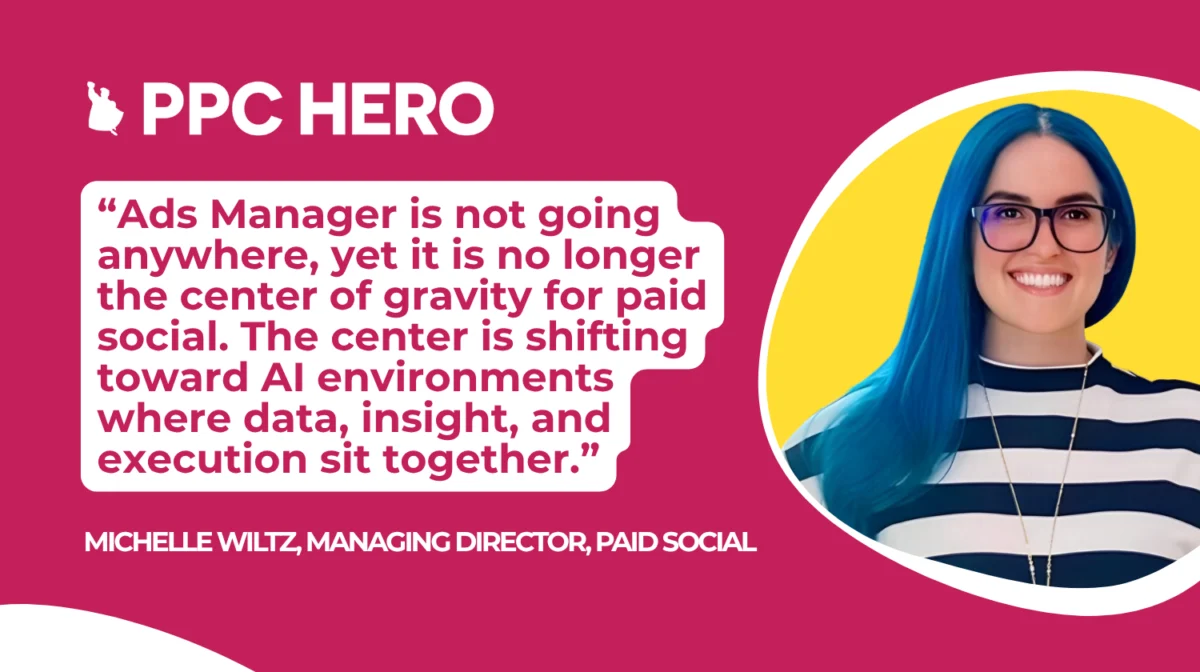
The introduction of Meta Ads AI Connectors represents more than just an incremental addition to the platform’s feature set; it signifies a fundamental repositioning of where paid social management resides. While Ads Manager will undoubtedly continue to serve its purpose, it is no longer the sole gravitational center for paid social advertising. The locus of control and execution is migrating towards AI-driven environments where data, insight, and action converge.
This seismic shift has significant implications for the future of digital marketing. Companies that adapt to this new paradigm will likely experience enhanced agility, enabling them to respond more rapidly to market changes and consumer behavior. Their decision-making processes will be more informed and integrated, leading to potentially higher returns on investment. The ability to leverage AI for both analysis and execution within a unified environment promises to unlock new levels of efficiency and strategic effectiveness.
Conversely, organizations that cling to traditional workflows risk falling behind. They may find themselves operating with a perpetual lag, constantly reacting to market shifts rather than proactively shaping them. The challenge for these entities will be to embrace the necessary technological and strategic evolution to remain competitive. The industry is at an inflection point, and the teams that successfully navigate this transition will be those best positioned to thrive in the evolving landscape of digital advertising. The integration of AI into the core of campaign management is not merely a technological advancement; it is a strategic imperative for future success.
Supporting Data and Context
The move towards AI integration in advertising platforms is not an isolated event. Industry analysts have consistently projected significant growth in AI adoption within marketing technology. For instance, reports from firms like Gartner and Forrester have highlighted an increasing reliance on AI for tasks ranging from audience segmentation and predictive analytics to content optimization and programmatic media buying. The global AI in marketing market size was valued at USD 11.05 billion in 2022 and is projected to grow at a compound annual growth rate (CAGR) of 35.4% from 2023 to 2030, according to Grand View Research. This broader trend underscores Meta’s strategic alignment with industry evolution.
The development of Meta Ads AI Connectors can be traced back to Meta’s ongoing commitment to artificial intelligence research and development. The company has consistently invested in AI to enhance user experiences across its family of apps, from personalized content feeds to more effective ad targeting. The launch of these connectors is a logical extension of this investment, aiming to democratize advanced AI capabilities for its advertising partners. The timeline for this development has been gradual, with Meta signaling its intent to integrate AI more deeply into its business tools over the past few years through various beta programs and feature rollouts within Ads Manager itself. The AI Connectors represent the culmination of these efforts, offering a more direct and powerful integration.
Reactions and Inferred Statements
While official statements from Meta directly commenting on competitor reactions are rare, the industry response has been largely positive, albeit with a degree of cautious optimism. Marketing technology providers who specialize in AI-powered advertising solutions have expressed enthusiasm for the potential of Meta Ads AI Connectors to streamline their clients’ workflows. Many are actively working to ensure their platforms are compatible with Meta’s new integration.
Inferred statements from industry experts suggest that this move by Meta will likely spur similar integrations from other major advertising platforms. The competitive pressure to offer seamless AI integration will intensify, forcing platforms to move beyond isolated AI features and towards more holistic, AI-native management environments. Agencies and in-house marketing teams are likely to see this as an opportunity to consolidate their MarTech stacks and derive greater value from their AI investments.
Broader Impact and Future Outlook
The long-term implications of Meta Ads AI Connectors extend beyond individual campaign optimization. They signal a broader shift towards an AI-augmented workforce in digital marketing. As AI tools become more capable of handling complex execution tasks, the role of human marketers will evolve towards higher-level strategy, creative conceptualization, and ethical oversight. This transition will necessitate a focus on upskilling and reskilling the marketing workforce to adapt to these new demands.
The increased accessibility of advanced campaign management through natural language interfaces could also lead to greater innovation and experimentation in paid social advertising. With reduced friction and more integrated workflows, marketers may have more time and resources to explore novel campaign strategies and test new approaches. This could ultimately benefit consumers by leading to more relevant and engaging advertising experiences.
As Meta continues to refine and expand the capabilities of its AI Connectors, the industry can expect further advancements in areas such as predictive optimization, automated creative generation, and hyper-personalized campaign delivery. The journey towards a truly intelligent and integrated advertising ecosystem is well underway, with Meta Ads AI Connectors marking a significant milestone in this ongoing evolution. The future of paid social advertising is undeniably intertwined with the intelligent automation and seamless integration that this new technology promises.