rifanmuazin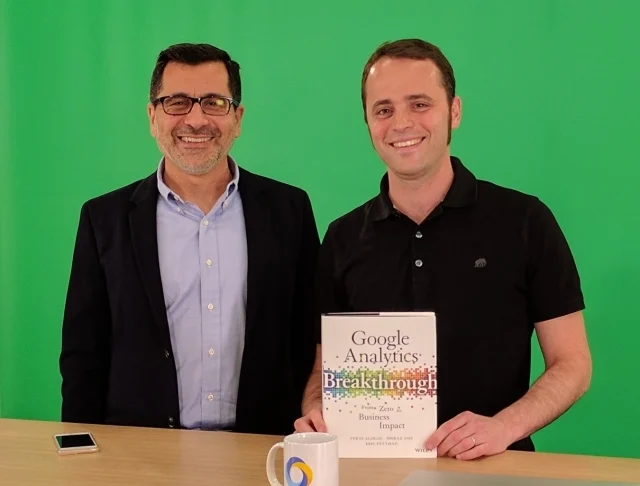
The landscape of digital marketing and data science has undergone a radical transformation over the last decade, shifting from basic traffic monitoring to a complex ecosystem of cross-platform user journeys and predictive modeling. In a recent professional exchange at the Google Analytics studio, Daniel Waisberg, a prominent figure in the search and analytics space, met with Feras Alhlou, Co-Founder and Principal Consultant at E-Nor and co-author of the seminal text Google Analytics Breakthrough. The discussion centered on the methodologies required to transform raw data into a structured business process that drives measurable growth. As organizations grapple with an unprecedented volume of information originating from web, mobile, social, and backend systems, the collaboration between these two industry veterans highlights a critical need for a standardized optimization framework.
The Evolution of the Analytics Professional Relationship
The professional partnership between Daniel Waisberg and Feras Alhlou spans nearly a decade, a period during which the digital analytics industry moved from the fringes of IT departments to the center of executive decision-making. Alhlou’s firm, E-Nor, has established itself as a leading consultancy by focusing on the intersection of technical implementation and business strategy. Their collaboration culminated in the publication of Google Analytics Breakthrough, a comprehensive guide designed to help enterprises navigate the complexities of the Google Marketing Platform. This long-standing relationship provides a unique vantage point on how the industry has matured.
In the early 2010s, analytics was largely viewed as a reporting function—a way to count “hits” and “pageviews.” However, as Waisberg and Alhlou noted during their session, the modern environment demands a more holistic approach. The transition from Universal Analytics to more advanced tracking capabilities reflects a broader shift in the market where “data for data’s sake” is no longer a viable strategy. Instead, the focus has shifted toward the “Optimization Framework,” a four-stage process championed by E-Nor to ensure that data investments yield a tangible return on investment (ROI).
The Four Pillars of the E-Nor Optimization Framework
The core of Alhlou’s methodology is the belief that analytics must be treated as a continuous business process rather than a one-time technical setup. This framework is divided into four distinct stages: Audit, Reporting, Analysis, and Testing/Personalization.
Phase 1: The Dual-Track Audit
The process begins with a comprehensive audit that addresses two specific areas: the technical infrastructure and the business objectives. On the technical side, consultants verify the integrity of the data being collected. This involves checking tag deployments, data layer accuracy, and ensuring that cross-domain tracking is functioning correctly. Without a clean technical foundation, any subsequent analysis is prone to error.
Simultaneously, the business audit involves deep engagement with stakeholders. The goal is to identify the Key Performance Indicators (KPIs) that truly matter to the organization’s bottom line. By interviewing executives and department heads, the analytics team can align the data collection strategy with the company’s overarching goals, ensuring that the metrics tracked are actionable rather than purely “vanity” metrics.
Phase 2: The Reporting Layer
Once the data collection is validated, the framework moves to the reporting layer. This stage is focused on visualization and accessibility. The challenge for many modern enterprises is not a lack of data, but an inability to synthesize that data into a format that non-technical stakeholders can understand. Effective reporting provides a “single source of truth” across the organization, allowing different departments to see how their efforts contribute to the broader business objectives.
Phase 3: Data Analysis and Actionable Insights
Reporting tells a company what happened; analysis explains why it happened. In this phase, the focus shifts to identifying patterns, anomalies, and opportunities. Alhlou emphasizes that this is where the real value of an analytics investment begins to manifest. By deep-diving into the data, organizations can uncover friction points in the customer journey or identify high-performing segments that warrant further investment.
Phase 4: Testing and Personalization
The final and most impactful stage of the framework is the move toward testing and personalization. With a solid foundation of data and insights, companies can begin to run A/B tests or multivariate experiments to optimize user experiences. Personalization allows businesses to tailor their messaging and offerings to specific user behaviors, significantly increasing conversion rates and customer lifetime value. It is in this stage that analytics transitions from a cost center to a primary driver of revenue.
Navigating the Complexity of Multi-Channel Data
A significant portion of the discussion between Waisberg and Alhlou focused on the increasing complexity of the modern digital landscape. In the early days of the internet, marketers dealt with a relatively simple environment characterized by single-device usage and a limited number of marketing channels. Today, the customer journey is fragmented across mobile devices, desktop computers, social media platforms, and offline touchpoints.
Alhlou pointed out that “life used to be simple for marketers,” but the current reality involves data being “everywhere.” To manage this, E-Nor advocates for a context-driven approach. Understanding the context around the data involves looking beyond the numbers to the environment in which the data was generated. This includes considering the device type, the geographic location, the referral source, and the user’s previous interactions with the brand. By focusing on context, marketers can avoid the “data silos” that often prevent a unified view of the customer.
Strategic Implementation: The Data Roadmap and Google Surveys
To successfully navigate this complexity, Alhlou advises organizations to develop a structured “data roadmap.” This roadmap serves as a strategic blueprint for data maturity, allowing companies to scale their efforts in a manageable way.
The first step in this roadmap is to master the data the organization already owns—specifically, web and mobile analytics. Once this foundation is stable, the next step is to augment these reports with basic social media data to gain a qualitative understanding of brand perception.
A key component of this advanced roadmap is the integration of “Voice of the Customer” (VoC) data. Alhlou highlighted the Google Surveys product as a revolutionary tool for modern market research. Traditionally, market research was an expensive and time-consuming endeavor, often reserved for large corporations with massive budgets. However, digital survey tools now allow businesses of all sizes to run targeted research campaigns quickly and affordably.
By running surveys on their own digital properties, companies can gain direct feedback from their users, providing the “why” behind the behavioral data seen in analytics. Furthermore, these tools can be used for broader market research to understand industry trends and competitor positioning. This combination of quantitative behavioral data and qualitative customer feedback creates a 360-degree view of the market.
Supporting Data and Industry Implications
The methodologies discussed by Waisberg and Alhlou are supported by broader industry trends. According to a report by Forrester Research, insight-driven businesses are growing at an average of 30% annually and are on track to take $1.8 trillion annually from their less-informed peers. Furthermore, a McKinsey & Company study found that organizations that leverage customer behavioral insights outperform peers by 85% in sales growth and more than 25% in gross margin.
The E-Nor Optimization Framework addresses a common failure point in corporate digital transformation: the “Implementation Gap.” Many companies invest heavily in high-end analytics software like Google Analytics 360 but fail to invest in the human capital and processes required to utilize those tools effectively. By emphasizing the audit and strategy phases, Alhlou’s approach ensures that the technology serves the business, rather than the business serving the technology.
Broader Impact and the Future of Digital Analytics
The conversation in the Google Analytics studio underscores a broader shift toward “Data Democracy” and “Actionable Intelligence.” As tools become more accessible, the competitive advantage no longer lies in having the data, but in the speed and accuracy with which an organization can act upon it.
The move toward privacy-centric tracking (such as the transition to GA4 and the phasing out of third-party cookies) further validates the need for the structured approach advocated by Alhlou and Waisberg. In a world with less “perfect” data, having a robust framework for analysis and a clear roadmap for testing becomes the only way to maintain a competitive edge.
The collaboration between these two experts serves as a reminder that while the tools of the trade are constantly evolving, the fundamental principles of business strategy remain constant. Success in the digital age requires a disciplined adherence to a measurement strategy that prioritizes business impact over technical complexity. As organizations continue to refine their digital presence, the E-Nor Optimization Framework provides a proven path from data collection to business transformation.