admin
admin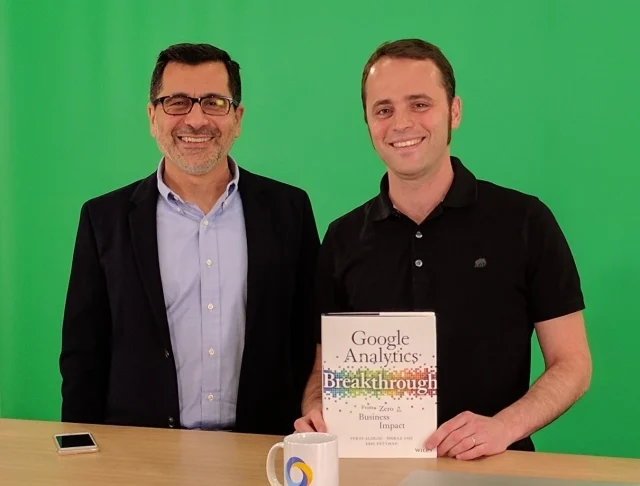
The intersection of technical measurement and business strategy has become the cornerstone of modern digital marketing, a theme central to the recent strategic dialogue between prominent industry figures Daniel Waisberg and Feras Alhlou. As organizations grapple with an increasingly fragmented digital landscape, the collaboration between these two experts highlights a shift from simple data collection to a holistic business process designed to drive measurable growth. Feras Alhlou, the Co-Founder and Principal Consultant at E-Nor and co-author of the seminal text "Google Analytics Breakthrough," joined Waisberg to outline a comprehensive framework for organizational optimization, emphasizing that data without a business context is a wasted resource.
Establishing a Unified Framework for Business Measurement
At the heart of the discussion is the E-Nor Optimization Framework, a multi-stage methodology designed to transform raw data into a competitive advantage. Alhlou posits that analytics should not be viewed as a siloed IT function but as a core business process. This process begins with a dual-layered audit that bridges the gap between technical execution and executive goals.
The first stage involves a technical audit to ensure data integrity. In an era where tracking pixels, tag managers, and cross-domain scripts are prone to failure, verifying the accuracy of the underlying data is paramount. However, Alhlou emphasizes that the technical audit is incomplete without a simultaneous business audit. This involves engaging stakeholders across various departments to identify Key Performance Indicators (KPIs) that truly impact the bottom line. By understanding what matters most to the business—whether it be customer acquisition costs, lifetime value, or conversion rates—analysts can tailor their implementation to serve specific strategic objectives.
Once the foundational data is secured, the framework moves into the reporting layer. The objective here is not merely to provide dashboards but to create a narrative that informs decision-makers. Following reporting is the analysis phase, where the focus shifts from "what happened" to "why it happened." Only after these steps are mastered can an organization move toward testing and personalization. According to industry benchmarks, companies that follow a structured approach to optimization are twice as likely to see a large increase in sales compared to those without a formal process.
Navigating the Complexity of the Modern Data Ecosystem
The digital marketing landscape has undergone a radical transformation over the last decade. Alhlou noted that in the early years of digital tracking, marketers operated in a relatively simple environment characterized by single-device journeys and limited marketing channels. Today, the reality is a sprawling ecosystem of mobile applications, social media platforms, web interfaces, and sophisticated backend systems.
This proliferation of touchpoints has created a "data everywhere" scenario that can lead to analysis paralysis. To combat this, Alhlou suggests that marketers must focus on context. Understanding the context around data involves looking beyond the numbers to see the human behavior they represent. This requires a shift from channel-centric reporting to customer-centric analysis.
Supporting data from recent market research indicates that the average consumer now interacts with a brand through six or more touchpoints before making a purchase. This complexity necessitates a move away from last-click attribution models toward more sophisticated multi-touch attribution (MTA) or media mix modeling (MMM). Alhlou’s insights suggest that the role of the modern analyst is to synthesize these disparate data streams into a singular, coherent view of the customer journey.
Constructing a Scalable Data Roadmap for Long-Term Growth
One of the most actionable takeaways from the discussion is the recommendation for organizations to develop a formal data roadmap. Rather than attempting to implement every available tool at once, Alhlou advises a staged approach that prioritizes "owned" data first. This begins with mastering web and mobile analytics—platforms where the company has the most control and the highest quality of first-party data.
As the organization’s data maturity increases, the roadmap should evolve to include:
- Augmentation with Social Data: Integrating basic social media metrics allows brands to understand brand sentiment and top-of-funnel engagement.
- Qualitative Integration: Moving beyond quantitative "clicks" to understand the "voice of the customer." This includes leveraging tools like Google Surveys to gain direct feedback from users on-site.
- Market Research: Utilizing digital survey tools to conduct broader market research, which Alhlou notes has become significantly more accessible and cost-effective than traditional methods.
The chronology of this roadmap is critical. By building a solid foundation of first-party web data before expanding into broader market research, companies ensure that their strategic decisions are backed by a reliable "truth" from their own digital properties.
The Role of Qualitative Data and Market Research
A significant portion of the dialogue focused on the democratization of market research through tools like Google Surveys. Historically, large-scale market research was the exclusive domain of major corporations with massive budgets and lengthy timelines. The introduction of digital-first survey platforms has shifted this dynamic, allowing even small to mid-sized enterprises to run targeted research campaigns with rapid turnaround times.
Alhlou pointed out that these tools are dual-purpose. They can be used on a company’s own properties to troubleshoot user experience (UX) issues or deployed across the wider web to gauge brand awareness and competitor positioning. This qualitative layer is essential for interpreting quantitative data. For example, if a high-traffic landing page has a high bounce rate, quantitative data shows the problem, but qualitative surveys reveal the cause—be it confusing navigation, lack of trust, or irrelevant content.
Broader Industry Implications and Professional Evolution
The meeting between Waisberg and Alhlou serves as a reflection of the broader professionalization of the analytics field. In the early 2010s, analytics was often a secondary task for web developers or digital marketers. Today, it is a specialized discipline that requires a blend of technical proficiency, statistical knowledge, and business acumen.
The implications for the industry are clear: organizations that fail to adopt a structured optimization framework risk being overwhelmed by the sheer volume of data they collect. Furthermore, as privacy regulations like GDPR and CCPA continue to evolve, the ability to effectively use first-party data and qualitative research becomes even more vital. Experts suggest that the future of the industry lies in "Privacy-Centric Measurement," where the focus shifts from tracking individuals to understanding aggregate patterns and direct user feedback.
Chronology of Analytics Evolution
The context of this discussion is rooted in a decade of collaboration between Waisberg and Alhlou. Having worked together for nearly ten years, their shared history mirrors the evolution of Google’s own analytics suite—from the transition to Universal Analytics to the more recent shifts toward integrated cloud solutions and machine learning-driven insights.
- Phase 1: Implementation (Circa 2010-2014): Focus was on "getting the tags on the page" and ensuring basic tracking was functional.
- Phase 2: Integration (2015-2018): The rise of the "data stack," where CRM, social, and web data began to be merged into single warehouses like BigQuery.
- Phase 3: Optimization (Present Day): The current era, defined by Alhlou’s framework, where the goal is to use data to drive personalization, testing, and direct business impact.
Conclusion: The Path Forward for Data-Driven Organizations
The dialogue between Daniel Waisberg and Feras Alhlou reinforces the idea that digital transformation is not a destination but a continuous process of refinement. By adopting a structured framework—starting with a rigorous audit and moving through a logical roadmap toward personalization—businesses can navigate the complexities of the modern digital landscape.
As Alhlou noted during the session at the Google Analytics studio, the goal is to "measure what matters most to the business." In an environment saturated with metrics, the ability to identify and act upon the most relevant data points remains the ultimate competitive differentiator. For CMOs and data leaders, the message is clear: invest in the process as much as the platform, and ensure that every byte of data serves a clear business objective.