

The digital marketing landscape has undergone a seismic shift as Instapage, a long-standing leader in landing page technology, announced the full-scale integration of generative artificial intelligence across its entire platform. This strategic evolution transforms the service from a specialized landing page builder into an end-to-end, AI-powered marketing ecosystem designed to address the increasing complexities of conversion rate optimization (CRO) and lead management. Since its inception in 2012, Instapage has maintained a significant market share by offering high-fidelity design tools, but this latest update signals a move toward total automation in the creative and analytical workflows of modern marketing teams.
The Evolution of a MarTech Pioneer: From Builder to Ecosystem
To understand the significance of Instapage’s recent AI rollout, one must examine the company’s decade-long trajectory. Founded in 2012, Instapage entered a market where creating high-converting landing pages required either deep technical knowledge of HTML/CSS or the use of rigid, template-based systems that offered little in the way of brand consistency. By introducing a "pixel-perfect" drag-and-drop builder, the company empowered non-technical marketers to create sophisticated web experiences.
By 2018, the platform had expanded its scope, recognizing that a landing page alone was insufficient for modern business needs. It integrated comprehensive CRO tools, including heatmaps, A/B testing, and dynamic text replacement for personalization. This expansion allowed businesses to scale their advertising efforts without a proportional increase in headcount—a value proposition that has become even more critical in the current economic climate. The transition to an AI-first platform represents the third major era for the company, moving from manual creation to assisted optimization and, finally, to generative execution.
Breaking the Creative Logjam: AI Page Generation
The centerpiece of the new release is the AI Page Generation tool, which aims to solve "blank page syndrome"—the primary bottleneck in campaign deployment. According to internal data and industry benchmarks, the average marketing team spends between 10 and 25 hours developing a single high-fidelity landing page from scratch when factoring in copywriting, wireframing, and design iterations.
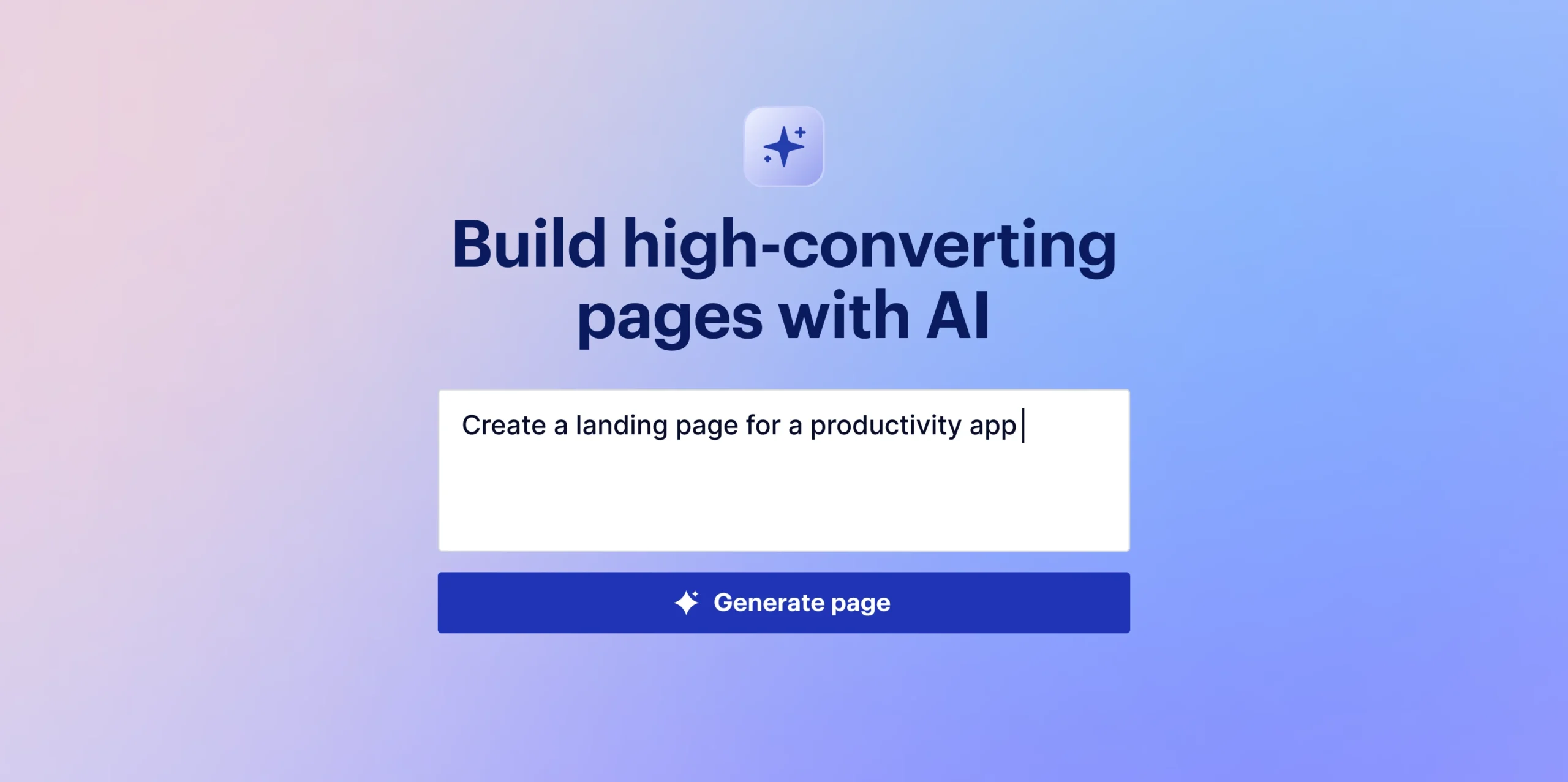
Instapage’s new system allows users to input a descriptive prompt detailing their campaign goals, target audience, and desired tone. The AI then generates a complete, conversion-ready page in seconds. Unlike standalone generative tools that often produce static or difficult-to-edit code, Instapage’s AI outputs are fully integrated into its proprietary visual builder.
This hybrid approach addresses a significant pain point in the generative AI market: the "token burn" and efficiency gap. In many current AI platforms, making a minor layout change requires a new prompt and a total regeneration of the asset, which consumes computational resources (tokens) and time. Instapage’s model uses AI for the initial "heavy lifting" of structural design and copywriting while allowing human designers to use the drag-and-drop interface for fine-tuning. This ensures that the final product adheres to brand guidelines without the frustrating back-and-forth often associated with prompt-engineering-only tools.
Bridging the Gap Between Conversion and Follow-Up
The second pillar of this technological overhaul is the AI-powered email generation and automation suite. Historically, marketers have faced a "fragmentation tax"—the loss of efficiency and data integrity caused by switching between a landing page builder, a separate email service provider (ESP), and a third-party AI writing assistant.
Industry research indicates that companies using more than ten different tools in their marketing stack experience a 20% drop in productivity due to "context switching." Instapage’s new suite centralizes these functions. When a lead is captured on an Instapage-built site, the platform’s AI can now automatically generate a tailored follow-up email sequence.
The system analyzes the context of the lead’s acquisition—such as which specific page they converted on and what their stated interests were—to craft messaging that feels personal rather than automated. By selecting specific goals, audiences, and tones within the platform, teams can maintain a continuous narrative from the first ad click to the final sales follow-up, all within a single interface.
Scaling Operations in a Leaner Economic Environment
The timing of this rollout is particularly relevant given the broader economic shifts affecting the technology and marketing sectors. As of late 2024 and heading into 2026, marketing budgets have faced increased scrutiny, and teams are frequently tasked with achieving higher conversion targets with fewer personnel.

"In 2026, the expectation is that a lean team must perform like a full-service agency," noted a market analyst familiar with the MarTech sector. "The only way to bridge that gap is through the intelligent application of AI that doesn’t just generate content, but organizes and optimizes it."
Instapage has addressed this need through "AI Collections," a feature designed to help teams manage and scale their assets. This system uses machine learning to categorize and surface the most effective design elements and copy blocks across various campaigns. By identifying patterns in what drives conversions, the AI helps marketers replicate success across hundreds of pages without manual auditing.
Data and Performance Metrics
The shift toward AI-driven marketing is backed by compelling data regarding consumer behavior. Recent studies show that personalized marketing experiences can lead to a 15% to 20% increase in total marketing spend efficiency. Furthermore, pages that are optimized using AI experimentation tools typically see a 30% higher conversion rate than those that rely on static, human-led A/B testing schedules.
Instapage’s platform now embeds these experimentation tools directly into the workflow. The AI doesn’t just build the page; it suggests variations for testing based on real-time traffic data. This "closed-loop" system means that the AI learns from the performance of the pages it generates, theoretically becoming more effective at predicting high-converting layouts over time.
Official Response and Market Implications
While Instapage executives emphasize that the platform is designed to empower rather than replace human marketers, the implications for the industry are profound. The company has stated that its goal is to eliminate the "manual handoffs" and "gaps" that traditionally slow down marketing departments.
In a statement regarding the release, the company highlighted that while many competitors "bolt on" AI features as an afterthought—such as a simple subject line generator or a basic copy bot—Instapage has re-engineered its workflow so that AI is foundational.
Industry analysts suggest that this move will force other players in the CMS (Content Management System) and CRM (Customer Relationship Management) spaces to accelerate their own AI integrations. The "all-in-one" trend is gaining momentum as businesses seek to reduce their "SaaS sprawl" and consolidate their software expenditures. By offering page generation, email automation, and CRO analytics in a single AI-enhanced package, Instapage is positioning itself as a primary operating system for growth marketing.
Implementation and Availability
Instapage has announced that these AI features are being rolled out through a phased approach. Select features, including the advanced AI Page Generator and AI Collections, are currently in beta to ensure stability and performance under high-traffic conditions. The company is offering a 14-day free trial for new users to experience the end-to-end workflow, while existing enterprise customers are being transitioned to the new capabilities in waves.
For the broader marketing community, this release serves as a case study in how legacy SaaS companies are pivoting to remain relevant in the age of generative AI. By moving beyond the "builder" label and embracing the role of an "AI-powered marketing platform," Instapage is betting that the future of the web lies not in manual construction, but in intelligent, automated orchestration.
Conclusion: The Future of Automated Growth
The integration of AI into Instapage’s suite represents a significant milestone in the democratization of high-end marketing technology. What once required a dedicated team of developers, copywriters, and data analysts can now be initiated by a single user with a clear strategic vision.
As the platform continues to refine its AI models, the focus will likely shift toward even deeper predictive analytics—telling marketers not just how to build a page, but predicting exactly how a specific demographic will react to it before a single dollar is spent on advertising. In an era where speed and relevance are the primary currencies of digital commerce, Instapage’s evolution offers a glimpse into a future where the friction between an idea and a live, high-performing campaign is virtually non-existent.







