The strategic establishment of social media goals has emerged as a critical imperative for businesses navigating the complex and rapidly evolving digital landscape of 2026. These defined outcomes provide a foundational direction for social media efforts, transforming what could otherwise be a diffuse expenditure of resources into a measurable driver of business success. Far beyond mere activity generation, well-articulated goals ensure that social media initiatives contribute tangibly to overarching organizational objectives, fostering accountability and enabling precise performance measurement.
![How to set social media goals in 2026 [10 examples]](https://blog.hootsuite.com/wp-content/uploads/2026/05/How-to-set-social-media-goals-in-2026-.png)
The Evolving Significance of Strategic Social Media Goal Setting
Social media’s journey from a nascent communication tool to an indispensable business channel has been swift and profound. In 2026, with an estimated 5.75 billion users worldwide, according to Statista, these platforms represent an unprecedented global marketplace and communication nexus. Early forays into social media marketing often prioritized "vanity metrics" such as follower counts or likes, offering little insight into tangible return on investment (ROI). However, as marketing budgets have increasingly shifted towards digital channels, the demand for demonstrable impact has intensified. Businesses today recognize that social media engagement must translate into quantifiable results, whether that means heightened brand recognition, increased customer loyalty, or direct revenue generation.
![How to set social media goals in 2026 [10 examples]](https://blog.hootsuite.com/wp-content/uploads/2026/05/How-to-set-social-media-goals-in-2026--556x556.png)
This shift underscores the critical relationship between goals, objectives, and tactics. Goals define the desired ultimate outcomes, objectives specify the measurable targets contributing to those goals, and tactics outline the actionable steps to achieve those objectives. When these elements are meticulously aligned, an organization’s social media strategy gains clarity, purpose, and a clear pathway to success. For large enterprises, this alignment is particularly crucial, facilitating budget allocation, harmonizing efforts across diverse departments like marketing, communications, and customer care, and providing a coherent narrative for reporting performance to executive leadership.
A Systematic Framework for Goal Establishment
![How to set social media goals in 2026 [10 examples]](https://cdn.airops.com/rails/active_storage/blobs/proxy/eyJfcmFpbHMiOnsiZGF0YSI6NTk3MDk2ODUwLCJwdXIiOiJibG9iX2lkIn19--df957ac18b4040013682d3865537f1e3b35f3538/image.png)
The process of setting effective social media goals is not arbitrary but rather a disciplined exercise, transferable to numerous strategic planning contexts within a career. A systematic five-step framework guides organizations through this process, ensuring that goals are not only ambitious but also achievable and impactful.
Step 1: Alignment with Overarching Business Objectives
The foundational step in setting social media goals involves a rigorous alignment with an organization’s broader business objectives. Before considering social media-specific metrics, strategists must first identify the core challenges or primary growth opportunities facing the business in the upcoming fiscal cycle. This could range from enhancing market recognition in a new geographic territory, increasing web conversions for e-commerce platforms, or differentiating the brand from fierce competitors. For instance, if a business struggles with brand recall, social media goals would naturally pivot towards initiatives that demonstrably build brand awareness and reputation. This upstream alignment ensures that social media efforts are not isolated but serve as integral components of the company’s strategic vision.
![How to set social media goals in 2026 [10 examples]](https://cdn.airops.com/rails/active_storage/blobs/proxy/eyJfcmFpbHMiOnsiZGF0YSI6NTk3MDk2ODUxLCJwdXIiOiJibG9iX2lkIn19--cef5bea4fd4b944ef1bfed56255883bfe79d2164/image.png)
Step 2: The SMART Framework for Goal Definition
Once the alignment with business objectives is established, the proposed social media goals must be rigorously tested against the SMART framework. This widely accepted methodology ensures that goals are:
- Specific: Clearly defined, leaving no room for ambiguity. Instead of "increase engagement," a specific goal might be "increase engagement rate on Instagram."
- Measurable: Quantifiable, allowing for objective tracking of progress. This requires identifying precise metrics and target figures.
- Achievable: Realistic and attainable given the available resources, time, and market conditions.
- Relevant: Directly contributing to the business objectives identified in Step 1, ensuring the effort is worthwhile.
- Time-bound: Assigned a clear deadline, creating a sense of urgency and a definitive point for evaluation.
For example, a SMART social media goal might be: "Increase Instagram reach by 30% in Q3 2026 to enhance brand visibility in the APAC region." This statement clearly articulates the metric, target, and deadline, ensuring an attainable and trackable objective.
![How to set social media goals in 2026 [10 examples]](https://cdn.airops.com/rails/active_storage/blobs/proxy/eyJfcmFpbHMiOnsiZGF0YSI6MjgyNDgyMjcxLCJwdXIiOiJibG9iX2lkIn19--af72520ce7dbcb7eff051e22ee55eff080794825/image.png)
Step 3: Identification of Key Metrics and KPIs
With SMART goals established, the next phase involves pinpointing the specific key performance indicators (KPIs) that will signal progress. The choice of metrics is directly contingent on the nature of the goal. For a goal centered on driving website traffic and conversions, KPIs would include referral traffic from social channels, click-through rates (CTR) on posts, and ultimately, conversion rates from social media users landing on the website. Conversely, a goal focused on brand awareness would track metrics such as post reach, impressions, and audience growth rate. Robust analytics platforms, often integrated into social media management tools, are essential for collecting and interpreting this data.
Step 4: Strategic Tactical Planning
Knowing where to go and how to measure arrival, the team must then devise the tactics—the specific actions and content strategies—that will facilitate goal achievement. This involves brainstorming and planning a diverse range of activities, including content creation (e.g., video series, infographics, interactive polls), audience targeting adjustments, paid social media campaigns, influencer collaborations, community management protocols, and scheduling optimization. A detailed content calendar, mapping out these tactics against specific objectives and deadlines, becomes an invaluable organizational tool.
![How to set social media goals in 2026 [10 examples]](https://cdn.airops.com/rails/active_storage/blobs/proxy/eyJfcmFpbHMiOnsiZGF0YSI6MjgyNDgyNDQ1LCJwdXIiOiJibG9iX2lkIn19--bc1a00dede5d281d99a24b973e204dec22b387d4/image.png)
Step 5: Continuous Execution, Measurement, and Optimization
The final step is an iterative cycle of execution, continuous measurement, and strategic optimization. Regular check-ins on key metrics (e.g., weekly) allow for early identification of deviations from planned progress. Monthly reviews of tactic performance enable fine-tuning of content strategies or campaign parameters. Quarterly evaluations provide an opportunity to reassess the goals themselves, adjusting them only if fundamental business objectives have shifted or if initial targets prove unrealistic despite sustained tactical efforts. Crucially, reporting to stakeholders must always connect social media performance back to core business objectives, articulating the impact in terms of revenue, pipeline growth, or brand health, rather than isolated social metrics. This structured reporting, often facilitated by Objectives and Key Results (OKR) frameworks, reinforces the strategic value of social media.
Prevailing Strategic Priorities: 10 Common Social Media Goals
![How to set social media goals in 2026 [10 examples]](https://blog.hootsuite.com/wp-content/uploads/2026/09/instagram-engagement-2-620x344.webp)
While bespoke goals are tailored to specific business needs, several strategic priorities commonly emerge for organizations leveraging social media. These objectives often overlap, and a single social media campaign can contribute to multiple goals simultaneously.
- Increase Brand Awareness: Essential for new market entrants or brands seeking broader recognition. Metrics include post reach, impressions, audience growth rate, and social share of voice. Tools providing competitive analysis and aggregated reach data are vital here.
- Manage Brand Reputation: Building and maintaining trust is paramount. This involves active social listening to track brand mentions, sentiment analysis, and managing online reviews. Proactive engagement with feedback, both positive and negative, is key.
- Drive Website Traffic: Social platforms act as powerful conduits to external digital assets. KPIs include referral traffic, click-through rates (CTR) on links, and specific email sign-ups originating from social campaigns. The effective use of UTM parameters for tracking is critical.
- Improve Community Engagement: Fostering meaningful interactions with the audience, beyond passive consumption. Metrics such as engagement rate (likes, comments, shares, saves), direct messages, and user-generated content demonstrate active community participation and content resonance.
- Boost Conversions or Sales: Directly translating social presence into revenue. This involves tracking conversion rates from social channels, direct sales through social commerce features (e.g., TikTok Shop, Instagram Shopping), and lead-to-customer conversion ratios. Social commerce is projected to surpass $100 billion in 2026, highlighting its growing significance.
- Generate Leads: Filling the sales funnel with qualified prospects. This typically involves collecting user information through lead generation forms, gated content downloads, or event registrations. The quality of leads is often prioritized over sheer volume.
- Build Thought Leadership: Establishing an organization and its executives as authoritative voices within an industry. Metrics include share of voice in industry conversations, earned media mentions, executive post engagement, and citations in external publications. The 2025 Edelman-LinkedIn B2B Thought Leadership Impact Report noted that 64% of decision-makers trust thought leadership content more than traditional marketing materials.
- Promote Events or Product Launches: Generating buzz and attendance/pre-orders for specific initiatives. This involves tracking event registrations, hashtag mentions, engagement with promotional content, and the success of countdown campaigns.
- Deliver Customer Service: Utilizing social channels as a direct line for customer support. Key metrics include response time, resolution rate, and customer satisfaction (CSAT) scores derived from social interactions. Integrated customer care apps and AI-powered chatbots are increasingly deployed to optimize this function.
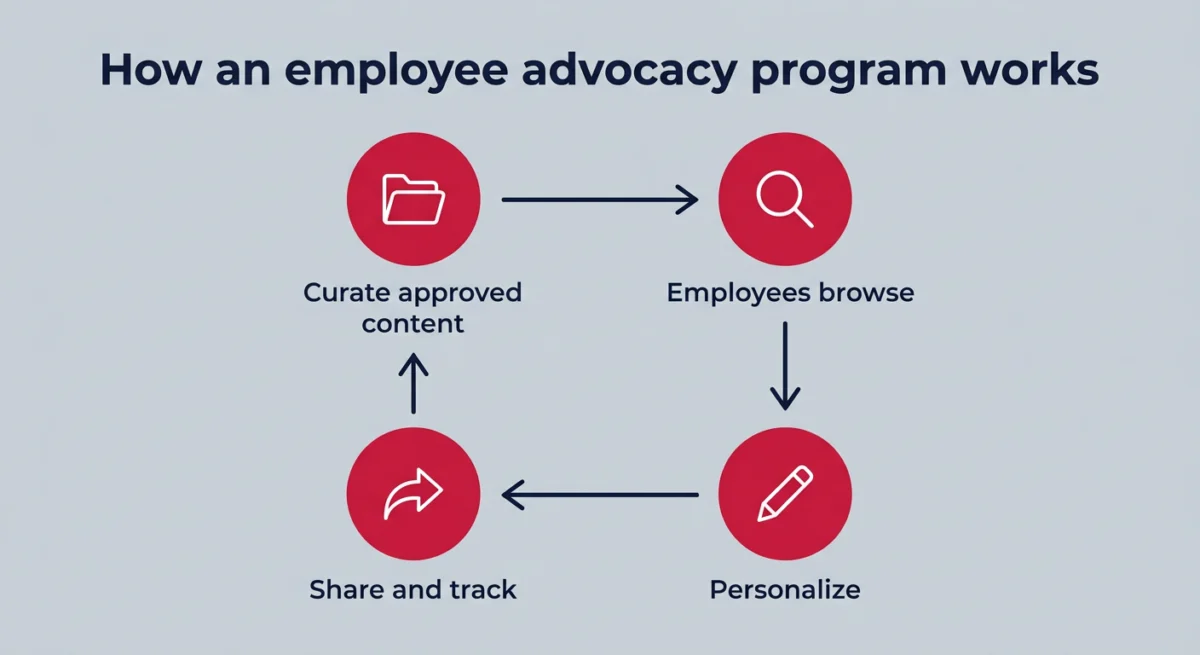
- Attract Candidates for Open Positions: Leveraging social media for recruitment and employer branding. Metrics such as leads per platform, source of hire (identifying social as the origin), and applicant quality help assess the effectiveness of social recruiting efforts. Employer advocacy programs, where employees share company culture content, significantly amplify reach.
Common Pitfalls in Social Media Goal Setting
![How to set social media goals in 2026 [10 examples]](https://blog.hootsuite.com/wp-content/uploads/2026/09/Lumen-04-620x418.png)
Even with a structured approach, organizations frequently encounter obstacles in setting and pursuing social media goals. A primary misstep is the pursuit of too many goals simultaneously, diluting focus and overstretching resources. Another common error is measuring irrelevant metrics, leading to a misinterpretation of true impact. Treating goal setting as an annual, static exercise, rather than a dynamic, iterative process, also often leads to misalignment with evolving market conditions. Furthermore, neglecting to allocate sufficient resources to the chosen goals, or failing to communicate them clearly across relevant teams, can sabotage even the most well-intentioned strategies. Finally, an overemphasis on vanity metrics without linking them to business outcomes remains a persistent challenge, obscuring the actual value proposition of social media efforts.
Platform-Specific Goal Tailoring
![How to set social media goals in 2026 [10 examples]](https://blog.hootsuite.com/wp-content/uploads/2026/09/Nest-01-3-620x401.png)
Given the distinct characteristics and primary user bases of various social media platforms, a nuanced approach to goal setting is essential. Generic KPIs applied indiscriminately across all channels often yield suboptimal results. For instance:
- LinkedIn: Primarily a professional networking platform, it excels in B2B lead generation, thought leadership, and recruitment. Its audience is receptive to industry insights, career opportunities, and professional development content.
- Instagram & TikTok: Visually driven platforms, ideal for brand awareness, community engagement, and social commerce, particularly for consumer brands. Short-form video and high-quality imagery thrive here.
- Facebook: Versatile, supporting a broad spectrum of goals from community building and customer service to targeted advertising for conversions. Its extensive demographic data allows for highly precise audience segmentation.
- X (formerly Twitter): A real-time communication platform, it is highly effective for reputation management, customer service, and driving conversation around events or breaking news. Its brevity fosters rapid information dissemination.
- Pinterest: A visual discovery engine, it is particularly strong for driving website traffic, product sales (social commerce), and generating leads for visually appealing products or services.
Achieving Cross-Team Alignment and Robust Measurement
![How to set social media goals in 2026 [10 examples]](https://blog.hootsuite.com/wp-content/uploads/2023/01/HS_ProductImage-Analytics-1.png)
The cross-functional nature of social media necessitates strong organizational alignment. Social initiatives frequently touch marketing, communications, customer service, human resources, and sales. To prevent silos and conflicting priorities, social media goals must be integrated into a unified strategic plan. This is achieved through shared OKRs (Objectives and Key Results) that tie social performance to broader business outcomes, establishing a single definition of success for all stakeholders. Regular cross-functional meetings foster collaborative planning and transparent progress updates. Centralized dashboards, providing a unified view of key social media KPIs, ensure that all teams are working from the same data set. Finally, clearly defined workflows and approval processes streamline content creation and response management, scaling operations efficiently.
Tracking and measuring social media goals effectively hinges on a robust measurement system. This begins with establishing a fixed measurement cadence: weekly check-ins for immediate tactical adjustments, monthly reviews for assessing broader campaign performance, and quarterly evaluations for strategic re-calibration of goals themselves. Dashboards should be meticulously constructed around the specific KPIs of each goal, avoiding data overload by focusing on the two or three most critical metrics. When reporting results to executive stakeholders, the narrative must consistently lead with the business objective, demonstrating how social media directly contributed to revenue growth, market expansion, or customer retention, rather than merely presenting raw social media statistics. In instances where targets are not being met, the strategy dictates adjusting tactics first—altering content formats, adjusting posting schedules, or reallocating paid media budgets—before contemplating a revision of the goal itself. This disciplined approach ensures that social media strategies remain agile, accountable, and ultimately, a powerful engine for business success in 2026 and beyond.