admin
admin
The digital advertising landscape underwent a fundamental transformation in late 2025 with the global completion of Meta’s Andromeda update, a systemic overhaul of how advertisements are ranked, filtered, and delivered across its ecosystem. While much of the initial industry analysis focused on the immediate challenges for media buyers and account managers, the implications for Conversion Rate Optimization (CRO) specialists are arguably more profound. This update signifies a shift away from manual audience targeting toward an AI-driven model where the creative asset itself functions as the primary targeting mechanism, fundamentally altering the nature of the traffic arriving at brand landing pages.

The Genesis and Mechanics of Andromeda
The Andromeda update represents the culmination of Meta’s multi-year pivot toward automated, signal-based advertising. Named after the nearest major galaxy to the Milky Way, the update implies a vast, interconnected network of data points that allow Meta’s algorithms to predict user behavior with unprecedented accuracy. This transition was largely catalyzed by the industry-wide disruptions following Apple’s iOS 14.4 update in 2021, which significantly hampered traditional tracking and forced Meta to develop more sophisticated internal modeling.
Andromeda is not a singular algorithm but a tiered filtering system designed to manage millions of potential ad impressions in real-time. The system operates through three distinct layers: retrieval, ranking, and the final auction. In the retrieval phase, the system identifies a broad pool of ads that could potentially be shown to a user. During ranking, the AI assigns a "predicted value" to each ad based on historical performance and real-time engagement signals. Finally, only the ads with the highest predicted economic value enter the auction.

The core metric governing this system is a calculated balance between Meta’s revenue and the advertiser’s success. Specifically, the algorithm optimizes for the "expected economic value," which functions as a product of Meta’s potential ad revenue and the probability of the advertiser achieving their stated goal, such as a purchase or lead generation. This shift means that ads lacking clear "signals"—such as generic imagery or vague copy—are often filtered out before they even reach the auction stage, resulting in ads that receive zero spend despite being active.
Chronology of the Automation Shift
The path to Andromeda was paved by several key milestones in Meta’s technological roadmap. In 2022, the company introduced Advantage+, a suite of automation tools designed to simplify campaign management by removing manual levers for audience selection, placement, and budget allocation. Throughout 2023 and 2024, Meta progressively integrated AI into its creative tools, allowing for automatic image expansion and text variations.

By early 2025, the Andromeda framework began its phased rollout, focusing on enhancing the "signal density" of ad creatives. The deployment was finalized in October 2025, marking the point at which the algorithm officially prioritized "signal-rich" content—video watch time, engagement patterns, and specific behavioral cues—over traditional interest-based or demographic targeting. For CRO specialists, this timeline marks the end of "neutral traffic," as the users being driven to websites are now highly pre-qualified by the ad’s content before the click even occurs.
Data-Driven Insights: Analyzing $14.5 Million in Ad Spend
To understand the practical impact of these changes, market analysts have scrutinized large-scale data sets from the late 2025 period. An analysis conducted by the Common Thread Collective, which examined $14.5 million in spend across 147 brands and over 53,000 unique ads, revealed critical patterns in how Andromeda handles different creative formats and bidding strategies.
The study found that while the "Lowest Cost" bidding strategy remains the dominant choice for most advertisers, alternative strategies such as "Cost Cap" and "Bid Cap" showed a distinct correlation with higher Average Order Value (AOV). Specifically, ads using Cost Caps saw AOVs that were significantly higher than those using Lowest Cost, suggesting that these bidding constraints force the algorithm to seek out higher-value customers who are more likely to make larger purchases.
Furthermore, the data highlighted a widening performance gap between static imagery and video content. As spend scaled, static ads frequently hit a ceiling of diminishing returns. In contrast, video assets were able to absorb significantly more spend while maintaining efficiency. This is attributed to the "signal density" of video; the algorithm can analyze exactly when a user stops scrolling, how long they watch, and which specific hooks trigger engagement, providing Andromeda with the granular data it needs to refine its targeting.

Creative as the New Targeting Mechanism
In the Andromeda era, the distinction between a creative strategist and a media buyer has blurred. Because Meta now uses the content of the ad—the pixels, the transcript of the video, and the sentiment of the copy—to find the audience, the creative itself serves as the targeting filter.
Abigail Laurel Morton, a Creative Manager at the London-based agency Aperture, notes that what often looks like creative failure is actually the algorithm selecting for clarity of intent. Morton argues that Meta is not optimizing for aesthetics but for "clarity of signal." When an ad is rooted in specific customer psychology or "Jobs-to-be-Done" (JTBD) frameworks, it encourages self-selection. A user who engages with a video detailing a specific pain point is signaling to Meta that they belong to a certain audience segment, allowing the system to find more users with identical profiles.
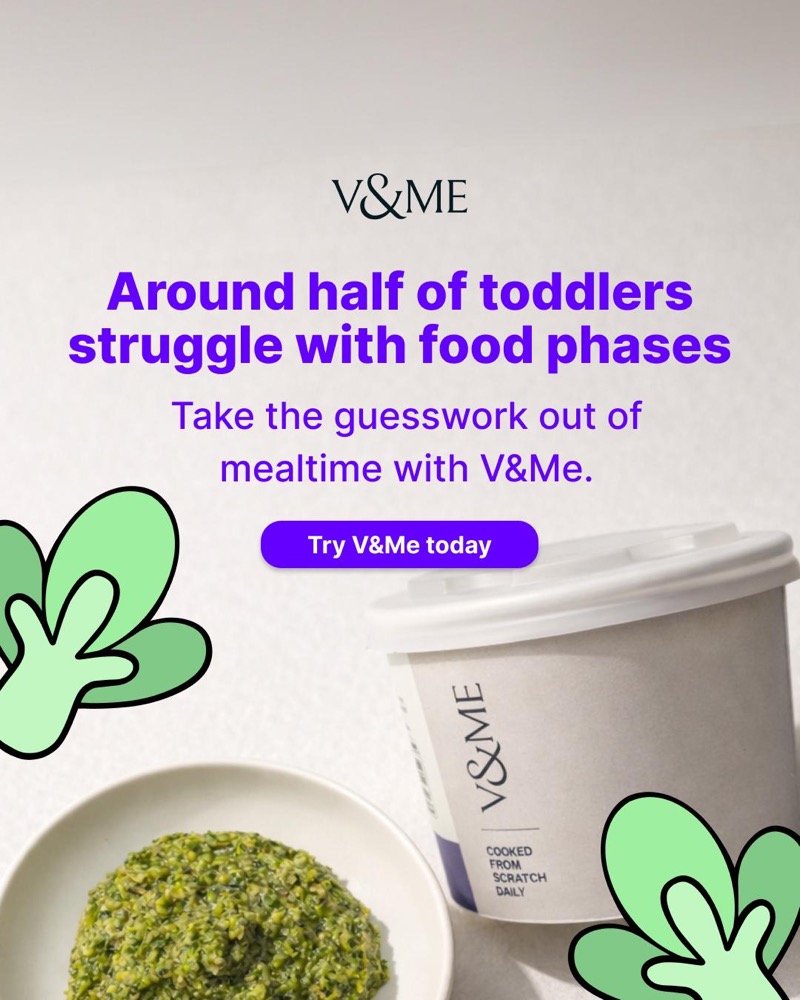
This has significant implications for niche products. For example, a brand selling menopause supplements no longer needs to manually exclude men or younger women from their targeting. Instead, a creative that speaks directly to the symptoms of menopause will naturally be ignored by those for whom it is irrelevant. The "waste" in broad targeting is minimized because the algorithm learns through non-engagement to stop showing the ad to irrelevant segments.
The Impact on Conversion Rate Optimization
For CRO specialists, the Andromeda update necessitates a complete rethink of how A/B tests are designed and interpreted. Traditionally, CRO assumes that traffic is a relatively stable variable and that changes to the landing page are the primary driver of conversion fluctuations. Under Andromeda, this assumption is no longer valid.
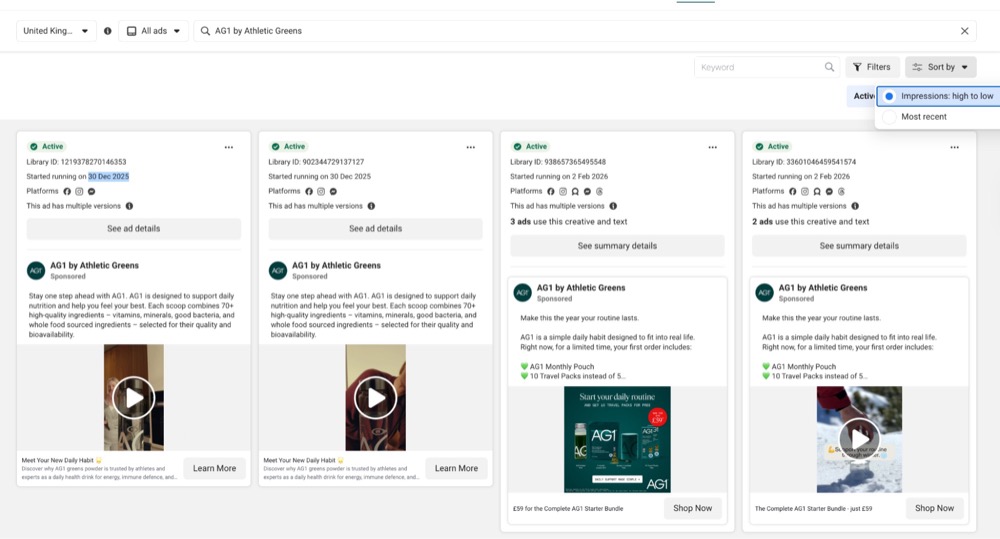
Because different creatives now attract fundamentally different qualities of users, a landing page test can be "poisoned" by the traffic source. If "Ad A" is a high-energy, clickbait-style video, it may drive high volumes of low-intent traffic. If "Ad B" is a slow-paced, educational testimonial, it may drive low volumes of high-intent traffic. If a CRO specialist runs an A/B test on a landing page using traffic from both ads, the results will be skewed by the varying intent levels of the users, rather than the merits of the page design itself.
To counter this, optimizers must now treat the creative and the landing page as a single, unified loop. Analysis must be segmented by creative type to ensure that a "winning" page variant is actually better at converting, rather than simply being the recipient of higher-quality traffic from a specific ad.

Broader Implications and Strategic Recommendations
The shift toward Andromeda-style automation suggests a future where digital marketing is less about technical platform manipulation and more about deep consumer insight. Meta’s own internal data suggests that these AI-driven improvements can lead to an average performance increase of approximately 8% for advertisers who embrace the system’s automated features.
For professionals navigating this new environment, several strategic adjustments are recommended:

- Prioritize Creative Diversity: Rather than making incremental changes to a single winning ad (such as changing a button color), brands must test radically different concepts, hooks, and formats. Meta’s system views minor iterations as the same "signal," meaning they do not help the algorithm find new audience pockets.
- Align Destination with Intent: The landing page experience must be a direct continuation of the ad’s narrative. High-intent "bottom of funnel" ads should lead to streamlined, conversion-focused pages, while educational, "top of funnel" content should lead to informative, long-form advertorials.
- Adopt Robust Naming Conventions: To accurately analyze CRO data, ads must be named systematically. Including the creative style (e.g., UGC, Static, Animation) and the intended hook in the ad name allows CRO tools to filter performance data and identify which traffic segments are responding to which page elements.
- Accept the "Black Box" Nature of Spend: Specialists must become comfortable with ads that receive zero spend. This is not necessarily a failure of the creative but a signal from Meta that the ad is not economically viable within the current auction environment.
The Andromeda update represents a maturation of the digital advertising space. By delegating the technical aspects of targeting to AI, Meta has forced brands to return to the fundamentals of marketing: understanding the customer, crafting compelling messages, and ensuring a seamless journey from the first impression to the final purchase. For the CRO specialist, the task is no longer just to optimize a page, but to optimize the entire relationship between the message and the destination.