
 rifanmuazin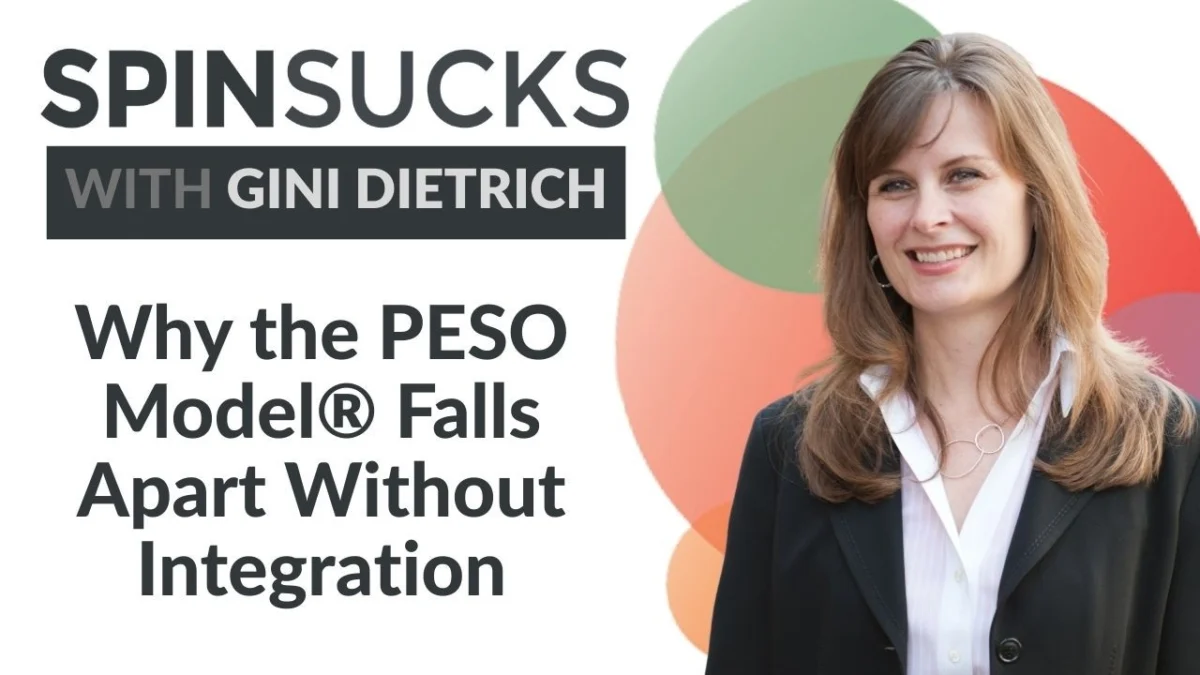
The landscape of modern communications has shifted from a focus on isolated tactical outputs to the necessity of an integrated "operating system" designed to survive a fragmented media environment and the rise of artificial intelligence. For over a decade, the PESO Model—comprising Paid, Earned, Shared, and Owned media—has served as the industry standard for mapping these efforts. However, communications experts now warn that many organizations are failing to achieve meaningful return on investment because they treat these four pillars as separate activities rather than a unified, compounding system. According to the latest industry standards and the updated PESO Model Certification, the transition from "doing PESO" to "running a PESO operating system" is the primary differentiator between organizations that build long-term authority and those that merely generate temporary noise.
The Evolution of Integrated Communications: A Chronology
The PESO Model was first introduced in 2014 by Gini Dietrich in her book Spin Sucks. At its inception, the model provided a much-needed framework for a PR industry struggling to adapt to the digital age. In the mid-2010s, the model functioned largely as a checklist of tactics: a blog post (Owned), a guest article (Earned), a Facebook update (Shared), and a boosted post (Paid).
By 2020, the rise of algorithmic social media and the decline of traditional newsrooms forced a refinement of the model. The focus shifted toward "Owned" media as the primary driver of authority. As search engines became more sophisticated, the intersection of Earned and Owned media became the "visibility engine" of the framework.
In 2024 and 2025, the framework underwent its most significant transformation to date. The emergence of Large Language Models (LLMs) and AI-driven search engines (such as Perplexity and Google’s Search Generative Experience) changed how information is synthesized. The PESO Model was subsequently rebuilt as an operating system (OS) to ensure that brand messaging remains consistent enough for AI to categorize while remaining engaging enough for human audiences. The current iteration emphasizes the "compounding" effect of media types, where the output of one pillar serves as the direct input for the next.
The Hidden Costs of Tactical Silos
When communications teams operate in silos, the result is often a "leaky bucket" of resources. Industry analysis suggests that organizations running disconnected PESO tactics face three primary categories of waste: duplication, confusion, and inefficient spending.
Resource Duplication
In a siloed environment, the social media team, the content team, and the media relations team often develop independent messaging for the same campaign. This leads to the redundant creation of content briefs, slide decks, and creative assets. Data from marketing efficiency studies indicates that integrated teams can reduce content production time by as much as 20-30% by repurposing "Owned" media assets across "Shared" and "Earned" channels.
Narrative Confusion
Inconsistency is a significant barrier to trust. When the website (Owned) emphasizes one value proposition while a media placement (Earned) highlights a different angle, and social media (Shared) uses a third tone, the brand’s authority is diluted. For AI crawlers, this inconsistency makes it difficult to establish a "knowledge graph" for the brand, leading to lower visibility in AI-generated answers.
Wasted Paid Spend
Without an integrated system, Paid media is frequently used as a "panic button" to generate traffic for underperforming content. In a PESO operating system, Paid media is reserved as an accelerant for content that has already proven successful in the Earned and Shared categories. Using Paid media as "duct tape" for a broken strategy is cited as one of the leading causes of budget depletion in mid-to-large-sized marketing departments.
The Mechanics of the PESO Operating System
To move beyond tactics, organizations must understand the mechanical intersections where media types feed each other. The PESO operating system is built on the premise that these four pillars are interdependent.
- Owned Media as the Destination: Owned media (blogs, white papers, newsletters) is the foundation. It provides the proof-backed authority that the organization controls. In an integrated OS, Owned media is not just "content"; it is the definitive source of truth that all other pillars point back to.
- Earned Media as Validation: Earned media (media relations, influencer mentions) provides the third-party credibility that cannot be purchased. Within the OS, a successful earned placement is not a one-time win; it is captured and repurposed into Owned and Shared channels to reinforce the brand’s narrative.
- Shared Media as Distribution and Feedback: Shared media (social platforms, community forums) acts as the delivery mechanism for the narrative. It breaks down large pieces of Owned media into portable formats. Crucially, Shared media provides a feedback loop, where audience questions and objections inform the next round of Owned media creation.
- Paid Media as the Accelerant: Paid media (sponsored content, social ads, SEM) is the final step. It is used to scale the reach of proven "proof points." By the time budget is allocated to Paid media, the message has already been validated by Earned credibility and Shared engagement.
Implementation: Operating Rhythms and Integration Maps
Transitioning to a PESO operating system requires structural changes to how teams work. Two primary tools have emerged as essential for this transition: the Operating Rhythm and the Integration Map.
The Operating Rhythm
An operating rhythm is a consistent cadence of decision-making that prevents reactive work. Rather than responding to ad-hoc requests for "viral posts," integrated teams follow a weekly cycle that asks:
- What is the primary narrative for this cycle?
- What Owned asset is the anchor for this narrative?
- How are we distributing this via Shared and Paid?
- What Earned proof do we have to support this?
This rhythm ensures that even in high-pressure environments, the "connective tissue" between tactics remains intact.
The Integration Map
The Integration Map is a one-page strategic document that replaces traditional, sprawling content calendars. It maps out how a single piece of "Owned" media will be broken down into "Shared" snippets, used as a hook for "Earned" pitches, and scaled via "Paid" amplification. This map allows leadership to see the entire system at a glance, shifting the conversation from "what did we do today?" to "what asset are we building?"
The "Stop List" and Resource Management
A critical component of the PESO OS is the "Stop List." Integration is not an additive process; it is a subtractive one. Organizations must identify and eliminate "disconnected work"—one-off posts, reactive assets, and random boosts that do not reinforce the central system. By stopping disconnected activities, teams free up the capacity to deepen their core narratives. This strategic focus is essential for building "momentum" rather than just "activity."
Official Responses and Industry Implications
Communication leaders have noted that the shift toward an integrated PESO model is no longer optional. "Integration is the difference between activity and momentum," according to recent briefings on the PESO Model Certification updates. Industry veterans argue that the "group project" mentality—where different departments handle different pillars without a shared map—is the primary reason for campaign failure.
The broader implication for the PR and marketing industry is a move toward more technical and data-driven roles. Professionals are now expected to understand the "mechanical" way media types interact. Furthermore, the rise of AI discovery means that consistency across the PESO pillars is now a technical requirement for search engine optimization and AI visibility.
Conclusion: Building Assets, Not Busywork
The transition to a PESO Model operating system represents a professionalization of the communications function. By moving away from a list of tactics and toward a compounding system, organizations can ensure that every dollar spent and every hour worked contributes to a larger, more durable asset.
As the digital landscape continues to evolve with AI and shifting consumer trust, the ability to run a synchronized communications OS will likely become the hallmark of successful brands. Organizations that fail to integrate will continue to face high costs and diminishing returns, while those that adopt the PESO OS will build the momentum necessary to lead their respective markets. The message from industry experts is clear: you can have a system, or you can have silos. Only one of them compounds.










