rifanmuazin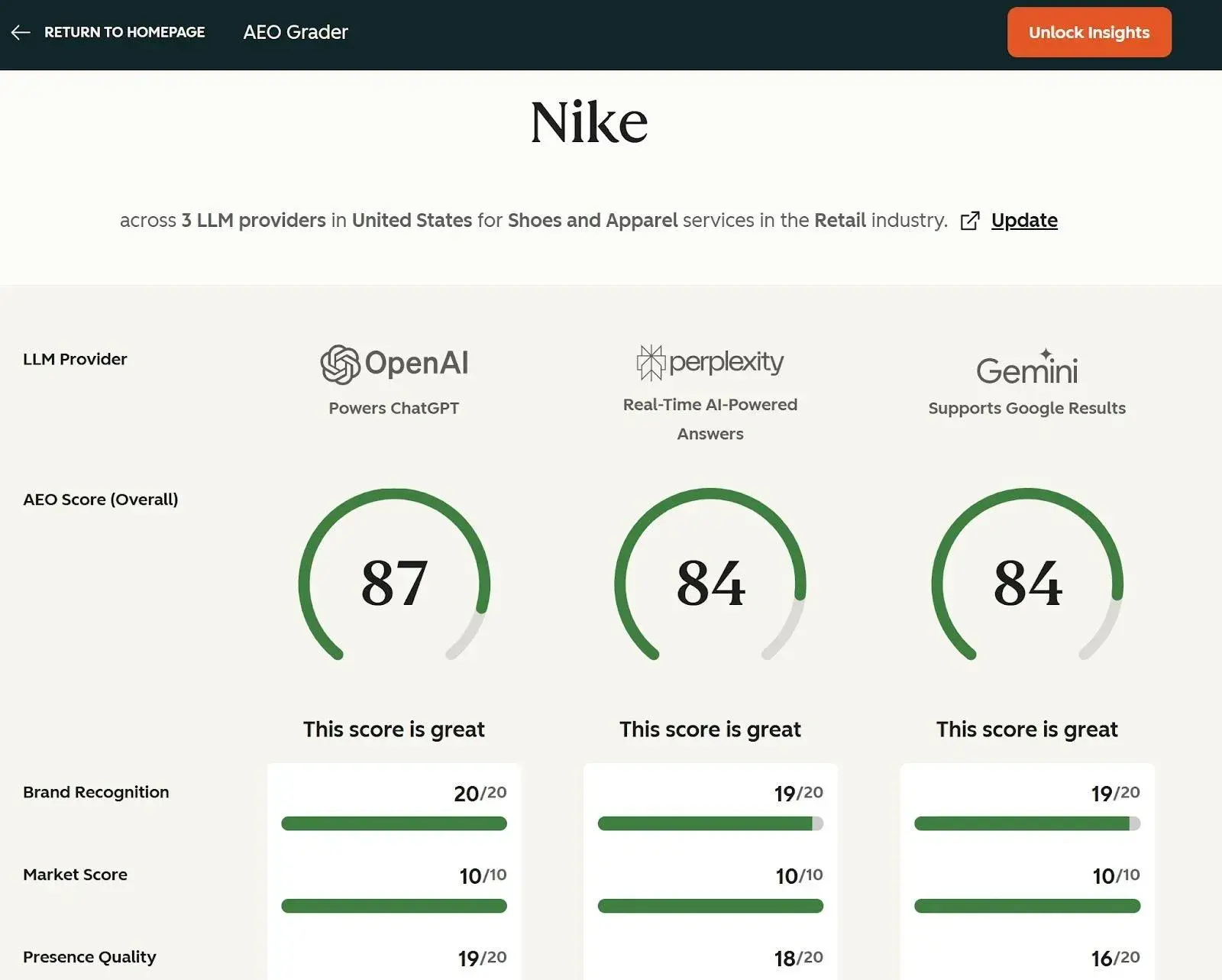
The Evolution of Search: From Links to Answers

For decades, digital marketing professionals have meticulously crafted content aimed at securing top positions on Search Engine Results Pages (SERPs). The goal was clear: rank high for relevant keywords, drive organic traffic, and convert visitors. Tools like Ahrefs and Semrush became indispensable, providing insights into search volume, keyword difficulty, and competitive landscapes. However, the rise of large language models (LLMs) such as ChatGPT, Perplexity AI, and the integration of AI Overviews (formerly Search Generative Experience) into Google Search has ushered in a new era. These "answer engines" do not merely present a list of links; instead, they synthesize information from various sources to provide direct, concise answers to user queries. This fundamental shift means that simply ranking is no longer enough; content must be designed to be authoritative, comprehensive, and structured in a way that AI models can readily interpret and cite.
The timeline of this evolution has been remarkably swift. While conversational AI has been in development for years, the public launch of ChatGPT in late 2022 marked a pivotal moment, rapidly accelerating the mainstream adoption and integration of generative AI into various digital platforms. Google’s subsequent deployment of AI Overviews demonstrated a clear commitment from the dominant search engine to embrace this answer-first approach, signaling to marketers that the future of search would be profoundly different. This rapid progression has created an urgent need for businesses to understand and implement Answer Engine Optimization (AEO).

Divergent Paths: AEO vs. Traditional SEO
The core difference between AEO and traditional SEO lies in their ultimate objectives. SEO primarily aims for ranking – securing a prominent position in a list of web pages. AEO, conversely, strives for citation – ensuring that content is identified as a trusted source and directly referenced or synthesized into an AI-generated answer. This distinction carries significant implications for keyword research.
SEO Keyword Research Priorities:
- Monthly Search Volume: Focusing on keywords with high traffic potential.
- Keyword Difficulty: Assessing the competition to rank for specific terms.
- Click-Through Rate (CTR): Optimizing for snippets that encourage users to click a link.
- Backlink Profile: Building authority through external links to improve ranking.
- Head Terms & Short-Tail Keywords: Often targeting broader, higher-volume terms.
AEO Keyword Research Priorities:
- Conversational Queries: Identifying natural language questions and prompts users ask.
- Intent Understanding: Deciphering the underlying need or goal behind a query, not just the words used.
- Fanout Queries: Predicting follow-up questions and related prompts an AI might generate internally.
- Authoritative Content: Ensuring content is comprehensive, factually accurate, and structured for AI interpretation.
- Direct Answer Opportunities: Focusing on questions that AI models are likely to answer directly.
- Entity Mapping: Clearly defining and connecting entities (people, places, things, concepts) within content to aid AI understanding.
When a user asks an AI, "What’s the best CRM for a small marketing team?", the AI doesn’t return a ranked list. Instead, it processes vast amounts of data, including articles, reviews, and comparison guides, to synthesize a direct answer. For a brand to appear in this synthesized response, its content must be structured to directly answer such questions authoritatively and comprehensively, providing the AI with easily digestible, trustworthy information. Industry experts increasingly emphasize that content must be "AI-proofed," meaning it anticipates and satisfies the requirements of these new algorithmic gatekeepers.
Essential Tools for the AEO Landscape
Navigating the AEO landscape requires a sophisticated toolkit, often a combination of established SEO platforms and newer AI-specific solutions. No single tool offers a complete solution; instead, a strategic stack is necessary to cover question discovery, fanout analysis, and visibility tracking.
Traditional Keyword Research Tools (Reimagined for AEO)
While not designed specifically for AEO, traditional SEO tools remain foundational. Their utility shifts from solely identifying high-volume keywords to extracting question-based queries and understanding semantic relationships.
- Semrush: This comprehensive platform allows users to filter keywords by question types (who, what, how, why, when), which is crucial for AEO. Its "Topic Research" feature visually maps semantically related questions and subtopics, helping identify content gaps around core AEO themes. Exporting "Questions" results provides an initial inventory of user inquiries.
- Journalistic Insight: Semrush’s ability to segment query types makes it an invaluable first step in understanding user intent for AI-driven answers, providing the raw material for more advanced AEO analysis.
- Ahrefs: Known for its robust backlink analysis and extensive keyword database, Ahrefs helps identify authoritative competitor content that might be cited by AI. The "Questions" filter in Keywords Explorer uncovers conversational queries, while the "Also rank for" report reveals the semantic neighborhood of successful pages, hinting at potential fanout queries.
- Journalistic Insight: Ahrefs provides critical competitive intelligence, allowing marketers to reverse-engineer what makes competitor content appealing to both traditional search engines and, by extension, AI models seeking authoritative sources.
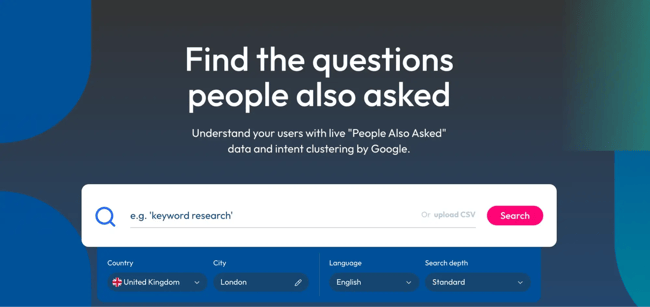
- AlsoAsked: This tool directly scrapes Google’s "People Also Asked" (PAA) boxes, visualizing how one question branches into related sub-questions. This visual hierarchy is a direct blueprint for structuring AEO content, distinguishing "parent" questions (H2s) from "sub-questions" (H3s and direct answers).
- Journalistic Insight: AlsoAsked provides a clear, real-time reflection of user curiosity and information-seeking paths, mirroring how AI models might internally expand a query.
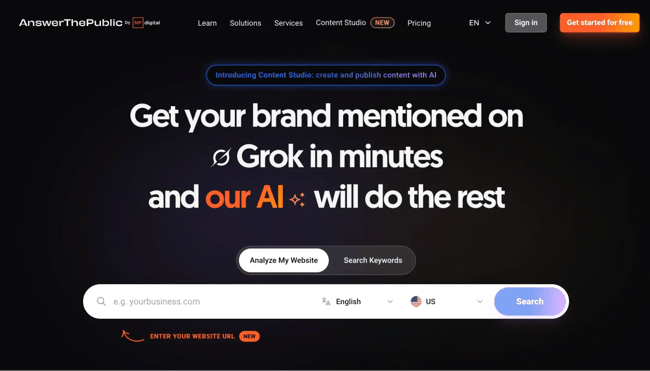
- AnswerThePublic: This tool visualizes question and preposition-based queries around a seed keyword, rapidly generating a large pool of AEO candidates categorized by question type. Its export function facilitates bulk analysis and prioritization.
- Journalistic Insight: AnswerThePublic excels at broad, exploratory question discovery, offering a panoramic view of potential AI prompts that can then be refined with volume data from other tools.
Tools for Finding Fanout Queries
Understanding how AI systems expand and interpret user questions – known as "fanout queries" – is a critical, yet often overlooked, aspect of AEO. These tools model the internal thought process of LLMs.
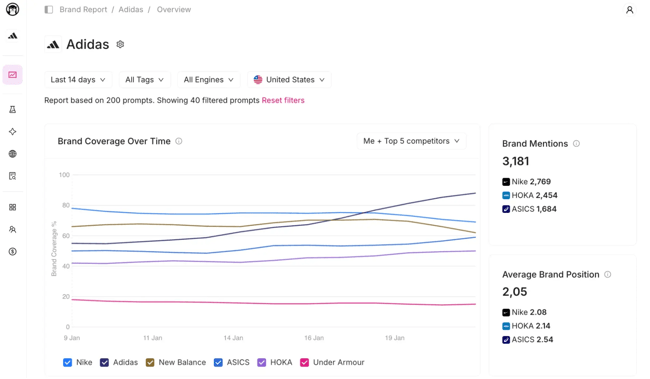
- Otterly.ai: This platform tracks content visibility across major answer engines like ChatGPT and Perplexity. By monitoring which prompts trigger content inclusion, marketers can reverse-engineer the fanout clusters that are most relevant. Its platform-specific visibility data allows for targeted optimization.
- Journalistic Insight: Otterly.ai provides actionable intelligence on where and how content is being cited, enabling precise adjustments to capture AI visibility gaps.
- Dejan.ai: Specializing in semantic analysis and entity mapping, Dejan.ai helps marketers understand how AI systems interpret content at a granular level. Its tools assist in modeling entity relationships, enhancing content clarity and citation likelihood.
- Journalistic Insight: Dejan.ai caters to advanced practitioners seeking to build highly structured, entity-rich content that maximizes AI parseability and trustworthiness.
- Screaming Frog + Gemini (DIY Approach): A powerful, cost-effective method involves using Screaming Frog to crawl a site and extract existing headings (H2s, H3s) and meta descriptions. These are then fed into Gemini (via API or Google AI Studio) with a prompt to generate follow-up questions. This creates a "synthetic fanout," approximating how AI models might expand the content’s topical footprint.
- Journalistic Insight: This DIY method empowers technical SEO teams to leverage existing infrastructure for proactive AI prompt modeling, focusing resources on content expansion for already high-performing pages.
AEO Visibility Trackers
These tools bridge the gap left by traditional rank trackers, measuring mentions, citations, and overall visibility within answer engines.
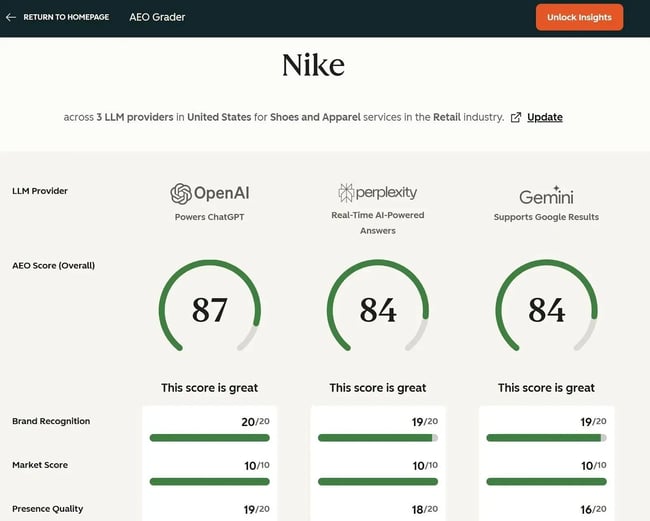
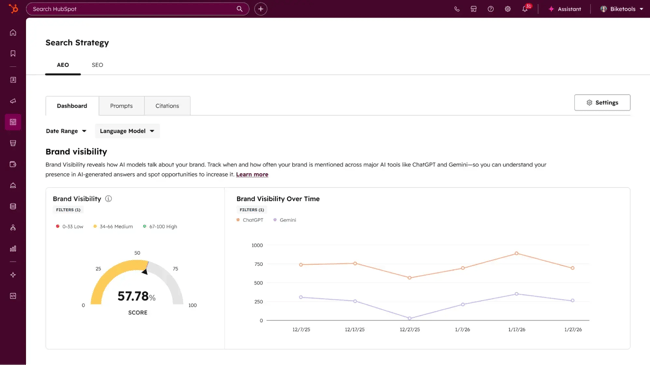
- HubSpot AEO Grader: A free starting point for assessing answer engine visibility, this tool provides a baseline understanding of brand appearance in AI-powered search results, highlighting areas of authority and content deficiencies. It’s ideal for initial assessments and securing internal buy-in.
- Journalistic Insight: The Grader democratizes initial AEO assessment, providing immediate clarity without financial commitment, which is crucial for organizations beginning their AEO journey.
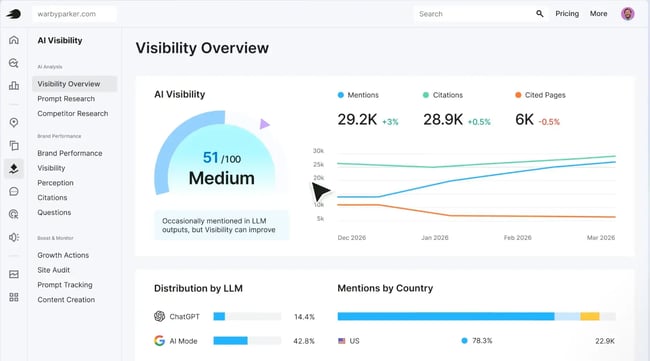
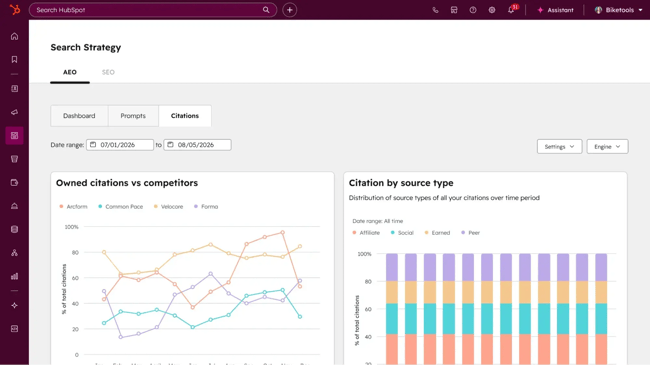
- HubSpot AEO – Prompt Tracking & AI-Powered Suggestions: This dedicated product tracks which questions a brand appears for across answer engines and offers AI-powered suggestions for new prompts to monitor. It automates significant portions of fanout discovery and identifies content gaps.
- Journalistic Insight: HubSpot AEO streamlines the complex process of AI visibility management, translating raw data into actionable recommendations that empower marketing teams without requiring specialized AEO expertise.
- Marketing Hub Pro and Enterprise: AEO capabilities are integrated directly into HubSpot’s Marketing Hub, connecting visibility scores, prompt tracking, and recommendations with existing CRM, content, and reporting tools. This allows for CRM-powered prompt suggestions tailored to specific industries, competitors, and customer segments.
- Journalistic Insight: The deep integration within HubSpot’s ecosystem offers a holistic approach, ensuring that AEO efforts are aligned with broader marketing objectives and customer insights.
Tools for Ideating AI Prompts with Synthetic Query Generation
Synthetic query generation proactively approximates the range of prompts users might type, particularly valuable for new products or emerging categories lacking historical search data.
- Claude: An excellent LLM for generating diverse synthetic queries. Prompts like "You are an expert in [topic]. Generate 20 distinct questions a user might ask an AI assistant about [topic], ranging from beginner to advanced, including comparison questions and follow-ups" yield high-quality starting inventories. Claude excels at comparative and consideration-stage queries, reflecting how users prompt AIs during purchasing decisions.
- Journalistic Insight: Claude serves as a powerful creative engine for AEO, allowing marketers to anticipate user needs and craft content that preemptively addresses the nuanced queries an AI might field.
Building an AEO Strategy: A Step-by-Step Workflow
A robust AEO strategy requires a structured workflow that connects discovery to execution.
Initial Query Identification and Expansion
- Seed Query Identification: Begin with 5-10 core topics central to the brand’s offerings or expertise. These should be product categories, use cases, or customer problems.
- Autocomplete Expansion: Input each seed topic into Google and record autocomplete suggestions, prioritizing question-formatted queries.
- People Also Asked Mapping: For each seed topic, capture Google’s "People Also Asked" box and use AlsoAsked to expand this into a comprehensive question hierarchy, mapping primary and follow-up questions.
- Prioritization: Cross-reference the expanded question list with search volume data from Semrush or Ahrefs. High-volume questions that already trigger AI Overviews in Google SERPs are top AEO targets, indicating a proven need for AI-synthesized answers.
Leveraging LLM Fan-Outs for Comprehensive Coverage
- Query Analysis: Group prioritized questions into intent clusters (e.g., "What is X," "How does X work," "X vs. Y").
- Synthetic Expansion: Feed each cluster into an LLM like Claude or ChatGPT with a fanout prompt (e.g., "A user asks: ‘[primary question]’. What are 8 follow-up questions they might ask after receiving an answer?").
- Cross-Engine Validation: Test the top synthetic prompts in ChatGPT, Perplexity, and Gemini. Identify which prompts consistently generate AI-synthesized answers, as these are confirmed AEO keywords.
- Gap Analysis: For each confirmed AEO target, use tools like HubSpot AEO or Otterly.ai to determine if the brand’s content appears in the AI-generated answer. These identified gaps form the content roadmap.
- Content Brief Creation: Develop detailed content briefs for each gap, including:
- The core question and direct answer.
- Supporting entities and related concepts.
- Required schema markup for structured data.
- Internal linking strategy to build topical authority.
- A clear outline of H2s and H3s based on fanout queries.
This step ensures that research translates into actionable content development.
Navigating the New Frontier: Implications and Future Outlook
The rise of AEO is not merely a technical adjustment; it represents a significant shift in marketing philosophy. Businesses that fail to adapt risk becoming invisible in an increasingly AI-driven information landscape. The implications are far-reaching:
- Content Strategy Redefinition: Content must become hyper-focused on answering specific questions comprehensively and authoritatively, often requiring deeper subject matter expertise. The emphasis shifts from broad keyword targeting to detailed, factual exposition.
- Attribution Challenges: Measuring the direct impact of AEO on traffic and conversions can be more complex, as AI citations may not always lead to direct website visits. Marketers will need new metrics focusing on brand mentions, sentiment, and the AI’s perception of authority.
- Investment in Expertise: AEO demands a blend of traditional SEO skills, natural language understanding, and an appreciation for how AI models process information. This may necessitate upskilling existing teams or hiring new specialists.
- Ethical Considerations: As AI becomes more influential, the ethical implications of content creation and potential biases in AI-generated answers will require careful consideration.
Frequently Asked Questions About Keyword Research Tools for AEO
- Is AEO replacing SEO? No, AEO is expanding the scope of SEO. Traditional organic search remains vital, but the growing share of queries resolved by AI-generated answers necessitates AEO as a complementary strategy. Businesses treating AEO as an extension of SEO are better positioned for future success.
- Can ChatGPT alone perform AEO keyword research? While ChatGPT is excellent for synthetic query generation and fanout expansion, it lacks search volume data, historical trends, and competitive tracking. It should be used as an input and validation layer, not a standalone research platform.
- Which engine should I prioritize first for AEO? Google AI Overviews should be the initial focus due to Google’s market dominance and the expanding range of queries it impacts. Successfully appearing in Google AI Overviews often leverages existing E-E-A-T (Experience, Expertise, Authoritativeness, Trustworthiness) standards, maximizing existing SEO investments. Subsequently, focus can expand to Perplexity and ChatGPT.
- How often should I refresh AEO keyword research? More frequently than traditional SEO research. Answer engines evolve rapidly, and user behavior shifts. A quarterly full AEO keyword audit, complemented by monthly prompt-tracking data reviews, is recommended. Tools with AI-powered suggestions can help flag emerging opportunities between formal cycles.
- What budget should I plan for AEO tools? Budgets can range from under $500/month for exploratory stacks (combining free tools with affordable options like AlsoAsked and Claude Pro) to $500-$2,000+/month for growth-stage teams (adding comprehensive platforms like Semrush/Ahrefs, Otterly.ai, and HubSpot AEO). The key is to start with a minimum viable toolset, prove the workflow’s efficacy, and then scale investment strategically.
Strategic Tool Selection for Optimal AEO
AEO keyword research is a multi-faceted endeavor encompassing question discovery, AI fanout modeling, and visibility tracking. The most effective approach involves assembling a tailored stack of tools, as no single platform adequately covers all three categories. For organizations seeking a unified starting point, HubSpot AEO offers consolidated visibility, tracking, and recommendation layers, providing a single answer engine score across major platforms and delivering prioritized, plain-language recommendations. For a rapid, no-commitment assessment of current answer engine visibility, the free HubSpot AEO Grader offers an excellent first step into a structured AEO program. The future of digital visibility hinges on understanding and actively engaging with these AI-driven shifts, transforming content strategies from merely ranking to authoritatively informing.