
 rifanmuazin
In an era of escalating customer acquisition costs (CAC) and saturated digital marketplaces, the discipline of Conversion Rate Optimization (CRO) has transitioned from a supplementary marketing tactic to a core business necessity. Industry data indicates that while the median conversion rate across all industries currently hovers at 6.6%, high-performing organizations are increasingly relying on sophisticated analytics workflows to outperform their competitors. According to Josh Gallant, founder of Backstage SEO and a leading expert in organic growth, the failure of most optimization programs stems from a reactive approach—treating analytics as an afterthought rather than the foundational architecture of the campaign.
The Evolution of Conversion Measurement and Strategic Goal Setting
The trajectory of digital marketing has shifted from high-volume traffic acquisition to the precision-based maximization of existing traffic. Historically, marketers focused on "vanity metrics" such as page views and bounce rates without correlating these figures to the bottom line. Today, the standard for professional CRO involves the establishment of outcome-focused goals that align directly with a company’s sales stages.
For example, a robust CRO strategy avoids vague objectives like "improving the conversion rate." Instead, it targets specific business outcomes: increasing the trial-to-paid conversion rate by 5%, or reducing the cost per lead (CPL) by 15% through landing page refinements. This shift in methodology is supported by industry benchmarks showing that traffic sources convert at vastly different rates; email marketing leads with an average conversion rate of 19.3%, while paid social and paid search follow at 12% and 10.9% respectively.
The Critical Role of Micro-Conversions
A significant development in the modern optimization workflow is the systematic tracking of micro-conversions. While macro-conversions—such as a completed purchase or a signed contract—are the ultimate goal, they often represent only the final step in a complex user journey. By monitoring micro-conversions, such as newsletter sign-ups, video views, or "add to cart" actions, businesses can identify where friction begins before a total funnel collapse occurs.

Expert analysis suggests that tracking 3-5 key micro-conversions provides the necessary visibility to diagnose drop-offs in the B2B sector, where sales cycles are notoriously long. This granular approach allows marketing teams to optimize lead generation forms and user interfaces based on early intent signals rather than waiting for the final sales data to materialize.
Analyzing the Conversion Funnel: Identifying Structural Weaknesses
The core of any CRO analytics workflow is the funnel report, a diagnostic tool that visualizes the user journey as a series of steps. By viewing the conversion path as a "leaky bucket," analysts can pinpoint exact stages where potential customers exit the site.
A standard professional funnel analysis typically tracks:
- Landing page arrivals.
- Product or pricing page views.
- Add-to-cart or "Start Trial" clicks.
- Checkout or form initiation.
- Success/Thank-you page arrival.
Data-driven marketers emphasize the importance of segmenting these funnels by traffic source and device type. Recent findings from the 2024 Conversion Benchmark Report highlight a critical disparity: while 83% of landing page visits now occur on mobile devices, desktop traffic continues to convert at an 8% higher rate. Without device-specific funnel segmentation, organizations risk misallocating resources to fix problems that may only exist on one platform.
Filtering Noise in Modern Analytics Environments
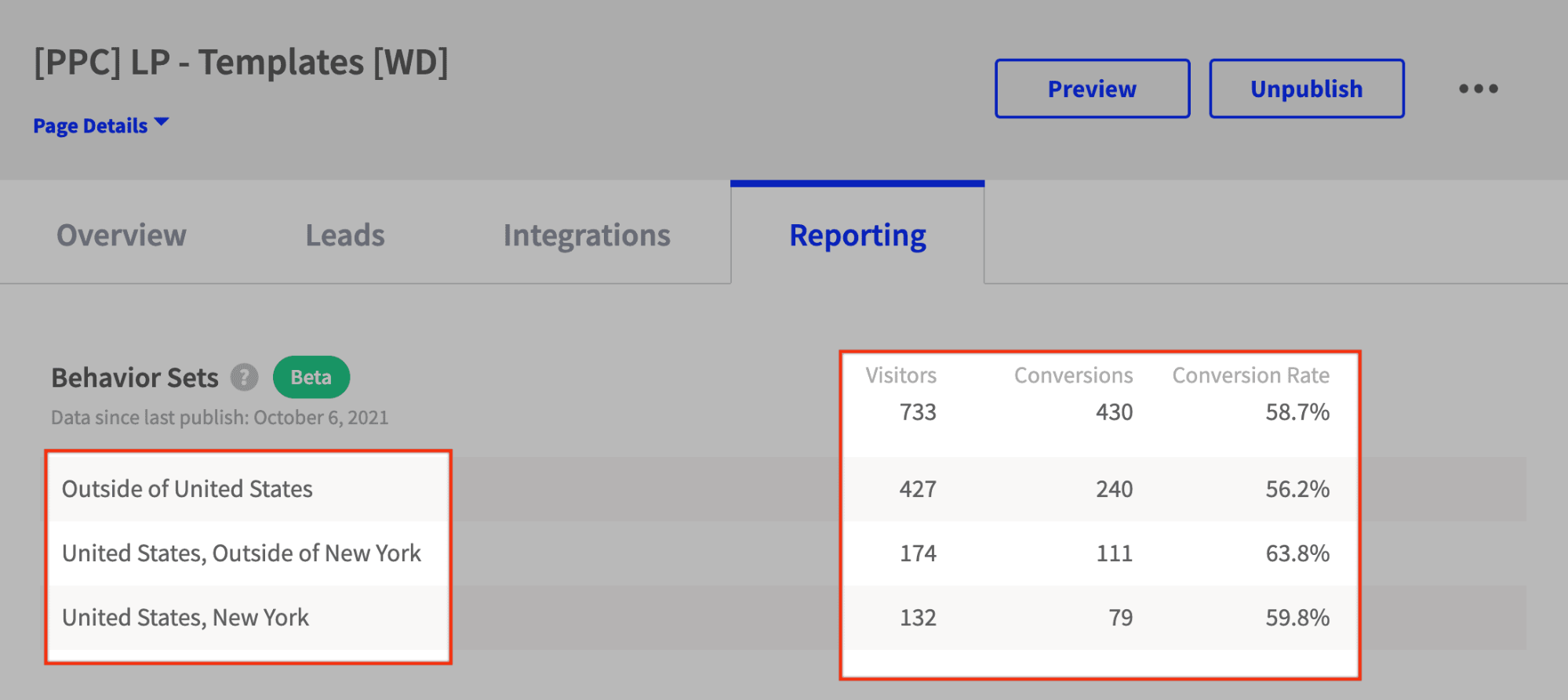
The transition to privacy-first analytics and platforms like Google Analytics 4 (GA4) has introduced new complexities in data interpretation. Professional analysts now warn against over-reliance on raw bounce rates, noting that a high bounce rate may simply indicate that a user found the required information (such as a phone number or address) immediately. To combat misleading data, modern workflows prioritize session duration and engagement rates, filtering out internal traffic, bot activity, and non-geographical targets to ensure the integrity of the testing pool.

Integrating Qualitative Research: Understanding the "Why" Behind the "What"
Quantitative data provides the "what"—the numerical evidence of user behavior. However, to achieve sustainable growth, marketers must uncover the "why." This requires the integration of qualitative research tools, such as heatmaps, session recordings, and user surveys, into the analytics workflow.
Visualizing User Friction
Heatmaps and session recordings serve as a "digital x-ray," revealing user frustration that numbers cannot capture. Common "red flags" identified through visual analysis include:
- Rage Clicking: Users repeatedly clicking an unlinked element, indicating a design flaw.
- Dead Clicks: Clicks that result in no system response.
- Scroll Hesitation: Users hovering over specific sections of copy, suggesting confusion or high cognitive load.
Research has shown that "word complexity" has a significant negative correlation with conversion rates—approximately -24.3%. Qualitative tools often reveal that users are stalling on sections of text that are too dense or technical, providing immediate evidence for copy optimization.
Voice of Customer (VoC) Integration
Direct feedback through on-page surveys and exit-intent polls allows companies to capture the "Voice of the Customer" (VoC). By asking targeted questions—such as "What is one thing that nearly stopped you from buying today?"—businesses can uncover specific objections, such as lack of clarity regarding shipping costs or concerns about data security. This feedback often leads to "quick wins" that A/B testing alone might take months to discover.
The Scientific Method: Building Data-Backed Hypotheses
Once data has been gathered, the next phase of a high-performing workflow is the formulation of a testable hypothesis. Professional CRO programs reject "hunch-based" testing in favor of a structured formula: "Because we observed [Data/Insight], if we [Change], then [Metric] will [Increase/Decrease]."
Prioritization and the 2×2 Matrix
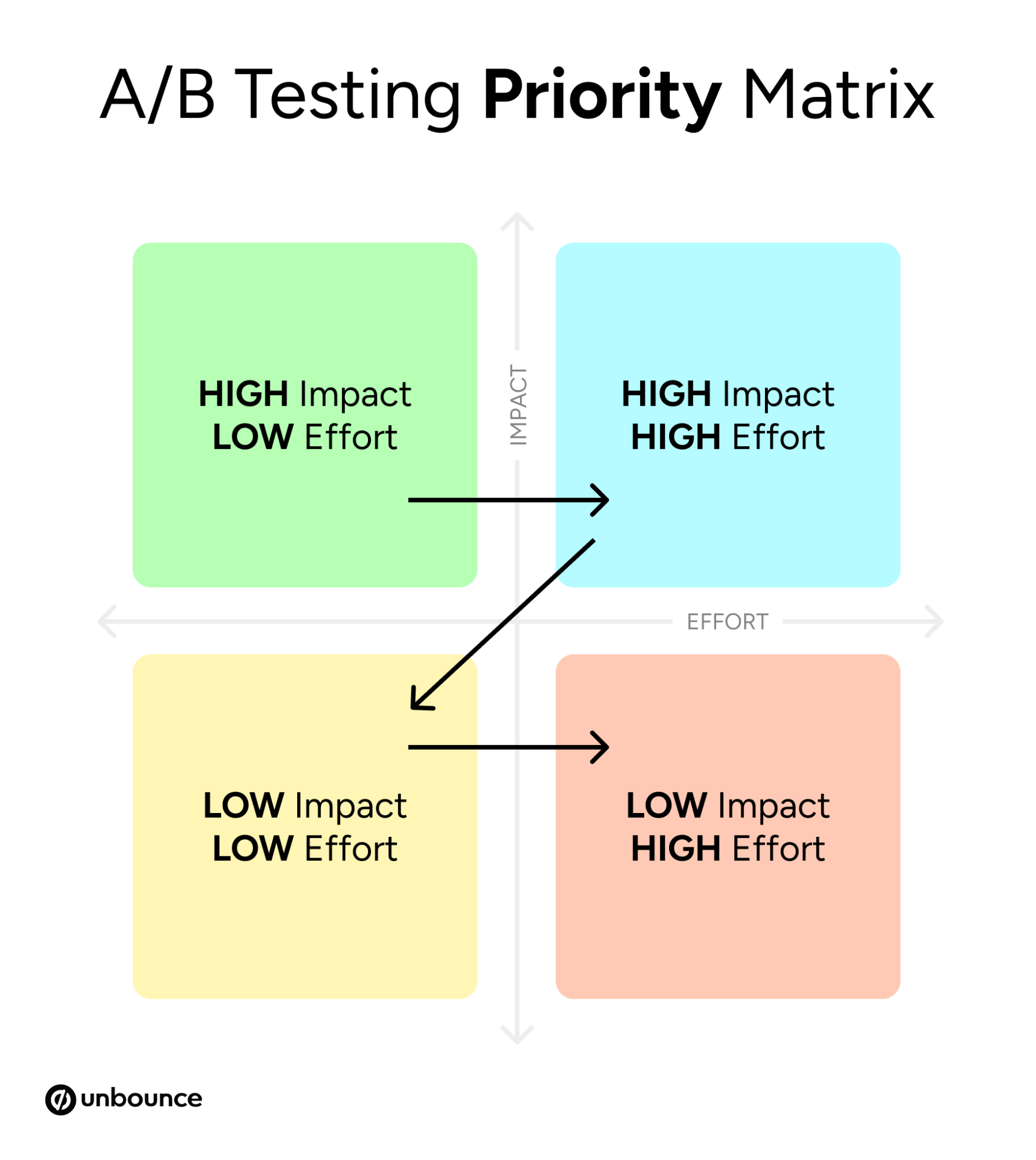
Resource management is a critical component of CRO. Marketing teams often face a backlog of potential tests, necessitating a prioritization framework. The industry standard is a 2×2 matrix that evaluates tests based on two criteria:
- Ease of Implementation: Technical effort required.
- Potential Impact: The likelihood of the change moving the needle on revenue.
Tests that are "Easy to Implement" and "High Impact" are designated as "Quick Wins" and prioritized. Conversely, "Low Impact" and "Hard to Implement" tasks are often discarded to prevent "optimization bloat."
Statistical Rigor and Significance
A common pitfall in conversion testing is the premature declaration of a winner. Professional analysts insist on statistical significance—usually a 95% confidence level—before concluding a test. This ensures that the observed lift in conversions is not due to random chance or seasonal fluctuations. Key principles for rigorous testing include:
- Sufficient Sample Size: Ensuring enough users have seen both variants.
- Test Duration: Running tests for at least two full business cycles (usually 14 days) to account for weekly behavior patterns.
- Consistency: Avoiding changes to the traffic sources or the site environment while a test is live.
Building a Culture of Continuous Experimentation
The final stage of a high-performing CRO workflow is the institutionalization of testing. Leading companies like Amazon, Netflix, and Booking.com do not treat CRO as a one-time project but as a "flywheel" of continuous improvement. In this model, every test—whether it results in a "win," a "loss," or a "neutral" outcome—provides data that informs the next experiment.
The Role of Technology in Scaling Optimization
As the digital landscape becomes more complex, the tools used to manage this workflow have become more specialized. Modern CRO "stacks" typically include:
- Landing Page Builders: For rapid deployment of variants without heavy IT involvement.
- A/B Testing Engines: To manage traffic splitting and statistical calculations.
- Heatmapping Software: For behavioral visualization.
- Survey Tools: For qualitative feedback.
- AI-Driven Optimization: New tools are emerging that use machine learning to automatically route traffic to the best-performing page variants in real-time.
Broader Impact and Industry Implications
The move toward structured CRO analytics workflows represents a fundamental change in how digital business is conducted. As privacy regulations (such as GDPR and CCPA) limit the effectiveness of traditional third-party tracking, first-party data gathered through on-site optimization becomes more valuable.
Furthermore, the rise of artificial intelligence in marketing means that the speed of testing is accelerating. Companies that can build and maintain a disciplined analytics workflow will be able to leverage AI tools more effectively, creating a widening gap between data-driven organizations and those relying on intuition. In the current economic climate, where every marketing dollar is under scrutiny, the ability to measure what matters and act on those insights is no longer an advantage—it is the baseline for survival.








