rifanmuazin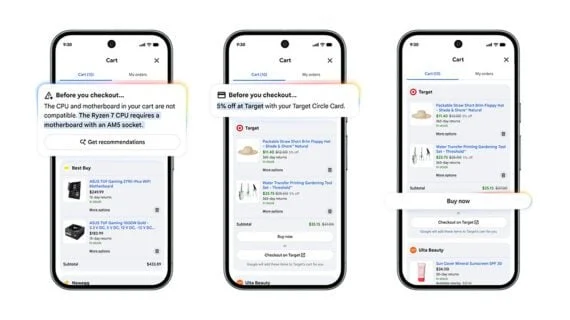
Google’s recent announcement of a comprehensive shopping cart, poised for integration across its vast app ecosystem, signals a potentially transformative moment for online shopping. This forthcoming “Universal Cart” aims to redefine how consumers interact with products, make purchasing decisions, and ultimately, check out, moving beyond the traditional one-to-one relationship between a shopping cart and a specific e-commerce website. While consumers and merchants have long operated under the assumption that a cart is intrinsically tied to a particular online store, Google’s vision, detailed in announcements on May 19, suggests this established paradigm may be on the verge of obsolescence.
The genesis of this ambitious project was revealed during Google I/O, the company’s premier developer conference. At this pivotal event, Google introduced a suite of three commerce-related features that, when combined, form the bedrock of what the company terms “agentic commerce components.” This innovative approach envisions a layer managed by intelligent agents, situated above or outside individual seller websites, where products from a multitude of disparate merchants can reside and be managed. This marks a significant departure from the current model, where a shopping cart is typically a feature of a single e-commerce platform, even in marketplaces like Amazon, where a single cart aggregates items from various third-party sellers but remains tethered to that specific marketplace’s domain.
The Agentic Commerce Revolution
At the heart of Google’s strategy lies the concept of agentic commerce, a field that has been steadily gaining traction within the tech industry. Agentic commerce refers to a paradigm where artificial intelligence agents actively participate in and manage various aspects of the shopping journey on behalf of the consumer. This goes beyond simple recommendations; it involves proactive monitoring, intelligent comparison, and automated execution of purchasing tasks based on pre-defined user preferences and rules. Google’s Universal Cart is positioned as a central hub within this evolving landscape, acting as a persistent repository for a shopper’s intent and a facilitator of their purchasing decisions.
The implications of this shift are profound. In Google’s proposed model, while merchants will continue to own the transaction and fulfill orders, they will no longer solely control the crucial elements of purchase intent and product discovery. This redistribution of influence could fundamentally alter the dynamics between retailers and consumers.
Historically, shopping carts have served multiple purposes for consumers beyond simply holding items intended for immediate purchase. Many shoppers utilize carts as digital wishlists, adding items with the intention of returning later, perhaps after comparing alternatives, waiting for a payday, or consulting with family members. This behavior has been a cornerstone of e-commerce strategy, with retailers investing heavily in optimizing their sites to accommodate and capitalize on these browsing and decision-making processes. Consumers have become accustomed to returning directly to a specific store to finalize their purchases.
However, if consumers begin to treat agent-managed carts with the same level of engagement and intent as traditional retailer carts, the origin of the purchase decision could shift. Retailers would still be the ultimate beneficiaries of sales and fulfillment, but the initial impetus and the broader context of the purchase might originate and be managed outside their direct purview. This mirrors the long-held promise of agentic commerce: a future where shopping becomes less about navigating individual websites and more about interacting with intelligent systems that orchestrate the entire process. Google’s recent announcements suggest that this future is rapidly approaching.
Google’s Universal Cart: Functionality and Features
The Universal Cart, as envisioned by Google, promises a seamless and integrated shopping experience across its diverse digital touchpoints. Consumers will be able to add products to their cart not only through traditional Google searches but also while engaging in conversations with Gemini, Google’s advanced conversational AI, and, in the future, potentially while consuming content on YouTube or managing communications through Gmail.
Once a product is added, the Universal Cart becomes an active and intelligent assistant. It will leverage AI to continuously monitor crucial factors such as price fluctuations, available offers, and inventory levels. This constant vigilance is designed to inform and guide the consumer’s buying decision, ensuring they have access to the most relevant and advantageous information at any given moment. Crucially, merchants will retain their status as the “merchant of record,” meaning they are officially responsible for the sale and fulfillment. However, the Universal Cart’s ability to expose shoppers to competing products or alternative offers means that even as a merchant of record, their products will exist within a broader ecosystem of choice.
Consider a scenario where a shopper is redecorating their kitchen. They might start by searching for a specific brand of stand mixer on Google, adding a KitchenAid mixer to their Universal Cart. Later, while browsing YouTube for cooking tutorials, they might discover and add a Le Creuset Dutch oven from a different retailer. Perhaps while reviewing emails, they spot a high-quality Japanese santoku knife from an affiliate link and add that as well. Throughout the evening, while the shopper is engaged in other activities, the Universal Cart continues to work in the background. It could proactively suggest an alternative knife set with superior customer reviews and faster delivery options, or alert them to a limited-time discount on the Dutch oven. When the shopper is finally ready to make their purchases, the Universal Cart will have consolidated their selections, compared options, offered recommendations, and coordinated the order, presenting a streamlined checkout process.
The Technological Backbone: UCP and AP2
Behind the user-facing Universal Cart lies a sophisticated infrastructure designed to enable this new era of agentic commerce. The Universal Commerce Protocol (UCP) is identified as the foundational technology that underpins Google’s strategy. UCP acts as the communication bridge between merchants and Google’s platform. Merchant Center feeds, which already provide product information to Google, will be enhanced by UCP to facilitate more dynamic and interactive engagement for shopping, checkout, and fulfillment processes.
Complementing UCP is the Agents Payments Protocol (AP2), which is slated for integration into Google products in the coming months. AP2 will be initially rolled out with Gemini Spark, a new persistent AI agent designed to automate and oversee shopping tasks for consumers. In practice, Gemini Spark will leverage the Universal Cart to maintain a curated list of desired items, actively comparing products, prices, and inventory in real-time.
The true power of AP2 lies in its ability to authorize and complete purchases. Once a shopper has established their preferences and rules – such as setting a spending limit, designating preferred retailers, or requiring explicit approval for each transaction – AP2 can then securely facilitate the payment process. This creates a synergistic relationship: the Universal Cart remembers and consolidates shopping activities, UCP connects merchants to Google’s platform, Spark intelligently guides decisions, and AP2 handles the secure execution of payments.
Broader Implications and Industry Reactions
The introduction of Universal Cart and its underlying agentic commerce infrastructure represents a significant strategic move by Google, potentially reshaping the competitive landscape of online retail. This move directly challenges the established dominance of individual e-commerce platforms and marketplaces by creating a centralized, AI-powered layer that mediates the shopping experience.
While Google has not released specific data on projected adoption rates or merchant participation beyond the initial rollout in the U.S. during the summer of 2026, the underlying technologies and the vision they represent have been in development for some time. The company’s sustained investment in AI and its expansive reach across consumer devices and services position it to effectively deploy and scale this new model.
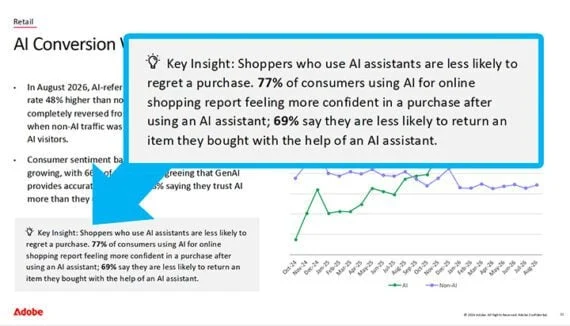
Industry analysts and e-commerce experts have begun to weigh in on the potential impact. Some see this as a natural evolution of online shopping, driven by advancements in AI and the increasing demand for personalized and convenient experiences. The ability for a single cart to aggregate products from multiple sources, coupled with AI-driven optimization and automated purchasing, could lead to significant improvements in conversion rates for merchants and enhanced satisfaction for consumers.
However, concerns have also been raised. Retailers may grapple with the shift in control over customer relationships and purchase intent. The prospect of their products being presented alongside competitors within a Google-managed cart, even if they remain the merchant of record, could necessitate a recalibration of their marketing and customer loyalty strategies. The ability of Google’s AI to influence purchase decisions based on factors beyond direct merchant promotion could also raise questions about algorithmic transparency and fairness.
From a consumer perspective, the convenience offered by Universal Cart is undeniable. The idea of a persistent, intelligent cart that manages price tracking, comparison shopping, and even automated purchasing based on pre-set rules is highly appealing. However, it also necessitates a degree of trust in Google’s AI and its handling of personal shopping data and payment information. The company’s commitment to privacy and security in the implementation of AP2 will be paramount in gaining and maintaining consumer confidence.
The timeline for widespread adoption remains to be seen, but the announcements at Google I/O have undeniably accelerated the conversation around agentic commerce. The Summer 2026 U.S. launch of Universal Cart will serve as a crucial testing ground, providing valuable insights into consumer behavior and merchant integration. As this technology matures, it has the potential to usher in an era where shopping is less about individual transactions and more about a continuous, intelligently managed flow of discovery, decision-making, and acquisition, orchestrated by powerful AI agents. The industry will be closely watching to see how this new paradigm unfolds and what its long-term consequences will be for the future of retail.