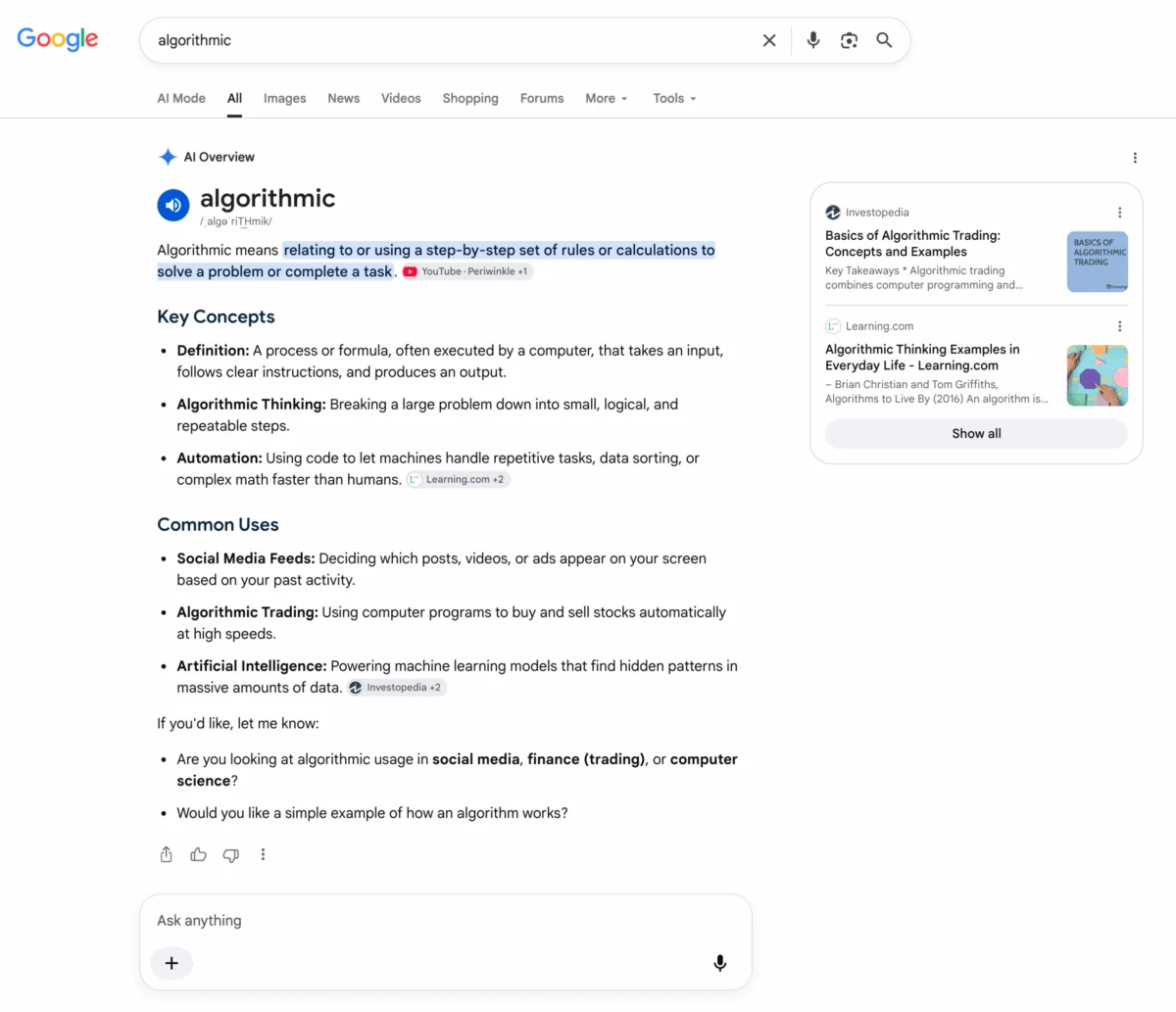
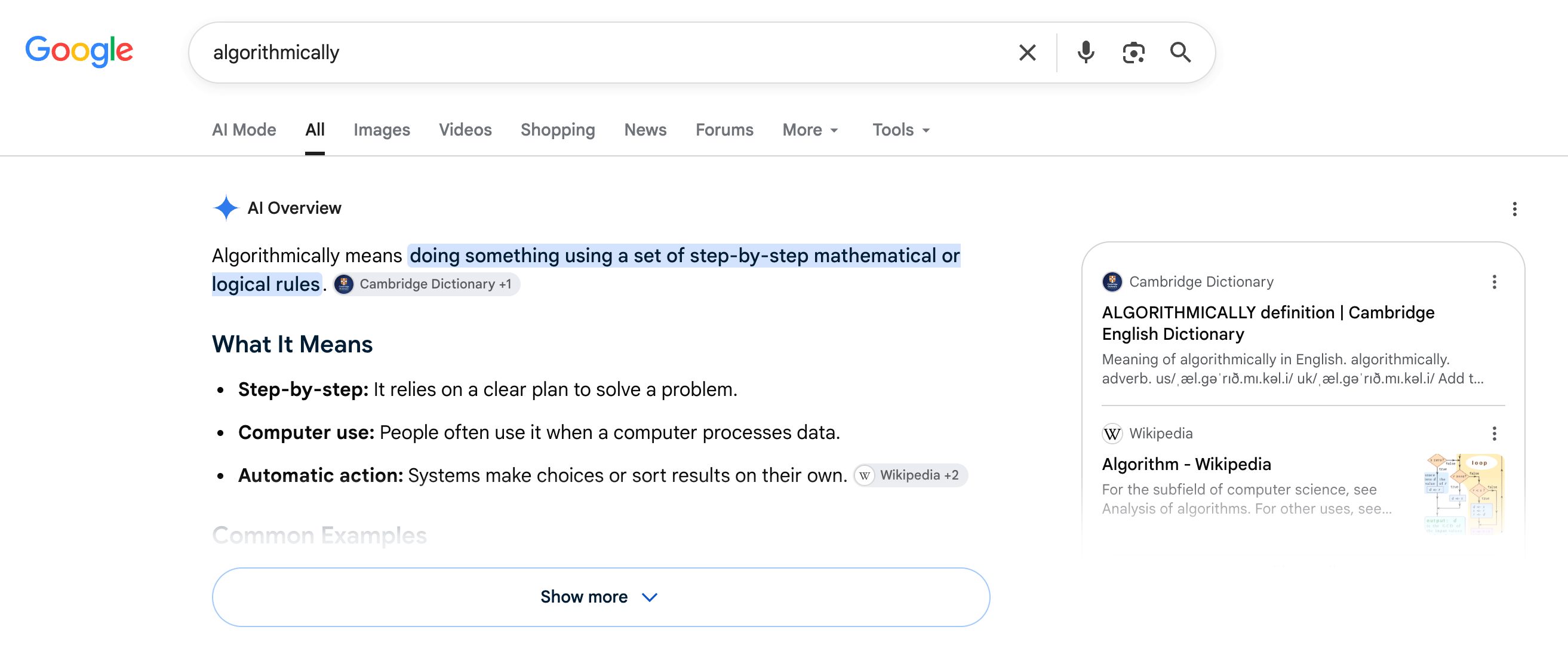
Google Search is currently undergoing significant experimentation, with a notable test pushing users directly into an "AI Mode" from the AI Overview by default, effectively bypassing the previous requirement to click a "Show more" button. This evolving user experience displays a much fuller AI-generated answer, akin to a comprehensive response one would expect from a dedicated AI conversational interface, and automatically loads a follow-up "Ask anything" prompt box. The immediate consequence of this design alteration is the substantial displacement of traditional organic search results, often referred to as the "ten blue links," further down the search engine results page (SERP).
This development was initially brought to light by Chris Long, a prominent figure in the SEO community, who shared his observations on the social media platform X (formerly Twitter). Long articulated his findings, stating, "Holy moly SEOs: Google is now revealing the AI Mode prompt box BY DEFAULT for some queries." He further elaborated on the strategic implication, adding, "This is how Google continues to push AI Mode as the default search experience." The phenomenon has since been independently replicated by various observers, confirming the active testing of this new interface. The visual change is stark: where previously a user might see a brief AI snippet and an invitation to "Show more," they are now presented with an expansive AI answer, immediately followed by an interactive prompt, indicating a clear shift in Google’s approach to information delivery.
The Evolution of Google’s Search Generative Experience (SGE)
To fully appreciate the gravity of this change, it’s essential to contextualize it within the broader evolution of Google’s Search Generative Experience (SGE), which powers the AI Overviews. Google first unveiled its ambitious plans for integrating generative AI directly into its core search product in May 2023. At the time, this initiative was presented as a transformative step designed to provide users with more comprehensive answers to complex queries, offering summaries and direct information without requiring clicks to external websites. The initial implementation of SGE included an AI Overview section at the top of the SERP, which typically provided a concise summary. Users interested in a more detailed AI-generated response were then prompted to click a "Show more" button to expand the content and access further AI-driven functionalities. This initial design struck a delicate balance, offering AI insights while still clearly delineating the boundary between the summary and the full AI interaction, thus implicitly preserving a degree of visibility for traditional organic listings.
The "Show more" button served as a critical interface element. It acted as a gate, requiring an explicit user action to delve deeper into the AI-generated content. Its presence suggested a choice: users could consume the summary and proceed to the organic links below, or they could opt for a more extensive AI interaction. The removal or de-prioritization of this button, and the default display of a full AI answer with an immediate "Ask anything" box, signifies a deliberate strategic move by Google to make the AI experience not just an option, but the primary, front-and-center mode of interaction for an increasing number of queries. This change accelerates the transition from Google as a "link engine" – a directory pointing to external information – to an "answer engine," aiming to fulfill user queries directly within the search interface.
Immediate Implications for Publishers and Content Creators
The implications of this shift are particularly profound and largely unfavorable for publishers, content creators, and businesses that rely heavily on organic search traffic. For decades, the "ten blue links" have been the lifeblood of the internet’s content ecosystem, driving billions of clicks to websites, fueling advertising revenues, and sustaining countless digital ventures. By pushing these organic results "way down lower on the page," Google is effectively reducing their visibility and, consequently, their potential for attracting clicks.
Consider the user journey: in the previous SGE model, a user might glance at the AI summary, not find it fully satisfactory, and then scroll down to explore the traditional links. With a full AI answer immediately presented and an interactive "Ask anything" box ready for follow-up questions, the incentive for users to scroll past this rich, interactive AI content significantly diminishes. This could lead to a substantial reduction in click-through rates (CTRs) for organic results, especially for informational queries where the AI can provide a direct, comprehensive answer.
For publishers, this translates directly into potential revenue losses. Many online publications, news sites, blogs, and e-commerce platforms depend on ad impressions and affiliate commissions generated by visitors arriving from Google Search. A decrease in organic traffic directly impacts these revenue streams, potentially jeopardizing the financial viability of content creation. The economic model that has underpinned the open web for over two decades—where Google facilitates traffic to content creators, who then monetize that traffic—is now facing an existential threat. Publishers may find themselves in a position where their content is used to train Google’s AI models, only for Google to then serve summaries of that content, thereby keeping users on Google’s own platform and away from the original source. This creates a challenging paradox for content creators: they need to be found by Google, but being found by Google might mean their content is consumed without direct visits.
The Strategic Rationale Behind Google’s Move
From Google’s perspective, this aggressive integration of AI into the default search experience is likely driven by several strategic imperatives. Firstly, the competitive landscape has fundamentally shifted with the advent of highly capable generative AI models like OpenAI’s ChatGPT and Microsoft’s Copilot (formerly Bing Chat). These AI tools offer conversational, direct answers, challenging Google’s traditional link-based search paradigm. By making AI Overviews more prominent and interactive, Google aims to maintain its market dominance and prevent users from migrating to alternative AI interfaces for information retrieval.
Secondly, Google believes that AI-powered answers can provide a superior user experience for many queries. For complex questions, multi-faceted research, or scenarios where users seek quick, distilled information, an AI-generated summary followed by an interactive conversational mode can be more efficient and satisfying than sifting through multiple web pages. This aligns with Google’s long-standing mission to organize the world’s information and make it universally accessible and useful, now enhanced by the capabilities of generative AI. The "Ask anything" prompt facilitates a deeper, more personalized information-seeking journey, allowing users to refine their queries and explore related topics within a single interface.

Thirdly, this move allows Google to consolidate user interaction within its own ecosystem. By providing comprehensive answers and facilitating follow-up questions directly on the SERP, Google reduces the need for users to navigate away from its platform. This could potentially increase user engagement time on Google properties and provide more opportunities for ad placements within or alongside the AI Overviews, although the monetization model for AI Overviews is still evolving and subject to ongoing experimentation.
Reactions from the SEO Community and Industry Analysts
The reaction from the Search Engine Optimization (SEO) community has been one of deep concern, though not entirely surprise. As Chris Long’s initial tweet suggested, many SEO professionals have anticipated such a move, given Google’s consistent investment in AI and its stated intention to evolve search. However, the speed and aggressiveness of this particular test have amplified anxieties. SEOs are now grappling with the reality that traditional optimization strategies, which focused on ranking highly in the "ten blue links," may become less effective for a significant portion of queries.
Industry analysts are closely watching these developments. The shift could fundamentally alter the SEO playbook, moving focus from pure keyword ranking to "AI Overview optimization"—understanding how Google’s AI models synthesize information, how to be cited as a source within AI Overviews, and how to craft content that is both valuable to human readers and easily digestible by AI. The challenge lies in the opacity of AI models; optimizing for an AI’s comprehension and summarization capabilities is inherently more complex than optimizing for keyword density or backlinks.
Moreover, there is a growing discussion about the ethical implications and potential for anti-competitive behavior. Critics argue that by increasingly prioritizing its own AI-generated content and keeping users on its platform, Google could be stifling competition and diminishing the open web that it helped create. The concern is that Google is effectively "eating its own lunch" by providing answers that negate the need to visit external sites, which Google itself indexes and relies upon for its vast knowledge base. This could raise questions for regulatory bodies already scrutinizing Google’s market power.
Looking Ahead: The Future of Search and Content Strategy
The current test represents a pivotal moment in the ongoing evolution of search. While Google has not yet made this the universal default, the direction of travel is clear: AI will play an increasingly central role in how users find and consume information. For publishers and content creators, this necessitates a fundamental re-evaluation of their digital strategies.
Future content strategies may need to focus more on establishing authority and expertise, as AI Overviews often cite sources. Being a trusted, authoritative source might become more important than merely ranking for a keyword. Furthermore, content creators might need to explore alternative monetization models that are less reliant on direct organic search traffic, such as direct subscriptions, memberships, or diversifying traffic sources through social media, email marketing, and direct engagement.
The distinction between "information retrieval" and "information consumption" is blurring. Google is moving towards becoming a primary consumption platform, rather than just a discovery platform. This shift could redefine the value proposition of websites themselves. Instead of being the destination for answers, many websites might become the underlying knowledge base that feeds Google’s AI, with the user experience largely confined to the Google interface.
As Google continues to experiment, the industry awaits further official statements. The company’s response to concerns from publishers and the broader web community will be crucial. The question remains whether Google can evolve its search product with AI while simultaneously fostering a healthy and vibrant ecosystem for content creators that have historically been essential to the web’s richness. The current testing phase suggests a bold and potentially disruptive path forward, signaling a new era where the "ten blue links" may no longer be the undisputed kings of the search kingdom. The digital landscape is undeniably in flux, and adaptation will be key for all stakeholders in this evolving information ecosystem.