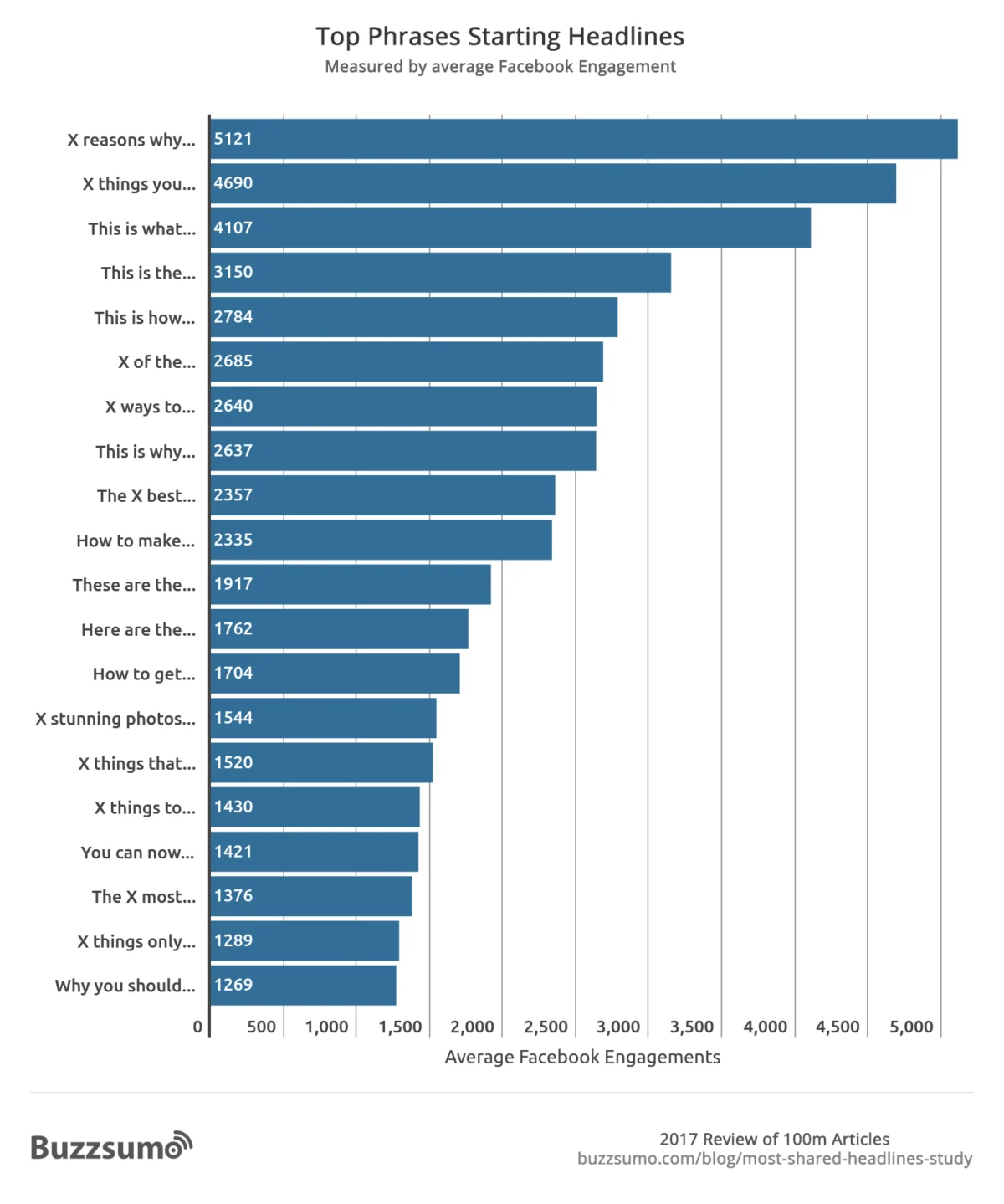
Headlines are far more than mere titles; they serve as critical gateways, capturing audience attention and dictating content engagement in an increasingly saturated digital landscape. In an era where algorithms filter information, competition is fierce, and audience expectations are sky-high, understanding what makes a headline effective is paramount for publishers and content creators. BuzzSumo, a leading content marketing analytics platform, has conducted extensive research, analyzing over 100 million article headlines across Facebook and Twitter, providing invaluable insights into what resonates with readers. This comprehensive study, initially published in 2017 and significantly updated with data from 2019-2020, reveals a dynamic evolution in headline best practices, driven by shifts in social media algorithms and audience preferences.
The 2017 Landscape: Emotional Hooks and Tribal Ties
BuzzSumo’s initial 2017 study, inspired by co-founder Steve Rayson, delved into 100 million headlines published between March 1st and May 10th, 2017. At that time, Facebook engagement was largely driven by emotionally charged, curiosity-provoking, and identity-affirming headlines. The most potent three-word phrase, or trigram, was "will make you," which garnered more than double the engagement of the second most popular phrase. This phrase often preceded an emotional outcome, such as "10 photos that will make you feel better."
Emotional phrases like "melt your heart," "tears of joy," and "shocked to see" were consistently effective on Facebook, often paired with compelling images or videos. Curiosity and voyeurism also played a significant role, with phrases like "are freaking out" and "what happened next" drawing readers in. Explanatory headlines, such as "this is why," promised readers new insights and a sense of enhanced knowledge. Quizzes, using phrases like "can we guess" or "only X in," capitalized on the human desire for self-discovery and validation. Furthermore, "tribal headlines" like "X things only [group] will understand" fostered a sense of belonging and reinforced group identity, leading to high shares, particularly for politically partisan content.
In terms of length, the 2017 study found that longer headlines performed better, with an optimal length of approximately 15 words and 95 characters. The "magic number" for listicles was identified as 10, followed by 5, 15, and 7, confirming previous research on numerical appeal. Conversely, phrases like "on a budget" performed poorly on Facebook, suggesting a mismatch with the platform’s audience intent, though such phrases could thrive on platforms like Pinterest for DIY content.
A notable distinction was observed between Facebook and Twitter engagement in 2017. While Facebook favored emotional content, Twitter’s top phrases leaned towards "newness" (e.g., "for first time," "is the new") and analytical explanations (e.g., "this is why," "how to get"). This highlighted the importance of tailoring headlines to specific social media contexts. Separately, BuzzSumo also conducted an analysis of B2B headlines on LinkedIn, finding significant differences in optimal phrases, structures, and lengths compared to B2C content. The top phrases for B2B content included "future of," "how to," and "need to know," underscoring the professional audience’s demand for foresight and practical guidance. This reinforced that a one-size-fits-all approach to headlines is ineffective.
The Great Shift: 2019-2020 Headline Dynamics
Fast forward to 2019-2020, and the digital landscape had undergone significant transformations. BuzzSumo revisited its analysis, examining another 100 million headlines to understand how algorithmic advancements, evolving audience preferences, and a changing publisher ecosystem had reshaped content engagement. The findings revealed a stark departure from the 2017 trends, signaling a maturing content environment where substance and clarity gained precedence over sensationalism.
Key Evolutionary Trends from 2017 to 2019-2020:
-
Demise of Overtly Emotional and Clickbait Headlines: The most dramatic shift was the significant decline of explicitly emotional or sensational headlines. Phrases like "will make you" saw a massive drop in average shares, from 1.7 million in 2017 to just 143,000 in 2019-2020 for its top-performing headline. The 2017 top emotional phrases were largely absent from the updated analysis, with "in love with" ranking a distant 55th. This change is directly attributed to Facebook’s algorithmic updates, which began demoting clickbait-style content in May 2017. Further refinements included prioritizing "trustworthy news" (January 2018) and boosting "original and authoritative news reporting" (June 2020). As marketing expert Brian Dean noted, this is a "huge shift from the heyday of Facebook organic, which was all about BuzzFeed-style clickbait," indicating a pivot towards educational and informative content.
-
Decline of Quizzes and Tribal Content: Headlines focused on quizzes (e.g., "can we guess") and tribal identity (e.g., "X things only [group] will understand") became exceedingly rare. These once-dominant formats, described as a "blast from the past" by the report, no longer resonated with mainstream audiences on Facebook and Twitter, indicating a collective move towards more substantive and broadly appealing content.
-
Complete Overhaul of Top Phrases: The most striking evidence of this evolution is the near-total transformation of top headline phrases. On Facebook, there was a 100% difference between the top 20 headline phrases in 2017 and 2020. Twitter also saw significant change, with only two of its most popular phrases remaining consistent. This "stark change" is attributed to algorithmic maturity and audience refinement, as social platforms and users collectively shaped a more refined content consumption pattern.
-
Snappier, More Concise Headlines: Audiences now demand information quickly. The ideal headline length shrunk significantly, moving from 15 words and 95 characters in 2017 to 11 words and 65 characters in the latest study. This trend reflects the "content overload" experienced by users, with online content increasing by 64% since 2016. Shorter, more direct headlines are favored for their "speed to insight," allowing readers to grasp the core message at a glance.
-
Increased Homogeneity Across Platforms: While platforms initially showed distinct preferences, the 2019-2020 data revealed a growing convergence. Eight of the top 20 headline phrases now crossed over between Facebook and Twitter, a substantial increase from just one shared phrase in 2017. This suggests that certain headline strategies can now be effective across multiple social networks, allowing for greater efficiency in content distribution for the right type of content.
-
Shifting Engagement Dynamics: Facebook saw a dramatic increase in engagement for its top phrases. The leading trigram, "of the year," garnered an average of 26,702 shares, tripling the average shares of Facebook’s 2017 top phrase, "will make you." Conversely, Twitter experienced a nearly fourfold decrease in average shares for its most popular phrases, with overall Twitter shares dropping by 14% between 2017 and 2020, despite stable monthly active users. This divergence underscores the evolving roles of each platform in content consumption and sharing, with Facebook potentially becoming a hub for more widely shareable content and Twitter for more niche or immediate news.
-
Numbers: Still Potent, but Shorter Lists Preferred: The number 10 retained its "magic" status in headlines. However, larger double-digit numbers like 15 and 20, which were popular in 2017, have fallen out of favor. This reinforces the "speed to insight" trend, as audiences appear to prefer shorter, more digestible lists that offer quick, actionable information.
-
Publisher Landscape Transformation: Facebook’s shift towards prioritizing trustworthy and original news sources had a profound impact on the top publishers. News organizations like cnn.com, dailymail.co.uk, nbcnews.com, washingtonpost.com, cbsnews.com, and time.com dominated the most shared Facebook headlines in 2019-2020. This clear reflection of the platform’s algorithmic adjustments offers greater confidence in the reliability of the current headline findings for content creators seeking to align with Facebook’s favored content types.
Deep Dive into 2019-2020 Engagement Drivers
Facebook: The Power of Instruction and Hyperbole
In the latest study, the most engaging three-word phrases on Facebook included "of the year," "in X years," "for the first," and "the first time." These phrases often related to:
- Ranking: Headlines focused on awards or public votes (e.g., "Joe Biden and Kamala Harris: TIME’s Person of the Year 2020"). This generates discussion among supporters and detractors.
- Newness: Phrases like "for the first time in X years" emphasized unique or rare events (e.g., "For the first time in history, U.S. billionaires paid a lower tax rate than the working class"), building intrigue and signaling a significant, often unprecedented, event.
- Instructional: This category "stole the show," according to the report. Phrases such as "you need to," "need to know," "you should know," and "what you need" drove significant engagement. These phrases directly instruct the reader, often invoking a sense of FOMO (Fear Of Missing Out) and promising concise, critical information. An example includes "Everything you need to know about washing your hands to protect against coronavirus (COVID-19)." Amanda Milligan highlighted that this trend "inherently demonstrates authority," as these headlines position the source as an expert providing essential guidance.
- Hyperbole: Exaggerated statements and superlatives (e.g., "one of the most," "of the best") continued to perform well, referencing exceptional content without being overtly emotional. An example: "Why Your Older Sister Is One of the Most Important People in Your Life."
- Curiosity: Headlines that hinted at revelations, explanations, or questions (e.g., "here are the," "X reasons why") remained effective, such as "Museum Asks People To Recreate Paintings With Stuff They Can Find at Home, Here Are The Results."
- Guidance: "How-to" or tutorial-based headlines (e.g., "How to make cookie cereal, the hottest new food trend") were popular, particularly at the start of headlines, suggesting a strong audience desire to learn.
- Story: Headlines centered around specific people or topics, similar to case studies (e.g., "Inside the Story of How H-E-B Planned for the Pandemic"), also found traction by offering narrative depth.
When analyzing headline composition, "listicles" starting with numbers proved highly effective. Instructional and curiosity phrases dominated the beginning of popular headlines, while "guidance" trigrams ("how to’s") were the most popular starting category overall, indicating a strong audience desire to learn. Ending phrases were heavily "time-centric," focusing on recent events (e.g., "in 2020," "in 2021") or using numbers to induce surprise or signal "speed to insight." Social media trends also fueled popular ending phrases, turning viral conversations into shareable content.
Twitter: Research, Future-Oriented, and Immediacy
Twitter audiences displayed distinct preferences, leaning towards more analytical, forward-looking, and immediate content. The phrase "future of" was the most engaging trigram (