The landscape of search engine optimization has undergone a profound transformation, moving decisively beyond the rudimentary keyword matching that once defined Google’s algorithmic core. In its formative years, Google’s primary function was to index web documents and return results based on the direct presence of search query keywords. This foundational approach gave birth to the widely adopted practice of "keyword research and optimization," a methodology that, surprisingly, remains the default strategy for many publishers vying for visibility on the world’s dominant search engine. However, the efficacy of this singular focus has waned significantly as Google’s intelligence has evolved, now prioritizing a nuanced understanding of user intent, contextual relevance, and, critically, content quality.
The Paradigm Shift in Search Algorithms
Google’s journey from a simple keyword matcher to a sophisticated semantic search engine has been a long and complex one. Early algorithms, while revolutionary for their time, were limited in their ability to discern the true meaning behind a user’s query or the inherent value of a web page. The challenge lay in teaching a machine to understand the elusive concept of "quality," a metric inherently subjective and variable depending on the individual searcher’s needs. This intricate problem led to the development and refinement of a crucial framework: E-E-A-T.
E-E-A-T, an acronym for Experience, Expertise, Authoritativeness, and Trustworthiness, represents Google’s comprehensive standard for assessing the credibility and value of both a website and its content creators. This concept is meticulously detailed in Google’s "Quality Raters’ Guidelines," an extensive document utilized by a global team of over 10,000 human quality raters. These raters manually evaluate search results, providing invaluable feedback that iteratively trains Google’s machine learning algorithms to better identify and surface high-quality content. The E-A-T component has been a cornerstone for many years, first gaining prominence nearly a decade ago. More recently, the "Experience" element was formally incorporated into the guidelines, emphasizing the importance of first-hand knowledge and practical engagement with a topic.
Deconstructing E-E-A-T: The Pillars of Quality
Each letter in E-E-A-T signifies a distinct yet interconnected attribute vital for content ranking:
- Experience: This refers to the creator’s direct, personal experience with the topic. For instance, a product review written by someone who has actually used the product, or travel advice from someone who has visited the destination, demonstrates authentic experience.
- Expertise: This denotes a high level of skill or knowledge in a particular field. Content should be produced by individuals who possess recognized qualifications, training, or deep practical understanding.
- Authoritativeness: This speaks to the reputation of the creator and the website as a recognized source of information on a given topic. It is about being a go-to resource that others cite and respect.
- Trustworthiness: This is perhaps the most critical component, encompassing the honesty, accuracy, and reliability of the content and its source. Users must be able to trust that the information presented is factual, unbiased, and safe.
It is crucial to understand that E-E-A-T is not a universal constant across all topics. A website might exhibit high E-E-A-T for sports news but not for medical advice. This distinction becomes particularly pronounced for "Your Money or Your Life" (YMYL) topics, where inaccurate or misleading information could have severe repercussions for a user’s health, financial stability, or safety. Google places stringent E-E-A-T demands on content related to:
- Medical, Health, and Science: Requiring expertise from qualified doctors, scientists, or reputable scientific publications.
- Financial and Legal Advice: Demanding professional insights from certified accountants, lawyers, or official regulatory bodies.
- News Reporting: Emphasizing accurate factual information and the expertise of seasoned journalists.
- Civic and Public Policy: Prioritizing official government sources for information on voting, legislation, and public policy.
- Child-Related Topics: Insisting on reliable sources, especially when providing advice pertinent to children’s well-being.
- Product Reviews: Valuing first-hand experience coupled with detailed methodologies for evaluating products, potentially incorporating third-party reviews.
Interestingly, Google’s guidelines also acknowledge that a lack of widespread reputation does not automatically equate to low E-E-A-T. Many niche websites and individual creators, despite lacking broad recognition, can produce exceptionally high-quality content, especially when backed by genuine first-hand experience. This nuance highlights Google’s commitment to rewarding authentic value, irrespective of scale.
Strategies for Elevating Content E-E-A-T
The shift towards E-E-A-T necessitates a fundamental rethinking of content strategy. The era of "gaming" search engines through superficial tactics like keyword stuffing is over. Modern content planning must immerse itself in the minds of the audience, anticipating their questions and understanding the intent behind their searches. Transitioning from writing for algorithms to writing for humans is paramount.
1. Learn from Exemplary Content:
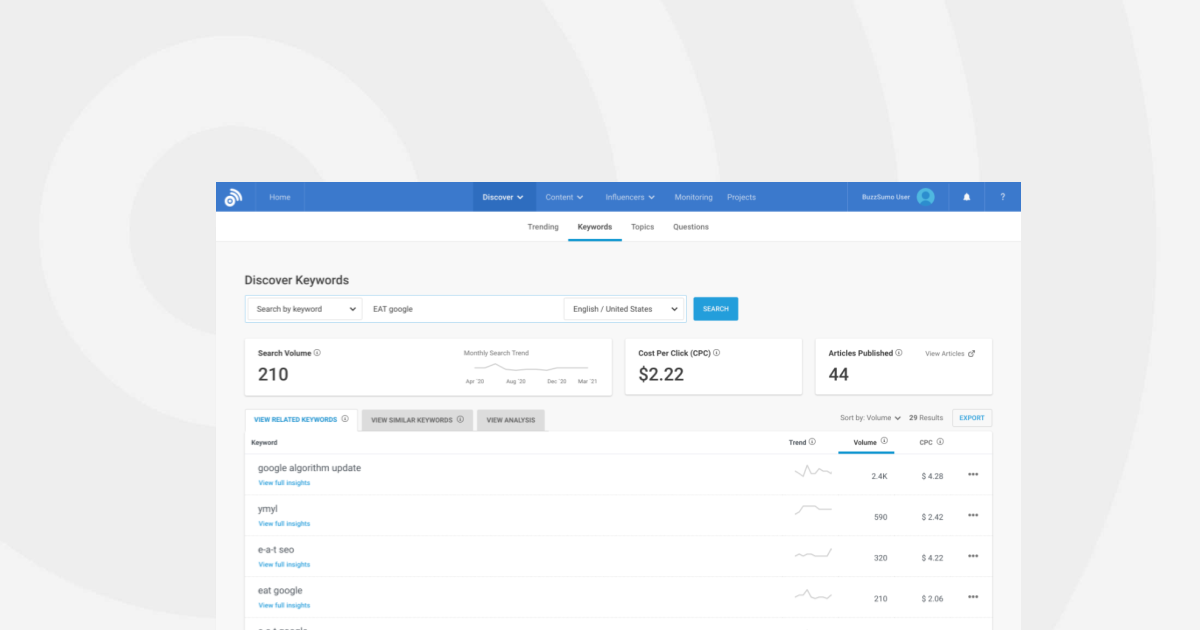
A cornerstone of effective E-E-A-T optimization is the diligent study of content that already excels in engagement and visibility. Tools like content analyzers can reveal patterns in successful content:
- Engagement Metrics: Analyzing shares and social engagement provides insight into content that resonates deeply with audiences. High engagement signals that the content is perceived as valuable, shareable, and satisfying, which Google interprets as a strong indicator of quality.
- Backlinks: Identifying top-linked articles reveals content deemed authoritative and worthy of citation by other credible sources. Backlinks remain a critical signal of trust and authority, bolstering a page’s E-E-A-T score.
- Evergreen Visibility: Prioritizing content that maintains high social engagement over extended periods indicates timeless relevance and enduring value, a hallmark of high-quality, authoritative information.
- Search Rankings: Examining top-ranking content for specific topics provides direct insight into what Google currently favors. Analyzing the structure, depth, and presentation of these articles can inform future content creation.
By dissecting these elements, content creators can glean actionable insights into crafting headlines, structuring arguments, and presenting information in ways that maximize user satisfaction and algorithmic favor.
2. Cultivate and Demonstrate Authority:
Google actively encourages its raters to investigate the author and organization behind a piece of content to ascertain their topical authority. While not always a strict prerequisite for good ratings, demonstrated expertise and authoritativeness are significant advantages. Building niche authority is an investment that yields long-term benefits, including improved rankings for associated content.
- Expert Visibility: Actively seek opportunities for interviews, podcasts, and guest contributions on reputable platforms within your niche. This expands your reach and signals to Google (and users) your recognition as an expert.
- Professional Profiles and Schema Markup: Make it easy for Google to connect your identity and brand across the web. Implementing Organization and Author schema markup provides structured data that explicitly informs search engines about your credentials and the entity behind the content. Consolidating your professional presence across various channels (social media, personal websites, publications) using tools like "link-in-bio" pages further reinforces your digital footprint and authority.
- Consistent Content Creation: Regularly publishing high-quality, insightful content within your niche establishes a track record of expertise and a commitment to providing value.
3. Embrace a Topic-Centric Approach:
Google’s evolution means it’s less concerned with isolated keywords and more with overarching topics and entities. A topic-centric content strategy, often implemented through "topic clusters" and "pillar content," is essential. This involves identifying broad "pillar" topics and then creating a network of supporting "cluster" content that delves into specific sub-topics, all interlinked to demonstrate comprehensive coverage and expertise.
- Topic Research: Utilize tools to identify the most popular and relevant associated topics within your domain. This ensures your content addresses the full spectrum of user inquiries, moving beyond superficial keyword matching to satisfy complex information needs.
- Semantic Understanding: This approach aligns with Google’s increasing ability to understand semantic relationships between concepts, rather than just keyword strings. By covering a topic comprehensively, you signal deeper knowledge and authority, making your content more favorable to Google’s algorithms. The success stories, such as SEO experts boosting traffic by 1,000% using this model, underscore its effectiveness.
4. Provide a "Satisfying Amount" of Content:
The optimal content length is not arbitrary but is entirely dependent on the search intent and the topic’s complexity. Google seeks a "satisfying amount" of content, which means enough detail to thoroughly address the user’s query without unnecessary verbosity.
- Intent-Driven Length: For a quick factual answer, a concise paragraph might be "satisfying." For a comprehensive guide or a complex "how-to," several thousand words might be necessary.
- Data-Driven Analysis: Analyzing engagement metrics relative to content length for specific topics can reveal industry benchmarks. For instance, a detailed guide on "Social Media Marketing" might perform best at 3,000-10,000 words, indicating that users expect an exhaustive resource. This data-driven approach helps content creators tailor content depth to user expectations and topic requirements, preventing both superficiality and overwhelming detail.
5. Cultivate Strategic Relationships:
E-E-A-T scores are heavily influenced by the web’s perception of your brand and content creators. Google employs human quality raters to manually assess content, and their findings inform the self-learning algorithm. The connections your brand and content have are paramount, extending beyond mere backlinks to genuine relationships.
- Influencer Outreach: Identify and connect with credible authors, journalists, and publications within your niche. Tools like journalist databases can facilitate this by highlighting influential voices and their areas of interest.
- Collaborative Ecosystem: Building real, ongoing relationships with authoritative figures and media outlets is crucial. This means engaging with them, sharing valuable insights, and potentially offering exclusive content. Even without direct links, Google’s sophisticated algorithms can semantically understand when your brand, as an entity, is regularly referenced or associated with other influential entities. This network effect signals strong authority and trustworthiness.
6. Prioritize Trusted Sources:
Citing reputable sources is fundamental to demonstrating trustworthiness, thorough research, and objectivity. While external links might direct users away from your site, they serve as powerful signals to Google about the credibility and depth of your content, especially for YMYL topics.
- Variety and Officialdom: Include a diverse range of sources, prioritizing official, academic, and governmental bodies for data and recommendations. For example, when discussing health topics, linking to .gov or .org sites from health organizations demonstrates adherence to credible information.
- Combatting Misinformation: In an age of widespread misinformation, Google places increasing emphasis on verifiable facts. By meticulously citing official sources, content creators reinforce the trustworthiness of their information, aligning with Google’s mission to provide reliable search results.
Optimizing for the Future of Search
The intelligence of Google’s search algorithms, powered by advancements in AI and machine learning, continues to grow at an exponential rate. These systems are increasingly capable of understanding content with a nuance approaching human comprehension. Therefore, for content marketers and SEO professionals, the imperative is clear: the focus must shift entirely to creating content that genuinely serves and satisfies the audience, rather than attempting to appease outdated algorithmic checkboxes.
Assessing your current content strategy to identify areas for E-E-A-T improvement is a logical first step. This involves a continuous cycle of analysis, creation, and refinement, always with the user at the forefront. As Google’s algorithms become more sophisticated, rewarding authentic value and expertise will only intensify. Embracing the principles of E-E-A-T is not merely an SEO tactic; it is a fundamental commitment to producing high-quality, trustworthy information that benefits both users and the broader digital ecosystem.