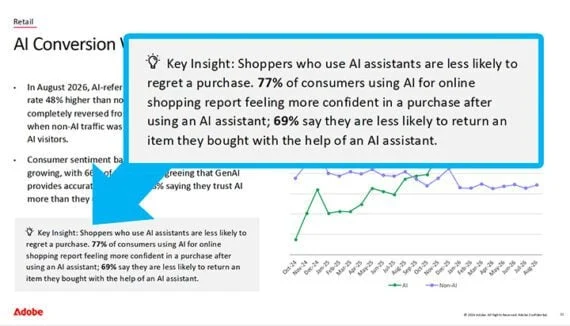
Less than 10% of web traffic to Edible Brands’ websites currently originates from artificial intelligence (AI) platforms, a figure that Chief Digital Officer Erica Randerson acknowledges is small but experiencing “exponential” growth. This burgeoning trend is prompting significant strategic investments and technological overhauls within the company, as Edible Brands seeks to redefine its understanding of omnichannel engagement and prepare for a future where AI agents play a more prominent role in consumer purchasing decisions.
The evolving nature of customer interaction with online retail is at the forefront of Edible Brands’ digital strategy. Randerson highlighted in an interview with Digital Commerce 360 that the company is meticulously tracking how customers discover and interact with its brand across various digital touchpoints. This includes a keen focus on how Edible Brands appears and performs within the emerging ecosystem of “agentic AI” platforms – sophisticated AI systems capable of performing tasks on behalf of users, such as conducting research, making recommendations, and even initiating purchases.
“We’re looking at how our customers are finding the retailer, and we’re also looking at how we show up in more of these agentic AI platforms,” Randerson explained. “That helps Edible to ensure that omnichannel doesn’t just stop in the historical definition of the word.” This forward-thinking approach underscores a recognition that the traditional boundaries of online and offline retail are dissolving, and that AI is poised to become another critical channel for customer engagement.
The Exponential Rise of AI Traffic
While the current volume of AI-driven traffic to Edible Brands’ websites remains a modest fraction of their overall digital presence, Randerson’s observation of its rapid ascent is a key driver for their proactive strategy. “What we’ve noticed is, while the traffic we’re getting from a ChatGPT or a Claude or Perplexity may still be a small percentage, it is growing at an exponential rate,” she stated. This trajectory, she anticipates, is only set to accelerate, compelling the company to actively explore and integrate AI into its operations.
The initial bewilderment surrounding agentic AI, as described by Randerson, echoes a sentiment prevalent across many industries in early 2025. “I remember being at a conference in early 2025 and talking about agentic AI. The room was just trying to figure out: What does that mean?” she recalled. “We all were thrown this new buzzword and what are we even dealing with, much less how are we optimizing for it?” This period of uncertainty has now transitioned into a phase of active adaptation and investment for forward-thinking companies like Edible Brands.
Strategic Investments in Infrastructure and Platform
In response to these evolving trends, Edible Brands is making “significant investments” in its technology and data infrastructure. These investments are not merely speculative; they are informed by sufficient “signals” indicating the increasing influence of agentic AI on e-commerce. The company’s strategic pivot includes a substantial replatforming effort, moving away from a proprietary, legacy e-commerce system to leverage the capabilities of Shopify. This transition also extends to their point-of-sale (POS) systems, signaling a holistic approach to modernizing their technological backbone.
The choice of Shopify as a primary e-commerce partner is a deliberate one, rooted in Shopify’s deep engagement with AI development. “Shopify has been one of the larger technology partners that has really deepened relationships with a lot of the AI engines out there,” Randerson noted. “We believe it’s going to be at the forefront of developing more in-LLM [large language model] shopping opportunities that we want to be showing up for very early on.” This partnership is expected to provide Edible Brands with early access to innovative AI-driven shopping features and integrations.
Redefining Consumer Search and Interaction
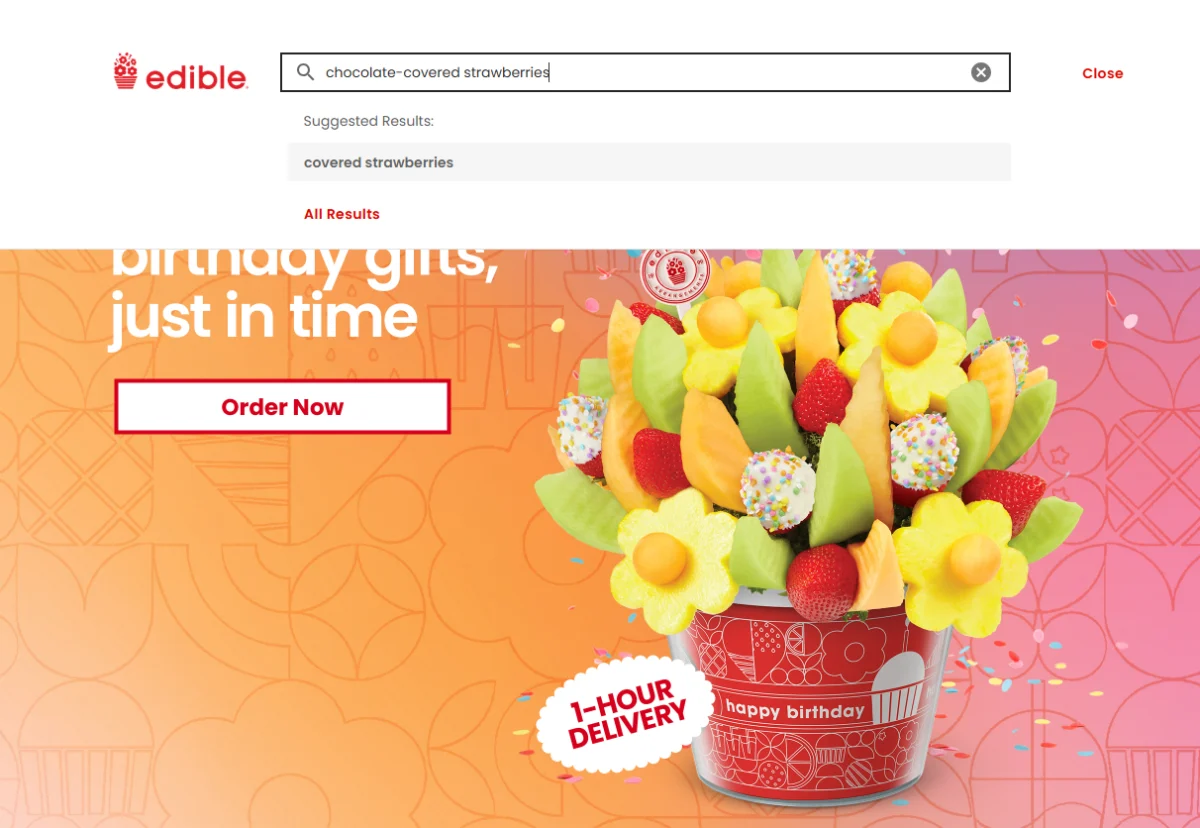
The advent of large language models (LLMs) is fundamentally altering consumer behavior, particularly in how they search for products and services. Randerson observed a significant shift away from traditional keyword-based searches towards more conversational and intent-driven queries. Instead of typing “chocolate-covered strawberries,” consumers are now posing complex questions and making detailed requests to AI platforms. For instance, a consumer might prompt an AI with, “Get best gift for my uncle who loves X, Y and Z.”
This transformation in search behavior has a direct impact on the data Edible Brands collects. “We’ve seen a lot of change in the data that we’re collecting through our own on-site search,” Randerson elaborated. “That’s really helping inform us of this trend of how customers interact with LLMs. It is transitioning into how they expect to be able to interact with websites.” This insight emphasizes the critical need for robust data analytics and infrastructure that can interpret and respond to these new forms of consumer intent.
Edible Brands’ Position in the E-commerce Landscape
Edible Brands holds the No. 182 position in the Digital Commerce 360 Top 2000 Database, an authoritative ranking of North America’s largest online retailers by their annual e-commerce sales. This ranking places them among a significant cohort of major online players, many of whom are also grappling with the implications of AI. According to Digital Commerce 360 data, over 110 of these Top 2000 retailers utilize Shopify as their e-commerce platform. In 2025 alone, the combined web sales of these Shopify-powered retailers reached an impressive $10.458 billion, highlighting the platform’s substantial reach and influence in the e-commerce sector.
Broader AI Integration Beyond Web Traffic
Edible Brands’ embrace of AI extends far beyond managing incoming web traffic. The company views AI as a transformative force that can be integrated across its entire operational spectrum. “AI is something that we’ve really embraced, not just in the lens of e-commerce over the past year, but holistically as a company,” Randerson affirmed.
Future applications of AI at Edible Brands include enhancing the customer experience, both in-store and online. This encompasses optimizing operational efficiencies within physical retail locations and delivering a more seamless and personalized e-commerce journey. Furthermore, the company is exploring AI’s potential to streamline its supply chain, aiming for greater efficiency and responsiveness.
Currently, Edible Brands is already leveraging AI on its e-commerce site to assist with real-time merchandising decisions, a testament to their ongoing commitment to practical AI implementation. The company also boasts an internal data science team, which includes a dedicated AI division currently under development. This internal expertise suggests a long-term vision for developing proprietary AI solutions and direct AI integrations.
“I wouldn’t count us out for having some more direct paths [to AI integration] as well,” Randerson commented, hinting at the potential for the company to develop its own innovative AI applications. “But initially will likely be the path through Shopify.” This phased approach allows Edible Brands to capitalize on existing AI advancements through its platform partner while concurrently building its internal capabilities for future, more bespoke AI integrations.
The Road Ahead: Adapting to an AI-Centric Future
The rapid evolution of AI technologies presents both challenges and opportunities for retailers. As agentic AI platforms become more sophisticated and integrated into daily life, their role in the consumer journey will undoubtedly expand. Edible Brands’ proactive strategy—investing in technology, embracing partnerships with AI leaders like Shopify, and understanding shifting consumer behavior—positions them to not only adapt but to potentially lead in this new era of e-commerce. The company’s commitment to continuous learning and strategic investment underscores a clear understanding that staying ahead in the digital marketplace requires a constant evolution of strategy and technological adoption. The ongoing “learning alongside everyone else” approach, coupled with significant investment, suggests a company poised to navigate the complexities and capitalize on the immense potential of AI in shaping the future of retail.