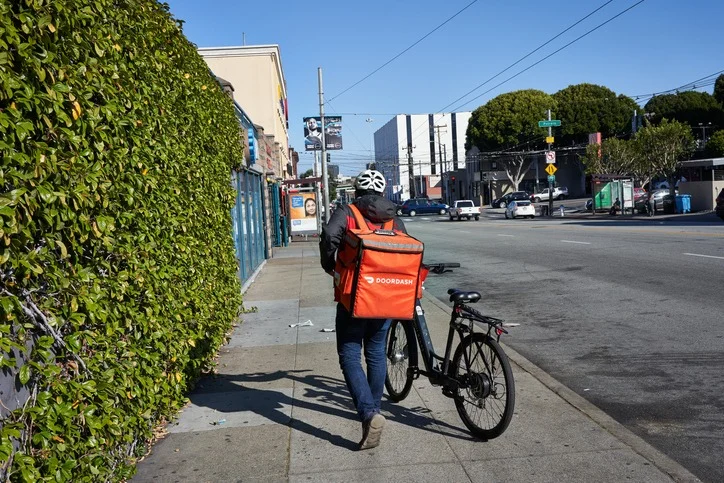
DoorDash, the leading food delivery platform in the United States, has reached a landmark $131.5 million settlement with New York City following an extensive investigation into the company’s labor practices. The settlement, described by city officials as the largest of its kind in New York’s history, addresses systemic failures that resulted in hundreds of thousands of delivery workers being underpaid, paid late, or denied compensation entirely. The agreement marks a significant turning point in the ongoing regulatory scrutiny of the gig economy, where the balance of power between digital platforms and independent contractors remains a point of intense legal and social friction.
The investigation, led by the New York City Department of Consumer and Worker Protection (DCWP), uncovered a series of discrepancies in how DoorDash calculated and distributed earnings to its "Dashers." According to the terms of the settlement, more than $115 million will be distributed to approximately 264,000 workers who were affected by these payroll failures. An additional $16.7 million has been earmarked for civil penalties and administrative costs. The settlement follows years of tension between the city and delivery apps over minimum pay standards and worker protections.
The Evolution of Gig Economy Regulation in New York City
The settlement is situated within a broader chronological push by New York City to regulate the burgeoning delivery sector. In 2023, the city implemented a first-of-its-kind minimum pay rule for app-based delivery workers, initially setting the rate at $17.96 per hour (excluding tips), with scheduled increases intended to reach nearly $20 per hour. DoorDash, along with competitors like Uber Eats and Grubhub, initially challenged these regulations in court, arguing that the higher wage requirements would force them to raise fees for consumers and reduce the number of available delivery slots.
However, the specific issues addressed in this $131.5 million settlement relate more directly to the fundamental execution of payroll and the interpretation of labor laws. The city’s investigation found that DoorDash failed to properly compensate workers for time spent logged into the application between deliveries—a crucial metric in determining total earnings under New York’s specific labor framework. Furthermore, technical malfunctions within the DoorDash platform led to significant delays in payments, leaving thousands of workers without their expected income for extended periods.
Official Response and Corporate Accountability
In an uncharacteristically blunt public statement, DoorDash executives acknowledged the severity of the oversight. “Simply put, we screwed up,” the company stated on Tuesday. “Our mistakes meant some Dashers were underpaid or paid late. While these mistakes weren’t intentional, that doesn’t make them okay.”
The company’s defense rested primarily on the complexity of its logistical operations. DoorDash attributed many of the payment errors to “technical glitches” and “complicated delivery situations,” such as orders that were canceled mid-route or trips that crossed municipal boundaries, which triggered conflicting regulatory requirements. While DoorDash maintains that its original interpretation of pay calculations for "on-call" time was legally defensible, the company confirmed it would adopt the city’s stricter calculation methodology moving forward to ensure compliance and prevent future litigation.
Industry analysts suggest that DoorDash’s direct apology is a strategic attempt to manage a growing trust deficit among its workforce. By separating the technical errors from the legal disagreements, the company is attempting to project a more "human" and transparent corporate image, contrasting with the often defensive posture taken by tech giants facing regulatory penalties.
The Power of Digital Storytelling: MrBeast and The Rockefeller Foundation
While DoorDash navigates the complexities of labor law, another shift in the media landscape is highlighting the changing nature of influence and public engagement. Jimmy Donaldson, known globally as MrBeast, has partnered with the Rockefeller Foundation to advocate for the use of high-impact video storytelling in addressing global crises.
In a joint opinion piece published in the New York Times, MrBeast and Rockefeller Foundation President Rajiv Shah argued that traditional philanthropic organizations are struggling to maintain relevance in an era of extreme media fragmentation. They contend that the "attention economy" requires a new approach to communication—one that prioritizes human-centric narratives and visual engagement over dense policy whitepapers.
The partnership leverages the massive reach of "Beast Philanthropy," a digital initiative that has already demonstrated the scale of modern creator influence. For example, a video titled “I Built 10 Schools Around the World” garnered over 82 million views and 2.4 million likes in a matter of months. Shah and Donaldson argue that these figures represent more than just entertainment; they represent a unique capacity to mobilize younger generations toward issues like hunger, poverty, and education.
This shift suggests that for organizations to be effective in the 21st century, they must think like media companies. The collaboration underscores a growing trend where established institutions seek the credibility and "trust-at-scale" that top-tier digital creators have built with Gen Z and Millennial audiences.
AI Agents and Platform Friction: Meta’s Muse vs. Amazon
The rapid advancement of artificial intelligence is also creating new battlegrounds for corporate sovereignty and consumer privacy. Meta’s new AI personal assistant, Muse, recently achieved significant commercial success, reaching the top of Apple’s U.S. App Store within two weeks of its debut. However, the app’s ability to act as an autonomous "agent" has drawn the ire of major retailers, most notably Amazon.
Amazon recently took the preemptive step of blocking Muse from accessing its website to facilitate shopping. The retail giant expressed concerns that Meta did not provide sufficient notice regarding the agent’s behavior and that Muse does not properly identify itself while browsing the site. More critically, Amazon raised alarms about the security of customer credentials, fearing that an AI intermediary could expose sensitive payment information or passwords.
An Amazon spokesperson emphasized that third-party applications must operate with transparency and respect the decisions of service providers. In response, Meta has asserted that Muse is designed with privacy as a priority, claiming the agent cannot view users’ passwords or payment data and that all credentials are stored in encrypted environments.
This conflict highlights a burgeoning tension in the AI industry: the "Agentic Web." As AI moves from being a chatbot to a tool that can perform actions—like booking flights or buying groceries—the friction between the platforms providing the AI and the platforms hosting the commerce will likely intensify. For businesses, the risk of "black box" AI agents interacting with their systems represents a significant reputational and security hurdle.
A Crisis of Access: The White House Press Pool Walkout
The principles of transparency and institutional trust are also being tested in the political sphere. In a rare display of unified protest, four major television networks—ABC, CBS, NBC, and Fox News—suspended their participation in the White House press pool. The move came after the Trump administration barred representatives from CNN, MS NOW, and Politico from entering White House grounds.
The White House press pool is a long-standing arrangement where a small group of journalists covers the President’s movements and briefings on behalf of the entire media corps. By excluding specific outlets based on their reporting, the administration triggered a collective response from competitors who viewed the move as an assault on the First Amendment.
“The public has a vital interest in receiving accurate, independent information about its government,” the networks said in a joint statement. “No administration should restrict a news organization because it objects to its reporting.”
The walkout is significant not only for its impact on daily news cycles but for the precedent it sets. When traditional rivals like Fox News and NBC align on a singular principle, it signals a profound breakdown in the relationship between the executive branch and the Fourth Estate. The incident reflects a broader global trend of "access journalism" being used as a tool for political leverage, further complicating the public’s ability to receive unfiltered information.
Broader Impact and Analysis of Emerging Trends
These four seemingly disparate stories—a massive labor settlement, a philanthropic media partnership, a clash over AI agents, and a press freedom protest—are connected by a central theme: the shifting nature of trust and authority in a digital-first world.
For DoorDash, the $131.5 million settlement is a reminder that "growth at all costs" is no longer a viable strategy in highly regulated urban markets. The city’s victory demonstrates that labor protections can be successfully enforced even against the most sophisticated tech platforms. For the workers, the settlement provides a necessary financial reprieve, but the underlying debate over the classification of gig workers remains unresolved.
In the media and technology sectors, the rise of creators like MrBeast and tools like Meta’s Muse suggests that the gatekeepers of the past are being replaced by algorithms and personalities. However, as the Amazon-Meta conflict shows, these new tools will face immediate pushback if they threaten the security or business models of established players.
Finally, the White House press pool crisis serves as a stark reminder that the structures meant to ensure transparency are fragile. As political and corporate entities become more adept at controlling their own narratives through direct-to-consumer channels and AI, the role of independent oversight—whether by journalists, regulators, or "watchdog" creators—becomes increasingly vital to a functioning society.
The convergence of these events suggests that the coming years will be defined by a struggle for "digital sovereignty." Whether it is a delivery driver seeking a fair wage, a non-profit seeking an audience, or a news organization seeking access, the common challenge is navigating a landscape where the rules are being rewritten by code, commerce, and collective action.