Siti Muinah
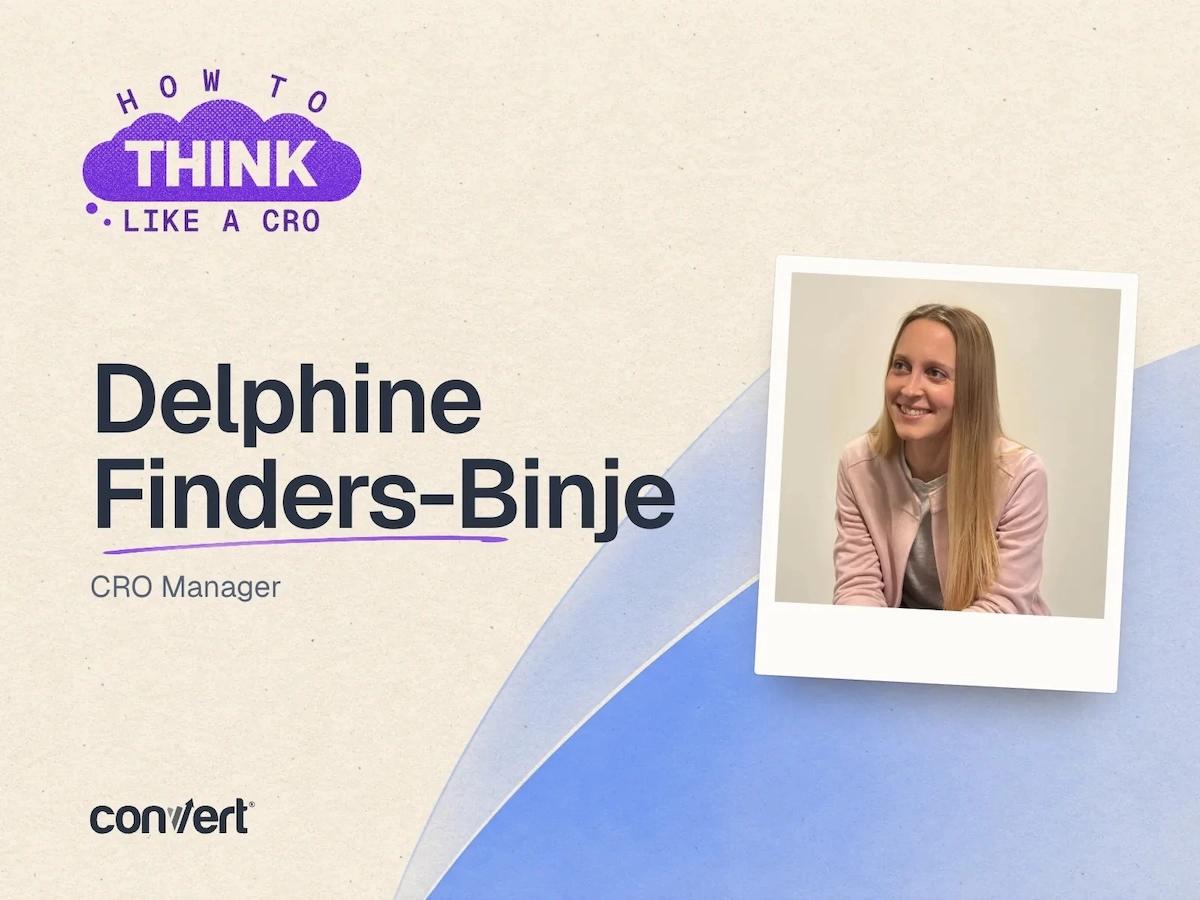
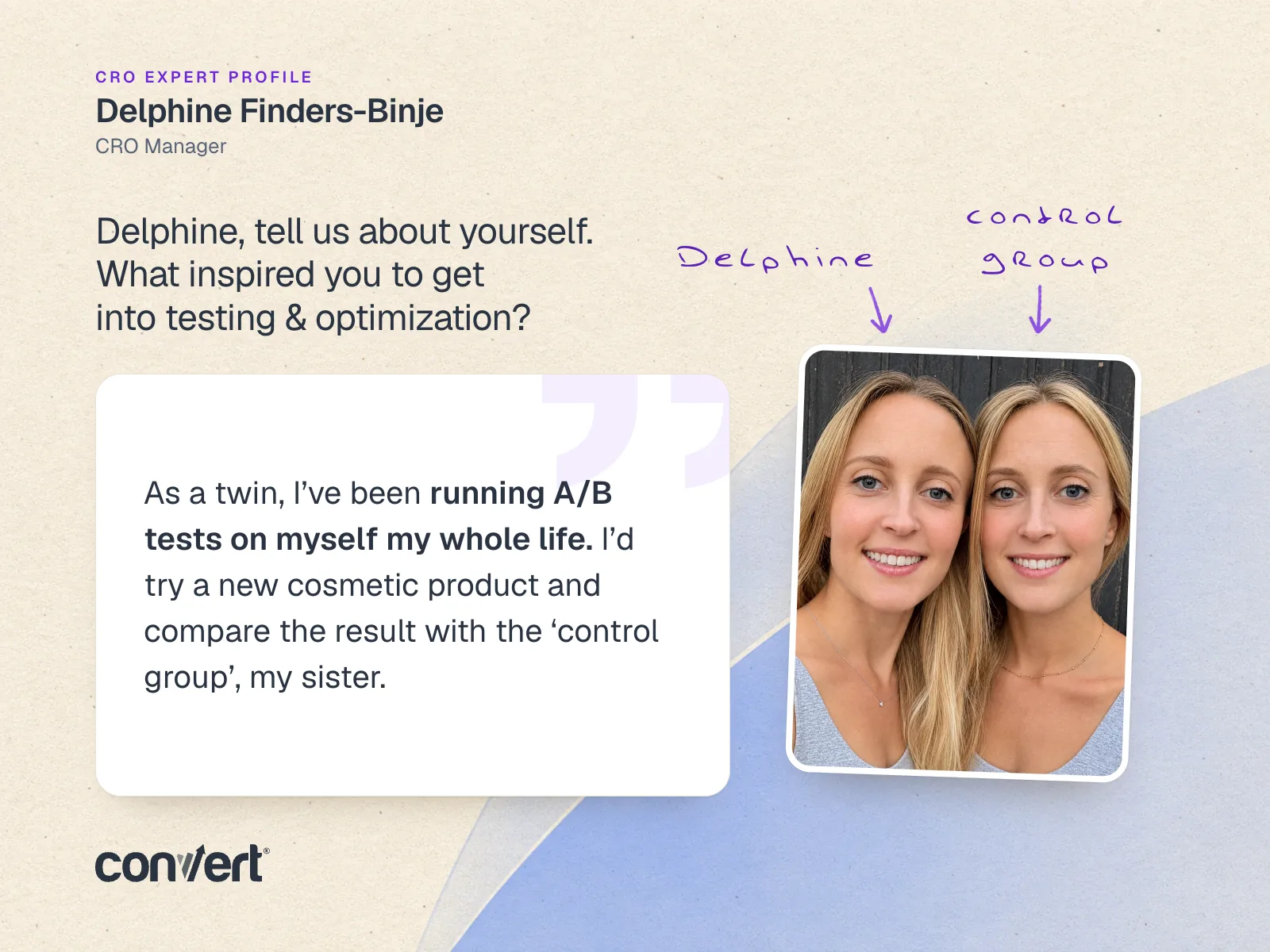
Delphine Finders-Binje has emerged as a prominent voice in the global experimentation community, recently sharing her professional methodology as part of the Testing Mind Map series. Her perspective offers a unique bridge between the foundational principles of psychological observation and the high-speed, automated future of Conversion Rate Optimization (CRO). At 32 years old, Finders-Binje views her career not as a choice made in adulthood, but as a lifelong practice rooted in her identity as a twin. This personal background, she argues, provided a biological "control group" that allowed her to observe variations in outcomes based on different inputs—from cosmetic products to behavioral choices—long before she encountered professional A/B testing software.
Her transition from traditional marketing aspirations, such as billboard and television commercial production, to the digital optimization space was influenced by her father’s background in software development. During an early internship, the introduction of specialized A/B testing tools provided the framework she needed to combine her analytical rigor with a natural curiosity regarding consumer psychology. Today, Finders-Binje is recognized for her "inspector-of-finished-work" approach, a meticulous style of auditing digital experiences to ensure that data-driven evidence consistently supersedes subjective opinion.
The Philosophical Shift: Facts Over Opinions in the Digital Age
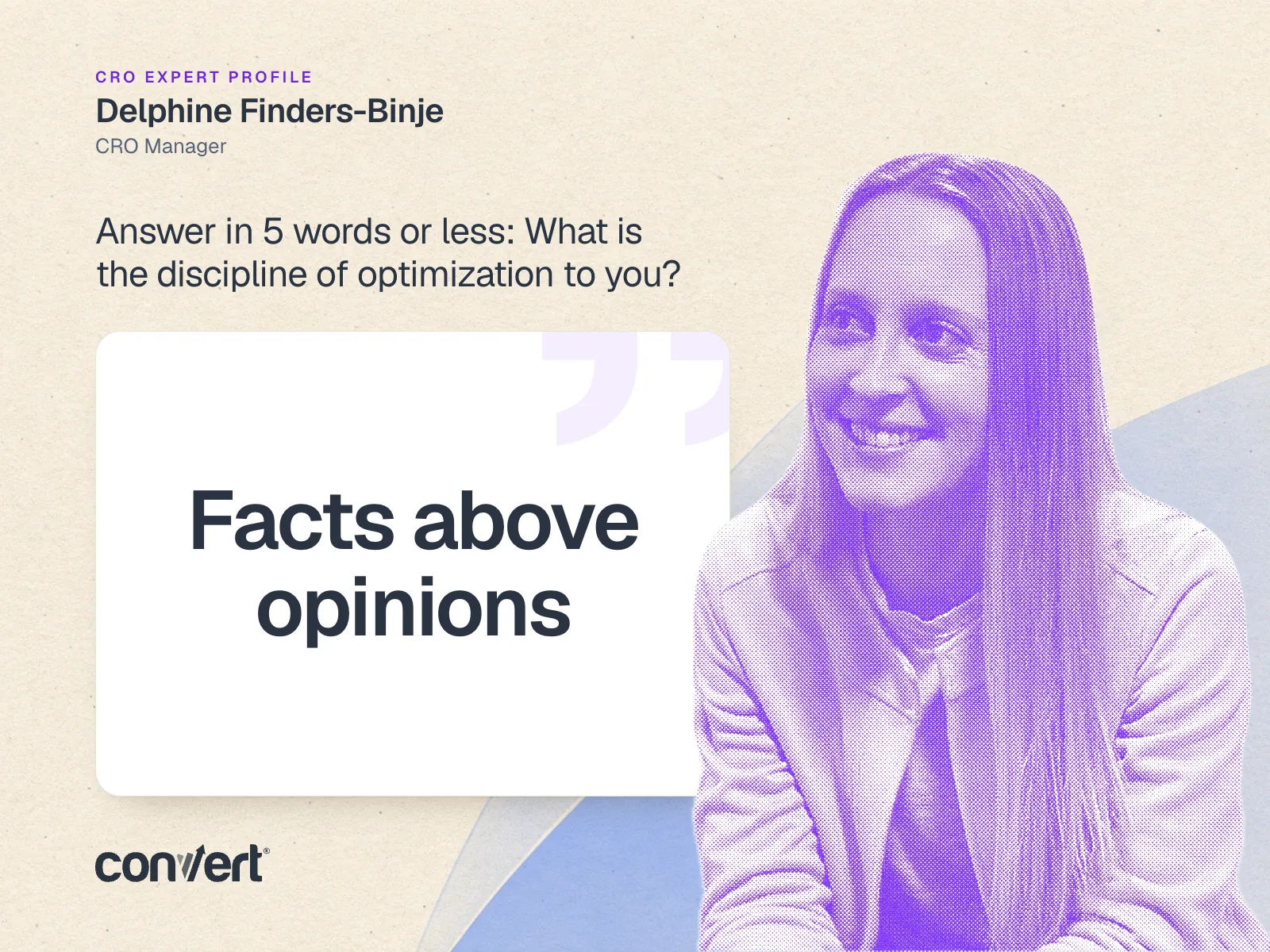
The core of Finders-Binje’s professional philosophy is summarized in a single directive: prioritize facts above opinions. In the modern corporate environment, where the "Highest Paid Person’s Opinion" (HIPPO) often dictates design and strategy, experimentation serves as a democratic stabilizer. By shifting the focus from internal conviction to external evidence, organizations can avoid the costly mistakes associated with gut-feeling decision-making.
Finders-Binje’s career has spanned over 250 documented A/B tests. While not every experiment results in a "winning" lift, she maintains that the value of experimentation lies in the iterative learning process. In her view, a "losing" test is only a failure if the data it produces is not used to inform the next hypothesis. This mindset is critical as the industry moves away from the "tidy" version of experimentation—where every change is expected to be a breakthrough—and toward a more realistic, production-heavy environment where survival and incremental gains are the standard.
Integrating Artificial Intelligence: The Tool Versus Colleague Paradigm
As artificial intelligence (AI) begins to commoditize the execution of digital tasks, Finders-Binje has adopted a pragmatic approach to its integration. She likens AI to a ball: a neutral instrument whose value is determined entirely by the game being played and the intent of the player. Within her current workflows, AI is no longer a speculative concept but a functional component of the testing lifecycle.

She utilizes AI to perform high-level analysis of test results, review documentation, and audit test screenshots for visual discrepancies. One of the most significant advancements in her process is the use of AI to tailor reporting for different stakeholders. By feeding the tool raw data and test iterations, she can generate technical reports for web analysts that emphasize statistical significance and data integrity, while simultaneously producing high-level summaries for product managers that focus on strategic outcomes and broader business implications.
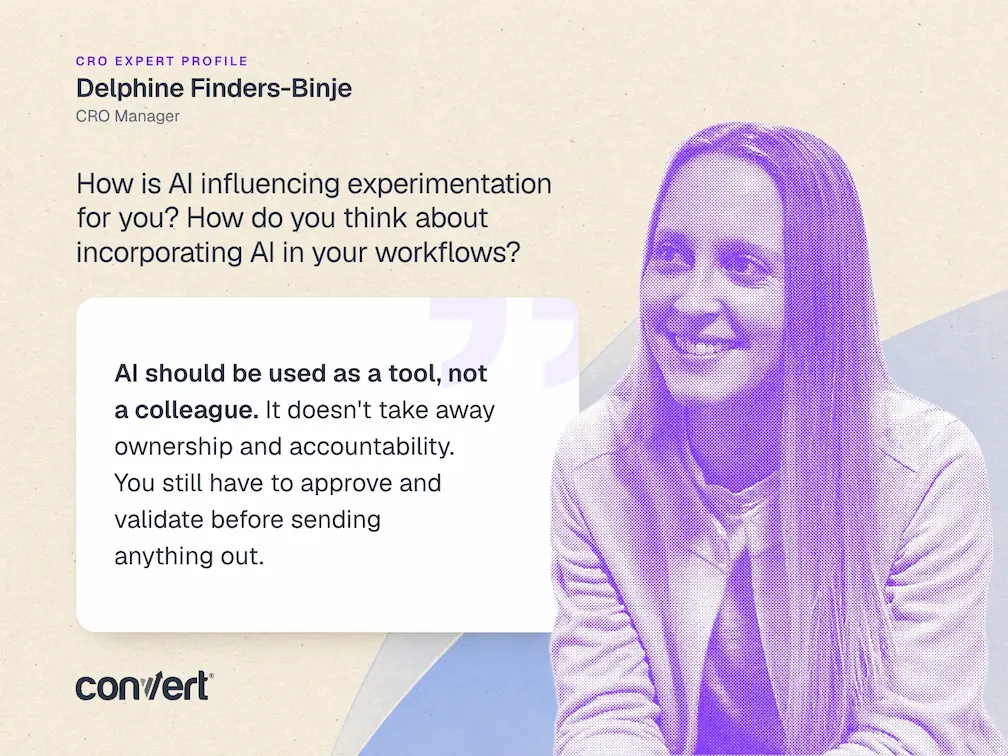
However, Finders-Binje remains firm on the boundary between human and machine. She views AI strictly as a tool rather than a colleague, emphasizing that accountability and ownership must remain with the human practitioner. The final validation of any report or strategic recommendation still requires the nuanced judgment of a professional who understands the specific context of the brand and its audience.
Quantifying the AI Dividend: 16 Hours of Strategic Recovery
The most compelling argument for AI integration in the CRO space is the quantifiable gain in efficiency. Finders-Binje reports that by automating repetitive tasks—such as data entry, basic analysis, and report formatting—she has been able to save approximately 16 hours of labor per testing period for a medium-sized client.
In financial terms, this efficiency translates to roughly $35,000 in recovered value. This "AI dividend" allows agencies and internal teams to reinvest their time into higher-value activities, such as deep strategy development and increasing the overall velocity of testing. As the cost of customer acquisition (CAC) continues to rise across digital platforms, the ability to run more tests in less time becomes a significant competitive advantage. The focus of the practitioner shifts from the "how" of execution to the "why" of strategy.
Case Study: The "Creep Factor" and the Limits of Personalization
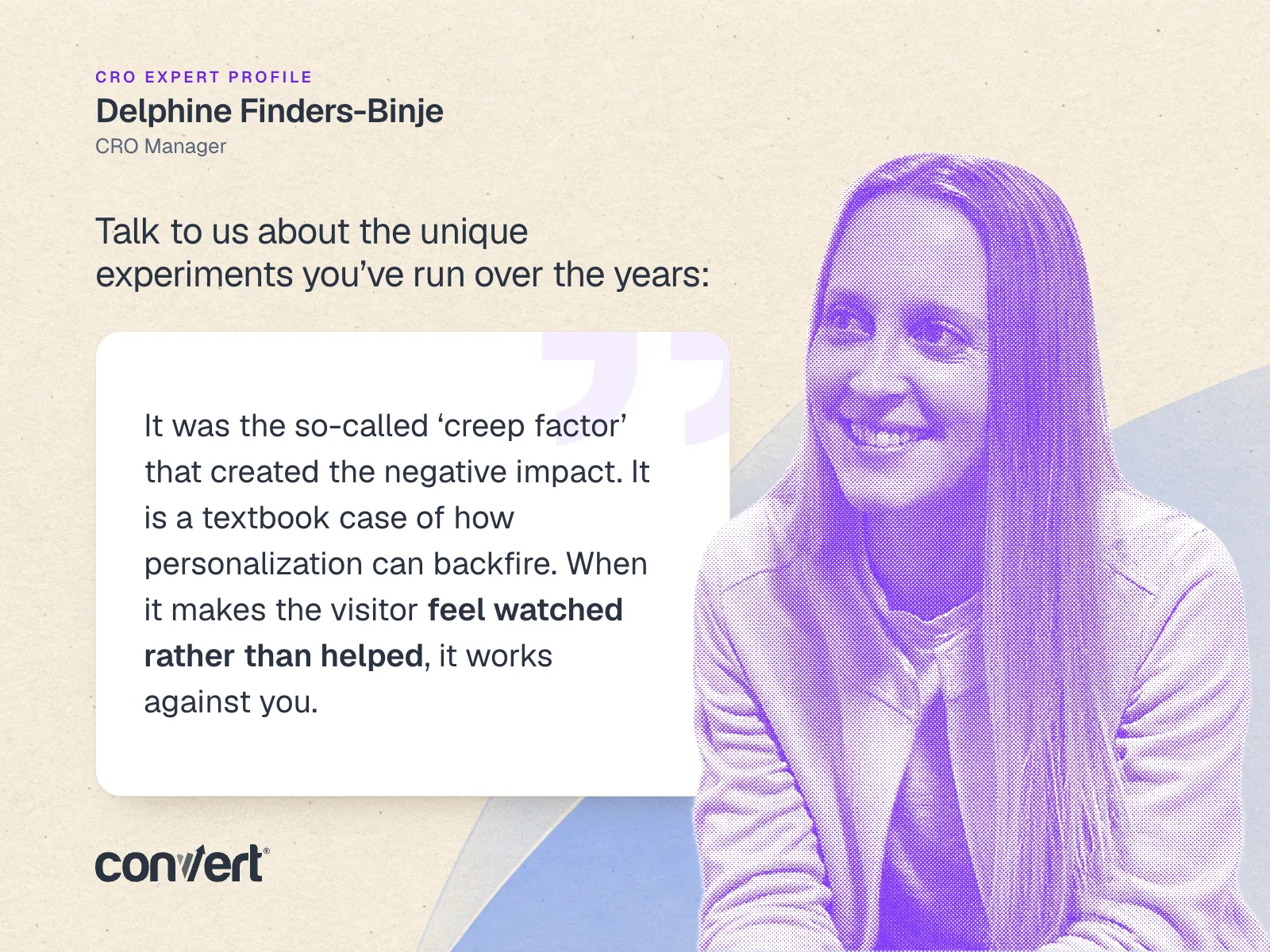
One of the most instructive examples from Finders-Binje’s portfolio involves a grocery e-commerce platform that attempted to transition from generic cross-sell carousels to highly personalized product recommendations. The initial hypothesis was straightforward: replacing generic offers with products a customer had previously purchased would increase relevance and, consequently, revenue.
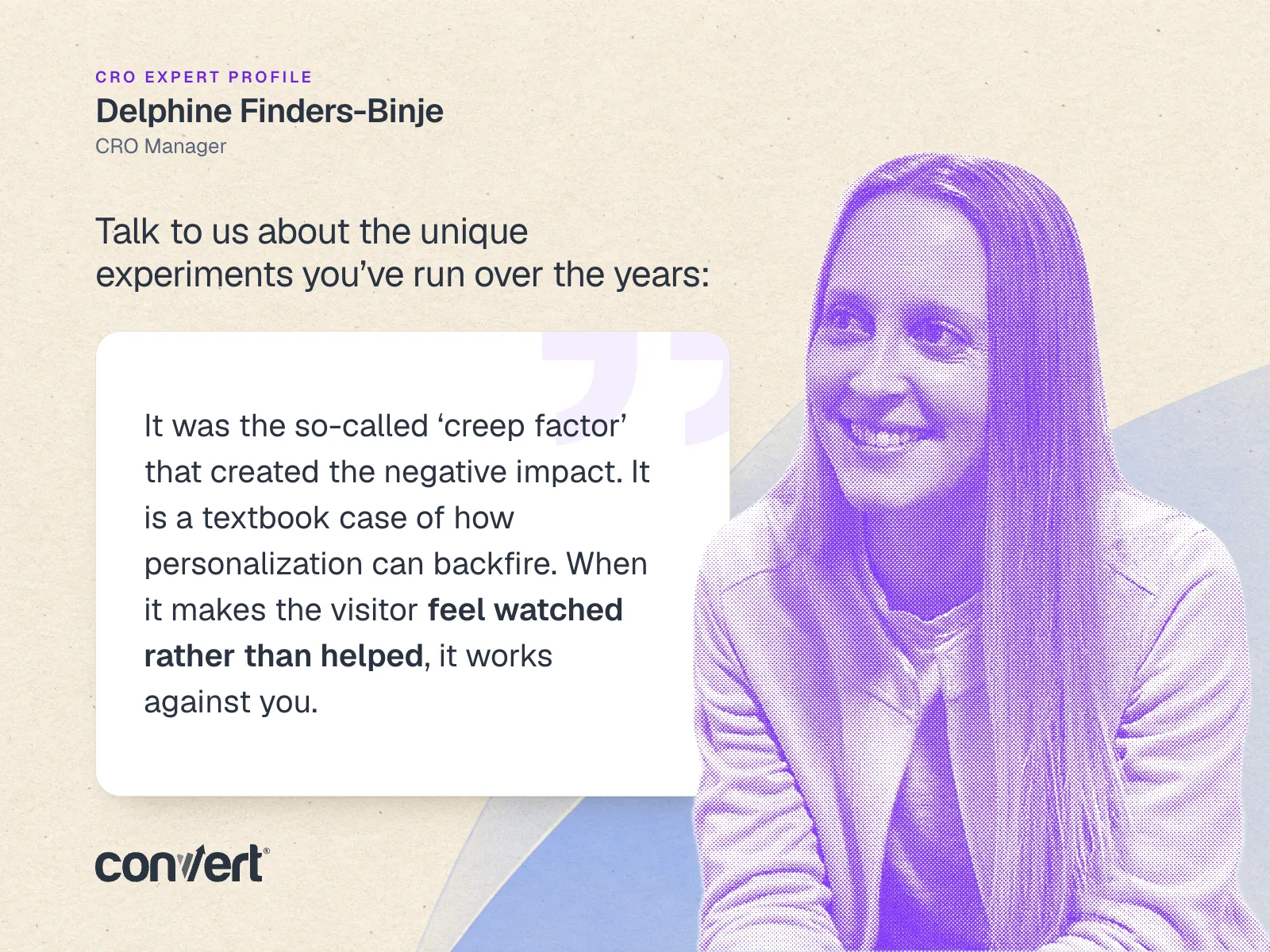
The result was a 5% drop in revenue per visitor. Initial analysis confirmed that the drop was not due to the removal of the old carousel, which had seen minimal engagement. Instead, the problem was psychological. The header used for the new section—"Products from your last order"—triggered what Finders-Binje calls the "creep factor." Visitors felt watched and monitored rather than assisted.
The subsequent iteration of the test kept the personalized logic but removed the intrusive title. This minor adjustment resulted in a 4% lift in revenue per visitor. This case serves as a vital reminder that personalization must be balanced with user privacy and comfort. When the mechanics of tracking become too visible, it creates a friction point that can override the benefits of relevance.
The Historical Evolution of Experimentation
To understand where experimentation is headed, it is necessary to look at its chronological development within the marketing sector:
- The Early Digital Era (2000s): Testing was largely limited to simple color changes and button text, often driven by technical teams rather than marketing departments.
- The Maturity of CRO (2010s): Specialized tools like Optimizely and Convert became mainstream. The focus shifted to user psychology, heatmapping, and full-funnel optimization.
- The Automation Surge (2020–2023): The integration of machine learning allowed for basic automated variations, but human oversight remained heavy for all aspects of reporting and hypothesis building.
- The Generative AI Era (2024–Present): AI begins to handle the "execution" layer—writing code for tests, analyzing data sets, and generating reports—allowing human experts to focus almost exclusively on high-level strategy and ethical judgment.
Finders-Binje notes that this evolution mirrors the adoption of the internet itself. While some tasks become redundant, the demand for sophisticated judgment and strategic oversight only increases. Practitioners who fail to adjust to this shift risk being left behind in a market that now demands both high rigor and high speed.
Future Implications: The Human Frontier of Judgment
As execution becomes commoditized, the future of CRO and experimentation will be defined by "judgment-based" value. Finders-Binje argues that while AI can process data at an inhuman scale, it lacks the ability to understand the nuance of human emotion or the long-term ethical implications of a specific marketing tactic.
The next generation of experimentation professionals will need to be experts in documentation and process management. Because AI and automation are fueled by data, the quality of an organization’s documentation will determine the quality of its AI-driven insights. Rigorous record-keeping is no longer just a bureaucratic requirement; it is the essential infrastructure for the modern optimization engine.
Conclusion: Adapting to the New Reality of Optimization
The insights provided by Delphine Finders-Binje suggest that the discipline of optimization is undergoing a fundamental transformation. The focus is shifting from "running tests" to "managing an experimentation ecosystem." In this new reality, the successful practitioner is one who can leverage AI to handle the mundane while maintaining a sharp focus on the psychological and strategic elements that drive human behavior.
For companies looking to scale their experimentation programs, the message is clear: invest in processes that support speed, embrace tools that offload execution, and never lose sight of the fact that behind every data point is a human visitor who values helpfulness over intrusion. As Finders-Binje’s career demonstrates, the path to optimization is a continuous cycle of comparing, learning, and iterating—a process that is now being supercharged by the very technology it seeks to measure.

 Azzam Bilal Chamdy
 Ammar Sabilarrohman