In an increasingly saturated media landscape, the pursuit of impactful Public Relations (PR) campaigns has never been more challenging. PR professionals routinely grapple with the demanding task of conceiving innovative ideas, finding the requisite time for thorough development, and, crucially, possessing the conviction to assert that a particular concept will unequivocally resonate. The traditional reliance on creative intuition, while valuable, is proving insufficient against the backdrop of an information overload, where attention spans are fleeting, and genuine engagement is a hard-won prize. However, a significant shift is underway, propelled by the strategic integration of robust research and data analytics, promising a drastic increase in the probability of campaign success. This methodology, leveraging advanced content analysis tools and drawing insights from successful precedents, offers a structured, two-step process for crafting campaigns that not only secure widespread coverage and valuable backlinks but also ignite profound social engagement.
The evolution of PR has seen a transformation from largely reactive media relations and press release distribution to a proactive, data-informed discipline centered on content strategy and digital outreach. In this contemporary environment, a successful PR campaign is often measured not just by mentions, but by tangible metrics like earned media, high-quality backlinks (critical for search engine optimization), and significant social shares. This paradigm shift necessitates a departure from mere guesswork and embraces a scientific approach to ideation, where creativity is informed by empirical evidence rather than solely by subjective brainstorming. The core tenet of this modern approach is to de-risk the ideation process by systematically understanding what content thrives, why it thrives, and how to replicate that success.
1. Strategic Content Theme Identification and Emotional Resonance
The foundational step in developing a high-impact PR campaign lies in understanding the thematic and emotional undercurrents that drive public interest and media engagement. To confidently predict a PR idea’s success, practitioners must meticulously identify themes that consistently achieve two critical benchmarks: consistent discussion across media platforms and robust sharing and linking across digital channels. The primary Key Performance Indicator (KPI) here is the acquisition of media coverage and backlinks, with social engagement serving as a crucial secondary indicator of audience resonance.
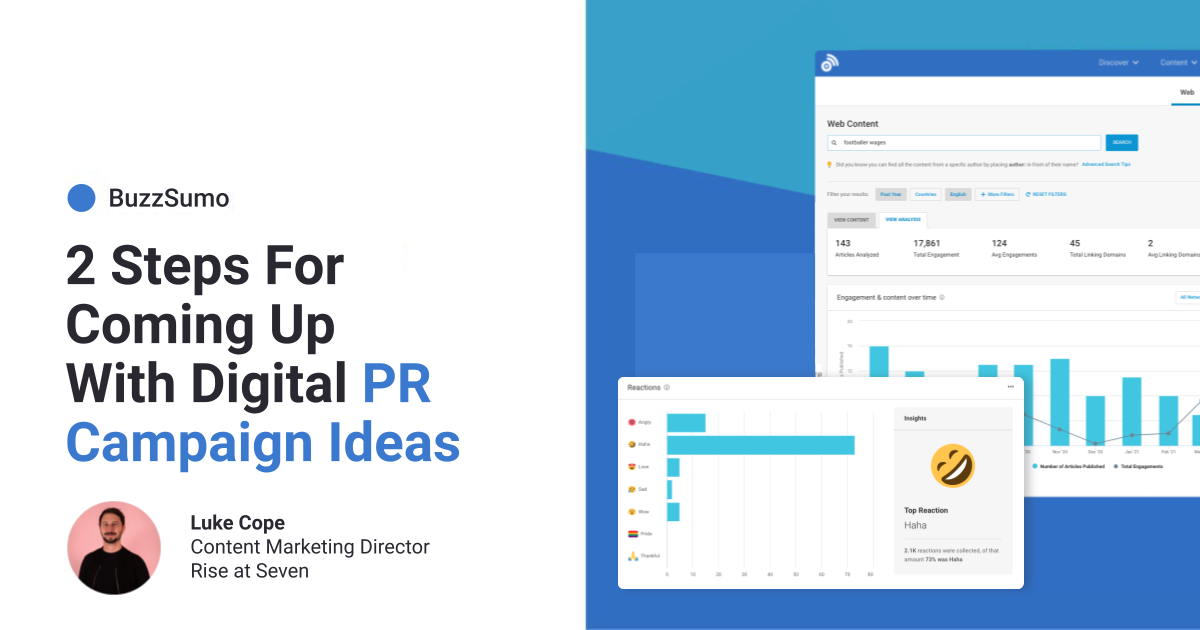
At this preliminary stage, the objective is not to formulate a concrete campaign idea but rather to unearth fertile ground for ideation. Placing immediate pressure to conjure a definitive concept during initial research or brainstorming sessions is counterproductive. Instead, the process commences with systematic exploration using sophisticated content analysis tools, such as BuzzSumo’s Content Analysis Report. This tool allows for a deep dive into content performance across various topics.
For instance, consider a client specializing in honeymoon packages. The initial research would logically begin with the core product area: "Honeymoons." However, the strategy mandates branching out to related, yet broader, themes. This might include "Weddings," "Engagement Rings," "Marriage Proposals," or even "Destination Weddings." The exploration should continue until the themes become too tangential to the client’s core offering. This iterative process of expanding and refining search terms within the content analysis tool reveals patterns of content volume, engagement rates, and prevalent emotional sentiments.
Illustrative Data & Thematic Deep Dive:
- "Honeymoons": Initial analysis might show a steady, but perhaps not explosive, volume of articles (e.g., 500 articles/month) with moderate social shares (e.g., average 2,000 shares). The dominant emotion might be "joy" or "aspiration."
- "Weddings": This broader term could reveal a significantly higher volume (e.g., 2,500 articles/month) and greater engagement (e.g., average 7,500 shares), encompassing themes of planning, trends, and traditions. Emotions could range from "excitement" to "stress."
- "Engagement Rings": Further investigation might highlight peaks in content volume around specific times of the year (e.g., holiday season proposals) and strong engagement driven by aspirational visuals and discussions around cost or ethical sourcing. Here, emotions like "love," "excitement," and "curiosity" might dominate.
By meticulously analyzing these trends, PR strategists can pinpoint themes with consistent traction and high engagement potential, even before a specific campaign idea takes shape. The goal is to identify topics that are not only frequently discussed but also actively shared and linked, indicating genuine audience interest and media appetite.
Case Study: The "World Without Light Pollution" Campaign
A compelling example of this research-driven ideation is the "World Without Light Pollution" campaign. The client’s core product was star maps, a niche offering. Initial research around "Star Maps" proved insufficient for a broad campaign. The strategist then broadened the scope:
- Product Theme: Star maps (limited campaign potential).
- Secondary Theme 1: Supermoons (high social engagement, regular occurrence for reactive PR).
- Secondary Theme 2: Night Sky (significant social engagement, evoking wonder).
- Secondary Theme 3: Light Pollution (high social engagement, timely topic with broader societal implications and more scope for creative ideas).
The "Light Pollution" theme emerged as particularly potent. It demonstrated consistent discussion, but at the time of the campaign’s conception, it was experiencing a surge in relevance. SpaceX’s satellite launches were sparking debates about increased celestial interference, and the broader context of COVID-19 had brought general pollution and environmental impact to the forefront of public discourse. This confluence of factors signaled an opportune moment for a campaign centered on this theme.
Crucially, the emotional analysis of articles related to light pollution revealed two dominant sentiments: sadness over the loss of natural night skies and a "wow factor" associated with pristine celestial views. This emotional dichotomy provided clear angles for outreach. The campaign had to be visually stunning to capture the "wow" and provoke contemplation about the beauty lost to light pollution. This strategic understanding of timing, thematic relevance, and emotional hooks laid a robust foundation for the creative development that followed.
Case Study: The "Footballer Car Cost Calculator" Campaign
Another illustrative campaign, focusing on the aspirational and competitive aspects of wealth, was the "Footballer Car Cost Calculator." The initial product theme was "Private Number Plates," which, while offering some humorous content, didn’t provide enough depth for a high-impact campaign. The research expanded into aspirational lifestyle themes:
- Product Theme: Private number plates (moderate campaign potential).
- Secondary Theme 1: Celebrity Cars (high volume of articles).
- Secondary Theme 2: Footballer Cars (high content volume and significant reader reactions in comments).
Analysis of reader comments on articles about footballer cars revealed a strong emotional response: irritation, competitiveness, and a sense of comparison. Readers weren’t just observing; they were implicitly, and often explicitly, comparing their own financial realities to those of professional athletes. This insight sparked the core idea: why not make this comparison literal and interactive? A calculator that allowed users to compare their earning potential to the cost of a footballer’s luxury car directly tapped into these powerful emotions of envy, aspiration, and competitive spirit. This approach, rooted in observed audience reactions, transformed a simple content idea into an emotionally resonant and highly shareable campaign.
The ability to identify a core theme linked to high-performing content and to pinpoint one or two dominant emotions is a critical differentiator in modern PR. This preliminary research phase is not merely about data collection; it is about strategic insight, forming the bedrock upon which truly successful campaigns are built. It removes much of the subjectivity from ideation, allowing for a more predictable and impactful outcome.
2. Optimizing Format and Amplifying Depth for Broader Reach
Once a compelling theme and its associated emotional triggers have been identified, the second crucial step involves selecting the most effective format for the campaign and enriching it with sufficient depth and multiple angles. A brilliant idea can fall flat if presented in an unsuitable format. For example, the "light pollution" campaign, designed to evoke a "wow factor," would have been significantly diluted if presented merely as a blog post. The visual impact was paramount.
The optimal format for the light pollution campaign was an interactive "before and after" slider, showcasing iconic cityscapes transformed by the absence of light pollution. This simple piece of interactive code elevated the visual concept, allowing users to actively engage with the stunning imagery and grasp the profound difference. This interactivity amplified the emotional impact, turning a passive viewing experience into an engaging discovery.
The Importance of Depth and Multiple Angles:
Beyond the format, the depth of the content and the multiplicity of angles it offers are vital for maximizing media coverage and audience engagement. While a single strong angle can initiate interest, a well-developed campaign provides journalists with several hooks, increasing its versatility and appeal across different publications and segments.
In the light pollution campaign, the core angle was the revelation that 85% of Americans had never seen the Milky Way due to light pollution – a powerful statistic highlighting a widespread environmental issue. To add depth, the campaign integrated data from the Bortle scale, a numerical scale that measures the night sky’s brightness and visibility. It visually contrasted the most light-polluted cities (Bortle Scale 10) with how they would appear under pristine conditions (Bortle Scale 1). Furthermore, while the initial focus might have been the USA, the global nature of light pollution made it logical and impactful to expand the scope internationally, providing a broader narrative for global media outlets. This layered approach ensured a rich tapestry of data, visuals, and emotional resonance that transcended geographical boundaries.
Case Study: The "Touch the Germs" Campaign
The "Touch the Germs" campaign (from Staveley Heads) exemplifies how a compelling format and added depth can create a significant media splash. This campaign could have easily been a simple graphic or a data list about germ distribution. However, the team went further by developing an interactive microscope function, allowing users to "explore" the unseen world of germs in everyday environments. This interactive format transformed a factual data presentation into an immersive and somewhat unsettling experience, amplifying the "disgust" or "awareness" emotion. The depth of the interaction, coupled with relevant public health data, propelled the campaign beyond typical media mentions. It garnered such attention that the Mayor of London himself commented on the issue, demonstrating how a well-executed campaign can influence public discourse and even elicit responses from public figures. The format, in this instance, perfectly justified the ambitious scale of the underlying idea.
Critique: The "Who Owns All the Space Junk?" Campaign
Conversely, the "Who Owns All the Space Junk?" campaign by Aira, while visually appealing and thematically relevant, illustrates a missed opportunity for greater depth. The piece effectively visualized space junk broken down by country, providing a clear main angle. However, the potential for further development was vast. What types of space junk are most prevalent? How has the volume and composition of space junk changed since the 1960s? What are the projections for the next century? What are the implications for future space exploration? These additional layers of data, visualized through timelines, comparative analyses, or predictive models, would have significantly enhanced the campaign’s depth, offering more diverse angles for journalists and a richer experience for the audience. Even excellent themes can benefit from a relentless pursuit of additional data and narrative complexity.
Case Study: The "iPods Visualized as Vinyl" Campaign
Not all effective formats need to be complex. Mark Johnstone’s "iPods Visualized as Vinyl" campaign demonstrates the power of simple, evocative visuals. This campaign played on nostalgia and the inherent contrast between digital and analog music formats. The simplicity of the visual concept – an iPod screen displaying a vinyl record – was its strength. It tapped into a shared cultural experience and generated immediate recognition and an emotional connection, proving that sometimes, the most elegant solutions are the most impactful.
Revisiting the "Footballer Car Cost Calculator," the interactive calculator itself was the ideal format, offering personalization and direct comparison. The depth was added through various angles derived from simple data: "How many years would it take an average worker to afford [footballer’s car X]?" or "The most shockingly expensive cars owned by footballers." These angles, rooted in tangible data (weekly wages vs. car costs), made the campaign endlessly quotable and shareable, appealing to both financial news outlets and lifestyle publications.
Ultimately, a campaign’s success hinges on a symbiotic relationship between a compelling, data-backed idea and its optimal presentation. Marrying successful themes and emotional resonance with the right format and abundant depth ensures that campaigns are not only noticed but actively engaged with, shared, and reported on, leading to significant digital PR and social impact.
Further PR Campaign Ideation Tips
Beyond the two-step framework, several tactical considerations can further enhance the efficacy of PR campaign development:
Re-use Initial Research for Targeted Seeding Lists: The initial research phase, which identifies relevant themes and content, is a goldmine for building targeted media lists. By exporting articles that have performed well on the chosen themes, PR professionals can quickly compile a list of journalists and publications that have previously covered similar topics. BuzzSumo’s outreach tools, for instance, allow users to save journalists to projects and export their contact details, ensuring that pitches are sent to highly relevant contacts. This practice significantly increases the likelihood of media pickup, as journalists are more inclined to cover stories aligned with their established beats and audience interests. Comprehensive guides on crafting effective PR pitches and securing media coverage, often derived from studies of thousands of journalist interactions, further refine this outreach strategy.
Leverage Research for Idea Sign-Off: One of the persistent challenges in PR is gaining internal or client buy-in for novel campaign ideas, which are often perceived as subjective. However, by presenting a robust body of research – detailing the consistent engagement around chosen themes, the prevalent emotional responses, and the validated potential of the proposed format – PR professionals can largely remove this subjectivity. Packaging the insights from the content analysis report, including data on engagement and emotion across multiple themes and publishers, provides an evidence-based justification for the campaign, increasing confidence and facilitating quicker approval processes. This data-driven approach transforms a creative pitch into a strategic proposal.
Key Takeaways for Future-Proofing PR:
- Explore Widely, Focus Deeply: Systematically investigate engagement patterns and content consistency across a spectrum of themes to identify high-potential areas for PR campaigns.
- Emotional Connection is Paramount: Ensure that campaign ideas tap into at least one discernible human emotion, whether it be joy, sadness, anger, awe, or curiosity, to foster deeper audience resonance.
- Format is Strategy: Match the campaign idea with the most appropriate and impactful format. This necessitates a flexible approach, as the ideal format will vary significantly from one idea to another.
- Juxtapose Reality and Aspiration: Create compelling narratives by comparing contrasting realities, such as the vast disparity between footballer wages and average earnings, or the stark difference between light-polluted skies and a pristine view of the galaxy. Such comparisons often generate strong emotional responses and drive engagement.
- Amplify Depth for Versatility: Add as much data, context, and detail as possible to campaign ideas. This enrichment generates multiple angles and narratives, significantly broadening the potential for media outreach and diverse coverage.
The landscape of PR is continually evolving, demanding a sophisticated blend of creativity and analytical rigor. By embracing a data-driven, two-step framework for ideation and development, PR professionals can move beyond guesswork, crafting campaigns that are not only innovative but also demonstrably effective in securing media attention, driving engagement, and delivering measurable results. The tools and methodologies exist to transform PR ideation from an art of intuition into a science of predictable success, allowing practitioners to navigate the complexities of the modern media environment with greater confidence and impact.