The global conversion rate optimization (CRO) market has entered a period of significant consolidation and technological evolution, punctuated most notably by the January 2026 merger between AB Tasty and VWO under the Wingify corporate umbrella. This shift has forced digital marketing teams and product engineers to re-evaluate their optimization stacks, weighing the benefits of all-in-one integrated platforms against high-end, specialized experimentation layers. As organizations navigate this new landscape, the choice between Crazy Egg and AB Tasty has emerged as a primary debate for stakeholders seeking to improve user experience and revenue per visitor. While both platforms offer robust testing capabilities, they serve fundamentally different operational philosophies and budgetary requirements.
The Evolution of CRO: Context and Market Shift
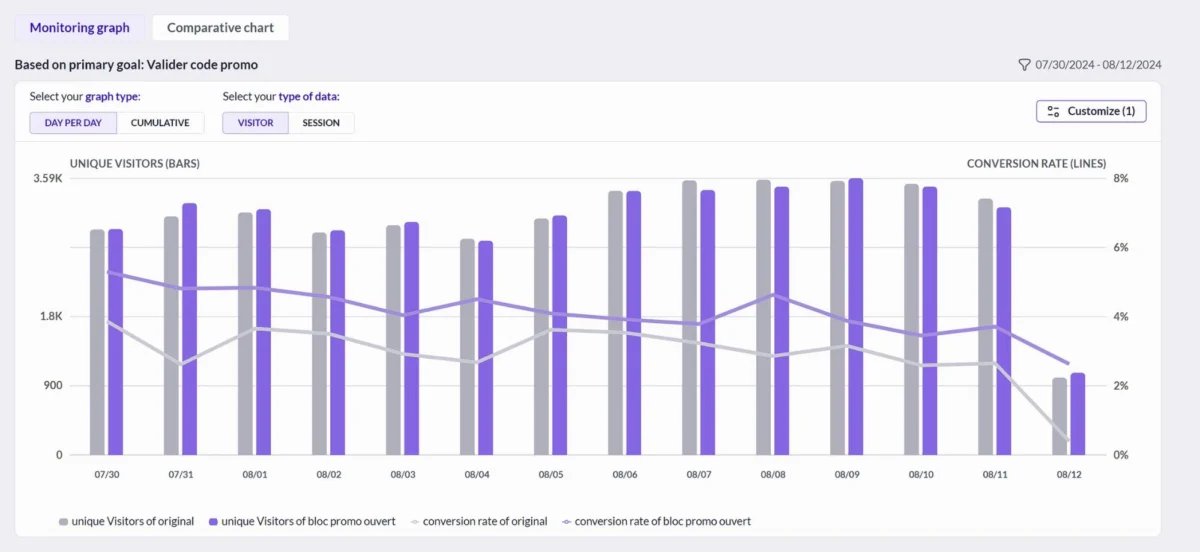
The 2026 merger between AB Tasty and VWO represents a milestone in the "MarTech" sector, reflecting a broader trend of enterprise-grade tools pooling resources to compete with the rapid advancement of artificial intelligence and data privacy regulations. AB Tasty, historically a French-led innovator in experimentation and personalization, has now integrated its Evi AI with VWO’s Copilot to create "Wandz," a unified AI layer. This consolidation positions the new entity as a dominant force in the upmarket sector, targeting Fortune 500 companies with complex, server-side testing needs.
In contrast, Crazy Egg has maintained its position as a transparent, high-value alternative that democratizes the full experimentation cycle. Originally known for pioneering heatmapping technology, Crazy Egg has evolved into a comprehensive suite that includes web analytics, session recordings, JavaScript error tracking, and AI-driven automated optimization loops. This makes it an attractive option for growth-stage startups and mid-market enterprises that require a single source of truth for user behavior and testing without the friction of multiple third-party integrations.
Strategic Comparison: Feature Sets and Operational Workflows
To understand the practical implications of choosing one platform over the other, it is necessary to examine how each handles the various stages of the optimization process: discovery, hypothesis, testing, and personalization.
A/B Testing and Experimentation
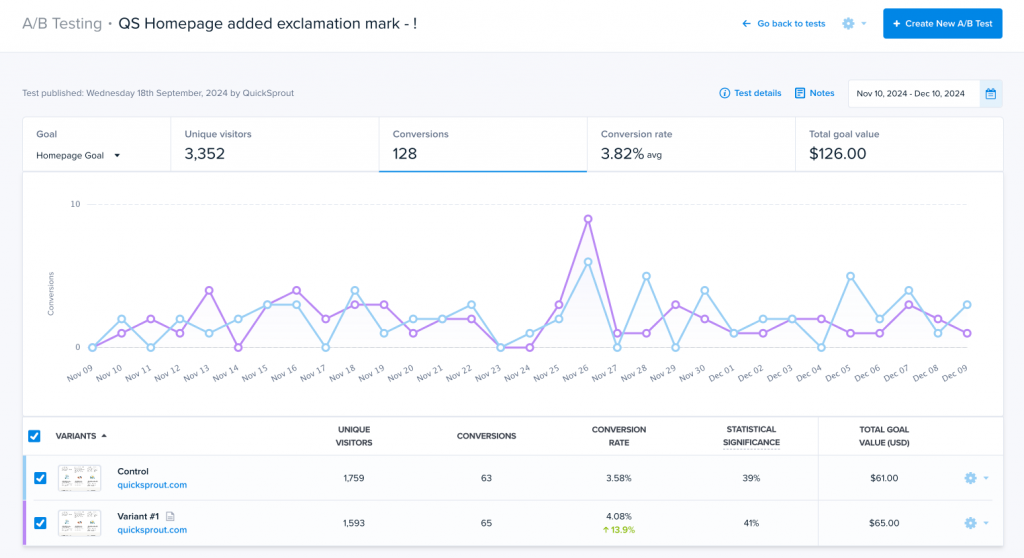
AB Tasty remains the more technically specialized platform for raw experimentation. Its Web Experimentation module supports not only standard A/B and split URL tests but also complex multivariate testing (MVT) and multi-page experiments. This allows enterprise teams to test multiple variables simultaneously to understand their interaction effects—a requirement for high-traffic sites with sophisticated design systems. AB Tasty also provides server-side testing and feature flags, allowing product teams to manage rollouts and conduct experiments deeper in the application stack.
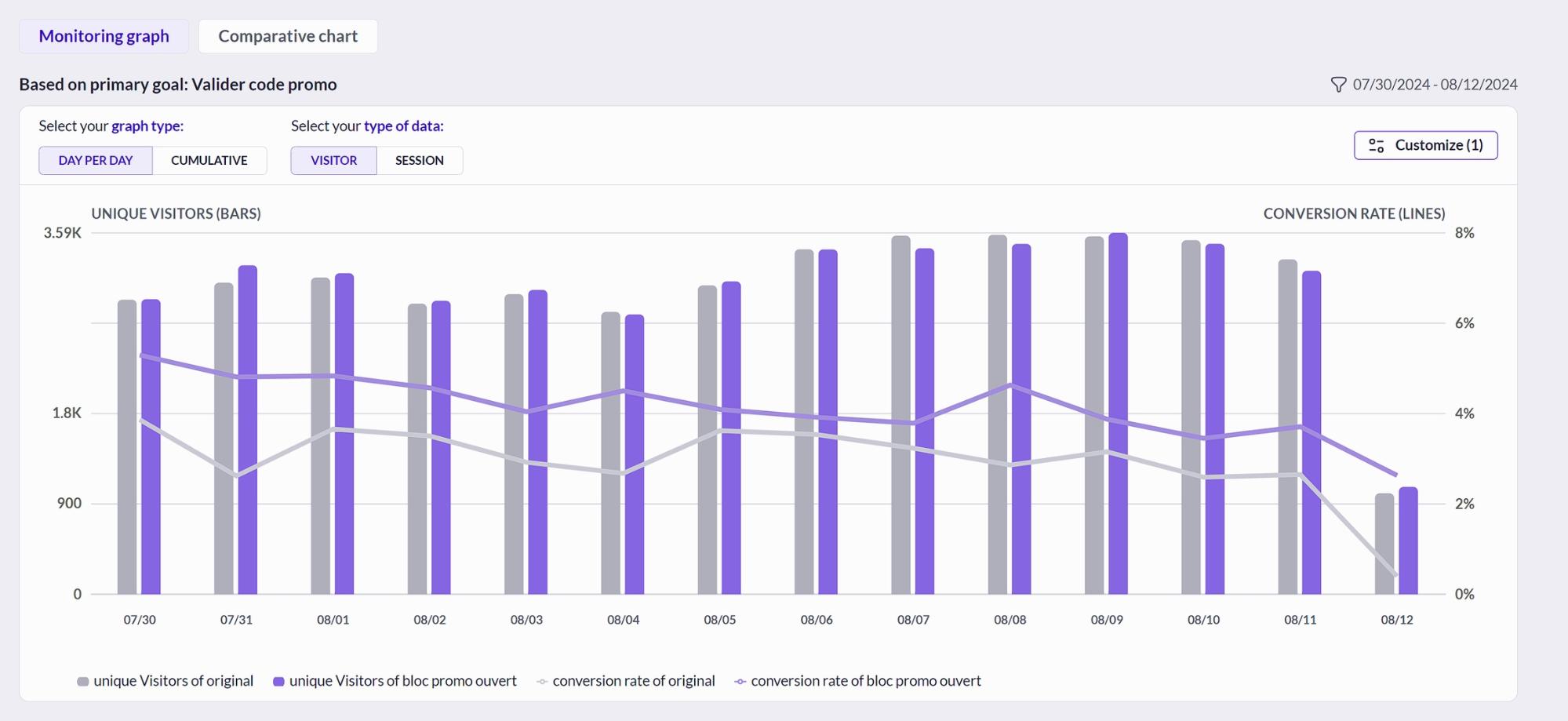
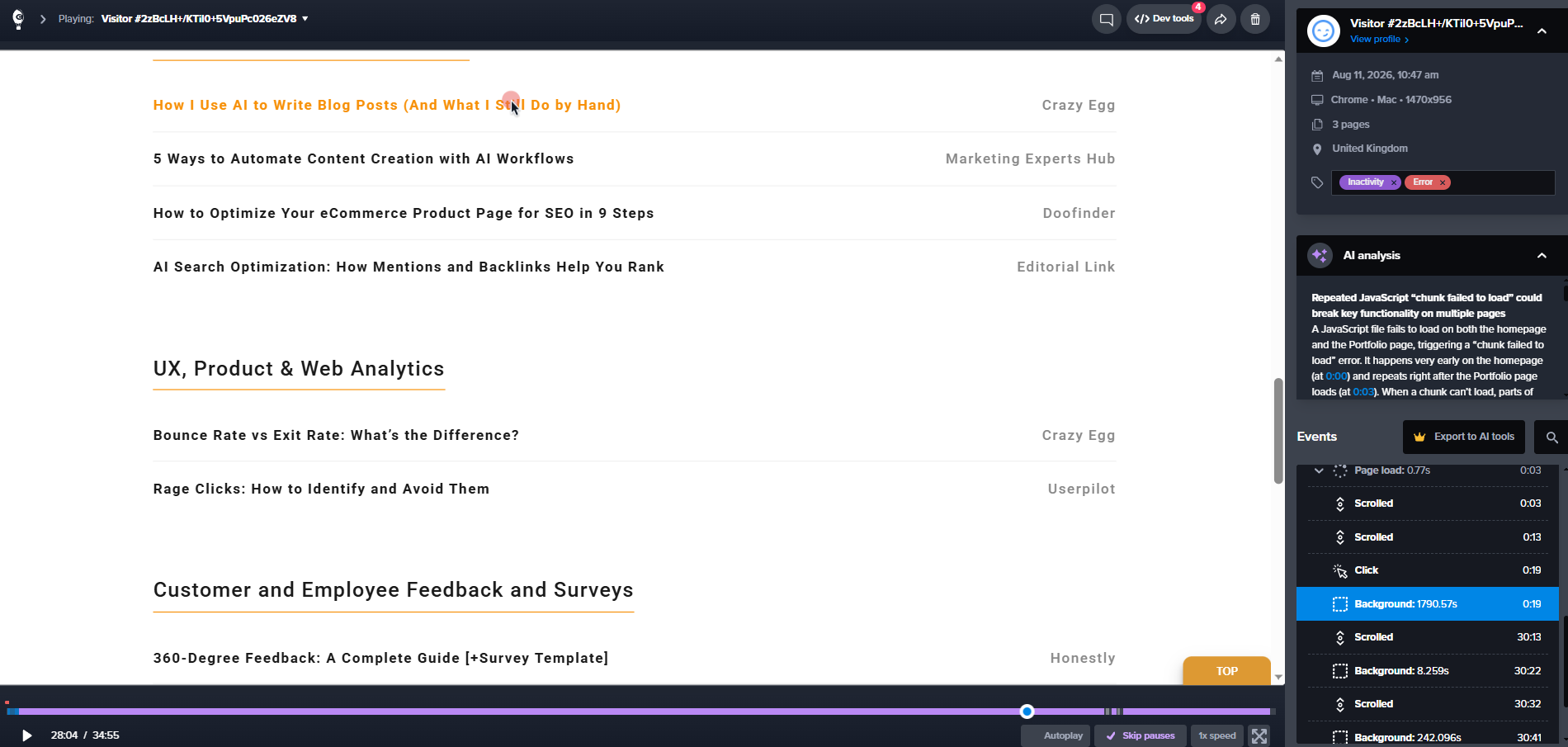
Crazy Egg approaches testing through the lens of an integrated workflow. While it lacks multivariate testing, it excels in "Multi-Armed Bandit" (MAB) testing, where traffic is dynamically shifted toward winning variants in real-time. A distinct advantage for Crazy Egg is its automatic generation of heatmaps and session recordings for every test variant. This ensures that when a variant outperforms the control, marketers can visually confirm why it happened, rather than relying solely on quantitative data.
Behavioral Analytics and User Discovery
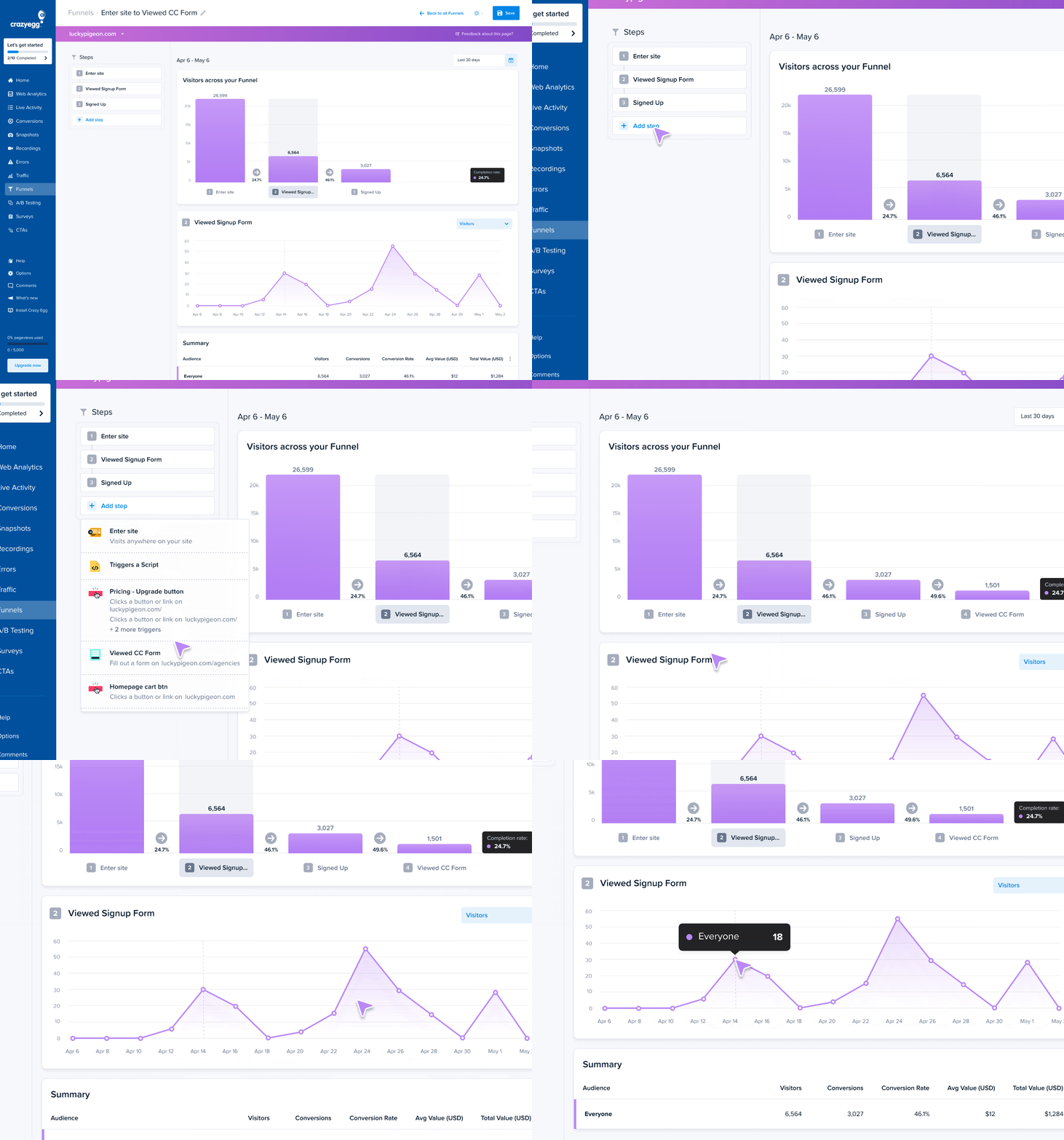
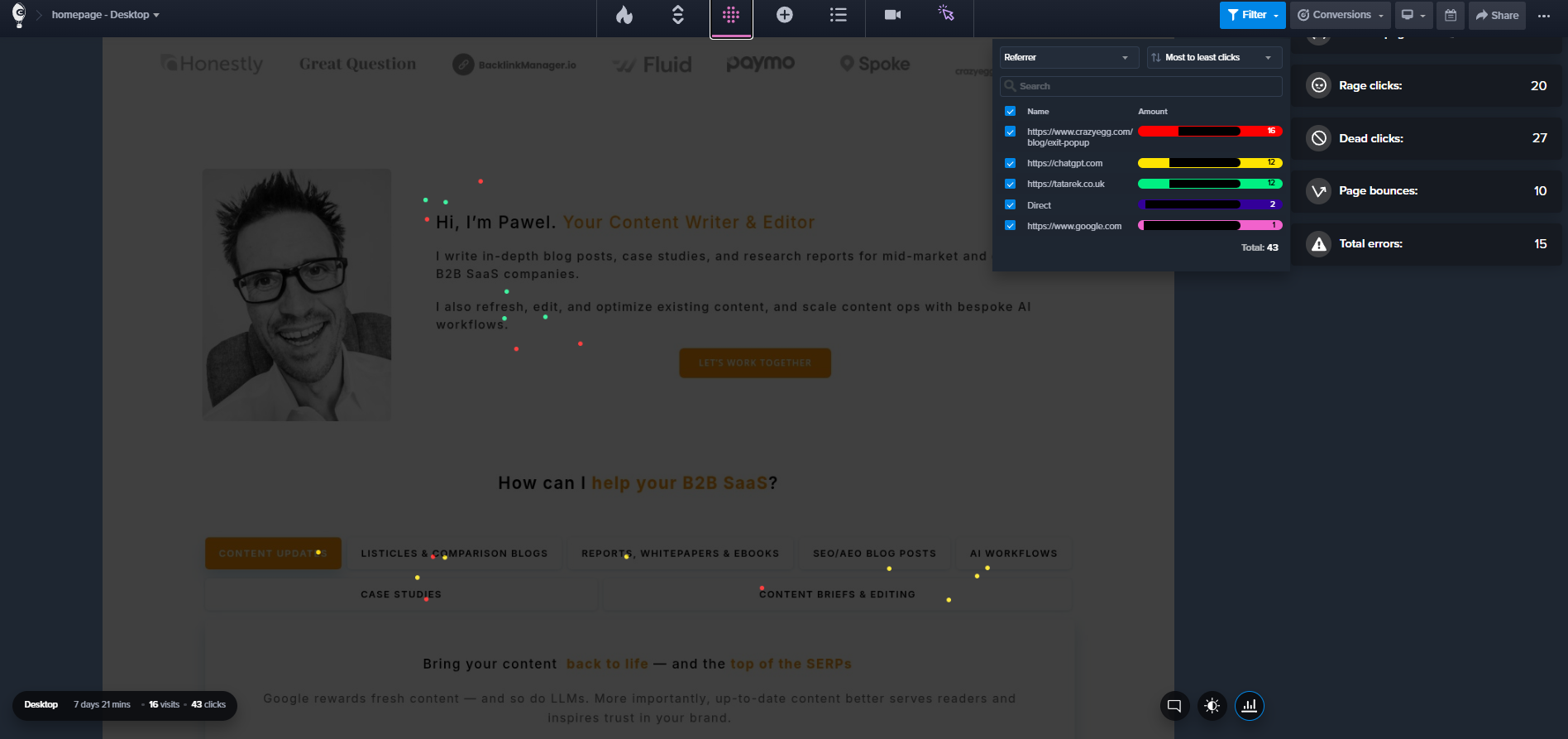
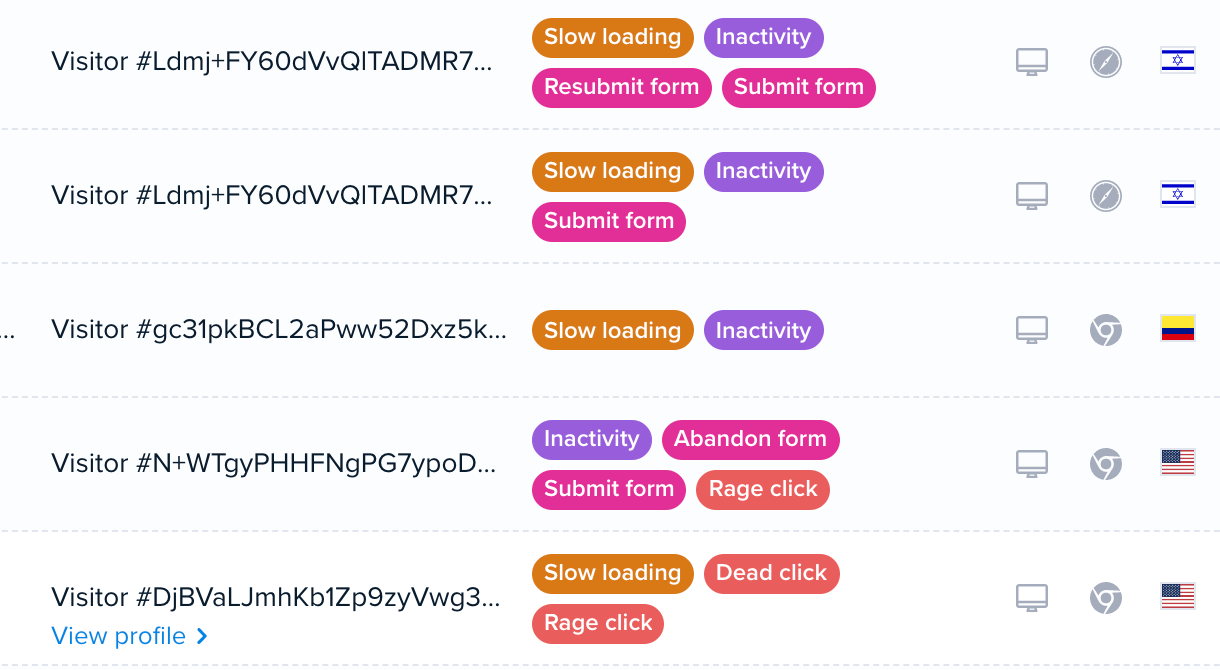
The most significant divergence between the two tools lies in behavioral data. Crazy Egg provides a native suite of discovery tools, including five types of heatmaps (click, scroll, confetti, overlay, and list) and Instant Heatmaps that require no manual setup. It also includes a session recording module with auto-tagged events, such as "rage clicks" or "slow loading," allowing teams to diagnose friction points immediately.
AB Tasty has moved away from native behavioral visualization. Following its merger and strategic pivot, the platform does not include a standalone heatmap or session replay module. Instead, it relies on its "EmotionsAI" feature, which uses internal behavioral signals—like mouse velocity and scroll patterns—to segment users into psychological profiles. Organizations requiring visual behavior reports must integrate AB Tasty with third-party tools like FullStory, Contentsquare, or Microsoft Clarity, which adds to the total cost of ownership.
Error Tracking and Technical Health
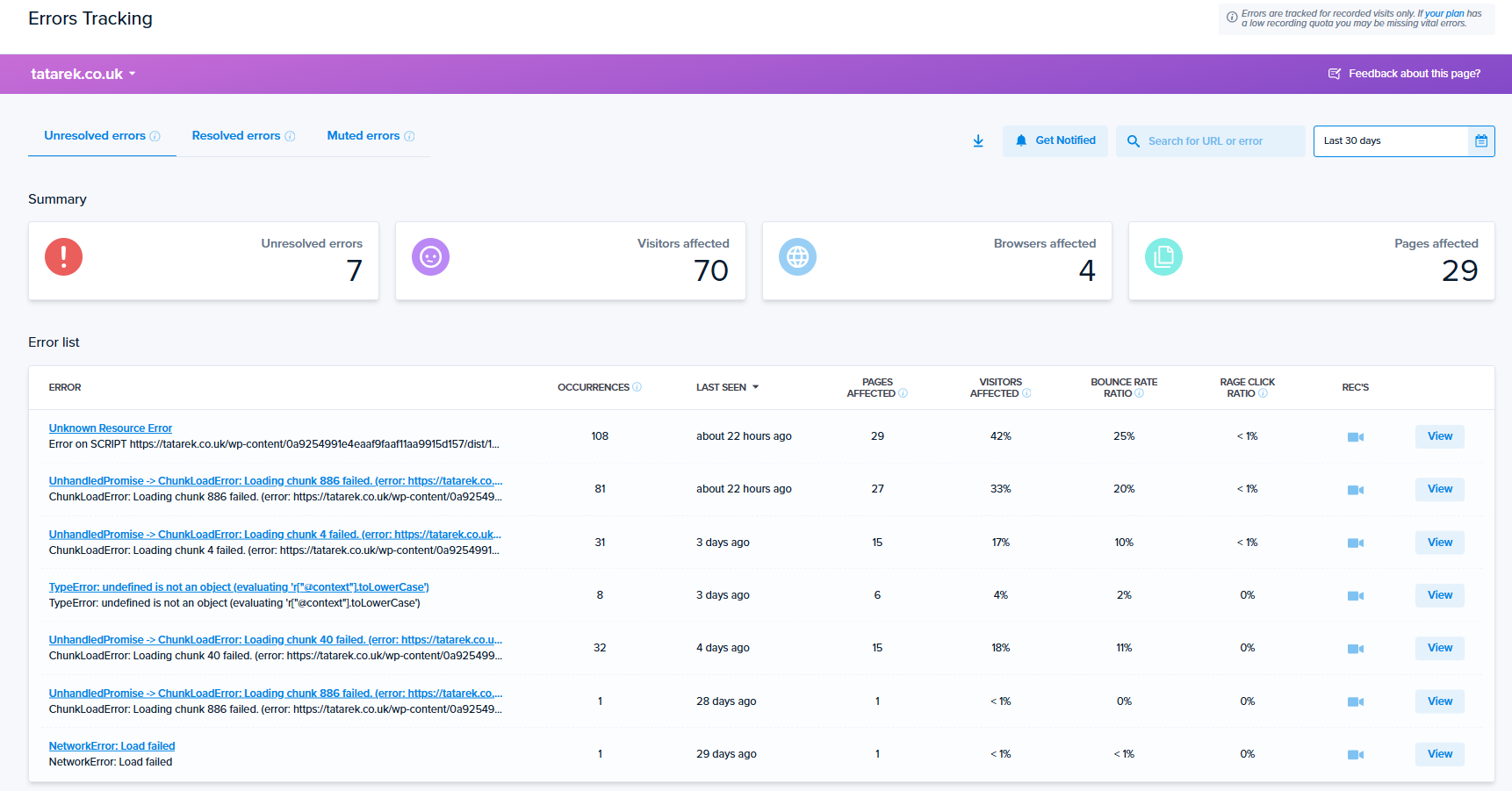
JavaScript (JS) error tracking has become a critical component of CRO, as technical bugs are often the primary cause of conversion drops. Crazy Egg includes an automated JS error capture system that links every error to a session recording. This allows developers to see the exact user actions that triggered a bug. AB Tasty does not offer live JS error capture natively, once again requiring integrations with tools like LogRocket or Sentry to provide similar functionality.
The Rise of Agentic AI in Optimization
By 2026, AI has transitioned from a supportive feature to a central operational layer. Both Crazy Egg and AB Tasty have introduced "agentic" capabilities that allow their platforms to perform tasks with minimal human intervention.
Crazy Egg has introduced the Model Context Protocol (MCP) server, a technical bridge that allows users to query their website data directly from AI assistants like Claude, ChatGPT, or GitHub Copilot. Furthermore, its "Tasks" feature (currently in early access) automates the optimization loop by setting up reports, analyzing the results, and drafting page variants for review. This "bring-your-own-LLM" approach provides flexibility for teams already using specific AI ecosystems.
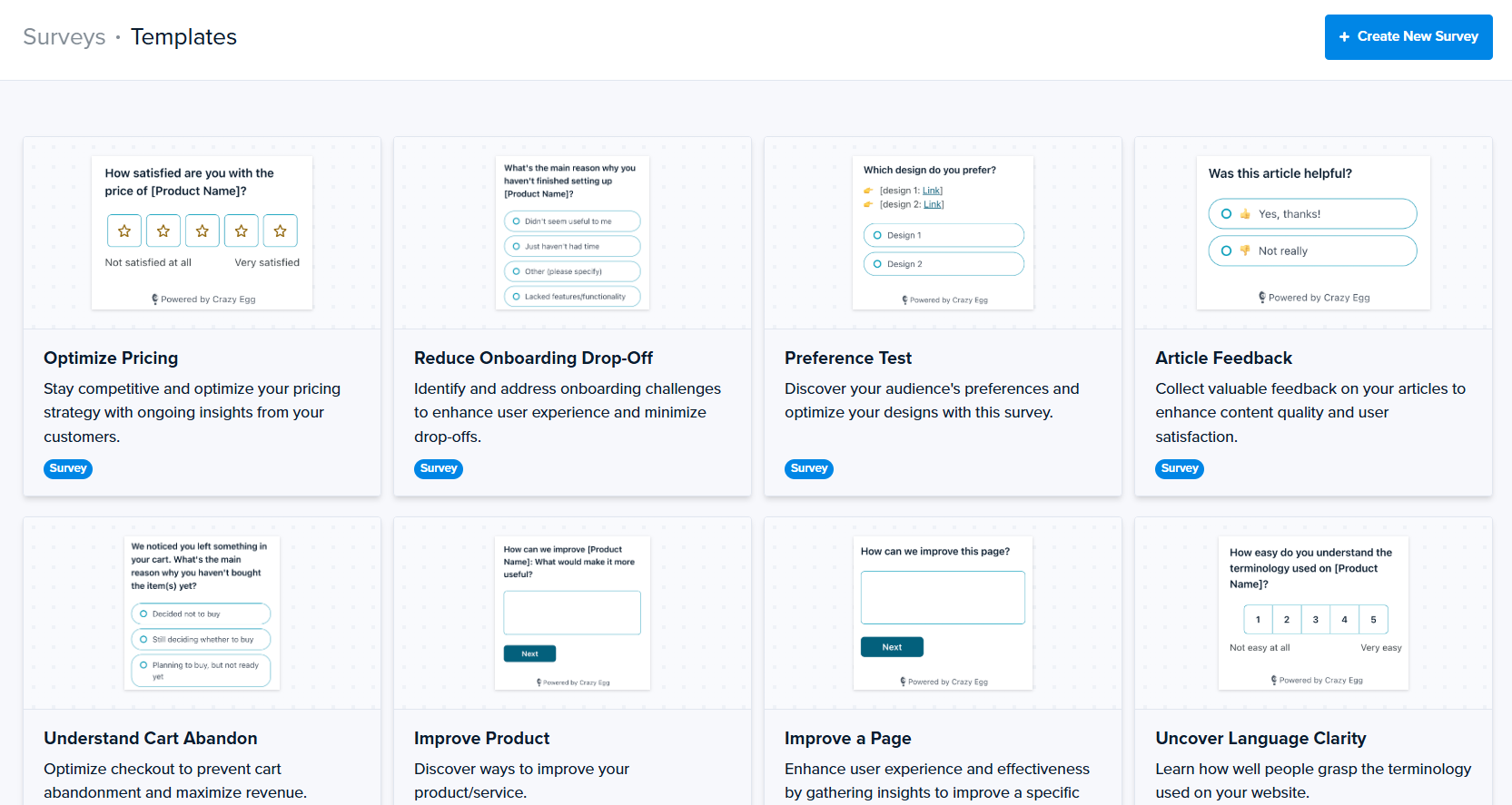
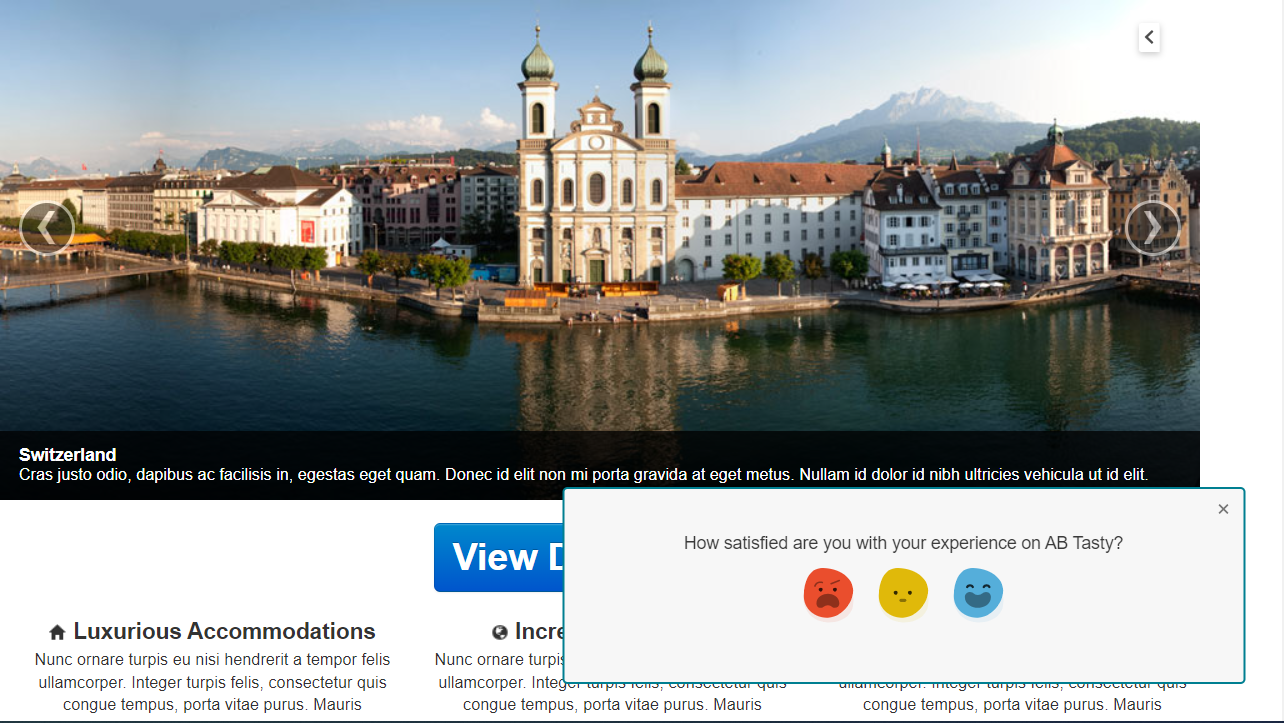
AB Tasty’s Wandz AI layer offers a more proprietary experience. It includes "Feedback Copilot" for analyzing survey responses and "AdaptiveCX," which predicts visitor intent in real-time. Wandz also offers synthetic testing and autopilot workflows, though these advanced features are housed in a paid "Advanced" tier that requires additional credits for heavy usage.
Timeline of Key Developments (2024–2026)
- Mid-2024: Crazy Egg launches its first AI Analysis tools for session recordings, providing automated executive summaries of user friction.
- January 2025: AB Tasty expands its EmotionsAI capability to include real-time intent prediction for anonymous users.
- June 2025: Crazy Egg releases JavaScript error tracking with a triage workflow for engineering teams.
- January 2026: The merger of AB Tasty and VWO is finalized; the companies begin rebranding under the Wingify name.
- February 2026: AB Tasty and VWO launch the unified Wandz AI layer.
- May 2026: Crazy Egg releases its MCP server, allowing direct data access via external LLMs.
Pricing Analysis and Economic Implications
The financial commitment required for these platforms represents two different market segments. Crazy Egg utilizes a transparent, tiered subscription model. Its "Pro" plan, priced at $249 per month, supports 500,000 tracked pageviews and includes 5,000 recordings. Even at the "Enterprise" level ($599/mo), the cost remains predictable and accessible for most businesses.
AB Tasty operates on a quote-based, enterprise-contract model. Market data from procurement platforms like Vendr suggests that AB Tasty contracts typically range from $40,000 to over $150,000 annually, depending on traffic volume and the inclusion of personalization and feature management modules. This price point reflects its status as an upmarket tool intended for organizations with dedicated experimentation budgets and specialized teams.
Official Responses and Industry Sentiment
While official statements from Wingify (the parent company of AB Tasty/VWO) emphasize "synergy" and "unmatched AI depth," some industry analysts have raised concerns regarding the complexity of the newly merged platform. "The consolidation of AB Tasty and VWO creates a powerhouse, but it also creates a steep learning curve and a high entry price," noted one independent MarTech consultant.
Conversely, Crazy Egg’s leadership has focused on "transparency and integration." Their strategy appears to be capturing the segment of the market that feels "priced out" or "over-tooled" by the recent industry mergers. Reactions from growth marketing communities suggest a growing preference for Crazy Egg’s all-in-one approach, particularly for teams that do not have the resources to manage five different integrations for analytics, heatmaps, and testing.
Final Implications for Decision Makers
The choice between Crazy Egg and AB Tasty in 2026 is ultimately a choice between an integrated suite and a specialized experimentation layer.
Organizations should opt for AB Tasty if they possess a high-maturity experimentation program, require multivariate or server-side testing, and have the budget to support both the platform and the necessary third-party analytics integrations. It is the tool of choice for large-scale digital products where even a 0.1% lift in a complex funnel justifies a six-figure software investment.
Organizations should choose Crazy Egg if they seek a comprehensive, cost-effective platform that manages the entire lifecycle of optimization—from identifying bugs and user friction to running A/B tests and personalizing the experience. Its transparent pricing and native behavioral tools make it the superior choice for companies that value speed, ease of use, and a consolidated tech stack.
As the MarTech industry continues to evolve under the influence of AI and corporate consolidation, the distinction between these two paths will likely sharpen. For now, the 2026 landscape offers clear options for every tier of the digital economy.


 Ammar Sabilarrohman
 Siti Muinah