The daily ritual for the paid media team at GrowRoom, a performance marketing and media agency, once began with a meticulous, manual review of budget pacing spreadsheets. This wasn’t a trivial task; it was a critical operational necessity. Each morning, before any other client work commenced, a team member would open a comprehensive budget pacing spreadsheet to compare month-to-date client spend against established targets. This data was then cross-referenced with individual Google Ads accounts. If an account was deviating from its projected spend trajectory, the team member would meticulously investigate which campaigns were contributing to the over or underspending and the underlying reasons for these discrepancies.
Following this in-depth analysis, an internal report was generated, detailing the affected accounts and campaigns, the causes of the budget drift, and recommended corrective actions. This process, multiplied across an entire client portfolio, every single day, represented a significant drain on valuable account manager time. While not an inherently complex task, its repetitive nature and sheer volume made it a considerable bottleneck in the agency’s workflow. For a long time, managing client spend effectively across a large and growing portfolio of Google Ads accounts was an endeavor that demanded a substantial amount of manual effort. This manual approach persisted until GrowRoom embarked on a journey to automate this core function, culminating in the development and refinement of a sophisticated script.
The Genesis of the Automation Initiative
The impetus for this automation project stemmed from a growing realization at GrowRoom about the increasing proportion of account manager time being consumed by repetitive, manual checks. As the agency expanded its client base and team, the inefficiencies of these daily tasks became more pronounced. The problem was particularly acute in the realm of budget pacing. The established workflow involved extracting data from Google Ads into a tracking spreadsheet, which then required a human to interpret, validate against live account performance, and synthesize into actionable insights for each client.
This manual data review process diverted skilled team members from more strategic and impactful work. As the client roster grew, so did the cumulative hours dedicated to this single task. The daily budget pacing check, consuming approximately thirty minutes each morning, five days a week, and twenty days a month, amounted to roughly ten hours of manual labor per month, per team member. While undeniably necessary for maintaining financial accountability and campaign performance, the agency leadership recognized that this process was ripe for optimization and could be automated to free up significant account manager bandwidth.
Unpacking the Core Problem: The Inefficiencies of Manual Review
The budget pacing sheet itself was not the source of the problem; it effectively communicated the current spending status of each account against its target. The true challenge lay in the subsequent steps: identifying why an account was deviating from its projected spend. This required an account manager to delve into individual campaigns, diagnose the factors influencing budget drift, and then articulate these findings in a report for the rest of the team.

Spend fluctuations in Google Ads can be attributed to a multitude of factors, including shifts in market demand, increased auction competition, or gradual increases in Cost Per Click (CPC) over several days. Accurately pinpointing the specific cause for a given account on any given day demanded considerable investigative effort. When this investigative process was multiplied across an entire portfolio of accounts, it translated into hours of manual review each day, in addition to the initial pacing check.
The limitations of the manual approach extended beyond just the top-line spending figures. The team lacked a swift mechanism to identify which campaigns or ad groups were consuming budget inefficiently or, conversely, which were performing exceptionally well and warranted increased investment. This daily operational cycle often involved:
- Data Extraction and Compilation: Manually pulling budget and performance data from various sources.
- Pacing Analysis: Comparing actual spend against projected spend.
- Root Cause Identification: Investigating the underlying reasons for budget deviations.
- Reporting and Recommendation: Communicating findings and suggesting actionable strategies.
Crucially, three of these four steps were primarily data analysis and reporting tasks. Only the final step represented actual implementation work, highlighting the significant amount of time spent on information gathering and synthesis rather than direct campaign optimization.
The Strategic Solution: A Custom Google Ads Script
The pivotal insight was that while the pacing sheet provided a clear picture of what was happening with client budgets, it did not explain why. The solution materialized in the form of a custom Google Ads script. This script, designed to be run at the MCC (My Client Center) level, was engineered to replicate the core functionality of the budget pacing sheet – reading monthly spend, comparing it against targets, and classifying accounts as on pace, overspending, or underspending. However, it took this crucial step further by automating the investigative work that account managers would otherwise perform manually.
The script analyzes campaign and ad group data from the preceding 30 days. Based on this performance data, it generates recommendations for budget allocation, suggesting shifts towards more efficient converting campaigns or away from underperforming elements. The script’s capabilities extend to a granular level, reviewing performance at the keyword level to identify terms performing above or below pre-established thresholds. Furthermore, it incorporates an analysis of auction insights, flagging potential shifts in the competitive landscape that might be contributing to performance changes. All of this culminates in a comprehensive report delivered daily to a shared inbox at 9 AM.
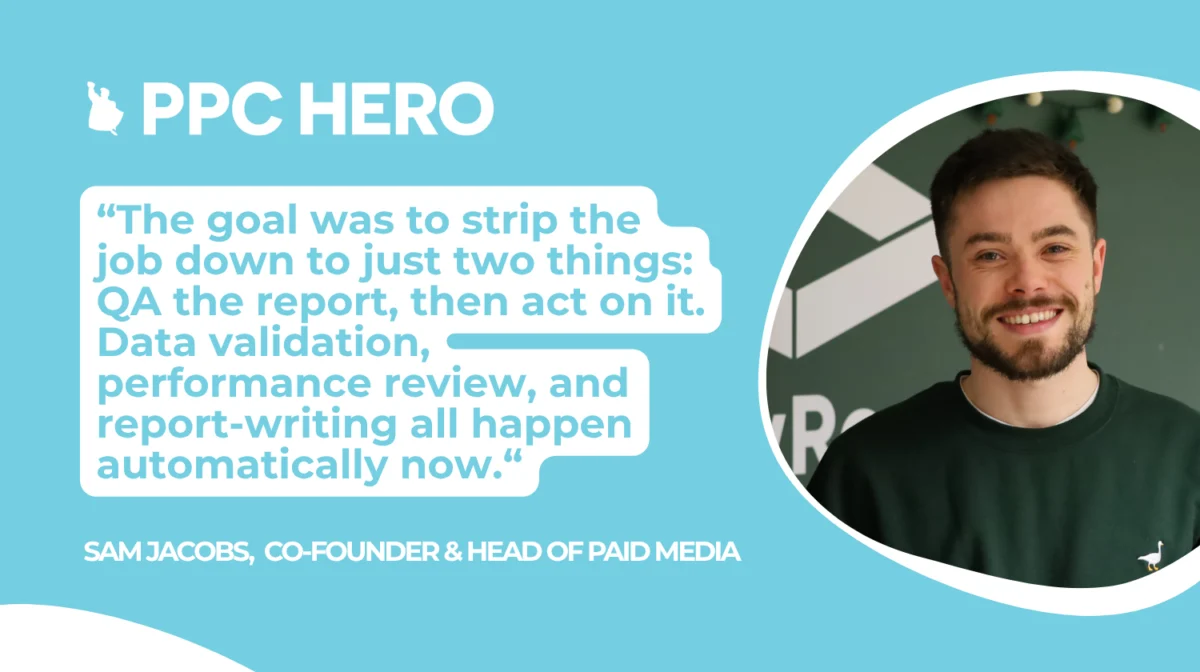
The overarching objective of this automated solution was to streamline the account manager’s role to two primary functions: quality assurance of the generated report and subsequent action based on its findings. Data validation, performance review, and the creation of detailed reports were now handled automatically, freeing up the team to focus on strategic implementation.

Implementing the Automation: A Phased and Iterative Approach
The development of the Google Ads script was an iterative process, meticulously tested within the Google Ads script editor and refined through analysis of real-world execution logs at each stage. Several key aspects of the implementation were critical to its success:
- MCC-Level Operation: Running the script at the MCC level allowed for efficient management and oversight of all client accounts from a single point of control. This ensured consistency in data analysis and reporting across the entire portfolio.
- Data Granularity: The script was designed to pull data at the campaign and ad group levels, providing the necessary detail for accurate performance diagnostics. Keyword-level analysis further enhanced its diagnostic capabilities.
- Customizable Thresholds: The ability to set custom performance thresholds for keywords and other metrics allowed the script to be tailored to the specific needs and goals of each client, ensuring that recommendations were always relevant.
- Exclusion of Today’s Spend: A critical early learning involved the precise calculation of pacing. To avoid artificially flagging accounts as underpaced each morning, the script was programmed to exclude the current day’s spend from its calculations, focusing only on completed days up to 23:59 of the previous day.
- Standardized Reporting Format: The script was configured to deliver reports in a consistent and easily digestible format, including summary tables, pacing narratives, and specific campaign and ad group recommendations. This ensured that the output was immediately actionable for the team.
- Error Handling and Logging: Robust error handling mechanisms were built into the script to identify and log any issues during execution. This was crucial for debugging and ensuring the reliability of the automated process.
The Transformative Impact: Reclaiming Valuable Time and Enhancing Strategy
The implementation of the automated budget pacing script brought about a significant transformation in GrowRoom’s paid media operations. The daily task that previously consumed hours of manual effort was now executed seamlessly without any human intervention. Logging into multiple accounts, manually checking spend, calculating pacing, and compiling reports – all these steps were completed before the team even settled at their desks each morning.
The team now receives a daily email containing a concise summary table of all assigned clients, a narrative detailing the pacing status for each account, and concrete recommendations for specific campaigns and ad groups. This shift has fundamentally altered how the team operates. Time that was once dedicated to information gathering and analysis is now channeled directly into strategic action. The approximately ten hours per month previously spent on manual pacing checks are now allocated to activities that demonstrably drive performance. This includes higher-level strategic thinking essential for account progression and the implementation of impactful campaign initiatives.
This reallocation of resources has empowered the paid media team to move beyond reactive budget management and engage in more proactive, strategic planning. This allows for greater focus on optimizing campaign performance, exploring new growth opportunities, and delivering enhanced value to clients. The agency’s ability to respond quickly to market dynamics and client needs has also been significantly improved.
Key Considerations and Lessons Learned
The rollout of this automation initiative provided GrowRoom with valuable insights that can inform similar projects undertaken by other agencies. Several key takeaways emerged:
- Recommendation Engine, Not Autopilot: It is crucial to emphasize that the script functions as a recommendation engine, not an autonomous system. Human oversight from account managers remains indispensable for implementing changes. The script provides data-driven insights, but the final strategic decisions and execution must be guided by experienced professionals.
- Dedicated Account for Script Execution: Running Google Ads Scripts from a dedicated reporting account, rather than a personal login, is highly recommended. Google Ads Scripts send emails from the account that owns the script, and there is no option to specify a separate sender address. Using a shared reporting account ensures a cleaner, more professional communication flow.
- Accurate Pacing Calculation: The method for calculating pacing is critical. As GrowRoom discovered early on, including the current day’s spend can lead to accounts appearing consistently underpaced. Limiting the calculation to completed days ensures accurate and reliable pacing signals.
- Precise Column Header Matching: During early testing, a case-sensitivity mismatch in column headers caused the script to break. Ensuring that column headers in any connected data sources exactly match what the script is programmed to look for is a fundamental but vital step to prevent operational disruptions.
- Leveraging Google’s Resources: For agencies considering building similar automation solutions, Google’s own Ads Scripts documentation is an invaluable starting point for understanding the fundamentals. The examples library provided by Google can also offer practical guidance and reduce the need to develop certain functionalities from scratch.
By addressing a core operational inefficiency through intelligent automation, GrowRoom has not only reclaimed significant time for its paid media team but has also elevated its strategic capabilities, positioning itself for continued growth and enhanced client success in the dynamic landscape of digital advertising.