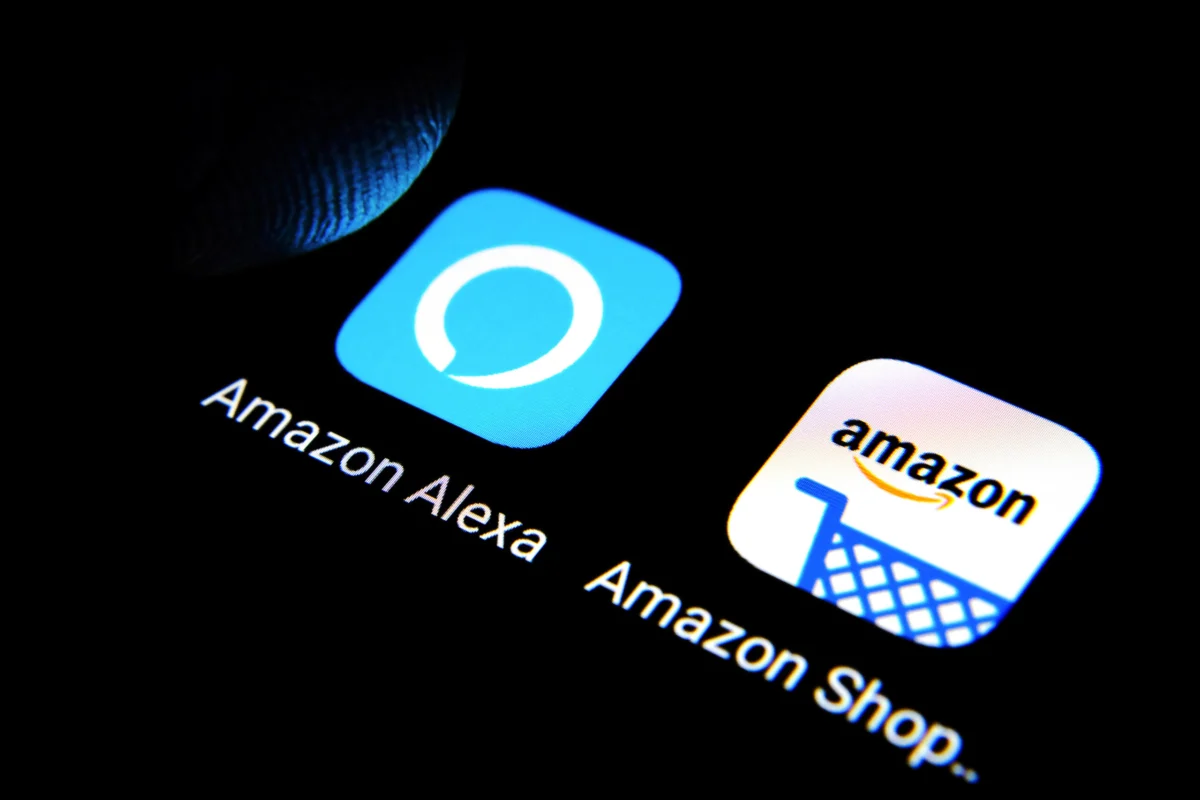
Amazon has significantly bolstered its AI-powered shopping assistant, Alexa for Shopping, by introducing two pivotal new functionalities: "Update Me When," which allows users to track new product releases across the vast expanse of the internet, and a robust verification system for discerning legitimate Amazon communications from fraudulent ones. These enhancements, detailed in separate blog posts released this week, aim to provide consumers with greater control over their online shopping experience and enhanced security against a growing tide of digital scams. The new features are currently available to shoppers in the United States, with plans for a broader international rollout.
The "Update Me When" feature represents a sophisticated expansion of Alexa’s proactive shopping assistance. Previously, Alexa for Shopping could monitor price drops and alert users when a desired item reached a specific price point, or even complete purchases automatically. "Update Me When" elevates this by enabling users to set alerts for entirely new product launches, book releases, television show premieres, or even tour announcements by artists. This capability extends beyond Amazon’s own platform, allowing Alexa to scan the broader web for these anticipated arrivals. Consumers can proactively engage with Alexa, requesting notifications for specific items, genres, or types of products. For instance, a user could instruct Alexa to alert them when a new cooperative board game designed for four or more players is released, or when a new Kindle e-reader model hits the market. This feature leverages Amazon’s AI capabilities to transform passive browsing into an active pursuit of desired items, ensuring consumers are among the first to know about new opportunities.
Rajiv Mehta, Amazon’s Vice President of Conversational Shopping, elaborated on the functionality in a recent blog post, emphasizing its potential to keep users informed about emerging trends and sought-after products. He highlighted examples such as an artist announcing a new tour or an author releasing a highly anticipated book. The assistant’s ability to monitor not only Amazon’s extensive catalog but also the wider internet signifies a substantial leap in personalized shopping intelligence. This proactive approach aims to capture consumer interest at the earliest stages of product availability, potentially influencing purchasing decisions and driving early adoption.
The second major update directly addresses the pervasive issue of impersonation fraud, a growing concern for online consumers worldwide. Shoppers can now leverage Alexa for Shopping to authenticate the origin of suspicious emails, text messages, or phone calls that purport to be from Amazon. By providing Alexa with details such as the sender, the time of communication, and the message content, users can have the assistant cross-reference this information with Amazon’s internal records of legitimate communications. This rigorous comparison process allows Alexa to determine, with a high degree of certainty, whether the message is genuine or a phishing attempt.
Amazon reports that it receives approximately 360,000 inquiries annually from customers seeking to verify the authenticity of communications claiming to be from the company. This new AI-driven verification system is designed to streamline this process, offering immediate and reliable answers. Alexa analyzes the provided details, including sender information, message content, timing, and formatting, comparing them against billions of records of communications sent by Amazon teams globally. The assistant then provides one of three clear responses: authentic, inauthentic, or unable to verify. Amazon stresses that a message is only marked as authentic when the AI is "completely certain."
In cases where a message is flagged as inauthentic, Alexa will advise the customer to refrain from clicking any links or replying to the communication. It may also guide users to review their recent orders or contact Amazon’s customer service for further assistance. If Alexa cannot definitively determine the authenticity of a message, users are encouraged to provide additional details or utilize alternative verification methods, such as forwarding the suspicious communication to [email protected]. This comprehensive approach not only aids individual consumers but also provides Amazon with invaluable data. Every submitted communication is automatically routed to Amazon’s customer protection and enforcement team, which utilizes this information to identify emerging fraud patterns and investigate malicious actors.
The introduction of these security features comes at a critical juncture, as impersonation fraud continues to inflict significant financial damage on consumers. The Federal Trade Commission (FTC) reported in August 2025 that losses of $10,000 or more due to business and government impersonation scams among adults aged 60 and older had surged more than fourfold since 2020. A common tactic employed by fraudsters involves posing as representatives of well-known companies like Amazon, falsely claiming to detect suspicious account activity to trick victims into revealing personal or financial information.
Timeline of Alexa for Shopping’s Evolution
Amazon’s journey in integrating AI into its shopping ecosystem has been a progressive one. Alexa for Shopping was initially launched in May of the current year, representing a consolidation of existing AI strengths. Its foundation was built upon the capabilities of Rufus, Amazon’s AI shopping assistant introduced in 2024, and Alexa+, an advanced iteration of Amazon’s voice assistant powered by generative AI. Even before these latest updates, Alexa for Shopping offered a suite of functionalities designed to enhance the online retail experience. These included the ability to compare products side-by-side, display price histories to inform purchasing decisions, identify available deals and promotions, shop on behalf of a user, and directly add items to a user’s shopping cart. The introduction of "Update Me When" and the communication verification feature marks a significant evolution, moving beyond transactional assistance to proactive discovery and enhanced security.
Supporting Data and Market Context
Amazon’s dominance in the e-commerce landscape is well-documented. The company consistently ranks at the pinnacle of industry analyses, holding the No. 1 position in Digital Commerce 360’s Top 1000 Database, which tracks North America’s largest online retailers by annual e-commerce sales. This formidable market presence provides a vast user base and a wealth of data through which these new AI features can be refined and deployed.
However, the integration of advanced AI also places Amazon within a rapidly evolving competitive arena. In Digital Commerce 360’s inaugural AI Rankings, Amazon is positioned at No. 158. This ranking, available within the Top 1000 Pro with AI Database, highlights the burgeoning field of AI innovation in commerce, where established players are vying with newer entrants for leadership. Furthermore, Amazon’s role as a global marketplace is underscored by its No. 3 ranking in Digital Commerce 360’s Global Online Marketplaces Database, which measures the 100 largest marketplaces by third-party gross merchandise value (GMV).
Consumer Trust and AI in Retail
While Amazon is investing heavily in AI-driven enhancements, consumer sentiment towards AI in shopping remains a complex and evolving landscape. Recent surveys indicate a growing adoption of AI for product research but a lingering hesitancy regarding its direct influence on purchasing decisions.
According to Alchemer’s 2026 Retail Report, a notable 48.5% of U.S. shoppers surveyed had utilized AI for retail purchase research in the past year. However, a significant portion, 35.4%, expressed only partial or no trust in AI shopping recommendations, with 22.2% stating they did not trust them at all. A further 16.5% voiced concerns that AI might be programmed to steer them towards products that retailers are eager to sell, underscoring a demand for transparency and unbiased recommendations.
Data privacy also remains a critical factor influencing consumer comfort levels. A separate 2026 survey conducted by Digital Commerce 360 and Bizrate Insights revealed that while over 55% of online shoppers were at least somewhat comfortable with retailers using AI, more than 46% indicated that retailers were not sufficiently clear about how they utilized customer personal data. This sentiment is detailed in the report, "AI Spotlight: Optimizing Data for Agentic Commerce."
Despite these reservations, the functionalities being introduced by Amazon align with key consumer desires for AI shopping assistants. A 2025 YouGov survey found that among consumers interested in AI shopping assistants, a significant majority sought help with finding the best deals (67%), followed by product comparisons (56%) and product information (55%). Crucially, however, only a small fraction (4%) indicated they would trust an AI shopping assistant to complete a purchase without their prior review. Overall trust in AI shopping assistants remains a significant hurdle, with over 40% of Americans reporting no trust at all in these tools.
Implications and Future Outlook
The introduction of "Update Me When" and the enhanced communication verification feature by Amazon for Alexa for Shopping represents a strategic move to deepen customer engagement and address critical pain points in the online retail journey. By proactively informing consumers about new releases, Amazon aims to capture early-stage interest and potentially influence purchase decisions before competitors. This shifts the role of the AI assistant from a reactive tool to a proactive concierge, anticipating user needs and preferences.
The robust fraud verification system is equally significant. In an era marked by sophisticated phishing schemes and impersonation scams, providing consumers with a reliable, AI-powered tool to validate communications can significantly bolster trust and reduce the likelihood of financial loss. This not only protects individual consumers but also safeguards Amazon’s brand reputation, which can be severely damaged by association with fraudulent activities.
The success of these features will likely depend on their accuracy, ease of use, and the ongoing efforts by Amazon to build consumer trust regarding data privacy and the unbiased nature of AI recommendations. As AI continues to permeate the retail landscape, Amazon’s ability to balance innovation with user security and transparency will be paramount in shaping the future of e-commerce and the role of voice assistants within it. The company’s commitment to refining Alexa for Shopping signals a clear intent to leverage AI not just for convenience, but for enhanced security and a more informed, empowered consumer. The expansion of these features beyond the U.S. market will be a key indicator of their global applicability and Amazon’s strategy for AI-driven retail worldwide.