Artificial intelligence is no longer a nascent technology on the periphery of e-commerce; by 2026, it has firmly established itself as a transformative force, profoundly influencing how online retailers attract customers, drive sales, and facilitate transactions. This evolution is marked by a strategic recalibration of investments and resource allocation by tech vendors and merchants alike. From the burgeoning concept of agentic commerce, championed by industry leaders like OpenAI, Shopify, and Walmart, to the critical realization that robust data strategies are paramount for effective AI implementation, the landscape of online retail is undergoing a significant metamorphosis. Evidence of this seismic shift is readily apparent in the newly launched AI Commerce Rankings by Digital Commerce 360 and ReFiBuy, which highlight how even smaller retailers in specific product categories are leveraging AI to achieve superior growth compared to their competitors. These rankings, drawing data from Digital Commerce 360’s comprehensive Top 1000 Database – which meticulously tracks North American online retailers by annual web sales – underscore the pervasive adoption of AI across the e-commerce spectrum, regardless of a company’s size.
Across the vast array of online retailers cataloged in the Top 1000 Database, a set of common AI objectives and applications has emerged, consistently guiding investment decisions and technological adoption throughout this dynamic year for the industry. Analysis of industry reports, executive interviews, and candid commentary from retail leaders consistently points to three pivotal ways in which online retailers are currently harnessing the power of artificial intelligence. Each of these strategic priorities is not merely an operational tweak but a fundamental driver shaping future investment and the adoption of cutting-edge technology.
AI Platforms Emerge as Crucial Discovery Channels
A significant development in the e-commerce ecosystem of 2026 is the dramatic rise of artificial intelligence platforms as primary channels for product discovery. In May 2026, Adobe Analytics reported a remarkable surge in web traffic originating from AI platforms such as ChatGPT, Gemini, and Perplexity, which more than doubled year-over-year, registering an impressive 138% increase. This surge signifies a palpable shift away from the dominance of traditional search engines. As the efficacy of conventional search platforms begins to plateau, online retailers are increasingly focused on strategies to ensure their products are featured prominently within the recommendations generated by these sophisticated AI interfaces. This proactive approach is a strategic imperative, preparing them for potential future scenarios, such as a "Google Zero day," where organic search visibility might be significantly diminished.
The foundation of this strategic pivot lies in the intensive efforts retailers are undertaking to optimize their product catalogs for AI systems. The objective is to ensure that their offerings are discoverable in response to complex, long-tail queries and prompts. This necessitates meticulously clean, contextually rich data that AI models can readily understand and utilize. The ability of AI platforms to interpret nuanced user intent and deliver highly relevant product suggestions is transforming the consumer journey, making it more intuitive and personalized. For retailers, this translates into a new frontier for customer acquisition, where visibility is determined not just by keywords but by the AI’s comprehension of a shopper’s needs and desires. The implications of this shift are profound, potentially democratizing visibility for well-optimized smaller players and forcing larger entities to re-evaluate their digital marketing spend and data management practices.
Enhancing Conversion Rates Through AI Integration
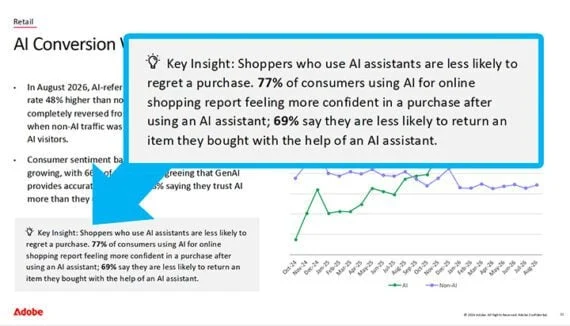
Beyond discovery, artificial intelligence is proving to be an increasingly potent tool for enhancing conversion rates. As AI platforms mature and their recommendation capabilities become more refined, Adobe analysts have observed a tangible improvement in the purchase conversion rates of traffic referred by these large language models (LLMs). Data from March 2026 indicated that AI-driven traffic to e-commerce websites converted a remarkable 42% more frequently than non-AI traffic. This represents a significant reversal from the trend observed a year prior, underscoring the accelerating impact of AI on consumer purchasing decisions.
Online retailers are not solely relying on external AI platforms; they are actively integrating AI into their own operational frameworks to drive conversions. For instance, the family apparel site PatPat, as detailed by Digital Commerce 360 in 2025, has been leveraging AI tools to significantly improve their marketing effectiveness. By analyzing known shopper behaviors and utilizing first-party data, PatPat’s marketing teams are empowered to make more informed decisions, leading to more precise targeting of potential buyers and ultimately, higher conversion rates. This internal application of AI extends to personalized recommendations, dynamic pricing strategies, and optimized customer service interactions, all designed to guide the shopper seamlessly through the purchase funnel. The ability of AI to predict and respond to individual customer needs in real-time is a critical factor in this conversion uplift, transforming passive browsing into active purchasing.
The implications for conversion optimization are far-reaching. Retailers that effectively integrate AI into their customer journeys can expect to see a direct correlation between AI adoption and revenue growth. This also implies a greater emphasis on data privacy and ethical AI usage, as consumers become more aware of how their data is being utilized to influence their purchasing decisions. The success of companies like PatPat serves as a blueprint for others, demonstrating that a strategic, data-driven approach to AI implementation can yield substantial commercial benefits. The shift from broad marketing campaigns to hyper-personalized, AI-driven engagement is becoming the new standard for maximizing conversion.
AI Facilitating Seamless Transactions
The integration of artificial intelligence extends beyond discovery and conversion to the very core of the transaction process. Merchants, payment providers, and AI platforms are collectively recognizing the immense potential of AI to streamline and secure online purchases. Prominent players in the financial sector, including American Express, Mastercard, and Visa, have proactively embraced AI solutions to facilitate payments made through AI-driven experiences. In collaboration with technology partners such as Stripe and Google, these financial institutions are actively engaged in defining the protocols and security measures necessary to ensure a confident and secure payment environment for consumers engaging with AI-powered commerce.
A significant challenge in this evolving landscape is the ongoing battle against fraud. As AI becomes more sophisticated, it is being leveraged by both legitimate businesses and malicious actors. This necessitates a continuous arms race in security, where AI is deployed not only to enable transactions but also to detect and prevent fraudulent activities. The development of advanced AI-driven fraud detection systems is paramount to maintaining consumer trust and protecting the integrity of e-commerce transactions. The introduction of agentic commerce, where AI agents can autonomously conduct transactions on behalf of consumers, further amplifies the need for robust security protocols. Ensuring that these AI agents operate within predefined security parameters and that transactions are transparent and verifiable is a critical undertaking for the entire industry.
The implications of AI in facilitating purchases are immense. It promises a future of frictionless commerce, where buying is as simple as a conversation or a request to an AI assistant. However, this convenience must be balanced with unwavering security. The industry’s collective focus on developing secure protocols and transparent transaction frameworks is a testament to the understanding that trust is the bedrock of online commerce. The ongoing collaboration between financial institutions, tech companies, and retailers will be crucial in navigating the complexities of AI-enabled payments and ensuring a safe and efficient future for e-commerce transactions. The development of standardized security protocols and regulatory frameworks will likely be a key focus in the coming years, ensuring that the benefits of AI-driven transactions are realized without compromising consumer safety.
The Data Imperative for AI Success
Underpinning all these advancements is the critical importance of data strategy. The effectiveness of AI systems, from product discovery to conversion optimization and secure transactions, is directly proportional to the quality and accessibility of the data they process. Retailers are increasingly recognizing that their data is not merely a byproduct of operations but a strategic asset that must be meticulously managed, cleaned, and contextualized. The shift towards AI-driven commerce necessitates a move away from siloed data repositories towards integrated data platforms that can provide a holistic view of the customer and the product lifecycle.
The challenges in this area are significant. Many retailers have legacy data systems that are not optimized for the demands of AI. Integrating diverse data sources, ensuring data accuracy and consistency, and establishing clear data governance policies are essential steps. Furthermore, as regulations around data privacy continue to evolve, retailers must ensure their data practices are compliant and that they are transparent with consumers about how their data is used. The "AI Commerce Rankings" implicitly highlight this, as the retailers that perform well are likely those with a strong foundation in data management, allowing them to effectively leverage AI for their growth strategies.
The investment in data infrastructure and expertise is therefore a critical prerequisite for unlocking the full potential of AI in e-commerce. Companies that prioritize data strategy will be better positioned to capitalize on the opportunities presented by AI, driving innovation, enhancing customer experiences, and ultimately achieving sustainable growth in the increasingly competitive online retail landscape. This data-centric approach is not a one-time effort but an ongoing commitment, requiring continuous refinement and adaptation as AI technologies and consumer behaviors evolve. The future of e-commerce is undeniably intertwined with the intelligent and responsible utilization of data, powered by advanced artificial intelligence.
Looking Ahead: The Evolving Role of AI
As 2026 unfolds, the trajectory of AI in e-commerce is clear: it is moving from a supplementary tool to a core component of business strategy. The ability to leverage AI for personalized discovery, highly effective conversion, and secure, seamless transactions will become a key differentiator for online retailers. The ongoing development of agentic commerce, coupled with advancements in generative AI for content creation and customer service, suggests an even deeper integration of AI into the fabric of online retail in the years to come.
The success of retailers will increasingly depend on their agility in adapting to these AI-driven shifts. This includes investing in the right talent, fostering a culture of data-driven decision-making, and embracing ethical AI practices. The journey is not without its challenges, particularly concerning data security, privacy, and the equitable distribution of AI’s benefits. However, the pervasive impact of AI across all facets of e-commerce in 2026 signals a fundamental and irreversible transformation, ushering in an era of more intelligent, personalized, and efficient online shopping experiences. The insights gleaned from platforms like Digital Commerce 360’s AI Commerce Rankings will continue to be invaluable in navigating this rapidly evolving terrain, providing benchmarks and identifying best practices for the entire industry.