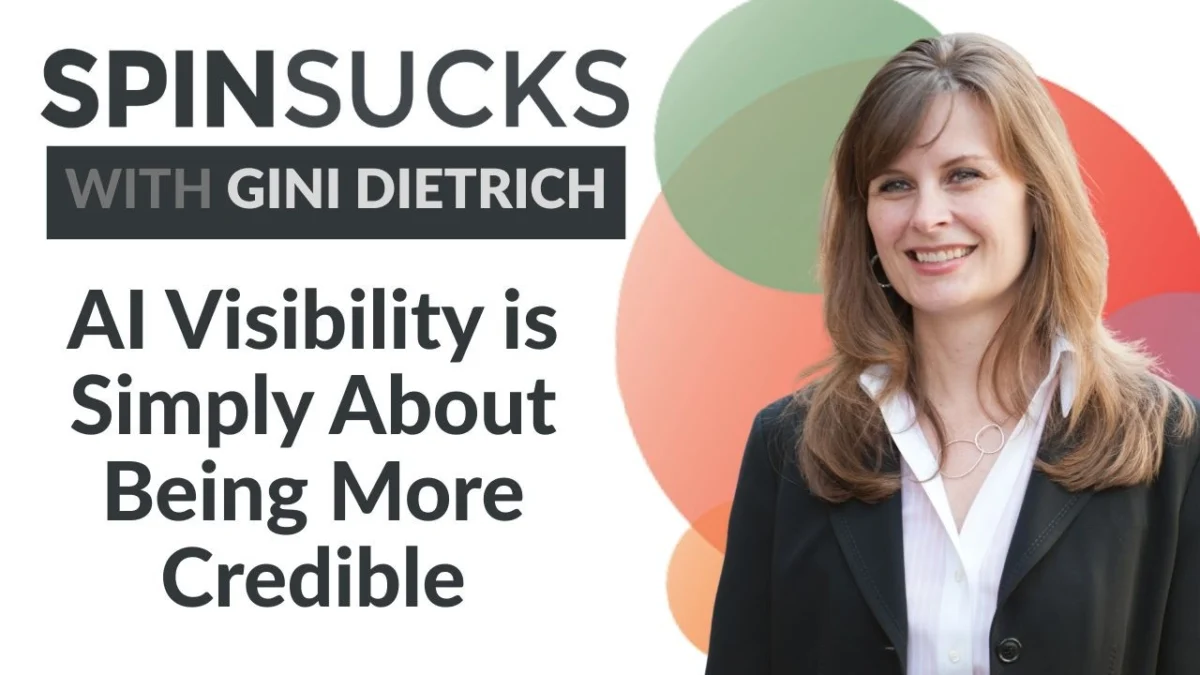
The rapid integration of generative artificial intelligence into search engines and digital discovery platforms has fundamentally altered the requirements for brand visibility. While traditional digital marketing strategies often relied on high-frequency publishing to capture search engine real estate, industry experts now warn that the "volume-first" approach is becoming obsolete. In the current landscape, AI visibility is no longer a contest of content quantity; it has transitioned into a game of credibility, where authority, structure, and third-party validation dictate which brands are recommended by Large Language Models (LLMs) and AI-driven search interfaces.
As platforms like Google, Perplexity, and OpenAI’s SearchGPT increasingly summarize information for users, the traditional "click-through" model is being replaced by a "citation" model. For brands to remain relevant, they must shift their focus from flooding the internet with mediocre assets to building a "source-of-truth" ecosystem. This evolution requires a disciplined approach to communications, emphasizing proprietary data, structured expertise, and what strategists call "corroboration loops" between owned and earned media.
The Evolution of Search: From Indexing to Synthesis
The shift toward AI-driven visibility is rooted in a fundamental change in how information is processed online. For two decades, Search Engine Optimization (SEO) was largely a matter of matching keywords and building backlink volume. However, the emergence of generative AI has introduced Generative Engine Optimization (GEO) and Answer Engine Optimization (AEO). These systems do not merely list websites; they synthesize answers based on the most credible and clear information available across the web.
According to recent industry projections, including reports from Gartner, traditional search engine volume is expected to drop by as much as 25% by 2026 as consumers migrate to AI chatbots for information. This transition has created a sense of urgency among marketing teams, many of whom have responded by using AI to accelerate content production. However, this "faster engine" often results in generic, interchangeable content that fails to establish the authority needed to satisfy AI algorithms.
The problem with the volume-centric strategy is that it ignores how AI models evaluate information. AI systems are designed to identify the "obvious answer" to a user’s query. When a brand produces contradictory or fragmented messaging across different channels, it creates an "authority problem" that prevents AI tools from trusting the brand as a primary source.
The Four Pillars of AI Credibility
To achieve visibility in an AI-shaped market, content must meet four specific criteria that both machines and humans use to gauge reliability.
First is clarity. AI rewards the clearest brand. If a company’s mission, products, and expertise are described inconsistently across its website, social media, and executive bios, AI models may struggle to categorize the brand accurately.
Second is consistency. A brand must maintain a unified voice and message across all touchpoints. When a spokesperson says one thing in a podcast and the company blog says another, it weakens the brand’s "digital footprint."
Third is structure. AI models prefer information that is organized logically. This includes the use of clear definitions, tight theses, proof points, and structured data (such as Schema markup). Content that is easy for a machine to parse is more likely to be used in an AI-generated summary or snippet.
Fourth is credibility. This is the most critical pillar. Credibility is established through evidence—such as proprietary data, case studies, and third-party validation from reputable news outlets or industry analysts. In an era where AI can generate infinite amounts of text, "perfectly fine" content is no longer a competitive advantage; citable evidence is.
Visibility Engineering and the PESO Model
The transition from traditional marketing to AI visibility has led to the rise of "visibility engineering." This discipline treats communications as a system rather than a series of disconnected activities. A central component of this system is the PESO Model (Paid, Earned, Shared, and Owned media), which provides a framework for building a corroboration loop.
Owned media—the content a brand produces on its own website—serves as the foundation. It is the "source of truth" where a brand establishes its definitive narrative. However, owned media has a "credibility ceiling" because it is inherently self-promotional. To break through this ceiling, brands must leverage earned media.
Earned media acts as a third-party validator. When a trade publication, a podcast host, or an industry analyst reinforces the same themes and proof points established in a brand’s owned media, it creates a "corroboration loop." AI systems look for this cross-verification. If an LLM finds a claim on a corporate website and sees that same claim validated in a reputable news article, the credibility of that information increases exponentially. This makes the brand a "safer" recommendation for the AI to provide to the end-user.
Shifting Strategy: From Generic How-Tos to Level-Three FAQs
As AI tools become more capable of answering basic "how-to" questions, brands must move deeper into the funnel to maintain visibility. Experts suggest a shift toward what is known as "Level-Three FAQs."
Level-One and Level-Two FAQs typically address beginner questions and basic product information—queries that AI can now answer without referencing a specific brand. Level-Three FAQs, however, require judgment, critical thinking, and nuanced expertise. These are questions regarding implementation risks, complex trade-offs, and industry-specific benchmarks.
For example, instead of writing a generic article on "How to Choose a CRM," a credible brand might publish a data-backed report on "The Hidden Implementation Costs of CRM Migration in the Healthcare Sector." This type of content is citable, proprietary, and difficult for an AI to replicate without referencing the original source.
Supporting data is vital in this context. Brands that utilize internal usage data, customer patterns, survey results, and real-world frameworks create "content that travels." These assets provide the "proof" that AI systems require to elevate a brand from a mere mention to a primary recommendation.
Industry Reactions and Strategic Analysis
The shift away from volume has met with mixed reactions in the corporate world. Many leadership teams, accustomed to measuring success through publishing cadence and "hustle culture," find the transition to a "disciplined content" model challenging. However, communications professionals argue that the current pressure to "do more with less" is a trap.
"When we respond to AI pressure by cranking out fast, generic, interchangeable content, we are effectively proving that we can be replaced by a prompt," one industry analyst noted. "Strategic value is found in meaning-making, not word production."
The implications of this shift are profound. Organizations that continue to prioritize volume over credibility risk being filtered out by AI search tools, which are increasingly programmed to ignore "noise." Conversely, brands that invest in "authority anchors"—high-quality, well-structured pieces of content that serve as definitive guides on specific topics—are seeing higher rates of AI citation.
Chronology of the AI Content Shift
The path to the current "credibility-first" era can be traced through several key milestones in the last few years:
- November 2022: The launch of ChatGPT brings generative AI to the mainstream, sparking a surge in AI-generated web content.
- Early 2023: Search engines begin integrating LLMs (e.g., Microsoft Bing with GPT-4), shifting the focus from link lists to direct answers.
- Mid-2023: Google announces Search Generative Experience (SGE), signaling a move toward AI-summarized search results.
- 2024: The emergence of "Generative Engine Optimization" as a distinct field. Marketers begin to observe "zero-click" searches rising as AI tools provide answers directly on the search results page.
- 2025-2026 (Projected): A predicted consolidation of digital authority, where only the most citable and verified sources maintain visibility in AI-driven ecosystems.
Strategic Roadmap for Brands
To adapt to the AI visibility landscape, organizations are encouraged to perform a "consistency audit." This involves ensuring that all public-facing information—from executive LinkedIn profiles to technical white papers—is aligned with the brand’s core expertise.
Furthermore, the focus must shift to "repurposing over reinvention." Rather than creating 50 mediocre blog posts, a brand might produce one comprehensive, data-driven webinar. That single asset can then be distilled into a series of structured blog posts, social media insights, and media pitches, all of which point back to the same "source of truth."
The ultimate goal for modern visibility is to answer a single, smarter question: "Have we made it unmistakably clear who we are, what we know, and why anyone should believe us?"
In the age of generative AI, the brands that win will not be those that speak the loudest or the most often. They will be the brands that provide the clearest points of view, backed by the strongest proof, and validated by the most reliable third-party sources. AI visibility is, at its heart, a trust-building exercise, and trust cannot be automated through volume.