

The landscape of modern e-commerce is characterized by a fundamental paradox: while digital journeys have become increasingly complex and non-linear, the tools used to navigate them often remain anchored in static, historical data. In a typical session, a visitor might arrive via a promotional email, browse several categories anonymously, exit to compare prices on a competitor’s site, and return hours later via a direct search with a completely different intent. Traditional personalization frameworks, which rely heavily on logged-in profiles and past purchase history, frequently fail to capture these rapid shifts in consumer behavior. This disconnect has led to the emergence of AdaptiveCX, a real-time AI-driven solution designed to interpret behavioral signals and adapt the user experience instantaneously.
The Evolution of the Digital Personalization Gap
For over a decade, the gold standard for digital marketing has been the "Known Customer Profile." Brands invested heavily in Customer Data Platforms (CDPs) and Customer Relationship Management (CRM) systems to build comprehensive dossiers on their users. However, industry data suggests that between 70% and 90% of website traffic consists of anonymous or unauthenticated visitors. These individuals may be browsing in private modes, utilizing ad-blockers, or simply visiting a site for the first time.
Under traditional systems, these anonymous visitors are often relegated to a "default" experience. Because the system lacks a historical record of their preferences, it treats them as a monolith. This results in significant missed opportunities, as these visitors are providing a wealth of information through their active behavior—information that goes largely ignored by rule-based engines. AdaptiveCX addresses this "personalization gap" by shifting the focus from who the visitor is to what the visitor is doing in the current moment.
The Mechanics of Real-Time Intent Prediction
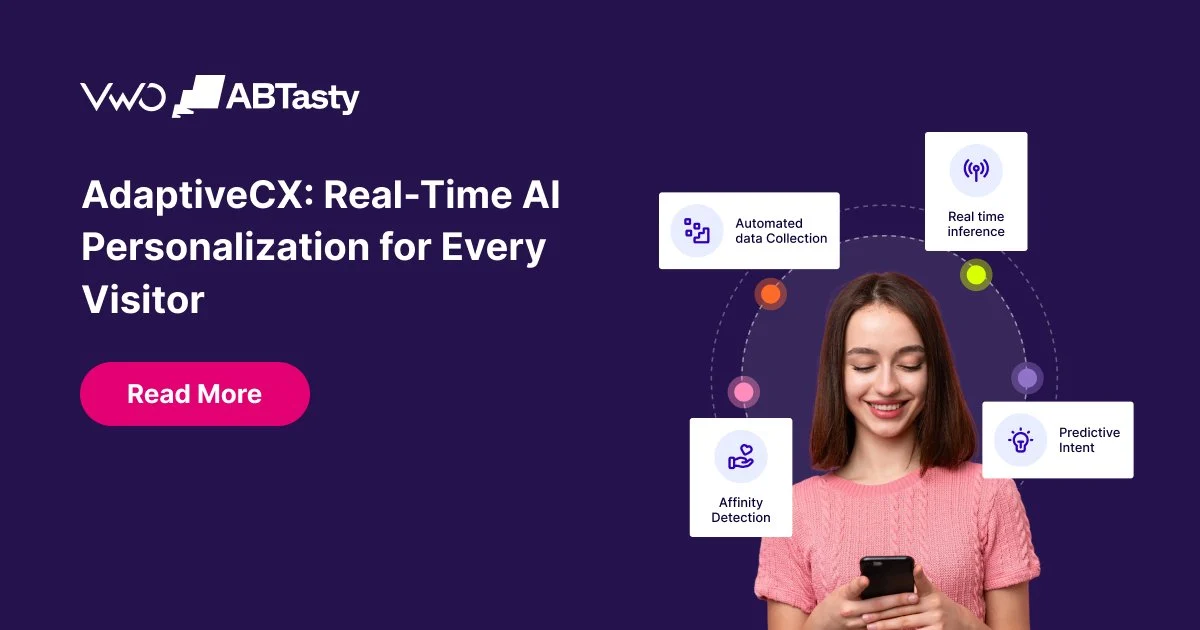
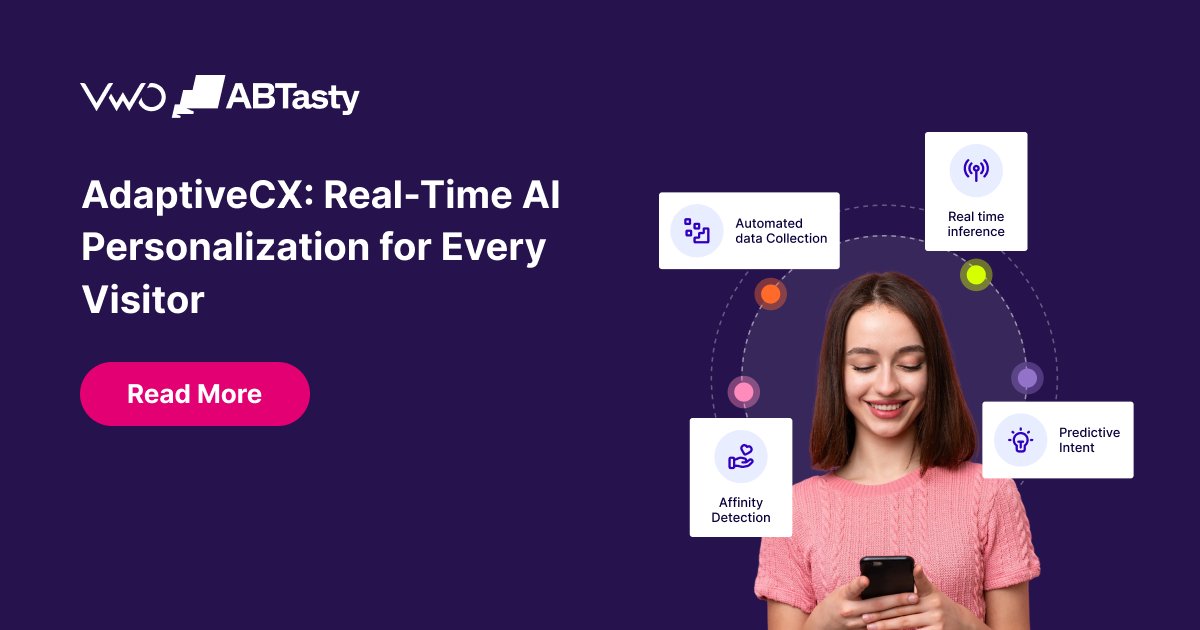
The core functionality of AdaptiveCX rests on its ability to transform raw behavioral signals into actionable intent scores within milliseconds. Unlike legacy systems that process data in batches, AdaptiveCX operates on a continuous loop of capture, prediction, and activation.
1. Signal Capture
As a visitor interacts with a site, the system monitors non-Personally Identifiable Information (non-PII). These micro-interactions include scroll depth, the speed of mouse movements, the sequence of pages viewed, and the specific elements ignored. For instance, a visitor who quickly scrolls past a "50% Off" banner but lingers on a technical specifications table provides a clear signal of being product-focused rather than price-sensitive.
2. Machine Learning and Intent Scoring
These signals are fed into machine learning models that categorize the visitor’s intent. The system can predict several key outcomes:
- Purchase Probability: The likelihood that the current session will result in a transaction.
- Abandonment Risk: Detecting "rage clicks" or hesitation patterns that suggest a user is frustrated and likely to leave.
- Content Affinity: Identifying whether the user is in a "discovery" phase (browsing broad categories) or a "comparison" phase (toggling between specific product variations).
3. Instant Activation
Once an intent is predicted, the platform triggers a specific experience change. This might involve reordering a homepage carousel, surfacing a specific size-guide for a hesitant shopper, or offering a targeted incentive to a visitor predicted to abandon their cart.
Comparative Analysis: Static vs. Adaptive Personalization
To understand the impact of AdaptiveCX, it is necessary to compare it against the prevailing "Static" or "Rule-Based" models. Static personalization relies on "If/Then" logic: "If a visitor is from New York, then show winter coats." While logical, this approach is rigid. A visitor from New York may be shopping for a vacation in the tropics, making the winter coat advertisement irrelevant and intrusive.
Adaptive personalization, by contrast, is fluid. It recognizes that intent can change within a single session. If that same New York visitor starts searching for swimwear and sun protection, an adaptive system will immediately pivot its recommendations, regardless of the user’s geographic location or previous history of buying winter gear. This responsiveness reduces friction and aligns the brand’s offerings with the customer’s immediate needs.
Implementation Chronology and Operational Scalability
The deployment of AI-driven personalization has historically been viewed as a multi-month technical undertaking requiring significant IT resources. AdaptiveCX has been engineered to circumvent these traditional bottlenecks through a streamlined implementation timeline.
- Phase 1: Integration (Days 1–3): Implementation typically begins with the placement of a single SaaS-based tag on the website. This no-code approach allows the system to begin observing traffic patterns without requiring changes to the site’s core architecture.
- Phase 2: Signal Training (Days 4–10): The AI begins to map site-specific behaviors to outcomes. During this phase, the models learn the nuances of the brand’s specific audience, such as what constitutes "high engagement" for a luxury jewelry brand versus a fast-fashion retailer.
- Phase 3: Initial Activation (Days 11–15): Marketing teams launch their first "Adaptive Experiences." These are often low-risk, high-reward interventions, such as adaptive search recommendations or out-of-stock recovery messages.
- Phase 4: Optimization and Scaling (Ongoing): Using built-in A/B testing and experimentation tools, teams measure the incremental lift of each adaptive intervention, refining the logic to maximize Revenue Per Visitor (RPV).
Empirical Evidence: Case Studies in Enterprise Retail
The business value of real-time adaptation is best illustrated through its application by major global brands. Two notable examples—Colony Brands and Abercrombie & Fitch—demonstrate how intent-based prediction translates into measurable financial gains.
Colony Brands: The Power of Content Prioritization
Colony Brands faced a common e-commerce challenge: the "buried content" problem. Their homepage carousels featured numerous campaigns, but most visitors never scrolled past the first two slides. By implementing AdaptiveCX, the brand began reordering these slides based on in-session intent. If a visitor showed a preference for a specific category, such as home decor, that campaign was automatically moved to the first position. This led to a 10% increase in conversion rates and a 40% to 60% increase in pageviews for the targeted categories.
Abercrombie & Fitch: Protecting Margins Through Intelligent Incentives
Abercrombie & Fitch utilized AdaptiveCX to solve the problem of "margin erosion." Many retailers offer blanket discounts to all new visitors, which often results in giving discounts to shoppers who would have purchased at full price anyway. By using real-time purchase probability scores, the brand was able to reserve incentives for "hesitant" shoppers while allowing "high-intent" shoppers to complete their journey without a discount. The result was a 2.5x increase in return visits and a significant preservation of profit margins.
Privacy-First Architecture in a Cookieless Future
As the digital industry moves away from third-party cookies and toward stricter privacy regulations like GDPR and CCPA, the methodology of AdaptiveCX offers a sustainable path forward. Because the system relies on first-party, in-session behavioral data rather than cross-site tracking or PII, it respects user privacy while still delivering a high level of relevance.
Furthermore, the "Transparent AI" component of the platform addresses the "black box" concern often associated with machine learning. Marketers can see exactly which signals influenced a specific prediction, allowing them to maintain strategic control. This transparency ensures that the AI serves as an assistant to human creativity and strategy, rather than a replacement for it.
Strategic Implications for the E-Commerce Industry
The shift toward adaptive experiences signals a broader evolution in the relationship between brands and consumers. In an era of infinite choice, the primary differentiator for a brand is no longer just the product or the price, but the quality of the experience.
Industry analysts suggest that the adoption of real-time intent prediction will soon become a baseline requirement for competitive e-commerce. As consumers grow accustomed to the seamless relevance provided by platforms like Netflix and Amazon, their expectations for other retailers will continue to rise. AdaptiveCX provides mid-market and enterprise businesses with the tools to meet these expectations, offering a path to increased conversion, higher retention, and a more resilient bottom line.
By moving away from static assumptions and toward a dynamic, signal-based understanding of the visitor, brands can finally align their digital presence with the non-linear reality of the modern customer journey. The goal is no longer just to "personalize more," but to personalize with precision, ensuring that every interaction adds value to the visitor’s current moment.







