rifanmuazin
Many entrepreneurs embarking on the journey of launching an e-commerce venture might not immediately consider HubSpot as a primary tool. Typically, HubSpot CRM is discovered and implemented later in a company’s lifecycle, often when the need for a robust customer relationship management system becomes critical. However, the platform’s capabilities extend far beyond managing customer records, offering a comprehensive suite of tools that can significantly fuel business growth from the outset and throughout its expansion. HubSpot provides free Content Management System (CMS) tools, enabling the creation of custom websites, alongside integrated commerce solutions like HubSpot Payments. Crucially, it integrates seamlessly with established e-commerce giants such as Shopify, bridging the gap between customer data and larger online retail platforms. This article explores why HubSpot is an exceptional, often overlooked, asset for e-commerce businesses and outlines how to leverage its full potential.
The Strategic Advantage of HubSpot for E-commerce Operations
While HubSpot CRM is widely recognized as a leading customer relationship management system, its strategic role in the e-commerce ecosystem is often underestimated. For online stores, HubSpot CRM functions as the central nervous system for every customer interaction that occurs outside the direct point of sale. It meticulously logs browsing behaviors, tracks sales opportunities, monitors order fulfillment, links email communications to customer profiles, and connects chat conversations directly to revenue generation. This comprehensive approach builds an intricate, chronological timeline of each buyer’s journey—a level of insight that is remarkably rare within the fragmented landscape of typical e-commerce software solutions.
Many online businesses operate on a patchwork of disparate applications, with separate tools for cart abandonment capture, email marketing, and lead scoring. HubSpot disrupts this model by consolidating all customer data into a unified view. It stands out as one of the few CRM systems where an abandoned cart can automatically trigger sophisticated sales automation sequences. The success of CODE41, which leveraged HubSpot’s integrated tools to achieve a remarkable 257% increase in sales, 223% in revenue, and 279% in leads, serves as a compelling testament to the platform’s transformative potential. Furthermore, HubSpot’s built-in inbound marketing capabilities foster the cultivation of enduring customer relationships, moving beyond the basic functionality of a storefront. This holistic approach explains why e-commerce teams increasingly rely on HubSpot, even when their primary storefront is managed by platforms like Shopify or BigCommerce. While these platforms handle the transactional aspect of the storefront, HubSpot excels at managing the entire customer lifecycle.
Unlocking the Comprehensive Benefits of HubSpot’s E-commerce Platform
HubSpot possesses a unique characteristic: its initial simplicity belies a profound depth of functionality that becomes apparent as businesses integrate it into their core operations. The most significant advantages often stem from seemingly minor, yet critically important, features that businesses may not initially prioritize.
Centralized Customer Data: A Unified View of Every Interaction
Traditional e-commerce tools often scatter critical customer information across various applications. A product view might reside in one system, an email open in another, an order in a third, and customer inquiries lost in a digital abyss. HubSpot CRM elegantly stitches these disparate data points into a cohesive, chronological timeline. From a customer browsing a product, abandoning a cart, opening a marketing email, returning days later, to engaging with support via chat, every interaction is visible. This unified perspective provides unparalleled context for understanding customer behavior and intent.
Streamlined Automation for Real-World Business Processes
HubSpot’s automation capabilities are designed to accommodate the complexities and realities of business operations. Instead of requiring perfectly defined workflows from the outset, its sales and marketing automation tools enable teams to construct dynamic, real-world processes that effectively recover lost revenue. For instance, a store can establish a seamless flow that links cart abandonment triggers to personalized email follow-ups, which then update sales pipeline stages and assign tasks to sales representatives. This process is designed for ease of implementation and minimal friction.
Inbound Marketing Tools That Directly Drive Revenue
The customer journey is rarely a linear path to purchase. Consumers typically engage in research, comparison, distraction, and contemplation before committing to a purchase. HubSpot meticulously tracks this entire journey, revealing patterns that are often invisible to businesses relying on fragmented systems. Many e-commerce stores discover that repeat purchases often originate from educational content, such as blog posts that guide customers in selecting the right product, highlighting the long-term impact of content strategy.
Integrated Payments and Quoting for Seamless Transactions
HubSpot Payments simplifies the checkout process, offering a more robust and integrated solution than the traditional method of sending PDF invoices and hoping for payment. This feature is particularly beneficial for Business-to-Business (B2B) e-commerce operations. Sales representatives can issue a quote, and upon customer approval, a subscription can be automatically generated. HubSpot then logs the order, updates the sales pipeline, creates onboarding tasks, and initiates a welcome sequence for the new customer.
AI-Powered Assistance Without Overwhelm
HubSpot’s AI content tools, particularly those integrated within the CMS and campaign builders, effectively address the challenge of "blank page syndrome." These tools are invaluable for generating initial drafts, creating meta descriptions, writing alt text for images, and handling repetitive copywriting tasks that can drain team resources. Furthermore, AI-driven workflow suggestions reduce setup time for users who may not be automation experts, streamlining operational efficiency.
Scalable Growth Infrastructure for Key Business Functions
HubSpot does not offer a magical solution for generating traffic or inventing revenue—a common, often misleading, promise of many SaaS tools. Instead, it provides the foundational structure to consolidate and enhance customer understanding, sales systems, marketing activities, and customer support experiences. This integrated approach empowers a one-person operation to function with the efficiency of a five-person team, or a five-person team to operate with the capacity of fifteen, by organizing and optimizing the critical elements of business growth.
A Practical Guide to Building an E-commerce Store with HubSpot
There are several effective methods for establishing an online store using HubSpot, tailored to specific business needs. The following step-by-step process outlines the typical implementation pathway.
Step 1: Establish a Foundation with a HubSpot CRM Account
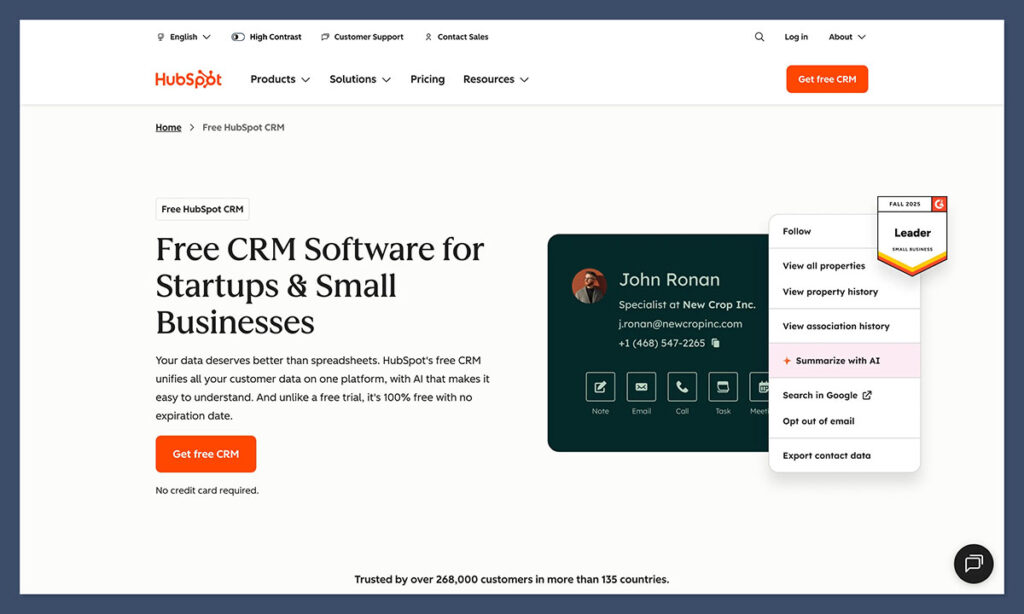
The core of any HubSpot-powered e-commerce operation is the CRM. A free HubSpot CRM account provides the essential framework, including contact management, list segmentation, pipeline tracking, email capabilities, and basic automation features. Once the CRM is operational, other components like the CMS, commerce tools, quoting functionalities, and chat widgets seamlessly integrate around this central data repository. Many businesses initially utilize the free CRM and later upgrade to Sales Hub or Marketing Hub as their need for advanced automation and marketing features grows.
Step 2: Select Your E-commerce Integration Strategy
Businesses have a few primary options for integrating their e-commerce operations with HubSpot:
- Option A: Direct Integration with Shopify or BigCommerce: For businesses that already utilize these established e-commerce platforms, HubSpot offers robust integrations that sync product catalogs, customer data, and order information. This approach leverages the strengths of both platforms, with Shopify or BigCommerce handling the storefront and HubSpot managing customer relationships and marketing efforts.
- Option B: Building a Storefront within HubSpot CMS: HubSpot’s own CMS provides the tools to build a fully functional e-commerce website. This is ideal for businesses with a curated product catalog or those focused on higher-touch customer interactions. It offers complete control over the user experience and direct integration with HubSpot’s CRM and marketing tools.
- Option C: Utilizing HubSpot for Backend Operations with a Custom or Third-Party Frontend: For businesses with highly specific requirements or existing custom-built frontends, HubSpot can serve as the powerful backend for managing customer data, sales pipelines, and automation, while a separate frontend handles the customer-facing interface.
The choice between these options often depends on the scale of the product catalog and the desired level of control over the customer experience. Large catalogs might benefit from the specialized features of platforms like Shopify or BigCommerce, while businesses selling unique or high-value items might find greater advantage in a custom HubSpot CMS build.
Step 3: Construct Your Storefront Using HubSpot CMS
HubSpot’s CMS is designed for simplicity and user-friendliness. Businesses can select a theme, utilize the intuitive editor to arrange modules, and create pages that are engaging and minimize customer bounce rates. A key advantage of the CMS is its deep integration with the CRM. When a customer repeatedly views a product, abandons their cart, or explores FAQ pages, this behavior is captured and analyzed, providing valuable insights into their level of interest and potential obstacles in the buying process.
Step 4: Integrate Products into Your System
The process of adding products to your e-commerce system has long-term implications for data management and sales efficiency. It is crucial to establish clear product naming conventions and avoid variations of the same product with slightly different names. Standardization from the outset prevents confusion and streamlines inventory management, marketing efforts, and customer service inquiries.
Step 5: Configure Payments and the Checkout Flow
For businesses operating within the United States, HubSpot Payments offers a streamlined and integrated payment solution. It seamlessly connects with quotes, product pages, forms, and chat functionalities, allowing for the easy distribution of payment links via email, direct messages, and landing pages. For international operations, popular combinations like Stripe with CommercePro are commonly employed, with the optimal choice depending on specific regional requirements and business preferences.
Step 6: Synchronize Carts, Orders, and Sales Pipelines
This is a critical area where HubSpot often exceeds expectations. By integrating abandoned cart data with the sales pipeline, businesses can proactively engage customers. For example, when a customer visits a cancellation page multiple times within a week, HubSpot can automatically generate a task, send a follow-up email, and flag the customer for attention. This proactive approach has proven effective in improving customer retention rates.
Step 7: Develop Tailored Automation Workflows
HubSpot empowers teams to build automation workflows that mirror their actual operational processes. Starting with simple automations, such as sending a welcome email upon signup or assigning a task after a specific form submission, businesses can gradually increase complexity as they gather more data. Automating abandoned cart recovery emails, creating follow-up tasks for leads that haven’t engaged, or sending birthday emails are initial steps that can significantly impact customer engagement and sales. The more data collected on customer behavior, the more sophisticated and effective automation flows can become, but it is essential to consistently test and analyze the results of these workflows over time.
Step 8: Leverage Inbound Marketing for Lead Generation and Conversion
HubSpot’s core philosophy is rooted in inbound marketing, and its platform is designed to maximize this approach. When blog posts, landing pages, emails, and the CRM operate within a unified ecosystem, businesses gain the ability to identify critical patterns that drive conversions. By tracking page views, email clicks, orders, and repeat purchases, the content strategies that yield the highest conversion rates become clearly discernible, allowing for more effective resource allocation.
Step 9: Monitor Performance with Robust Analytics
HubSpot’s analytics tools provide more than just superficial data visualizations; they are deeply integrated with individual customer records. This allows for a granular understanding of campaign performance, revenue attribution, and customer lifetime value. By analyzing metrics such as website traffic sources, email open rates, conversion rates by source, and lead-to-customer conversion rates, businesses can gain actionable insights to refine their strategies and optimize their marketing spend. The synergy of data and context provided by HubSpot ensures a sharper, more informed approach to business decisions.
The Enduring Appeal of HubSpot for E-commerce Brands
While not typically categorized as a direct e-commerce platform in the vein of Shopify, HubSpot offers an indispensable toolkit for any serious online business. Many e-commerce companies begin with a fragmented collection of tools, only to later discover that HubSpot can effectively manage the "thinking" aspects of their business: nurturing relationships, executing follow-ups, managing quotes, handling renewals, creating content, and automating critical tasks that prevent crucial emails from being missed.
While numerous platforms excel at managing the storefront itself, HubSpot’s strength lies in its profound understanding of the buyer. It meticulously tracks customer behavior—what they clicked, what they ignored, when they returned, and which communication ultimately prompted their purchase. This deep contextual understanding fundamentally transforms how an e-commerce store operates, shifting the focus from broadcasting generic promotions to skillfully guiding individual customers through their decision-making process. For those curious to explore this potential, initiating a free HubSpot CRM account, experimenting with the CMS, sending a payment link, and building a simple workflow can quickly reveal how seamlessly these components integrate to create a cohesive and powerful e-commerce solution.
Frequently Asked Questions
How does HubSpot compare to Shopify for e-commerce?
Shopify is primarily a storefront engine, designed for the creation and management of online shops. HubSpot, conversely, is a customer engagement and growth engine. When used in tandem, they can form a formidable partnership. However, for businesses that prioritize lead nurturing, complex quoting processes, or subscription management, HubSpot offers a distinct advantage in handling these customer-centric functions.
Can HubSpot operate a complete e-commerce store independently?
Yes, HubSpot can manage a complete online store, particularly for businesses with a focused product catalog and a less complex retail infrastructure. The combination of its CMS, Commerce Hub, and HubSpot Payments can effectively support digital products, subscriptions, coaching services, curated kits, and a significant portion of B2B e-commerce. For businesses with extremely large or complex product catalogs, integrating HubSpot with platforms like Shopify or BigCommerce often presents a more scalable solution.
Is HubSpot prohibitively expensive for small e-commerce businesses?
Not necessarily. Many small businesses begin by leveraging HubSpot’s free CRM and free CMS tools. Costs typically increase as businesses require more advanced automation features, sophisticated sales functionalities, or extensive marketing capabilities. However, if these advanced features are actively utilized and contribute to business growth, the return on investment is often realized quickly.
Does HubSpot support subscriptions and recurring billing?
Absolutely. Commerce Hub is equipped to handle recurring payments, manage subscription records, track renewals, and automate workflows tied to billing events. This capability transforms a often-complex aspect of e-commerce into a streamlined, largely automated process.
Are HubSpot’s AI tools genuinely beneficial for e-commerce?
HubSpot’s AI tools are particularly effective in automating routine tasks such as drafting emails, developing workflow logic, generating website content, and suggesting segmentation strategies. While they do not replace strategic planning, they significantly reduce the burden of repetitive work, allowing e-commerce teams to concentrate on high-impact activities that drive revenue and enhance customer experience.